




Strawberry Legs: Causes, Symptoms, Home Remedies and More
By Dr. Raina N. Nahar +2 more

Medically reviewed by Dr. Raina N. Nahar
Last updated: Oct 13, 2026 Published on: Oct 13, 2026


Get,

to manage your symptom
Get your,

4 Cr+ families
benefitted

OTP sent to 9988776655



You’ve successfully subscribed to receive
doctor-approved tips on
Whatsapp

Get ready to feel your best.


Register to Avail the Offer
Send OTPBy continuing, you agree with our Privacy Policy and Terms and Conditions
Hi There,
Sign up on PharmEasy now!!


Trusted by 4 crore+ families

OTP sent to 9988776655
You have unlocked 25% off on medicines


Code: NU25

By Dr. Raina N. Nahar +2 more
Table of Contents
Strawberry skin is a common concern many people face. In this skin problem, the skin on different parts of the body appears dotted or spotted. This often gives it a rough or uneven appearance1. The name usually comes from the resemblance of these small dark spots to the seed-like appearance of a strawberry.
Although strawberry skin is usually harmless and does not indicate a serious health problem, it can affect the appearance of the skin and may sometimes affect self-confidence. This blog explores the common causes and symptoms, along with simple home remedies for strawberry legs that may help improve the appearance of the skin.
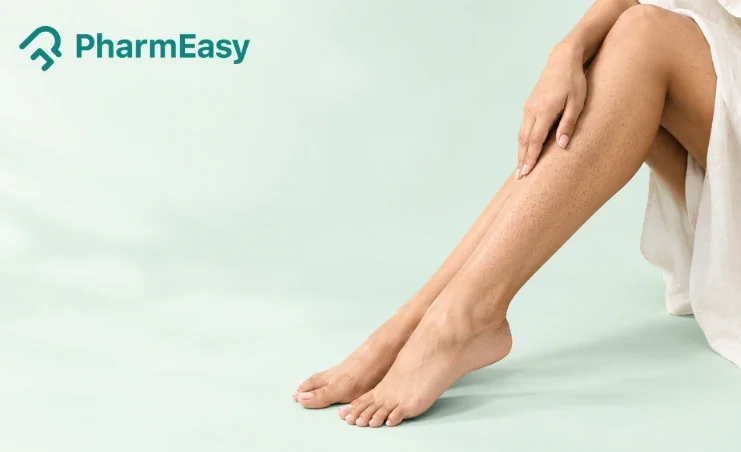
Strawberry legs are a common skin concern in which small dark or reddish spots appear around the hair follicles, making the skin of the legs look bumpy (like the surface of a strawberry)1. These spots may become more noticeable after shaving or when the hair follicles become clogged with dead skin cells, oil, or other debris. Not just legs, these spots can occur even on the arms, buttocks or other regions of the body2.
Note: Strawberry legs is not a specific medical diagnosis and can occur due to several skin conditions, including keratosis pilaris, folliculitis, and clogged or enlarged hair follicles2,3.
What causes strawberry legs? Strawberry legs may develop when the hair follicles become clogged, irritated, or inflamed. Several factors can trigger or worsen these changes:
The main symptom of strawberry legs is the appearance of small dark red or brown spots around the hair follicles of the legs. Other symptoms may include:
Note: The symptoms can vary depending on the underlying cause, such as keratosis pilaris, folliculitis, shaving irritation, or ingrown hairs.
If you are wondering how to get rid of strawberry legs, the following simple skincare measures may help improve the appearance of your skin:
Use a moisturiser to help prevent dryness and keep the skin smooth6,7. You may choose a fragrance-free and non-comedogenic moisturiser with ingredients like shea butter or glycerine. Other options like petrolatum-based products can also help moisturise the skin deeply and protect the skin barrier2. Apply them after bathing and reapply at any time of the day when the skin feels dry.
This helps remove dead skin cells that can clog hair follicles6. You may use a soft washcloth or a gentle exfoliating product like a cream or body wash that is intended for exfoliation. You can also try a homemade oatmeal scrub (just mix some oats with glycerine or curd) and use before a shower. However, you should try to avoid vigorous scrubbing, as it could irritate the skin and do harm.
Shaving is a big cause that leads to strawberry skin and ingrown hair. So, when shaving try to shave in the direction of your hair growth. Also, exfoliate your skin before shaving and do not forget to apply an effective lubricant like shaving gel to reduce friction. When shaving, avoid going repeatedly over the same area. All of these will help reduce the appearance as well as the occurrence of strawberry skin and ingrown hairs.
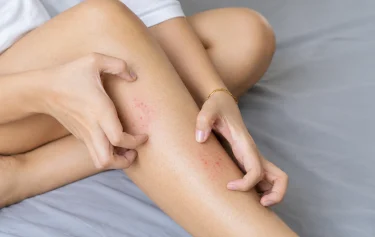
Constantly scratching, picking, or rubbing the affected skin can be bad for your skin. It can increase irritation, cause inflammation, and may make the bumps more noticeable1,6. So, try and avoid this as much as possible. If you feel that your skin seems itchy or you feel like scratching, you can use ice cubes wrapped in a cotton cloth to soothe the skin. You can also do this after shaving if you feel your skin is irritated.
Note: Home remedies can be helpful in some cases but should be used with care. Not all ingredients may suit every skin type, so choose accordingly.
The answer to the question of how to remove strawberry legs depends on its underlying cause. Based on your skin’s appearance, a dermatologist may recommend the following strawberry legs treatment/management options:
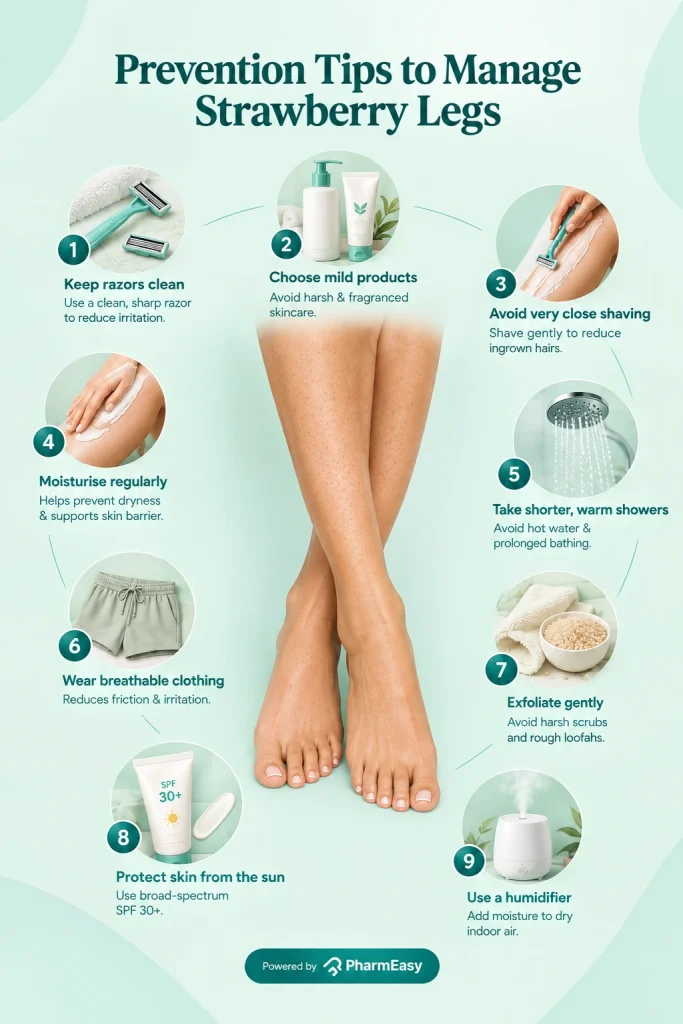
The following measures can help you understand how to prevent strawberry legs and how to lower the chance of the spots becoming more noticeable:
Also Read: Can Sunscreen Cause Cancer? What the Research Says
Strawberry legs are usually harmless. However, consult a doctor if:
Also Read: Dermatitis Herpetiformis: Causes, Symptoms, Treatment, and Prevention Tips
Strawberry legs are a common and usually harmless skin concern that causes small dark or reddish spots around the hair follicles. In such cases, maintaining good skincare and hygiene, keeping the skin moisturised, and using gentle hair removal practices can help improve the appearance and reduce irritation.
However, if the spots persist, worsen, or become inflamed despite these measures, you should consult a dermatologist. They can identify the underlying cause and determine the most appropriate treatment.
They may improve over time with consistent skincare. However, conditions such as keratosis pilaris may require ongoing management2.
Lemon juice is not a proven treatment for strawberry legs and may irritate the skin. So, it is better to use gentle skincare products1.
Dry brushing may help remove surface dead skin cells, but there is no evidence that it treats strawberry legs9. Also, brushing too vigorously can irritate the skin and make the appearance worse. So, be gentle and mindful while dry brushing.
Waxing may reduce the need for frequent shaving, but it can also irritate the skin and worsen inflammation in some people10. If waxing causes redness, bumps, or ingrown hairs, consider a gentler hair-removal method.
Glycolic acid may help improve strawberry legs by gently exfoliating dead skin cells and reducing follicular plugging11. Always start with a low concentration and avoid overuse, as it may cause irritation.
Salicylic acid can help unclog hair follicles by exfoliating dead skin cells. This may improve the rough, bumpy appearance associated with strawberry legs12. Always use it as directed and stop if significant irritation develops.
Strawberry legs themselves are not necessarily genetic. However, conditions that can contribute to their appearance, such as keratosis pilaris, may run in some families4.
1. Keratosis pilaris. NHS. October 24, 2017. Accessed September 15, 2026. https://www.nhs.uk/conditions/keratosis-pilaris/
2. Kaur K, Kaur A, Kalsi V, Kasav S. Keratosis Pilaris Unveiled: Insights into its Origin, Management Strategies and Research Frontiers. Indian J Dermatol. 2025;70(5):267-274. doi:10.4103/ijd.ijd_51_25 https://pubmed.ncbi.nlm.nih.gov/40918705/
3. Winters RD, Mitchell M. Folliculitis. In: StatPearls. StatPearls Publishing; 2026. Accessed September 15, 2026. http://www.ncbi.nlm.nih.gov/books/NBK547754/
4. Pennycook KB, McCready TA. Keratosis Pilaris. In: StatPearls. StatPearls Publishing; 2026. Accessed September 15, 2026. http://www.ncbi.nlm.nih.gov/books/NBK546708/
5. Ingrown hair. Healthdirect. August 28, 2025. Accessed September 15, 2026. https://www.healthdirect.gov.au/ingrown-hair
6. Keratosis pilaris: Self-care. AAD. Accessed September 15, 2026. https://www.aad.org/public/diseases/a-z/keratosis-pilaris-self-care
7. Keratosis pilaris: Diagnosis and treatment. AAD. Accessed September 15, 2026. https://www.aad.org/public/diseases/a-z/keratosis-pilaris-treatment
8. How to apply sunscreen. AAD. Accessed October 9, 2026. https://www.aad.org/public/everyday-care/sun-protection/shade-clothing-sunscreen/how-to-apply-sunscreen
9. Komagata S. Kanpumasatsu: A superficial self-massage with a dry towel to enhance relaxation and immune functions. J Interprofessional Educ Pract. 2023;31:100609. doi:10.1016/j.xjep.2023.100609 https://pubmed.ncbi.nlm.nih.gov/36776417/
10. Evans RL, Bates S, Marriott RE, Arnold DS. The impact of different hair‐removal behaviours on the biophysical and biochemical characteristics of female axillary skin. Int J Cosmet Sci. 2020;42(5):436-443. doi:10.1111/ics.12648 https://pubmed.ncbi.nlm.nih.gov/32638392/
11. Tian Y, Li XX, Zhang JJ, et al. Clinical outcomes and 5-year follow-up results of keratosis pilaris treated by a high concentration of glycolic acid. World J Clin Cases. 2021;9(18):4681-4689. doi:10.12998/wjcc.v9.i18.4681 https://pubmed.ncbi.nlm.nih.gov/34222434/
12. Ge L, Liu Z, Xu S, et al. A Cohort Clinical Study on the Efficacy of Topical Salicylic Acid/Piroctone Olamine Dandruff Pre‐Gel and Cleanser in Improving Symptoms of Moderate to Severe Seborrheic Dermatitis of the Scalp. J Cosmet Dermatol. 2025;24(1):e16742. doi:10.1111/jocd.16742 https://pubmed.ncbi.nlm.nih.gov/39778065/
Disclaimer: The information provided here is for educational/awareness purposes only and is not intended to be a substitute for medical treatment by a healthcare professional and should not be relied upon to diagnose or treat any medical condition. The reader should consult a registered medical practitioner to determine the appropriateness of the information and before consuming any medication. PharmEasy does not provide any guarantee or warranty (express or implied) regarding the accuracy, adequacy, completeness, legality, reliability or usefulness of the information; and disclaims any liability arising thereof.
Links and product recommendations in the information provided here are advertisements of third-party products available on the website. PharmEasy does not make any representation on the accuracy or suitability of such products/services. Advertisements do not influence the editorial decisions or content. The information in this blog is subject to change without notice. The authors and administrators reserve the right to modify, add, or remove content without notification. It is your responsibility to review this disclaimer regularly for any changes.


Comments

Leave your comment...
You may also like















Comments