




Best Iodine-Rich Foods to Support Thyroid Health Naturally
By Dr. Malavika Athavale +2 more

Medically reviewed by Dr. Malavika Athavale
Last updated: Aug 24, 2026 Published on: May 19, 2026


Get,

to manage your symptom
Get your,

4 Cr+ families
benefitted

OTP sent to 9988776655



You’ve successfully subscribed to receive
doctor-approved tips on
Whatsapp

Get ready to feel your best.


Register to Avail the Offer
Send OTPBy continuing, you agree with our Privacy Policy and Terms and Conditions
Hi There,
Sign up on PharmEasy now!!


Trusted by 4 crore+ families

OTP sent to 9988776655
You have unlocked 25% off on medicines


Code: NU25

By Dr. Malavika Athavale +2 more
Table of Contents
Iodine is an essential trace mineral that the body needs in small amounts to support important biological functions. It is naturally present in certain foods, added to iodised salt, and also available as a dietary supplement. One of the main roles of iodine in the body is to support the production of thyroid gland hormones. These are essential for proper growth and development, especially for the brain and nervous system during early life1,2.
Although iodine is required only in small amounts, adults generally need about 150 micrograms per day to maintain normal thyroid function3. When iodine intake is low, the body cannot produce enough thyroid hormones. This can lead to a group of conditions known as iodine deficiency disorders2.
This article will explain the importance of iodine, common signs of deficiency, and the best iodine rich foods that can help support healthy thyroid function naturally1,2.
Iodine is a trace element that is found in food in forms such as iodide and iodate1. It is consumed with our diet and absorbed by the digestive system to enter the bloodstream from where it is carried to the thyroid gland. In healthy adults, about 15 to 20 mg of iodine is present in the body, with nearly 70 to 80 percent stored in the thyroid gland. Inside the thyroid gland, iodine attaches to a protein called thyroglobulin and forms the two important thyroid hormones called thyroxine (T4) and triiodothyronine (T3)1,4.
Iodine is essential for several important body functions, especially those related to thyroid health, growth, brain development, and metabolism as explained below:
Thus, iodine is important because it supports thyroid hormone production, brain development, growth, immune function, and overall health, while low iodine levels may lead to problems such as tiredness, weight gain, goitre, and hypothyroidism, which are explained in the next section1,4.
When iodine intake becomes low, the body cannot produce enough thyroid hormones (T3 and T4). The thyroid gland tries to compensate by working harder under the effect of increased TSH, which can lead to its enlargement, called goitre. Over time, low hormone levels slow down many body processes, affecting energy use, growth, and brain development4. In children and during pregnancy, this can affect brain development and may lead to long-term learning problems1,4. Severe deficiency can reduce hormone production even when the body is trying to correct it1.
Several factors that contribute to low iodine levels in the body. These include:
Many individuals with mild iodine deficiency may not notice any clear symptoms. But persistently low levels can lead to conditions such as goitre and hypothyroidism, and may affect metabolism, energy levels, and overall health1,4.
Common symptoms of iodine deficiency are linked to hypothyroidism, which include2:
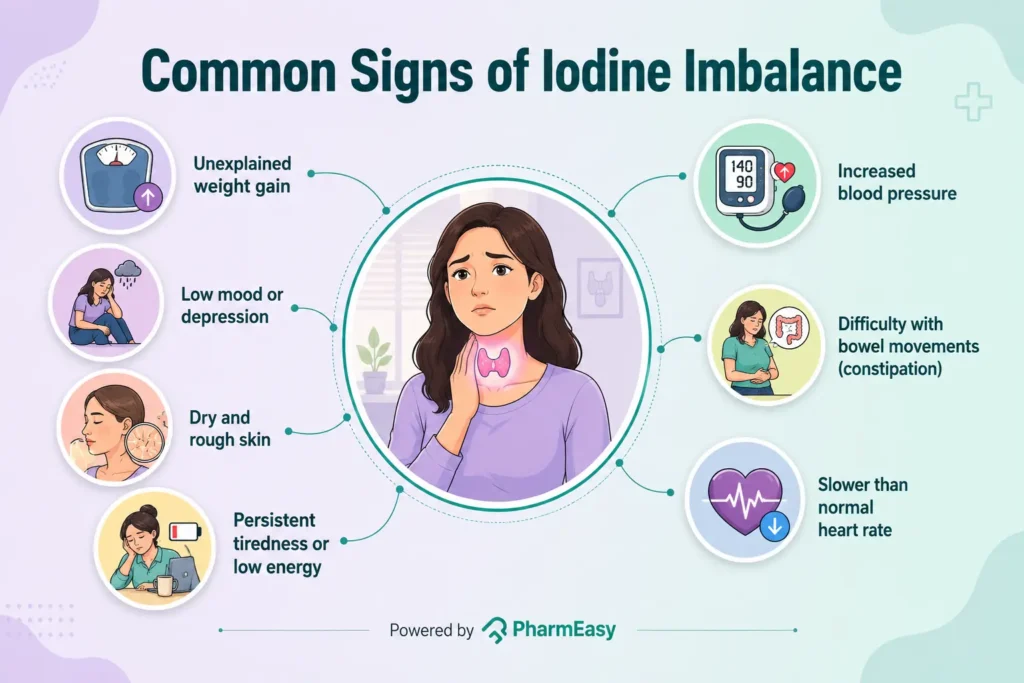
During pregnancy, low iodine levels can have serious consequences, including impaired brain development in the baby, birth defects, pregnancy loss, or still birth1,2.
The iodine content of foods can vary depending on soil quality, farming practices, and proximity to seawater. Foods grown in iodine-poor soil may naturally contain lower iodine levels and vice-versa5.
Some of the most reliable iodine-rich foods include:
Because natural intake can vary widely, iodised salt programs used in many countries help maintain adequate iodine intake1. However, balance is important, as both low and excessive iodine intake can affect health.
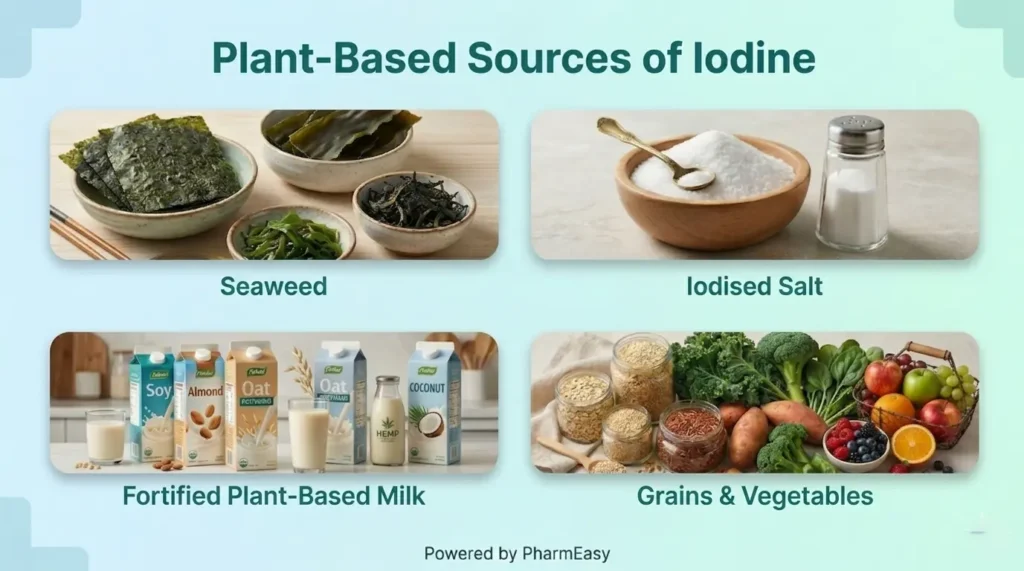
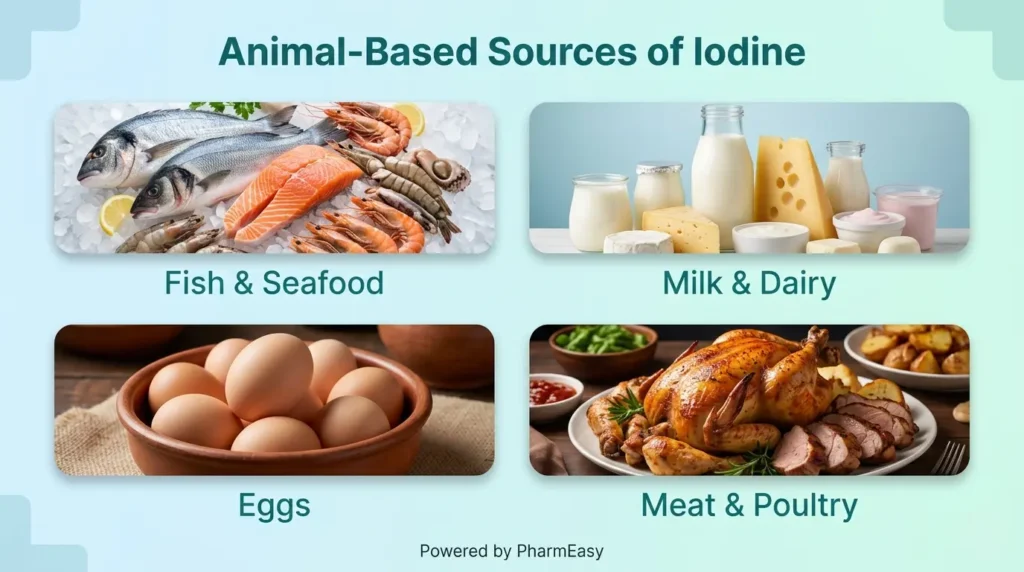
Iodine content differs significantly between plant-based and animal-based foods due to how iodine enters the food chain5. Animal foods usually provide more consistent iodine levels due to iodine in feed, water, and farming practices1. In contrast, plant foods depend mainly on soil iodine levels, which which varies by region, fertiliser use, and irrigation, making intake less predictable5.
Plant-based iodine food sources include:
Animal-based iodine sources include:
Vegan diets may have lower iodine intake since most plant foods are naturally low in iodine. So, iodised salt or fortified foods are often needed to prevent deficiency1
Iodine-rich foods such as seaweed, fish, seafood, dairy products, eggs, and iodised salt can help support thyroid function by providing the iodine needed to produce the thyroid hormones T3 and T41. These hormones help regulate metabolism, energy production, body temperature, growth, and several other body functions4.
Seaweed is one of the richest natural sources of iodine, although the iodine content may vary depending on the type. Fish and seafood also contain iodine because it is naturally present in seawater. Dairy products and eggs may contribute useful amounts of iodine to the diet, while iodised salt remains an important dietary source in many countries1,5.
Adequate iodine intake is particularly important for pregnant and breastfeeding women, as infants depend on maternal iodine supply through breast milk. Recommended intake for adults is about 150 mcg per day, increasing to around 220–250 mcg during pregnancy and 290 mcg during lactation1.
However, excessive iodine intake may also affect thyroid function in some individuals. Therefore, maintaining balanced iodine intake through iodine-rich foods is important for supporting normal thyroid function and overall health1.
Also Read: What Are Electrolytes and Why Are They So Important for Your Body?
Iodine levels in the body can be measured using different laboratory tests. Since iodine is closely linked to thyroid hormone production, doctors may evaluate both iodine status and thyroid function depending on the symptoms and clinical need. Here are some tests which can help to check iodine levels:
Therefore, Iodine levels are usually understood through these tests depending on the individual’s condition and clinical requirement6,8
To check thyroid function, you can book a thyroid test here
Also Read: Top Foods That May Help With Muscle Cramps
It is important to consult a doctor for proper evaluation and guidance, if you experience these iodine deficiency related problems:
Also Read: Creatine Rich Foods: How Your Body Uses It, Daily Needs & Food Sources
Iodine is an essential nutrient needed for proper thyroid function and overall health. Adequate intake through iodine rich foods such as seaweed, fish, seafood, dairy products, eggs, and iodised salt helps support thyroid hormone production and normal body processes. Knowing what foods are rich in iodine and choosing the right iodine food sources is important. A balanced diet along with proper medical guidance can help prevent iodine deficiency and maintain long-term health.
No fruit is a strong source of iodine. Some fruits, such as strawberries have been tried to be fortified with iodine by growing them using iodine-enriched farming methods. However, only a limited amount of iodine reaches the fruit, so the iodine content remains low and inconsistent. Therefore, fruits are not considered reliable iodine-rich foods10. Most iodine comes from seafood, dairy, eggs, and iodized salt11.
Indian foods rich in iodine mainly include seafood such as marine fish, shellfish, and crabs, which are naturally high in iodine content12. Common dietary iodine food sources also include milk, curd, eggs, and iodized salt, which help meet daily iodine needs11.
Low iodine can lead to iodine deficiency, where the body cannot make enough thyroid hormones. This may cause goitre (enlarged thyroid) and hypothyroidism. In severe cases, it can harm brain development in infants and reduce thinking ability in children and adults11.
Iodine supplements can help the thyroid when intake is low because iodine is needed to make thyroid hormones. However, too much iodine may also cause thyroid problems, so supplements should only be taken under medical guidance and not in excess1.
To increase iodine safely, doctors usually advise getting it mainly from food sources like fish (cod, tuna), shrimp, dairy products, eggs, and using iodized salt regularly. These naturally help meet daily iodine needs. In some cases, especially during pregnancy or deficiency, a doctor may recommend iodine-containing supplements, but they should be taken only under medical advice to avoid excess intake11.
1. Iodine Fact Sheet for Health Professionals. Accessed May 2, 2026. https://ods.od.nih.gov/factsheets/Iodine-HealthProfessional/
2. Iodine deficiency – symptoms, causes, treatment & prevention | healthdirect. Accessed May 2, 2026. https://www.healthdirect.gov.au/iodine-deficiency
3. Iodine – health benefits and how much you need | healthdirect. Accessed May 2, 2026. https://www.healthdirect.gov.au/iodine#why
4. Delić T, Karanović Štambuk S. Iodine in Health and Disease: A Comprehensive Review. Nutrients. 2026;18(8):1262. doi:10.3390/nu18081262 https://pubmed.ncbi.nlm.nih.gov/42075074/
5. Nedić O. Iodine: Physiological importance and food sources. eFood. 2023;4(1):e63. doi:10.1002/efd2.63 https://www.researchgate.net/publication/368468267_Iodine_Physiological_importance_and_food_sources
6. Medline Plus. Hypothyroidism. Accessed May 4, 2026. https://medlineplus.gov/hypothyroidism.html
7. Hatch-McChesney A, Lieberman HR. Iodine and Iodine Deficiency: A Comprehensive Review of a Re-Emerging Issue. Nutrients. 2022;14(17):3474. doi:10.3390/nu14173474 https://pubmed.ncbi.nlm.nih.gov/36079737/
8. Li X, Tu P, Gu S, et al. Serum Iodine as a Potential Individual Iodine Status Biomarker: A Cohort Study of Mild Iodine Deficient Pregnant Women in China. Nutrients. 2023;15(16):3555. doi:10.3390/nu15163555 https://pmc.ncbi.nlm.nih.gov/articles/PMC10460065/
9. Hypothyroidism | American Thyroid Association. Accessed May 4, 2026. https://www.thyroid.org/hypothyroidism/
10. Budke C, Thor Straten S, Mühling KH, Broll G, Daum D. Iodine biofortification of field-grown strawberries – Approaches and their limitations. Sci Hortic. 2020;269:109317. doi:10.1016/j.scienta.2020.109317 https://www.researchgate.net/publication/340929479_Iodine_biofortification_of_field-grown_strawberries_-_Approaches_and_their_limitations
11. Office of Dietary Supplements. Iodine Fact Sheet for Consumers. Accessed May 4, 2026. https://ods.od.nih.gov/factsheets/Iodine-Consumer/
12. Sreeramulu D, Rao SV. Distribution of iodine in marine foods from different regions of India. Indian J Med Res. 1992;96:168-170. https://pascal-francis.inist.fr/vibad/index.php?action=getRecordDetail&idt=4592734
Disclaimer: The information provided here is for educational/awareness purposes only and is not intended to be a substitute for medical treatment by a healthcare professional and should not be relied upon to diagnose or treat any medical condition. The reader should consult a registered medical practitioner to determine the appropriateness of the information and before consuming any medication. PharmEasy does not provide any guarantee or warranty (express or implied) regarding the accuracy, adequacy, completeness, legality, reliability or usefulness of the information; and disclaims any liability arising thereof.
Links and product recommendations in the information provided here are advertisements of third-party products available on the website. PharmEasy does not make any representation on the accuracy or suitability of such products/services. Advertisements do not influence the editorial decisions or content. The information in this blog is subject to change without notice. The authors and administrators reserve the right to modify, add, or remove content without notification. It is your responsibility to review this disclaimer regularly for any changes.


Comments

Leave your comment...
You may also like























Comments