




Is Hair Transplant Safe? Here’s What Experts Say
By Dr. Raina N. Nahar +2 more

Medically reviewed by Dr. Raina N. Nahar
Last updated: Sep 16, 2026 Published on: Feb 2, 2024


Get,

to manage your symptom
Get your,

4 Cr+ families
benefitted

OTP sent to 9988776655



You’ve successfully subscribed to receive
doctor-approved tips on
Whatsapp

Get ready to feel your best.


Register to Avail the Offer
Send OTPBy continuing, you agree with our Privacy Policy and Terms and Conditions
Hi There,
Sign up on PharmEasy now!!


Trusted by 4 crore+ families

OTP sent to 9988776655
You have unlocked 25% off on medicines


Code: NU25
Comments
Leave your comment here

By Dr. Raina N. Nahar +2 more
Table of Contents
Hair loss is a common issue. It might occur due to age, genetics, hormones, or medical treatments.1 In this article, we will discuss about hair transplants1. We will cover what you need to know about the process and also discuss about how safe it is and what to expect before, during, and after the procedure.
We will look at the two types of hair transplants available and discuss about what makes them work well. We will also list the side effects that you should be aware of, the costs involved in the procedure, and guide you on choosinge the right doctor Lastly, we will give you helpful tips for your recovery.
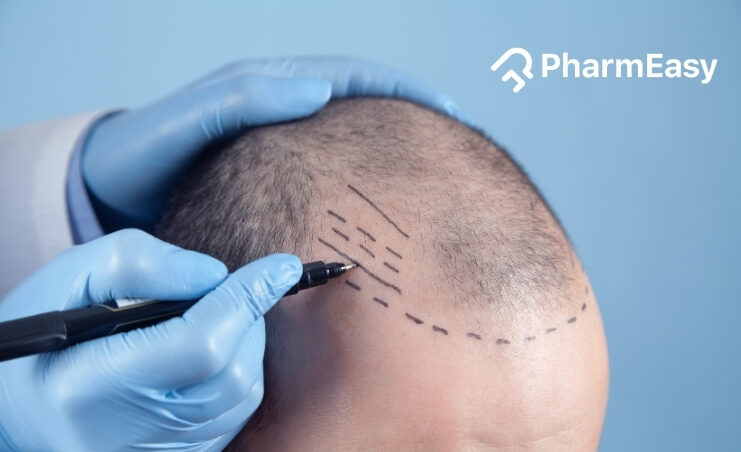
Beginning in 1900s, hair transplants have come a long way. The first hair transplant was done in Japan in 1939. Since then, techniques have become much better. Advances in technology and methods have led to higher patient satisfaction. They’ve also reduced issues and risks.
Hair transplant is a surgery, primarily done to treat areas of baldness or hair thinning. Doctors take healthy hair follicles from a spot on your head. Then they move it to the spot where your hair is thinning or gone. This is done to make your hair look fuller. And, of course, to make you look and feel better about yourself3.
The two main methods of hair transplantation are Follicular Unit Transplantation (FUT) and Follicular Unit Extraction (FUE). Each method has its pros and cons. The right choice depends on your individual needs4.
FUT is also called “strip surgery”. Doctors remove a strip of your scalp skin. Then they stitch up the spot where it was taken from. The strip of hair is divided into one or a few hair grafts for transplanting4.
FUE is a newer method. It doesn’t need a strip of your scalp. Instead, doctors take out single hair follicles from the donor site. They use a special tool for this.
Hair transplants have become increasingly popular in the past few years. Still, their success rate depends on certain factors. There are a lot of things to know that will help you set the right management.
A hair transplant’s success hinges on a few things. The surgeon’s level of expertise and the available donor hair are some examples. Also, the desired coverage area plays a crucial role. The success rate is variable with 10 to 80 percent of the new hair growing back fully in three to four months. The overall success rate may differ based on the kind of hair transplant chosen and each patient’s case.
There are some factors that can affect the end result of a hair transplant. They are as follows.
Like any surgery, hair transplants carry risks. Knowing these risks and taking necessary steps may make the transplant safer and its result potentially better.
The care after surgery has a lot to do with your hair transplant’s success. Knowing what to expect and following expert advice may help ensure a smooth and easy recovery.
The success of a hair transplant has a lot to do with the surgeon carrying it out. Therefore, it is important to research your options carefully and then make the best choice.
The cost of a hair transplant can be very different based on quite a few things. Knowing these may help you make a good choice in terms of money. Factors affecting the cost of hair transplantation.
Always discuss about all the costs involved with your clinic beforehand. This will prevent you from getting an unexpected bill later4.
Hair transplant could be a saviour for those struggling with hair and are very concerned about their aesthetics. But before you make your choice, think about the risks and benefits. Also, check out your chosen surgeon’s skills and experience.
By doing deep research and talking with professionals in the field, you may be able to make a good choice. Always get all your doubts cleared with the surgeon you choose, as it will enable you to understand more clearly whether the procedure is right for you. Keep in mind, a good hair restoration journey depends on setting realistic expectations and giving yourself plenty of time to heal and see results.
Also Read: Blood Test for Hair Loss: Who Should Get Tested, Types and Prevention
Most people feel a no pain during a hair transplant. This is because of the local anaesthetic used to numb the area being treated. Some discomfort might occur during recovery. But it should get better over time.
The choice to get a hair transplant depends on what you want, your budget, and your overall expectations. Hair transplants could be the right move for people who’ve tried other ways to regrow hair without success. Anyone who wants a more lasting solution to hair loss might consider it too.
It’s not common, but a hair transplant can fail. It’s more likely if the doctor does not have skill or practice. Other factors that might lead to failure are infection, poor graft prep, or bad-quality donor hair.
You can expect to see full results of a hair transplant between 8 to 12 months. The transplanted hair might fall out initially. But then new growth begins.
Hair transplants are seen as a lasting fix for hair loss. However, patients might still show varied responses because many factors influence the survival of the transplanted hair follicles like age of patient, quality of donor follicles, area needed to be covered, skill set of the surgeon, etc.
Disclaimer: The information provided here is for educational/awareness purposes only and is not intended to be a substitute for medical treatment by a healthcare professional and should not be relied upon to diagnose or treat any medical condition. The reader should consult a registered medical practitioner to determine the appropriateness of the information and before consuming any medication. PharmEasy does not provide any guarantee or warranty (express or implied) regarding the accuracy, adequacy, completeness, legality, reliability or usefulness of the information; and disclaims any liability arising thereof.
Links and product recommendations in the information provided here are advertisements of third-party products available on the website. PharmEasy does not make any representation on the accuracy or suitability of such products/services. Advertisements do not influence the editorial decisions or content. The information in this blog is subject to change without notice. The authors and administrators reserve the right to modify, add, or remove content without notification. It is your responsibility to review this disclaimer regularly for any changes.


Comments

Leave your comment...

View all comments(1)
You may also like
























This is a very informative and well-written article! It goes into great detail about the safety and efficacy of hair transplants, which is helpful for anyone considering the procedure.
The article mentions FUE and FUT as hair transplant techniques. Are there any other newer advancements in hair transplant technology that you might recommend exploring?”