



Sugar Detox: Benefits, Symptoms, Meal Plan & How to Detox from Sugar Safely
By Dr. Malavika Athavale +2 more

Medically reviewed by Dr. Malavika Athavale
Last updated: Oct 19, 2026 Published on: Jun 15, 2026


Get,

to manage your symptom
Get your,

4 Cr+ families
benefitted

OTP sent to 9988776655



You’ve successfully subscribed to receive
doctor-approved tips on
Whatsapp

Get ready to feel your best.


Register to Avail the Offer
Send OTPBy continuing, you agree with our Privacy Policy and Terms and Conditions
Hi There,
Sign up on PharmEasy now!!


Trusted by 4 crore+ families

OTP sent to 9988776655
You have unlocked 25% off on medicines


Code: NU25

By Dr. Malavika Athavale +2 more
Table of Contents
Many people now consume extra sugar every day without realising it because added sugar is commonly found in soft drinks, packaged snacks, flavoured yoghurts, desserts, breakfast cereals, fruit drinks, and other ultra-processed foods1. Health experts recommend limiting free sugar intake to only 5–10% of daily calories, but studies show that sugar-sweetened beverages are consumed at high levels worldwide and are linked with weight gain, obesity, type 2 diabetes, heart disease, and other long-term health problems1,2 Research also suggests that ultra-processed foods have become a major source of excess added sugar in modern diets, while intake of fresh and minimally processed foods has decreased over time1.
This article explains how to detox from sugar safely, common symptoms during the process, possible health benefits, and practical food choices that may help lower added sugar intake.
A sugar detox means reducing or avoiding added sugars and highly processed sugary foods for a certain period of time.
It mainly focuses on cutting down sugars added during food preparation or manufacturing, such as sucrose, glucose, fructose, and high-fructose corn syrup. However, it does not usually mean avoiding the natural sugars found in whole fruits, vegetables, plain dairy products, and other whole foods.
Many people try a sugar detox to reduce cravings, improve eating habits, and support their overall health, which is why recognising the signs can be helpful3,4.
Signs you may need a sugar detox include5,7:
People who suddenly reduce or stop consuming sugary foods and drinks may experience temporary withdrawal-like symptoms as the body adjusts to lower sugar intake. Studies on sugar abstinence and sugary drink cessation have reported effects on both physical and mental wellbeing, especially during the first few days. These may include8,9:
These sugar detox symptoms were most noticeable during the first 1–2 days after stopping sugary drinksv9. These effects are usually temporary and typically improve within 5–10 days as the body adapts to lower sugar intake. But if symptoms don’t go away, then it is better to consult a doctor.
When you stop or reduce sugar after a high intake, your body goes through a short adjustment phase. In the brain, sugar normally triggers dopamine, a chemical linked to pleasure and reward. With frequent high intake, the brain can become more sensitive to this cycle, so when sugar drops, you may feel cravings or low mood for a short time as dopamine signalling adjusts10.
But there are long-term gains! With lowering sugar in the diet, your blood sugar levels become more stable over time, reducing sharp spikes and crashes in energy. Studies on high-sugar diets also suggest that lowering excess sugar intake may help improve insulin sensitivity, especially when it reduces excess calorie intake overall11.
In your gut, reducing sugar slowly changes the balance of bacteria. High sugar intake is linked with harmful shifts in gut microbes and more gut irritation. When sugar is reduced, the gut environment becomes more balanced, which supports digestion and reduces inflammation over time12.
Overall, research shows that high sugar intake affects metabolism, appetite, and inflammation, so cutting down helps your body move back toward balance13.
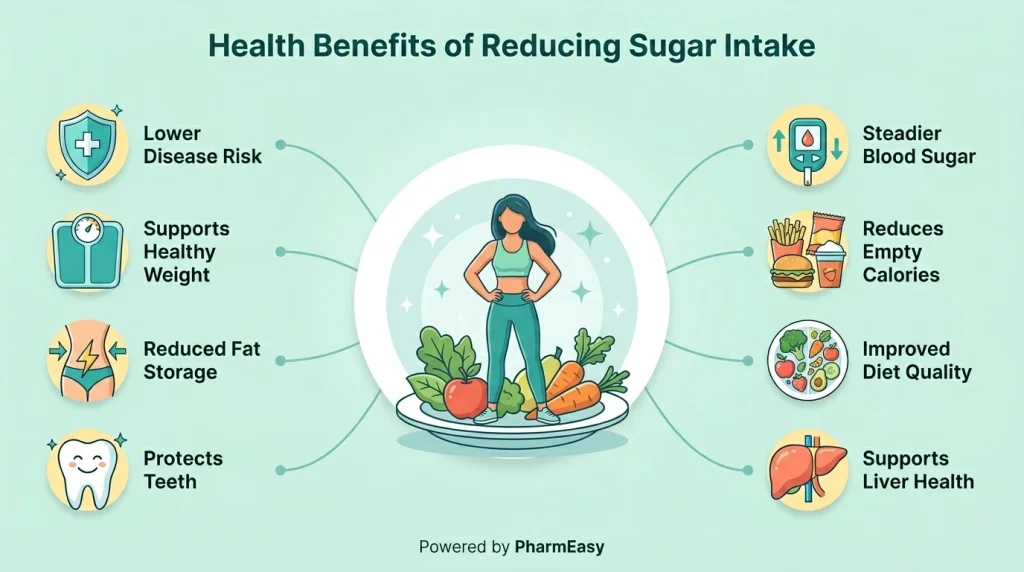
A sugar detox diet may provide several health benefits by helping with weight control, blood sugar balance, gut health, and reducing long-term disease risk over time. Here are some benefits of a sugar detox diet14,19:
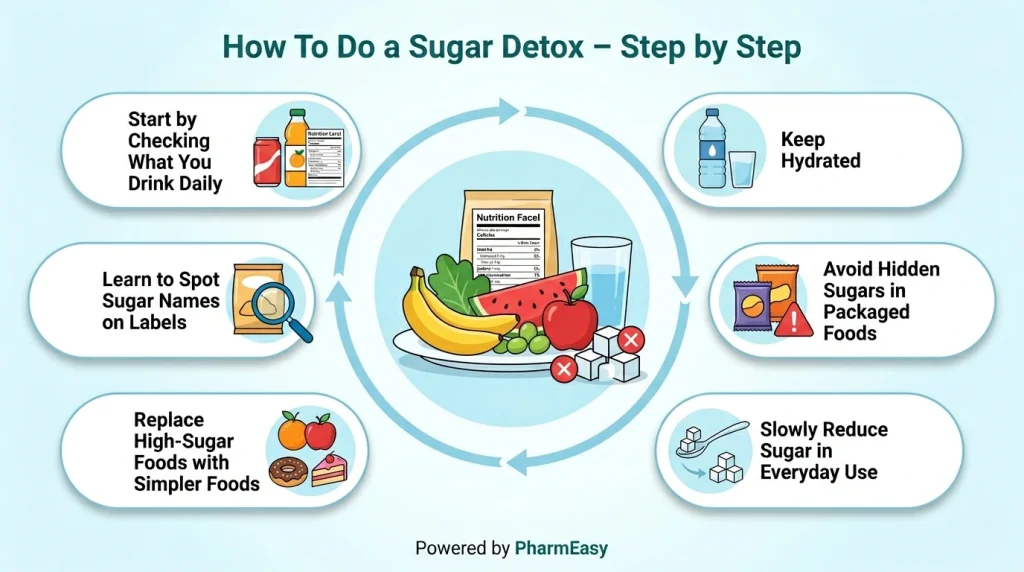
A sugar detox is done by slowly reducing added sugars in foods and drinks and making simple changes to daily eating habits. Here is a step-by-step approach for a sugar detox20,21:
Following these basic changes in your lifestyle can help you stay consistent with your plan.
When on a sugar detox, you must reduce added sugar and focus on whole foods from basic food groups like fruits, vegetables, grains, legumes, poultary, seafood, nuts, and seeds as given below22,24:
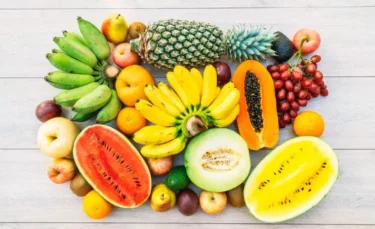
Fruits like apples, berries, and oranges provide natural sweetness along with fibre, vitamins, and antioxidants. The fibre content in these foods may help slow digestion, control blood sugar better, and keep you full.

Broccoli, cauliflower, and carrots are low in calories but rich in vitamins, minerals, and fibre, supporting balanced meals.

Spinach, kale, and other leafy greens are rich in vitamins, minerals, and fibre while being low in calories. They support overall nutrient intake and dietary balance.
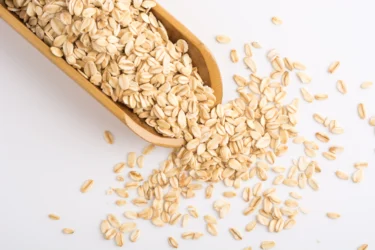
Brown rice, quinoa, and oats are whole grains which can be used instead of refined grains. They contain more fibre and nutrients, which can help keep you full for longer.

Plant-based proteins like lentils, chickpeas, and beans or animal based like eggs and chicken (non processed) help improve satiety and overall diet quality.

Foods such as avocado, fish, olive oil and nuts and seeds like almonds, walnuts, chia seeds, and flaxseeds provide healthy fats like omega-3. They are nutrient-dense and support overall health when eaten in moderation.
Avoid foods high in added sugars, sugary drinks, and highly processed products during a sugar detox, which may include the following21,25,26
This 7-day sugar detox meal plan is designed to help reduce added sugar intake while maintaining balanced, nutritious eating patterns. It is based on general dietary guidelines that emphasize whole grains, lean proteins, fruits, vegetables, and controlled portions for better energy balance and appetite control.
This is a sample plan. Adjust portions and food choices based on your preferences and any dietary requirements. The portions need to be planned as per every individual27,28,29.
| Day | Breakfast | Lunch | Dinner | Snacks |
| Day 1 | Oats + banana + nuts | Brown rice + dal + mixed vegetables | Grilled chicken/tofu + broccoli + salad | Apple + peanut butter |
| Day 2 | 2 boiled eggs/Besan chilla + fruit | Millet khichdi + curd | Paneer stir-fry + vegetables | Curd + berries |
| Day 3 | Vegetable omelette/ Chilla | Rice + sambar + greens | Chicken/soya curry + sautéed veggies | Carrot sticks + hummus |
| Day 4 | Oats + yogurt + apple | Chapati (whole wheat) + dal + salad | Fish/chicken/tofu + steamed vegetables | Banana + nuts |
| Day 5 | Poha with vegetables | Millet + vegetable curry + curd | Paneer + mixed vegetable stir-fry | Yogurt + nuts |
| Day 6 | Idli + sambar | Brown rice + rajma + salad | Egg curry/paneer curry + greens + salad | Fruit bowl |
| Day 7 | Scrambled eggs/Paneer + whole grain toast | Vegetable khichdi + curd | Grilled chicken/tofu + mixed vegetables | Apple + peanut butter |
When you follow this meal plan and reduce added sugar, your body may take some time to adjust based on this timeline:
Also Read: How to Reduce Blood Sugar Level Immediately
A sugar detox may benefit many people, but medical guidance is needed in certain situations such as:
In such cases, it is better to consult a doctor or a qualified nutrition professional before starting any restrictive diet plan.
Note: This article is for informational purposes only and does not substitute professional medical advice.
Sugar detox focuses on reducing added sugars and replacing them with whole, nutrient-dense foods to support better energy balance and overall health. The process may cause short-term adjustment symptoms, but these usually improve as the body adapts to lower sugar intake. However, it’s best to discuss with a doctor before adopting sugar detox especially if you have any medical conditions. Taking small but consistent steps in your everyday habits can make your sugar detox journey more effective and provide long term gains.
High sugar intake may show as frequent cravings, overeating, weight gain, mood changes, poor focus, low mood, frequent sugary/processed food intake, and overall high calorie consumption6,9.
There is no fixed sugar detox time because the body does not need to “remove” sugar like a toxin. Instead, it adapts when intake is reduced. Most people experience adjustment symptoms within 1–3 days, which usually ease within about a week. Over 2–4 weeks, cravings, appetite control, and energy levels gradually stabilise as the body gets used to lower added sugar intake and more balanced eating habits9.
There is no instant sugar detox, but you can reduce symptoms quickly by cutting added sugar, eating protein and fibre-rich foods, drinking plenty of water, and choosing whole fruits instead of sweets22,23.
Avoid sugary drinks, fruit punches, sweets, pastries, candies, sweetened yoghurts, flavoured milk, cereals, snack bars, jams, and fruit juice during sugar reduction. These foods are high in added sugars and refined ingredients4,20,21.
A sugar detox diet focuses on reducing or avoiding added sugars like sweets, sugary drinks, baked foods, and processed snacks. It encourages whole foods such as fruits, vegetables, whole grains, and lean proteins. In diabetes care, dietary changes should be part of a structured diabetic meal plan under professional medical or dietitian guidance. A diabetic diet controls carbohydrates and includes measured portions of grains, fruits, vegetables, proteins, and dairy to support stable blood glucose levels31.
Excess sugar affects multiple organs in the body. The liver is heavily impacted as it converts extra sugar into fat, which can lead to fatty liver. It also affects the pancreas, heart, and blood vessels, increasing risk of diabetes and heart disease32.
Yes, you can eat whole fruits during a sugar detox because the focus is on reducing free sugars, not natural sugars in whole fruits. WHO defines free sugars as added sugars and those in honey, syrups, and fruit juices, and recommends limiting them to under 10% of total energy intake23. Whole fruits are considered healthy foods that provide fibre and nutrients and are recommended in a balanced diet. Fiber keep you full for longer and helps avoid sugar spikes in the body22.
1. Ashraf R, Duncan AM, Darlington G, Buchholz AC, Haines J, Ma DWL. The degree of food processing contributes to sugar intakes in families with preschool-aged children. Clin Nutr ESPEN. 2024;59:37-47. doi:10.1016/j.clnesp.2023.11.010 https://pubmed.ncbi.nlm.nih.gov/38220399/
2. Malik VS, Hu FB. The role of sugar-sweetened beverages in the global epidemics of obesity and chronic diseases. Nat Rev Endocrinol. 2022;18(4):205-218. doi:10.1038/s41574-021-00627-6 https://pubmed.ncbi.nlm.nih.gov/35064240/
3. Gillespie KM, Kemps E, White MJ, Bartlett SE. The Impact of Free Sugar on Human Health—A Narrative Review. Nutrients. 2023;15(4):889. doi:10.3390/nu15040889 https://pubmed.ncbi.nlm.nih.gov/36839247/
4. World Health Organisation. Healthy diet. World Health Organisation. Accessed May 27, 2026. https://www.who.int/news-room/fact-sheets/detail/healthy-diet
5. World Health Organisation. sugars-factsheet. World Health Organisation. Accessed May 27, 2026. https://cdn.who.int/media/docs/librariesprovider2/euro-health-topics/obesity/sugars-factsheet.pdf?sfvrsn=d5b89d5f_3&download=true
6. Hall KD, Ayuketah A, Brychta R, et al. Ultra-Processed Diets Cause Excess Calorie Intake and Weight Gain: An Inpatient Randomized Controlled Trial of Ad Libitum Food Intake. Cell Metab. 2019;30(1):67-77.e3. doi:10.1016/j.cmet.2019.05.008 https://pubmed.ncbi.nlm.nih.gov/31105044/
7. Witek K, Wydra K, Filip M. A High-Sugar Diet Consumption, Metabolism and Health Impacts with a Focus on the Development of Substance Use Disorder: A Narrative Review. Nutrients. 2022;14(14):2940. doi:10.3390/nu14142940 https://pubmed.ncbi.nlm.nih.gov/35889898/
8. Bijker R, Henry NIN, Rodda SN. Ecological momentary assessment of symptom trajectories during sugar reduction: application of substance use disorder criteria. Appetite. 2026;223:108549. doi:10.1016/j.appet.2026.108549 https://pubmed.ncbi.nlm.nih.gov/41905576/
9. Falbe J, Thompson HR, Patel A, Madsen KA. Potentially addictive properties of sugar-sweetened beverages among adolescents. Appetite. 2019;133:130-137. doi:10.1016/j.appet.2018.10.032 https://pubmed.ncbi.nlm.nih.gov/30385262/
10. Avena NM, Rada P, Hoebel BG. Evidence for sugar addiction: Behavioral and neurochemical effects of intermittent, excessive sugar intake. Neurosci Biobehav Rev. 2008;32(1):20-39. doi:10.1016/j.neubiorev.2007.04.019 https://pubmed.ncbi.nlm.nih.gov/17617461/
11. Macdonald IA. A review of recent evidence relating to sugars, insulin resistance and diabetes. Eur J Nutr. 2016;55(S2):17-23. doi:10.1007/s00394-016-1340-8 https://pubmed.ncbi.nlm.nih.gov/27882410/
12. Satokari R. High Intake of Sugar and the Balance between Pro- and Anti-Inflammatory Gut Bacteria. Nutrients. 2020;12(5):1348. doi:10.3390/nu12051348 https://pubmed.ncbi.nlm.nih.gov/32397233/
13. Zhang Y, Walker RW, Kaplan RC, Qi Q. Added sugars, gut microbiota, and host health. Gut Microbes. 2025;17(1):2592431. doi:10.1080/19490976.2025.2592431 https://pubmed.ncbi.nlm.nih.gov/41325059/
14. World Health Organisation. Reducing free sugars intake in adults to reduce the risk of noncommunicable diseases. World Health Organisation. Accessed May 27, 2026. https://www.who.int/tools/elena/interventions/free-sugars-adults-ncds
15. Te Morenga L, Mallard S, Mann J. Dietary sugars and body weight: systematic review and meta-analyses of randomised controlled trials and cohort studies. BMJ. 2012;346(jan15 3):e7492-e7492. doi:10.1136/bmj.e7492 https://pubmed.ncbi.nlm.nih.gov/23321486/
16. Churuangsuk C, Lean MEJ, Combet E. Low and reduced carbohydrate diets: challenges and opportunities for type 2 diabetes management and prevention. Proc Nutr Soc. 2020;79(4):498-513. doi:10.1017/S0029665120000105 https://pubmed.ncbi.nlm.nih.gov/32131904/
17. World Health Organization, ed. Guideline: Sugars Intake for Adults and Children. World Health Organization; 2015. https://www.who.int/publications/i/item/9789241549028
18. Pappe CL, Peters B, Dommisch H, Woelber JP, Pivovarova-Ramich O. Effects of reducing free sugars on 24-hour glucose profiles and glycemic variability in subjects without diabetes. Front Nutr. 2023;10:1213661. doi:10.3389/fnut.2023.1213661 https://pubmed.ncbi.nlm.nih.gov/37850088/
19. Khodami B, Hatami B, Yari Z, et al. Effects of a low free sugar diet on the management of nonalcoholic fatty liver disease: a randomized clinical trial. Eur J Clin Nutr. 2022;76(7):987-994. doi:10.1038/s41430-022-01081-x https://pubmed.ncbi.nlm.nih.gov/35058605/
20. CDC. Rethink Your Drink. Healthy Weight and Growth. Accessed May 27, 2026. https://www.cdc.gov/healthy-weight-growth/rethink-your-drink/index.html
21. U.S. Department of Health and Human Services USD of A. Cut Down on Added Sugars. Office of Disease Prevention and Health Promotion (ODPHP); 2019. https://odphp.health.gov/sites/default/files/2019-10/DGA_Cut-Down-On-Added-Sugars.pdf
22. CDC. Fiber: The Carb That Helps You Manage Diabetes | Diabetes | CDC. CDC – Centers for Disease Control and Prevention. Accessed May 27, 2026. https://www.cdc.gov/diabetes/healthy-eating/fiber-helps-diabetes.html
23. National Institute on Aging. Healthy Eating As You Age: Know Your Food Groups. National Institute on Aging. Accessed May 27, 2026. https://www.nia.nih.gov/health/healthy-eating-nutrition-and-diet/healthy-eating-you-age-know-your-food-groups
24. Better Health Channel. Nuts and seeds. Accessed May 27, 2026. https://www.betterhealth.vic.gov.au/health/healthyliving/Nuts-and-seeds
25. CDC. Be Smart About Sugar. Healthy Weight and Growth. April 14, 2026. Accessed May 28, 2026. https://www.cdc.gov/healthy-weight-growth/be-sugar-smart/index.html
26. Food Safety and Standards Authority of India (FSSAI). Reduce Sugar. Eat Right India. Accessed May 28, 2026. https://eatrightindia.gov.in/reduce-sugar.jsp
27. Indian Council of Medical Research NI of N. Dietary Guidelines for Indians. ICMR-National Institute of Nutrition; 2024. https://nin.res.in/dietaryguidelines/pdfjs/locale/DGI_2024.pdf
28. CDC. Diabetes Meal Planning. Diabetes. June 5, 2024. Accessed May 28, 2026. https://www.cdc.gov/diabetes/healthy-eating/diabetes-meal-planning.html
29. CDC. Tips to Support Healthy Routines for Children and Teens. Healthy Weight and Growth. April 1, 2026. Accessed May 28, 2026. https://www.cdc.gov/healthy-weight-growth/tips-parents-caregivers/index.html
30. Oudmaijer CAJ, Komninos DSJ, Hoeijmakers JHJ, IJzermans JNM, Vermeij WP. Clinical implications of nutritional interventions reducing calories, a systematic scoping review. Clin Nutr ESPEN. 2024;63:427-439. doi:10.1016/j.clnesp.2024.06.046 https://pubmed.ncbi.nlm.nih.gov/38986906/
31. Medline Plus. Diabetic Diet. Accessed May 28, 2026. https://medlineplus.gov/diabeticdiet.html
32. Huang Y, Chen Z, Chen B, et al. Dietary sugar consumption and health: umbrella review. BMJ. 2023;381:e071609. doi:10.1136/bmj-2022-071609 https://pubmed.ncbi.nlm.nih.gov/37019448/
Disclaimer: The information provided here is for educational/awareness purposes only and is not intended to be a substitute for medical treatment by a healthcare professional and should not be relied upon to diagnose or treat any medical condition. The reader should consult a registered medical practitioner to determine the appropriateness of the information and before consuming any medication. PharmEasy does not provide any guarantee or warranty (express or implied) regarding the accuracy, adequacy, completeness, legality, reliability or usefulness of the information; and disclaims any liability arising thereof.
Links and product recommendations in the information provided here are advertisements of third-party products available on the website. PharmEasy does not make any representation on the accuracy or suitability of such products/services. Advertisements do not influence the editorial decisions or content. The information in this blog is subject to change without notice. The authors and administrators reserve the right to modify, add, or remove content without notification. It is your responsibility to review this disclaimer regularly for any changes.


Comments

Leave your comment...
You may also like
























Comments