



Brown Sugar: Uses, Benefits, Side Effects & More
By Dr. Malavika Athavale +2 more


Get,

to manage your symptom
Get your,

4 Cr+ families
benefitted

OTP sent to 9988776655



You’ve successfully subscribed to receive
doctor-approved tips on
Whatsapp

Get ready to feel your best.


Register to Avail the Offer
Send OTPBy continuing, you agree with our Privacy Policy and Terms and Conditions
Hi There,
Sign up on PharmEasy now!!


Trusted by 4 crore+ families

OTP sent to 9988776655
You have unlocked 25% off on medicines


Code: NU25

By Dr. Malavika Athavale +2 more
Table of Contents
Sugar is a major commodity all over the world, and its production continues to rise. It is estimated that during the years 2025 and 2026, the world sugar production will rise by 8.6 million tons, reaching 189.3 million tons. Particularly in India, the sugar output is estimated to surge over 25% to 35.3 million tons1.
As production increases, global consumption also increases, which is fuelled especially by the expanding food service sectors1. More importantly, since a variety of sugar types are available in the market, consumers are increasingly exposed to different forms and uses of sugar in everyday foods.
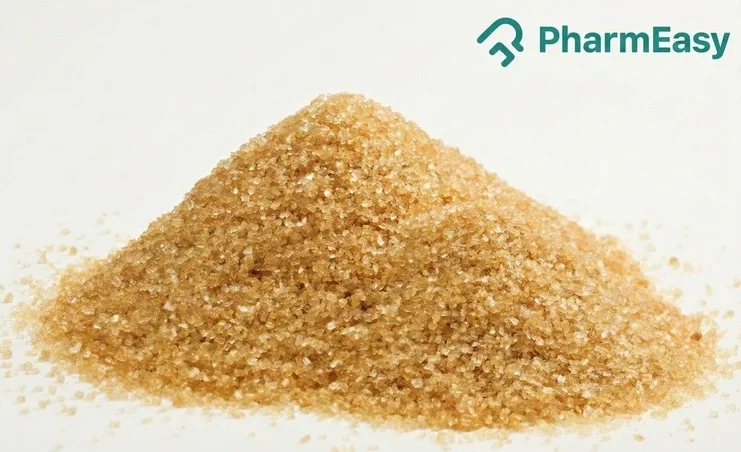
Brown sugar is one such commonly used variety. It is recognised for its characteristic brown colour, moist texture, and deeper caramel-like flavour compared to regular white sugar2,3.
Through this article, we aim to explore brown sugar uses, benefits, side effects, and key considerations while using brown sugar to support informed and balanced dietary choices.
The U.S. Department of Agriculture (USDA) defines brown sugar as a soft and moist sugar made from sugar cane (or sugar beets) that contains natural or added molasses4. Molasses is the thick and dark syrup left after sugar crystals are extracted from sugarcane (or sugar beet) juice. This molasses contributes to the moisture, colour, and distinctive taste of brown sugar4,5.
Brown sugar is generally available in two main varieties4:
The variety typically depends on the molasses content.
Note: While brown sugar contributes significantly to taste, texture, and product stability in a wide range of foods, it still falls under added sugars2. This makes it crucial for consumers to understand both its culinary value and its potential health impacts.
Brown sugar is primarily a source of carbohydrates and provides calories with no significant protein or fat. The table below describes the specific values of brown sugar nutrition6.
| Serving Size | Calories (kcal) | Water (%) | Protein (g) | Fat (g) | Carbohydrates (g)* |
| 1 tbsp (9 g) | 34 | 2 | 0 | 0 | 8 to 9 |
| 1 cup, packed (220 g) | 827 | 2 | 0 | 0 | 212 to 220 |
| 1 cup, unpacked (145 g) | 545 | 2 | 0 | 0 | 140 to 145 |
*Carbohydrates are calculated as the total weight minus water content, and in brown sugar, this is made up primarily of sucrose.
Refined white sugar is highly purified and consists of nearly 99% sucrose (table sugar). On the contrary, brown sugar typically contains around 88% to 93% sucrose along with trace quantities of other beneficial compounds that contribute to its benefits7.
Now, let us see some brown sugar benefits:

Like all sugars, brown sugar is a fast source of energy for the body7. It can offer an immediate boost, which is why it is commonly used in foods needing quick fuel.

Brown sugar contains molasses, which is traditionally known to help ease mild indigestion and support smoother digestion for some people5. While this effect is gentle and not a medical treatment, it can be an added digestive comfort for some individuals.
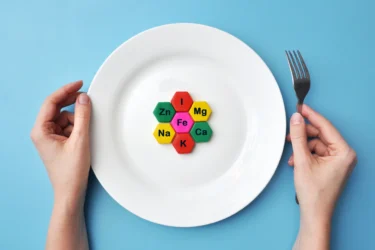
Since brown sugar processing is less intensive, some minerals such as calcium, potassium, manganese and even selenium are retained in it8,9. While the levels are small, this makes it slightly more nutritious than fully refined white sugar.
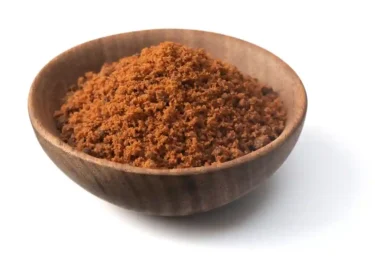
One of the clearest advantages of brown sugar is its taste. This is because it contains more molasses and natural cane components that have a deeper, caramel-like flavour and a stronger aroma10. This is why it works well in baked goods and desserts that needs a rich flavour.

Some less-refined sugars digest more slowly, meaning brown sugar may cause a slightly milder rise in blood sugar than white sugar11,12. Due to this property, it may offer slightly better support for individuals looking to manage their blood sugar levels. However, as the difference is modest, it should still be used in moderation.

Brown sugar retains small amounts of natural plant compounds (phenolics and flavonoids) that are mostly lost when sugar is fully refined11,13. This gives it mild antioxidant properties that may help reduce inflammation. While the benefit is small and research is underway, this is still a positive difference.

A large study in Japan found that people who regularly consumed brown sugar had a slightly lower rate of cancer14. While not conclusive, it suggests that its natural compounds may offer minor protective benefits.
Note: While brown sugar may offer modest additional advantages compared to refined sugar, it is still an added sugar and should be consumed with caution.
Although brown sugar contains trace minerals and phytochemicals, it still behaves like regular sugar in the body and may lead to several health concerns when consumed in excess. Some brown sugar side effects include:
Brown sugar is a versatile ingredient that adds moisture, depth, and a warm caramel-like flavour to both sweet and savoury dishes. It blends easily with spices, fruits, and marinades, which makes it suitable for a wide range of home-cooked recipes.
Here are some practical ways/recipes to use brown sugar in cooking:

Brown sugar can be paired with root vegetables like yams and sweet potatoes, helping them caramelise and develop a glossy, sweet coating.
Preparation steps:

In marinades, brown sugar helps balance the heat from spices and contributes to browning during cooking.
Preparation steps:

Brown sugar adds depth and moisture to baked fruit desserts, which helps in creating a rich, golden topping.
Preparation steps:

Brown sugar could enhance the filling with a warm, molasses-like sweetness that complements spices and sweet potatoes.
Preparation steps:

Brown sugar may enrich traditional Indian desserts like payasam by adding warmth, colour, and a deep caramel sweetness that complements milk, spices, and herbal ingredients.
Preparation steps:
Brown sugar can enhance the flavour of many dishes, but like all added sugars, it must be used wisely to avoid potential health risks. Here is what one should be aware of:
Although brown sugar itself does not directly interact with most medications, its sucrose content may influence the effectiveness of certain drugs. Thus, understanding the below mentioned interactions can help avoid unwanted effects:
Brown sugar counts as an added sugar, so intake should follow the American Heart Association (AHA) limits for total added sugars consumed per day23:
It is recommended to stay within these guidelines to help reduce the risk of obesity, type 2 diabetes, heart disease, and metabolic syndrome.
Brown sugar is a widely used sweetener valued for its flavour, rich aroma, and versatility in both traditional and modern cooking. Although it contains trace amounts of minerals, phenolic compounds, and antioxidants (especially in minimally refined forms), these brown sugar benefits are modest and do not change the fact that brown sugar is still an added sugar. Nevertheless, brown sugar can still be part of a balanced diet when consumed in moderation, chosen carefully (with attention to labelling and processing), and paired with healthy eating habits.
Both are added sugars and have almost similar calorie content6. Brown sugar may contain small amounts of minerals and antioxidants due to its molasses content. However, the differences are nutritionally minimal4,7.
No, brown sugar is usually refined white sugar with molasses added back, or partially refined cane sugar that retains some of the natural molasses2,4. Jaggery, on the other hand, is an unrefined sweetener made by boiling sugarcane juice without separating molasses24.
Brown sugar affects blood glucose almost the same way as white sugar16. Therefore, diabetic patients should limit it strictly and follow their recommended carbohydrate and sugar allowance. Remember, brown sugar is not a safer alternative for diabetic people.
Disclaimer: The information provided here is for educational/awareness purposes only and is not intended to be a substitute for medical treatment by a healthcare professional and should not be relied upon to diagnose or treat any medical condition. The reader should consult a registered medical practitioner to determine the appropriateness of the information and before consuming any medication. PharmEasy does not provide any guarantee or warranty (express or implied) regarding the accuracy, adequacy, completeness, legality, reliability or usefulness of the information; and disclaims any liability arising thereof.
Links and product recommendations in the information provided here are advertisements of third-party products available on the website. PharmEasy does not make any representation on the accuracy or suitability of such products/services. Advertisements do not influence the editorial decisions or content. The information in this blog is subject to change without notice. The authors and administrators reserve the right to modify, add, or remove content without notification. It is your responsibility to review this disclaimer regularly for any changes.


Comments

Leave your comment...
You may also like





















Comments