
Typhoid fever can leave you feeling weak and drained, but the recovery doesn’t have to be difficult. While medical treatment is essential, certain home remedies can help ease symptoms.
Typhoid is caused by a bacterial infection spread by contaminated water or food. It affects the intestinal tract and then spreads to the bloodstream. It is caused by the bacteria Salmonella typhi. Poor hygienic conditions, unsafe drinking water, and contaminated food are the usual causes of typhoid[1].
Here are 11 home remedies, from hydration tips to soothing foods, to help support your recovery along with your prescribed medications.
Friendly Reminder: The information shared here is for educational purposes only and the reader should consult a registered medical practitioner before implementing any changes to their health routine.
Complications may include

Typhoid fever may cause vomiting and diarrhoea that might lead to severe dehydration. To prevent dehydration, keep sipping on safe and healthy fluids[3]. Staying hydrated also helps in the timely elimination of waste materials and toxins from the body. A simple way to monitor hydration is to ensure your urine remains pale yellow in colour[10]. Apart from water, have fruit juices, coconut water, and soups.
ORS is the best solution to combat the dehydration caused by typhoid fever. Ensure that you have WHO-recommended ORS. You can even make it at home by mixing sugar and salt in a litre of boiled water. If you are unable to keep fluids down or notice signs of severe dehydration, such as dizziness, confusion, or reduced urination, seek medical attention immediately[6].

To combat high fever, sponging with lukewarm water can help reduce the temperature and be a supportive method in addition to fever-lowering medicines like paracetamol. You can sponge off armpits, feet, groin, and hands. Sponging on the extremities brings down the fever most effectively.
You can also soak a washcloth in water, squeeze out the excess water and place it on your forehead. Change the washcloth frequently.

Consume easy-to-digest foods[6]. Cut down on fried and spicy foods. Avoid raw salad and fruits that cannot be peeled. You should consult your doctor about the meal plan depending on your condition.
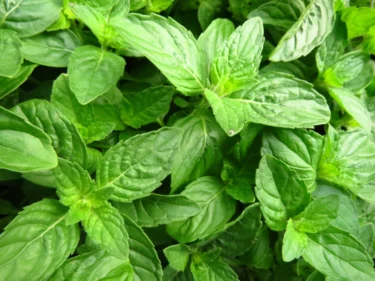
Basil is loaded with antibiotic and antimicrobial properties. Add basil to boiled water and drink three to four cups daily. Basil boosts immunity and calms the tummy[7].

The antimicrobial properties present in garlic may speed up the recovery from typhoid due to its antioxidative properties [5].

Bananas have pectin, a soluble fibre that helps the intestines absorb fluids, thus beneficial during diarrhoea. Potassium in the fruit helps in replacing the electrolytes lost through loose motions. It is one of the best things to eat when having typhoid[9].
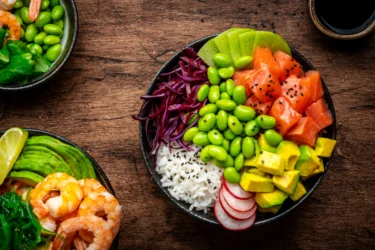
Consume small amounts of easy-to-digest food at frequent intervals.

Cloves fight against bacteria that cause typhoid. The essential oils in cloves have antibacterial properties. It also reduces nausea and vomiting caused by typhoid. Boil water with cloves, strain in a cup and have a small amount of it[7].

Pomegranates are an effective home remedy against typhoid. It helps in preventing dehydration. Have it as pomegranate juice for the ease of digestion[8].

Buttermilk is loaded with probiotics, which not only improve gut health but also help support the immune system. Additionally, it helps to break proteins down, which can aid in the recovery process after your fever has passed. This is one of the home remedies for typhoid that you should use towards the end of your fever.

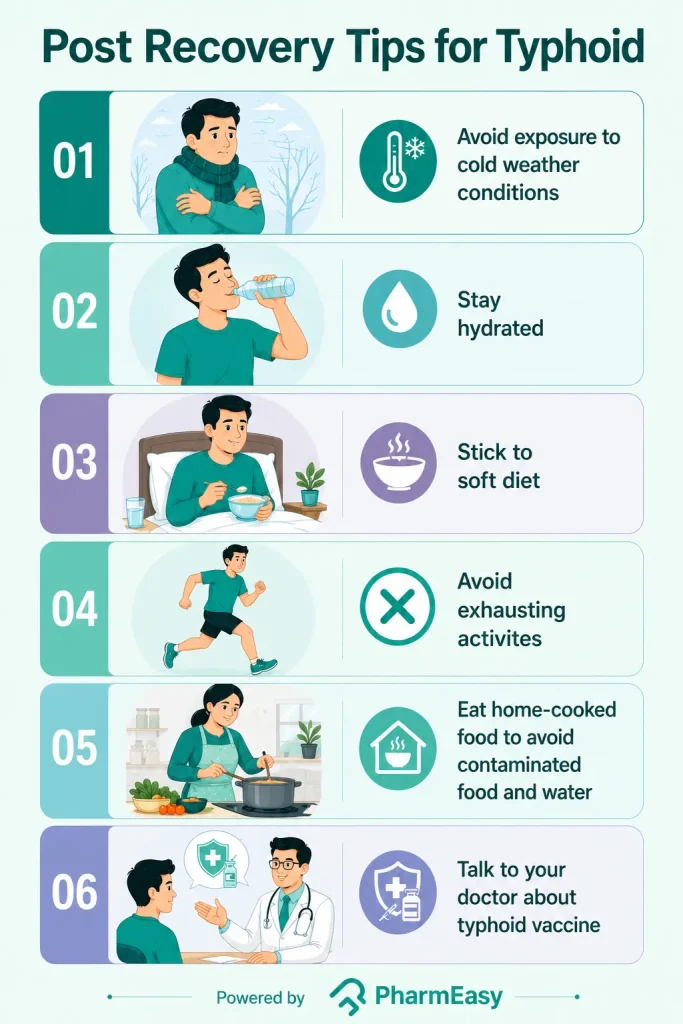
Typhoid fever is often associated with weakness and fatigue. It is vital to take adequate rest to support recovery.
Consult a doctor and use the home remedies for a speedy recovery. With proper rest, light food, clean water, and prescribed medicines, the patients usually recover well.
Note: Home remedies may help support recovery from typhoid fever by easing symptoms such as dehydration and weakness. However, they cannot cure typhoid fever or eliminate the underlying bacterial infection. Prescribed antibiotics are the primary treatment for typhoid and should never be delayed, replaced, or discontinued without medical advice
Also Read: Typhoid Vaccine: What is It, Types, When to Be Taken & Side Effects
Typhoid can affect the digestive system and reduce appetite, making it important to reintroduce foods gradually. As symptoms improve and under your doctor’s guidance, you may progress from fluids to soft foods and then to a normal diet.
| Recovery Stage | Foods to Include | Foods to Avoid |
| Stage 1: Acute Illness (High Fever, Nausea, Diarrhoea) | ORS, water, coconut water, clear soups, rice water, diluted fruit juices (without pulp) | Fried foods, spicy foods, caffeinated beverages, sugary drinks |
| Stage 2: Early Recovery (Symptoms Improving) | Soft khichdi, rice porridge (kanji), boiled potatoes, mashed bananas, curd, yoghurt, stewed apples, soft cooked vegetables | Raw vegetables, salads, high-fibre foods, processed snacks |
| Stage 3: Recovery Phase (Fever Resolved, Appetite Returning) | Soft chapati, well-cooked rice, dal, paneer, eggs (if tolerated), cooked vegetables, buttermilk | Oily foods, heavily spiced meals, fast food |
| Stage 4: Return to Normal Diet | Gradually resume a balanced diet with fruits, vegetables, whole grains, and protein-rich foods | Sudden intake of large, heavy, or oily meals |
Note: Eat small, frequent meals instead of large portions. If any food worsens abdominal discomfort, diarrhoea, or nausea, stop consuming it and consult your doctor. Recovery rates vary between individuals, and dietary progression should be guided by symptoms, nutritional needs, and the advice of a healthcare professional.
Also Read: Influenza B: What is It, Causes, Symptoms, Treatment & Prevention
Typhoid fever requires medical attention because it is caused by a bacterial infection that can lead to serious complications if left untreated. Consult a doctor if you experience:
If your doctor suspects typhoid fever, they may recommend diagnostic tests such as blood culture, stool culture, urine culture, and a typhoid test to confirm the infection and provide a guided treatment.
Hospitalisation may be necessary if:
Recovering from typhoid takes time, a lot of care, and the right approach. These simple home remedies, along with your medical treatment, can help you feel better faster. Every small effort counts, whether it’s staying hydrated, eating nutrient-rich foods, or getting enough rest. Always consult a doctor before trying new remedies.
Also Read: Home Remedies for Jaundice By Dr. Siddharth Gupta
Foods that should be avoided by someone suffering from typhoid fever are raw vegetables like broccoli, cauliflower, cabbage, dry fruits, raw berries, pineapple, nuts like almonds, pistachios, walnuts and seeds like pumpkin seeds, flax seeds, and chia seeds.
In order to prevent typhoid fever, you must drink clean water, keep your surroundings clean and practise good hygiene, like washing your hands frequently[1], using alcohol-based sanitisers, avoiding drinking untreated water, cleaning raw fruits and vegetables[1], eating hot foods and getting vaccinated.
With proper treatment, the symptoms of typhoid fever should improve within 3-5 days, but recovery can take around 1-2 weeks. The course of prescribed medicines should not be discontinued in between. If typhoid fever isn’t treated, it can get worse, and there is a significant risk of life-threatening complications.
Disclaimer: The information provided here is for educational/awareness purposes only and is not intended to be a substitute for medical treatment by a healthcare professional and should not be relied upon to diagnose or treat any medical condition. The reader should consult a registered medical practitioner to determine the appropriateness of the information and before consuming any medication. PharmEasy does not provide any guarantee or warranty (express or implied) regarding the accuracy, adequacy, completeness, legality, reliability or usefulness of the information; and disclaims any liability arising thereof.
 491
491  -4
-4Typhoid is a bacterial infection caused by Salmonella typhi, a bacterium. It is typically characterised by high fever, nausea, vomiting, and, in some cases, diarrhoea. The disease is primarily transmitted through the consumption of food or water contaminated with faecal matter, making it more common in areas with inadequate sanitation and limited access to clean drinking water. If left untreated, typhoid can be fatal. However, with timely diagnosis and appropriate antibiotic treatment, most individuals make a full recovery. Improving hygiene and sanitation practices is key to preventing the spread of this potentially life-threatening illness..
Other serious complications include1:
Common and more specific complications of typhoid include1:
In many cases, individuals may carry Salmonella typhi without showing any noticeable symptoms, a condition known as being an asymptomatic carrier. These carriers can unknowingly contribute to the spread of the infection. Once symptoms become evident, such as persistent fever and gastrointestinal discomfort, a course of antibiotics is typically prescribed to manage the infection and help recovery2.
An asymptomatic carrier is a person who carries the Salmonella Typhi bacteria in their body but does not feel unwell or show any symptoms of typhoid. Despite appearing perfectly healthy, they can still pass the infection to others7.
After recovering from typhoid, some people may continue to carry r the bacteria, often in the gallbladder, for weeks, months, or in some cases, much longer. These individuals may not realise they are still carrying the bacteria, as they no longer feel sick.
The concern with carriers is that they can unknowingly spread the infection, particularly if they handle or prepare food without strict hand hygiene. This is why good handwashing and food-safety practices remain important even after recovery.
A well-known historical example is that of “Typhoid Mary,” a cook in the early twentieth century who was a healthy carrier of the bacteria. Although she showed no symptoms herself, she was linked to spreading typhoid to many people through the food she prepared. Her story is often used as an educational example to explain how carriers can transmit infection while feeling completely well.
If a carrier state is suspected, a doctor can advise on appropriate testing and management.
While many people recover fully with prompt treatment, untreated or severe typhoid can sometimes lead to serious complications. Understanding these in simple terms can help explain why early medical care is so important8.
This is one of the most serious complications. As the infection progresses, it can weaken the wall of the intestine, and in severe cases, a hole may form. This is known as intestinal perforation. It is a medical emergency, as it can allow the intestinal contents to leak into the abdomen, and it usually requires urgent treatment.
The infection can also damage the lining of the intestine, leading to bleeding. This may show up as blood in the stool and can sometimes be significant, requiring close medical monitoring.
It is important to understand that these complications are generally more likely in cases that are untreated, diagnosed late, or particularly severe. They are not an inevitable part of typhoid.
The reassuring message is that prompt medical treatment, including timely diagnosis and appropriate treatment, greatly reduces the risk of these complications. This is why anyone with persistent high fever and gastrointestinal symptoms should seek medical advice rather than waiting.
Diagnosing typhoid accurately is important, as its symptoms can resemble those of other illnesses such as malaria or dengue. Doctors may use one or more tests to confirm the infection. Below is a simple comparison of the three commonly discussed tests.
| Test | What It Detects | Key Advantage | Key Limitation |
| Blood Culture | Salmonella typhi bacteria | Most accurate (gold standard) | Takes a few days; affected by prior antibiotics |
| Widal Test | Antibodies | Quick and affordable | Less reliable alone |
| Typhidot Test | IgM/IgG antibodies | Faster, useful early | Needs clinical correlation |
It is worth noting that blood culture is generally considered the gold standard for confirming typhoid fever. Your doctor will decide which test is most suitable based on your symptoms and how long you have been unwell.
In addition to antibiotic treatment, individuals diagnosed with typhoid are often advised to stay well-hydrated by consuming clean, preferably boiled water, and to practise strict food hygiene, such as thoroughly washing fruits and vegetables before consumption2.
During pregnancy, typhoid can lead to serious complications, including miscarriage, premature labour, intrauterine growth restriction (IUGR), and even faetal loss, largely due to systemic infection and high maternal fever3. Vaccination offers a significant degree of protection and is especially recommended for those living in or travelling to areas where typhoid is endemic. However, as no vaccine provides complete immunity, it must be complemented by good sanitation and hygiene practices to effectively prevent infection and limit its spread4.
If an individual has not been exposed to the Salmonella typhi bacterium, typhoid vaccination is often recommended as a preventive measure. Doctors may prescribe the vaccine to those who are carriers of the disease, individuals in close contact with typhoid patients, or persons planning to travel to regions where typhoid fever is prevalent. The vaccine is available in two forms: an oral capsule (Ty21a) or a single-dose injection (Vi polysaccharide). However, the vaccine is preventive rather than therapeutic, meaning it does not treat active infections and is ineffective once illness has begun. It is also not suitable for very young children. The polysaccharide vaccine is approved for children aged two years and above, while the oral Ty21a vaccine is approved for those aged six years and older. In rare cases, the vaccine may cause mild side effects, including gastrointestinal discomfort, headache, or nausea, and should therefore be administered under medical supervision2.
Typhoid fever is an illness you get from S. Typhi bacterium. It causes a high fever, flu-like symptoms, and diarrhoea. You can be contagious with typhoid even if you don’t feel sick. Typhoid can be life-threatening and is usually treated promptly with antibiotics.
Dr. M.G. Kartheeka, MBBS, MD(Pediatrics)
Two main types of typhoid vaccine are commonly available4. The table below offers a reader-friendly summary to help you understand the differences.
| Feature | Injectable Vi Polysaccharide Vaccine | Oral Ty21a Vaccine |
| Eligible age group | Generally approved for those aged 2 years and above | Generally approved for those aged 6 years and above |
| Number of doses | A single injection | A course of capsules taken on alternate days, as advised |
| Booster recommendation | A booster is typically advised every few years for those at continued risk | A booster course may be advised after a few years for those at continued risk |
| Key considerations | Suitable for a wider age range, including younger children | Not suitable for very young children or may not be recommended to those with weakened immune systems; must be taken correctly to be effective |
Both vaccines are preventive rather than therapeutic, meaning they help reduce the risk of getting typhoid but do not treat an active infection. It is also important to remember that no vaccine offers complete protection, so vaccination should always be combined with safe food, clean water, and good hygiene practices.
The most suitable vaccine, along with the exact schedule of any booster doses, should be decided by a doctor based on the individual’s age, health status, and risk of exposure, such as travel to areas where typhoid is common. Always consult a healthcare professional before vaccination.
To reduce the risk of contracting Salmonella typhi, it is advisable to follow these preventive practices, especially when travelling to or living in areas where typhoid is common5:
Also Read: Malaria: Types, Symptoms, Causes and Treatment
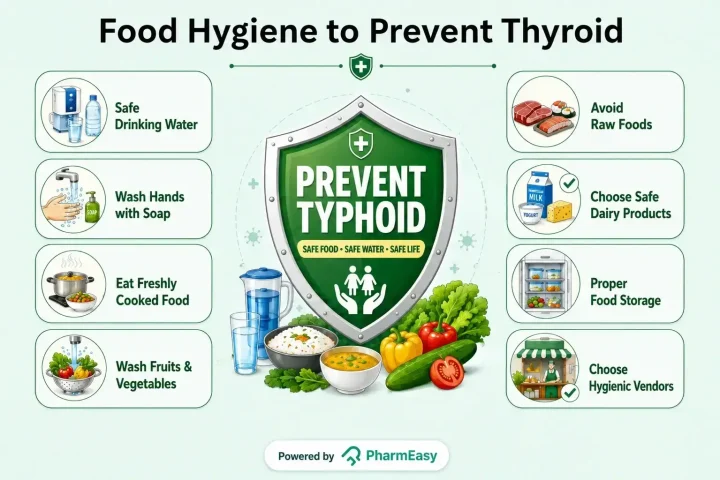
Since typhoid spreads mainly through contaminated food and water, following safe food-hygiene habits is one of the most effective ways to protect yourself and your family. Use this simple checklist as a handy guide.
Following these simple steps consistently can significantly lower your risk of typhoid and other food- and water-borne infections.
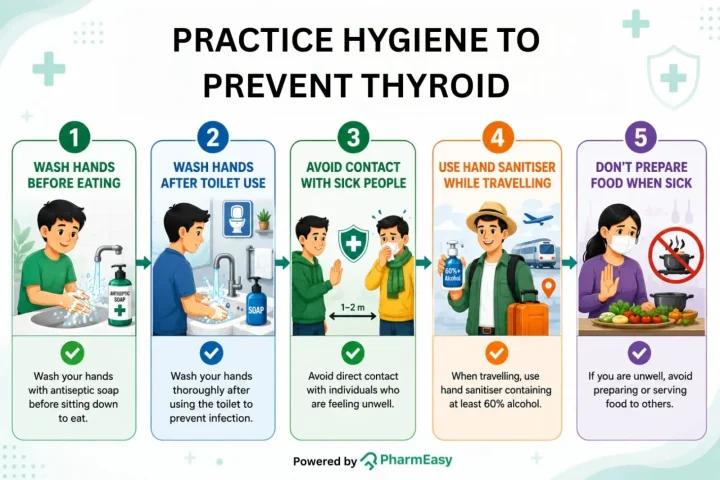
To minimise the risk of contracting or spreading typhoid, it is important to follow these essential personal hygiene practices6:
Also Read: Jaundice: Symptoms, Treatment, Causes and Types
Typhoid is a serious but preventable bacterial infection that spreads through contaminated food and water. Maintaining good hygiene, following safe food and water practices, and considering vaccination where appropriate are key to prevention. With prompt medical attention and responsible habits, the risks associated with typhoid can be significantly reduced.
Also Read: Typhoid Vaccine: What is It, Types, When to Be Taken & Side Effects
Disclaimer: The information provided here is for educational/awareness purposes only and is not intended to be a substitute for medical treatment by a healthcare professional and should not be relied upon to diagnose or treat any medical condition. The reader should consult a registered medical practitioner to determine the appropriateness of the information and before consuming any medication. PharmEasy does not provide any guarantee or warranty (express or implied) regarding the accuracy, adequacy, completeness, legality, reliability or usefulness of the information; and disclaims any liability arising thereof.
51
18


