




Best Guide to Breast Pumping For New Mothers
By Dr. Charmi Shah +2 more

Medically reviewed by Dr. Charmi Shah
Last updated: Mar 2, 2026 Published on: Mar 31, 2022


Get,

to manage your symptom
Get your,

4 Cr+ families
benefitted

OTP sent to 9988776655



You’ve successfully subscribed to receive
doctor-approved tips on
Whatsapp

Get ready to feel your best.


Register to Avail the Offer
Send OTPBy continuing, you agree with our Privacy Policy and Terms and Conditions
Hi There,
Sign up on PharmEasy now!!


Trusted by 4 crore+ families

OTP sent to 9988776655
You have unlocked 25% off on medicines


Code: NU25

By Dr. Charmi Shah +2 more
Table of Contents
Being a mother is a blissful experience, but new mom challenges like finding the right kind of breast pump can be daunting. Before choosing any type of breast pump, you should consider whether your milk supply is well established, how rarely or often you are away from the baby and how many hours in a day.
If you are a new inexperienced mother unsure if you need an electric breast pump, a lightweight pump or a double pump, don’t worry. We have you covered. In this blog, we look at how to use breast pumps, various kinds of breast pumps and their benefits to help you decide which type of breast pump is best for you.
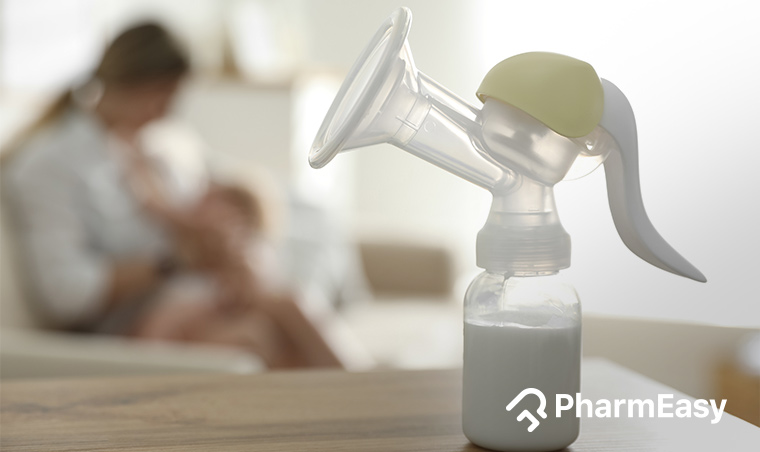
Breast pumps allow mothers to stimulate breast milk production and store it in a container by pumping their breasts with a manual or electric pumping device1. A typical pumping session lasts 10 to 15 minutes a breast2.
All breast pumps come with breast shields, which are cone-shaped cups that fit over your breasts and nipples3. Larger or replacement shields are often available with manufacturers if the standard breast shield is too small. Maintenance parts of a breast pump like tubing and duck valves also need timely replacement.
Selecting the correct flange size is essential to prevent nipple pain, ensure thorough breast drainage, and maintain an optimal milk supply4.
It is important to store breast milk appropriately after expression. Freshly expressed or pumped milk can be stored: At room temperature (77°F or colder) for up to 4 hours. In the refrigerator for up to 4 days. In the freezer for about 6 months is best; up to 12 months is acceptable.
Dr. M.G. Kartheeka, MBBS, MD
Breastfeeding mothers like using breast pumps for their ease of use and accessibility, efficiency, ease of cleaning, and affordability. But breast pumps are a motherhood necessity for several other reasons, such as:
Depending on which type of breast pump and how many rounds you make to express breast milk, pumping can take about 10 to 20 minutes. Since the body produces more prolactin at night, milk supply tends to be at its highest during this time7, but you can use a breast pump at any time of the day. Here’s how you can use a battery-based or electric breast pump.
Never store breast milk in disposable bottle liners or plastic bags that are not intended for storing breast milk, instead always prefer to use breast milk storage bags or clean, food-grade containers to store expressed breast milk.
Dr. Ashish Bajaj – M.B.B.S, M.D.
While searching for the best breast pumps for new mothers, you might come across terms like closed-system pump, open-system pump or overflow protection. To help you understand, here’s what these terms stand for:
This comes with a barrier that prevents milk from getting into the machine, that is, the overflow protection feature9. These hospital-grade breast pumps are most hygienic, but their tubes and small pieces can be difficult to sterilize. Closed systems are suitable for multiple users (like in NICU)10.
These don’t have any barriers and let you transfer milk flows through the tubes and other parts into the bottle. Since the milk can come in contact with the pumping mechanism, it can be less hygienic. Open systems are strictly for single-user use as they cannot be fully sterilized9,10.
When shopping for a breast pump, you should consider certain factors, including your pumping frequency, whether you use the pump outdoors or indoors, the noise level, weight and replacement parts of the pump and the cost.
You can find any of these breast pumps at the nearest drugstore, department store, maternity store and online retailers selling maternity products.
Freshly expressed or pumped milk can be stored: At room temperature (77°F or colder) for up to 4 hours, in the refrigerator for up to 4 days, in the freezer for about 6 months is best; up to 12 months is acceptable.
Dr. Ashish Bajaj – M.B.B.S, M.D.
Your choice will depend upon the duration and frequency of your time away from the baby, whether your milk is already established or not and if there is any medical necessity like preterm birth etc.
A single-breast manual pump will usually suffice if you are away from your baby only occasionally and for a few hours. But if you’re joining work full time and might not be available for breastfeeding throughout the day, an electric double-breast pump is quick and efficient. If you choose to pump both breasts simultaneously, make sure the breast pump comes with two breast shields11. You can also try a hands-free breast pump that fits inside your bra, allowing you to pump discreetly or at work.
For infants in the NICU or those born preterm, hospital-grade electric pumps are the preferred choice to effectively establish and sustain milk supply12.
It is best to buy the pump until after your baby is born, as you’ll know better about your milk production and pumping needs. But if in case of high-risk pregnancy or expected NICU admission cases, breast pump can be purchased beforehand. Lastly, it is important to store the expressed milk safely in a refrigerator in an airtight hygienic container.
Note: If you experience ongoing nipple pain, a sudden drop in milk supply, or frequent clogged ducts and mastitis, it is important to seek professional help. You should also consult a lactation specialist or doctor if you notice persistent blood in your milk. Getting expert advice early can help you resolve these issues quickly and keep your breastfeeding journey on track.
Also Read: Can You Increase Your Breast Size Naturally? Here’s What Doctors Want You To Know
Choosing the right breast pump depends on your unique lifestyle, whether you need a portable manual option for occasional use or electric pump for returning to work. By prioritizing a proper flange fit and following safe storage guidelines, you can successfully maintain your milk supply while ensuring your baby receives vital nutrition. Ultimately, having the right tools and knowledge empowers you to navigate the challenges of new motherhood with greater confidence and flexibility.
Disclaimer: The information provided here is for educational/awareness purposes only and is not intended to be a substitute for medical treatment by a healthcare professional and should not be relied upon to diagnose or treat any medical condition. The reader should consult a registered medical practitioner to determine the appropriateness of the information before consuming any medication. PharmEasy does not provide any guarantee or warranty (express or implied) regarding the accuracy, adequacy, completeness, legality, reliability, or usefulness of the information; and disclaims any liability arising thereof.
Links and product recommendations in the information provided here are advertisements of third-party products available on the website. PharmEasy does not make any representation of the accuracy or suitability of such products/services. Advertisements do not influence the editorial decisions or content. The information in this blog is subject to change without notice. The authors and administrators reserve the right to modify, add, or remove content without notification. It is your responsibility to review this disclaimer regularly for any changes.
 2
2  1
1Comments

Leave your comment...
You may also like

























Comments