




Turkey Tail Mushroom: Benefits, Uses, Side Effects & More!
By Dr. Malavika Athavale +2 more

Medically reviewed by Dr. Malavika Athavale
Last updated: Mar 17, 2026 Published on: Dec 14, 2023


Get,

to manage your symptom
Get your,

4 Cr+ families
benefitted

OTP sent to 9988776655



You’ve successfully subscribed to receive
doctor-approved tips on
Whatsapp

Get ready to feel your best.


Register to Avail the Offer
Send OTPBy continuing, you agree with our Privacy Policy and Terms and Conditions
Hi There,
Sign up on PharmEasy now!!


Trusted by 4 crore+ families

OTP sent to 9988776655
You have unlocked 25% off on medicines


Code: NU25

By Dr. Malavika Athavale +2 more
Table of Contents
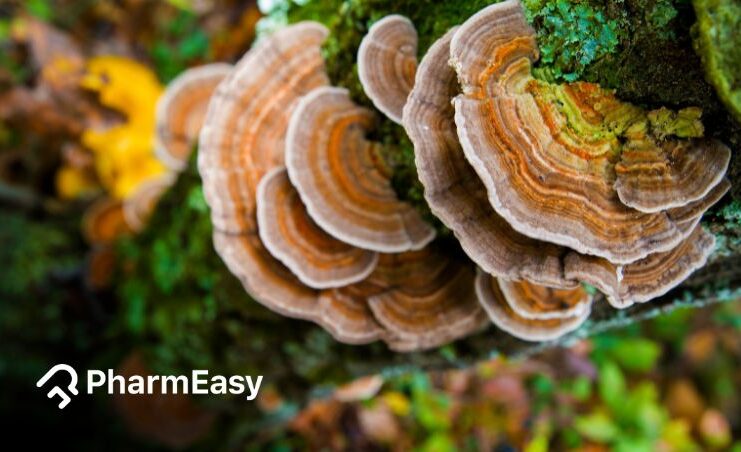
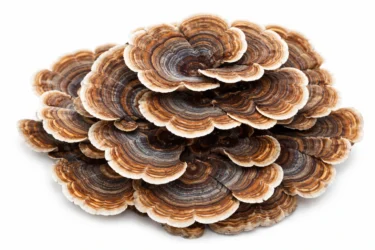
Turkey tail mushrooms have been used for centuries as a traditional medicine. These mushrooms resemble a well-spread show of a turkey’s tail feathers. They have colours like brown, tan, and grey. You can find these mushrooms on fallen logs and tree trunks in many wooded areas throughout Asia, Europe, and North America1.
People everywhere have been using these healing fungi to manage health issues. In China, they call it “Yun Zhi”. They’re well known for helping with breathing problems. In Japan, they’re known as “Kawaratake”. Here, their role in boosting the immune system is well regarded1. In India also, these mushrooms have become popular for their medicinal properties.
In this blog, we’ll discuss the nutrient profile, the research-backed immune support benefits, other potential health benefits and the possible side effects of consuming this mushroom.
Turkey tail mushrooms are packed with antioxidants. These are powerful substances that battle free radicals and oxidative stress. Thus, they help reduce inflammation and support immunity in the body. Phenols and flavonoids1,2 along with other important ones known as quercetin and baicalein, are the main antioxidants present in turkey tail mushrooms.
Turkey tail mushrooms also offer polysaccharides, a type of carbohydrate bound to proteins. These include Polysaccharide Krestin (PSK), Polysaccharide Peptide (PSP), and others that are proposed to play an important role in supporting immunity in the body1. They may potentially be able to do this by managing certain types of immune cells and keeping inflammation down.
Our bodies can’t make essential fatty acids that’s why we need to get them from the food we eat, and turkey tail mushrooms are a great source1.
These mushrooms are also a powerhouse of needed minerals for healthy body functions. They contain important nutrients like potassium, calcium, and magnesium.
Studies have shown that Turkey tail mushroom has the potential to enhance gut health by encouraging the development of good bacteria that aid digestion. Gut microbiota balance and health are associated with better immune function, fewer gastrointestinal illnesses and diseases, and better digestive health. Occasionally enjoying meals containing Turkey tail mushroom should be typically safe.
Dr. Rajeev Singh, BAMS
Turkey tail mushrooms are possibly great for immunity due to their load of phenol and flavonoid antioxidants. These may aid the immune system by lessening inflammation and prompting the release of protective compounds1,3. What’s more, studies indicate that a specific antioxidant called quercetin may spike the making of proteins that protect immunity while reducing pro-inflammatory enzymes from releasing, and turkey tail mushroom is full of this3.

Some polysaccharopeptides found in turkey tail mushrooms are provide vital immune regulating properties. Polysaccharide-K (PSK) present in this mushroom supports immunity by helping activate immune cells that combat infections and disease. Another useful polysaccharopeptide, Polysaccharide-PZ (PSP), found in turkey tail mushrooms is shown to support our body’s defence system by stimulating monocytes, a type of white blood cell that help fight infection3.
Researchers have found that Turkey tail may improve endurance and combat fatigue to improve sports performance. Turkey tail extract was found to improve strength and endurance in a study that used mice. Additionally, the extract decreased the physical exhaustion and their blood sugar levels both before and after activity. I recommend you consult your doctor before consuming excess of Turkey tail mushroom for these benefits.
Dr. Siddharth Gupta, B.A.M.S, M.D (Ayu)



Turkey tail mushroom extracts given along with cancer therapy may help manage side effects associated with chemotherapy in cancer patients. These might include nausea, vomiting, and loss of appetite6.

Turkey tail mushroom extracts may also enhance the overall quality of life for patients going through cancer treatment. Research looking at the use of these mushroom extracts alongside cancer treatments saw a clear trend towards an uptick in patient satisfaction, overall health, and well-being6.

Turkey tail mushroom extracts are known to have broad spectrum antibacterial action and antifungal action. Their immune boosting property helps activate immune cells and chemical mediators providing potential activity against microbes such Staphylococcus aureus, Fusarium langsethiae, Escherichia coli, Pseudomonas aeruginosa, Candida albicans etc. Moreover, they may also have antiviral properties and help fight against infections like herpes simplex virus (HSV) and human papillomavirus (HPV). Therefore, turkey tail may reduce the risk of infections caused by these microbes3.

They have properties that may support heart health by lessening inflammation and lowering cholesterol levels1,3. Plus, they improve blood flow too. Studies suggest that these mushrooms are supposed to have the power to raise good HDL cholesterol levels while lowering bad LDL. This reduces the risk of heart issues.

Some early research indicates that turkey tail mushrooms may be good for athletic performance. According to mice studies, turkey tail extract boosted exercise endurance, cut down on fatigue signals, and managed blood sugar levels during rest and after exercising7.
Although studies have shown beneficial health properties in turkey tail mushrooms, more large-scale human research is needed to confirm these findings. Thus, it’s ideal to consult a health care expert before adding these to your routine diet.
Generally, turkey tail mushroom is safe to eat but causes few side effects. Yet, if you’re allergic to mushrooms or mould, it’s best to skip them3. Also, if you’re pregnant or are breastfeeding, it’s better to get advice from your healthcare providers before trying turkey tail mushrooms or supplements.
While generally safe, some potential side effects that might come up if you eat turkey tail mushrooms or supplements are as follows.
Even though turkey tail mushrooms are quite beneficial, you should always take caution about possible interactions with medications you’re using. These are described below.
Before you add turkey tail mushrooms or supplements to your day-to-day routine, always consult with your healthcare provider.
You can eat whole dried mushrooms or use the more concentrated extracts, powders, or capsules1,3,4. These potent forms might provide a strong dose of the mushroom’s helpful compounds and are simply easier to add to your daily routine.
Without firm guidelines, most makers suggest starting with 1-3 grams each day. Just make sure to follow the dosage instructions on the product and talk to a healthcare professional before starting.
Make sure the product is made from organic, 100% fruiting bodies. These hold the most beneficial compounds. Also, check if the product has been third-party tested by a reliable organisation or Consumer Lab.
You can just slice up the dried mushrooms and add them into stews, stir-fry dishes, or casseroles.
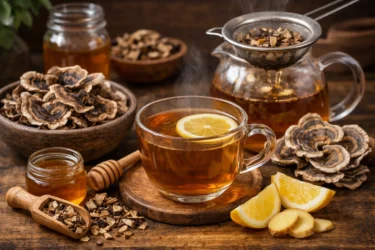
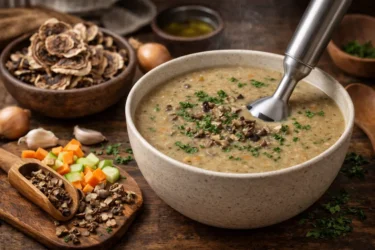
Even Turkey tail mushroom powder can be mixed into smoothies, sauces, and other recipes for a nutrient lift. Turkey tail mushrooms can also be consumed by making tea or soups3. Here, are two simple recipes
Turkey tail mushrooms are nature’s gift. They are supposed to be health boosters that have been chosen for centuries for different conditions. Packed with antioxidants, polysaccharides, and fatty acids, these mushrooms may support immunity, aid gut health, and even play a role in cancer protection. The options are endless to include turkey tail mushrooms in your diet, making the potential benefits of these mushrooms easy to access. But moderation in consumption is important to avoid side effects and also to consult a healthcare provider before adding them into your day-to-day routine.
Also Read: Mushroom (Khumbi): Uses, Benefits, Side effects By Dr. Smita Barode
Turkey tail mushroom is often safe for most people. But if you’re allergic to mushrooms or mouldy items, let it pass. Always ask your healthcare provider before eating turkey tail mushroom or using its supplements if you’re expecting, nursing, or have an ongoing health issue.
A real turkey tail mushroom is fan-shaped and has varying coloured bands like the tail of a turkey. Colours seen include tan, brown, and grey. Be extra sure it’s not another type of fungus that looks similar.
Most makers suggest starting with a daily dose of 1-3 grams of turkey tail extract. But it’s always best to consult your healthcare provider for custom dosage advice fit for your needs and health status.
Before you start using turkey tail mushrooms or supplements, always first discuss it with your healthcare provider. This is because there might be likely interactions with specific drugs, especially diabetes and anticancer medications.
Disclaimer: The information provided here is for educational/awareness purposes only and is not intended to be a substitute for medical treatment by a healthcare professional and should not be relied upon to diagnose or treat any medical condition. The reader should consult a registered medical practitioner to determine the appropriateness of the information and before consuming any medication. PharmEasy does not provide any guarantee or warranty (express or implied) regarding the accuracy, adequacy, completeness, legality, reliability or usefulness of the information; and disclaims any liability arising thereof.
Links and product recommendations in the information provided here are advertisements of third-party products available on the website. PharmEasy does not make any representation on the accuracy or suitability of such products/services. Advertisements do not influence the editorial decisions or content. The information in this blog is subject to change without notice. The authors and administrators reserve the right to modify, add, or remove content without notification. It is your responsibility to review this disclaimer regularly for any changes.
 1
1 
Comments

Leave your comment...
You may also like



















Comments