




Dust Allergy: Symptoms, Causes, Treatment & Prevention Tips
By Dr. Vishesh Bharucha +2 more

Medically reviewed by Dr. Vishesh Bharucha
Last updated: Aug 20, 2026 Published on: May 5, 2026


Get,

to manage your symptom
Get your,

4 Cr+ families
benefitted

OTP sent to 9988776655



You’ve successfully subscribed to receive
doctor-approved tips on
Whatsapp

Get ready to feel your best.


Register to Avail the Offer
Send OTPBy continuing, you agree with our Privacy Policy and Terms and Conditions
Hi There,
Sign up on PharmEasy now!!


Trusted by 4 crore+ families

OTP sent to 9988776655
You have unlocked 25% off on medicines


Code: NU25

By Dr. Vishesh Bharucha +2 more
Table of Contents
Allergy to dust is a very common allergic condition that affects people of all ages, particularly in indoor environments where dust tends to accumulate1.
Dust is a complex mixture of tiny particles that may include dust mites, pollen, mould spores, pet dander, and fibres from fabrics2. Among these, dust mites (their body parts and faeces) are one of the most common triggers of allergic responses. Some people may experience mild issues such as sneezing, a runny nose, or itchy eyes, while others may develop severe problems like persistent coughing, wheezing, or difficulty breathing (especially if asthma is also present)2,3.
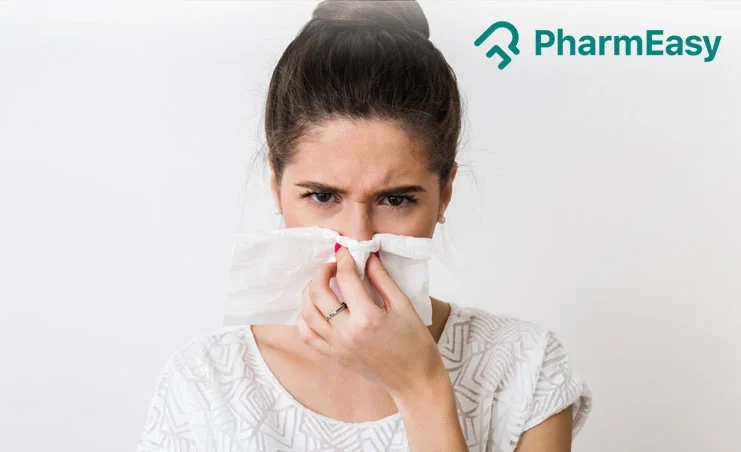
Since dust is almost impossible to completely avoid, understanding the triggers of dust allergy, its symptoms, and management strategies is essential for improving quality of life and preventing complications. This blog covers the common symptoms of dust allergy, its causes and risk factors, available drug allergy treatment options, and practical prevention tips to help manage and reduce exposure effectively.
A dust allergy is an immune system reaction to tiny particles commonly found in dust. These particles (known as allergens) include dust mites, pollen, mould spores, pet dander, and fabric fibres. While these substances are harmless to most people, in some individuals, the immune system mistakenly identifies them as dangerous2,3.
At first exposure to these allergens in dust, the body makes special allergy antibodies called IgE antibodies against these particles. These IgE antibodies attach to certain immune cells (mast cells and basophils). When the person is exposed again, the allergens stick to these IgE antibodies and trigger the release of chemicals like histamine. This immune response to the allergens causes inflammation and leads to symptoms like sneezing, blocked or runny nose, itching, watery eyes, coughing, or breathing problems2,3.
Did You Know?
Dust allergy symptoms could range from mild to severe. Common symptoms include1,3:
Note: Symptoms often worsen during cleaning, exposure to dust, or while lying on bedding and carpets where dust mites are commonly found1,2.
Dust allergy is not caused by dust itself, but by allergens present within dust. The most common dust allergy causes (triggers) include1:

Dust mites (often referred to as bed mites) are the leading cause of dust allergy. They thrive in warm and humid environments. These microscopic organisms are commonly found in pillows, mattresses, carpets, and upholstered furniture. When bedding is disturbed or during activities like sweeping or vacuuming, dust mite particles become airborne can be easily inhaled.
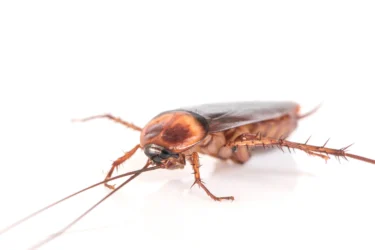
Cockroach allergens are another important contributor to dust allergy. Tiny particles from their droppings, saliva, and body parts can mix with household dust and become airborne. Exposure to these particles can trigger allergic reactions, especially in urban environments where cockroach presence is more common.
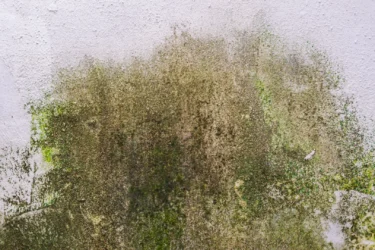
Mould is a type of fungus that releases microscopic spores into the air. These spores are mainly present as airborne particles and are easily inhaled, although they can later settle into household dust. Mould tends to thrive in damp and poorly ventilated areas such as bathrooms, kitchens, and basements. Inhaling mould spores can trigger allergy symptoms in sensitive individuals.

Pollen from trees, grass, weeds, and flowers can enter indoor spaces through open windows, doors, or clothing. Once inside, it settles into household dust. Individuals may be allergic to specific types of pollen, and even small amounts of it can trigger symptoms.
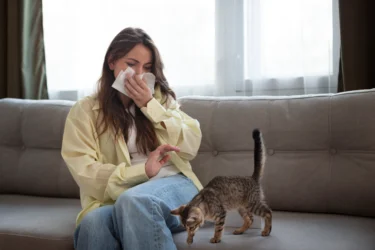
Pets contribute to dust allergens through dander (skin flakes), saliva, and urine, all of which can become a part of your household dust. These particles are lightweight and remain airborne for long periods. In homes with birds, feathers and droppings can also act as allergens and contribute to dust-related reactions.
In most cases, dust allergy is manageable. However, if exposure to allergens continues over time, it can lead to more persistent and sometimes serious health issues.
Continuous exposure to dust allergens (especially dust mites) in sensitive individuals can result in the following complications3:
Diagnosing a dust allergy usually starts with a detailed medical history and symptom review. Doctors may ask about your symptoms, past history of allergies, home environment, and when symptoms tend to worsen. Based on this, they may recommend specific tests to confirm the diagnosis. Common tests for dust allergy include:
Once a dust allergy is confirmed, your doctor will prescribe medicines to reduce symptoms and advise you to limit exposure to allergens. Prescribed medications may include1:
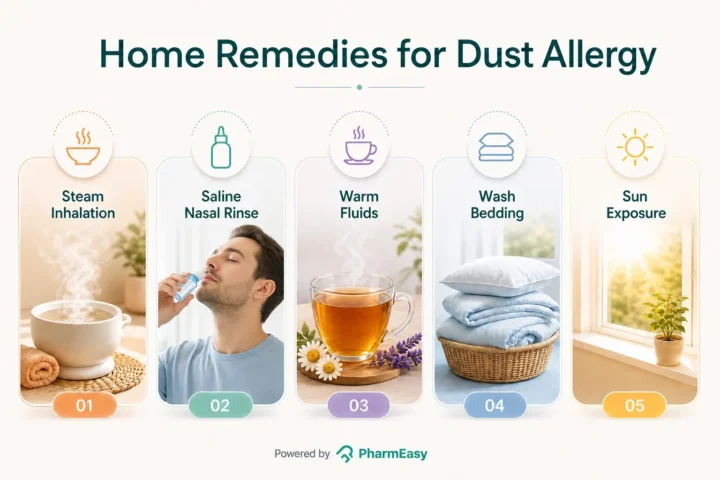
Certain simple home remedies can help with dust allergy treatment at home, meaning they can help ease dust allergy symptoms and provide relief:
Managing dust allergy in the long term requires consistent lifestyle adjustments1,2:
Preventing dust allergy focuses on reducing exposure to common triggers1,3:
While dust allergy is often manageable, medical attention may be needed in certain situations. You should see a doctor if:
Note: Seek immediate medical care if there is severe difficulty in breathing or rapid worsening of symptoms.
Also Read: Food Allergy Rash: Symptoms, Causes, Treatment & Home Remedies
Dust allergy is a common but manageable condition that can affect daily comfort and overall quality of life. Although it cannot be completely avoided, understanding its triggers, recognising symptoms early, and taking the right steps can make a significant difference.
Most people can effectively control their symptoms with a combination of medical treatment, simple home remedies, and consistent lifestyle changes. These often include reducing exposure to dust, maintaining a clean indoor environment, and seeking timely medical advice when needed.
Also Read: Food Allergies: Symptoms, Types, Diagnosis & Home Remedies
Dust allergy is usually a long-term (chronic) condition, but it is not necessarily constant. Symptoms may come and go depending on exposure to dust and allergens3.
No, dust allergy is not contagious. It is an immune system response and cannot spread through contact, air, or sharing items3.
Cetirizine is an antihistamine that may help relieve symptoms such as sneezing, a runny nose, and itching9. However, it only provides temporary relief and does not cure the underlying allergy.
To get quick relief, move away from the dusty environment, wash your face and hands, and change clothes if needed. Using a mask can help prevent further exposure. Saline nasal sprays or rinses may help clear nasal passages, and antihistamines (taken under a doctor’s guidance) can provide faster symptom relief1,2,6.
Dust allergy symptoms can last for a few hours, depending on the level of exposure10. In some cases, symptoms may persist as long as the person remains in a dust-filled environment. Thus, reducing exposure usually helps symptoms improve quickly.
Dust allergy is not caused by any specific vitamin or nutrient deficiency. It occurs due to an overactive immune response to harmless particles like dust mites3.
Disclaimer: The information provided here is for educational/awareness purposes only and is not intended to be a substitute for medical treatment by a healthcare professional and should not be relied upon to diagnose or treat any medical condition. The reader should consult a registered medical practitioner to determine the appropriateness of the information and before consuming any medication. PharmEasy does not provide any guarantee or warranty (express or implied) regarding the accuracy, adequacy, completeness, legality, reliability or usefulness of the information and disclaims any liability arising thereof.
Links and product recommendations in the information provided here are advertisements of third-party products available on the website. PharmEasy does not make any representation on the accuracy or suitability of such products/services. Advertisements do not influence the editorial decisions or content. The information in this blog is subject to change without notice. The authors and administrators reserve the right to modify, add, or remove content without notification. It is your responsibility to review this disclaimer regularly for any changes.


Comments

Leave your comment...
You may also like

























Comments