




Types of Cancer: Symptoms, Early Signs, Diagnosis & More
By Dr. Vishesh Bharucha +2 more

Medically reviewed by Dr. Vishesh Bharucha
Last updated: Sep 21, 2026 Published on: Apr 24, 2026


Get,

to manage your symptom
Get your,

4 Cr+ families
benefitted

OTP sent to 9988776655



You’ve successfully subscribed to receive
doctor-approved tips on
Whatsapp

Get ready to feel your best.


Register to Avail the Offer
Send OTPBy continuing, you agree with our Privacy Policy and Terms and Conditions
Hi There,
Sign up on PharmEasy now!!


Trusted by 4 crore+ families

OTP sent to 9988776655
You have unlocked 25% off on medicines


Code: NU25

By Dr. Vishesh Bharucha +2 more
Table of Contents
Cancer is one of the major health problems around the world, affecting millions of people every year. Even though there is a big advancement in the medical treatment, many cases are detected very late, making the treatment procedure difficult. This is why knowing cancer is important, especially its early signs and symptoms. Finding cancer early can greatly improve the chances of successful treatment and recovery1.
There are different types of cancer, which can affect different body parts, and the early symptoms are often not clear or easy to notice. Common warning signs may include unexplained weight loss, constant tiredness, unusual lumps, unusual sweeting, etc2. Pain is usually a late feature in many cancers, so paying attention to the other changes in the body and consulting a doctor on time is important for diagnosis and improving treatment outcomes.

This article might help you understand the main types of cancer, their early warning signs and how they are diagnosed. The aim is to raise awareness, help detect cancers early, and encourage people to take better care of their health.
Cancer is a disease that happens when normal cells in the body change and start growing uncontrollably, forming a tumour that can spread and harm healthy tissues1. However, all tumours are not cancers. They can be benign or malignant3. Also, not all cancers form solid tumours, such as blood cancers, which have no discrete growth as such4.
The spread of cancer cells from one part of the body to another through the blood or lymph system is called metastasis. In addition, cancer also spread directly into nearby tissues (local invasion)3 or within body cavities, such as the abdomen6.
The risk of cancer increases with age. This is because, over time, the body builds up more risk factors, and the natural repair system of cells becomes less effective as we grow older1. Other risk factors include family history, lifestyle (smoking, alcohol, etc.), viral infections (human papilloma or hepatitis), etc2.
Cancer develops differently in each person, and not all growths are harmful. With early detection and proper treatment, many cancers can be managed effectively1.
There are different types of cancers which can develop in different body parts. Most of these cancers have very few known causes4,7,9. The following might help you understand how many types of cancer exist based on the types of cancer cells.
Carcinoma is a type of cancer that starts in epithelial tissue, which covers the skin and lines the inside of organs and body passages. It can develop in tissues that produce or secrete substances, such as in the breast, lungs, colon, prostate, or bladder, (adenocarcinoma) or in flat, thin cells that form the skin surface and line some internal organs (squamous cell carcinoma)10. The common cause is the accumulation of genetic changes over time, which leads cells to uncontrolled growth of cells. The risk factors that can trigger these genetic alterations including smoking, alcohol consumption, chemical exposure, lack of physical activity, obesity, etc11,12.
Sarcoma is a type of cancer that begins in the body’s supportive and connective tissues like bones, muscles, fat, cartilage, and tendons. It is more common in children and in adolescents, compared to carcinoma. However, several other types (soft tissue sarcomas) can also occur in adults. It often appears as a painful lump, especially in the bones, and the tumour usually looks like the normal tissue from where it starts10. It is commonly caused by mutation in the gene due to exposure to radiation or by certain cancer-causing chemicals (carcinogens)9.
Leukaemia is a blood cancer that begins in the bone marrow, the place where blood cells are produced. It disrupts the normal functioning of bone marrow, leading to the reduced production of red blood cells and the platelet count. This can cause problems like fatigue, anaemia, and poor blood clotting10. The risk factors include family history, age and sex, exposure to harmful radiations and chemicals, and viral infections (human T-cell leukaemia virus)4.
Myeloma (multiple myeloma) is a type of cancer that affects plasma cells, which are white blood cells that help fight infection by making antibodies8. The plasma cells produce certain types of protein (monoclonal (M) protein/paraprotein) which are found in the blood10. Here, abnormal plasma cells grow too much in the bone marrow and replace healthy blood cells, affecting red cells, white cells, and platelets. The risk factors include age, exposure to x-rays or other radiations, people belonging to specific races, etc8.
Lymphoma is a type of cancer that starts in the lymphatic system, which includes lymph nodes, spleen, tonsils, and thymus. This system helps fight infections by supporting the development and activation of white blood cells. It is a type of blood-related (hematologic) cancer, that is often seen as enlarged lymph nodes or mass-like growths. It can also develop in organs like the stomach, breast, or brain10. People with weak immune systems, those on immune-suppressing medicines, Epstein-Barr virus infection, radiation exposure, and those with a family history are at higher risk of developing lymphoma7.
There are several types of cancers. Below are some common types and their symptoms.
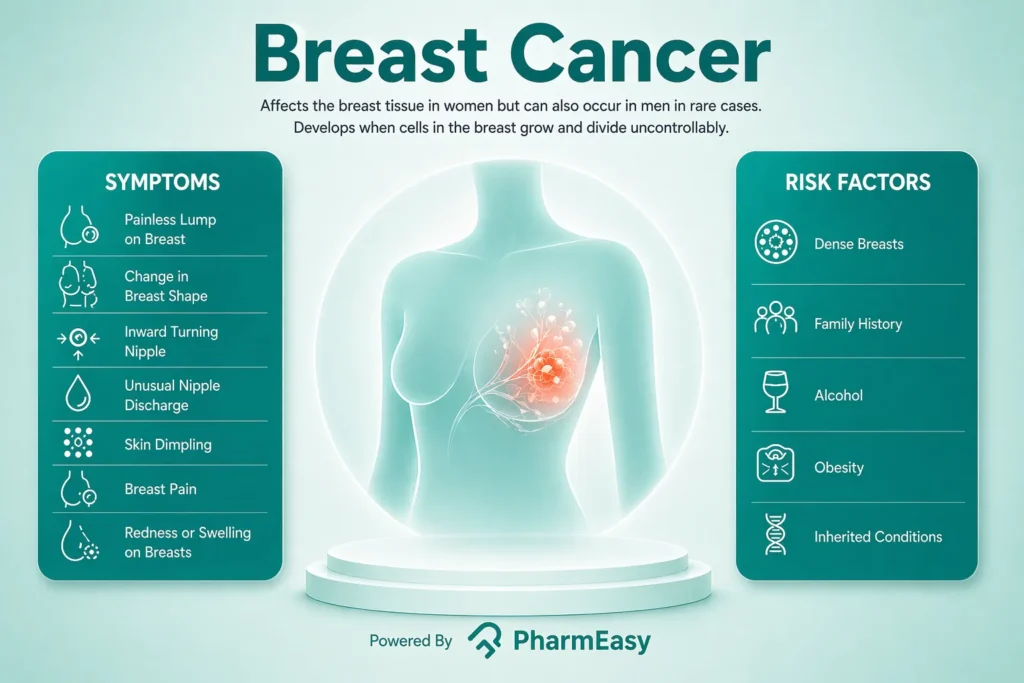
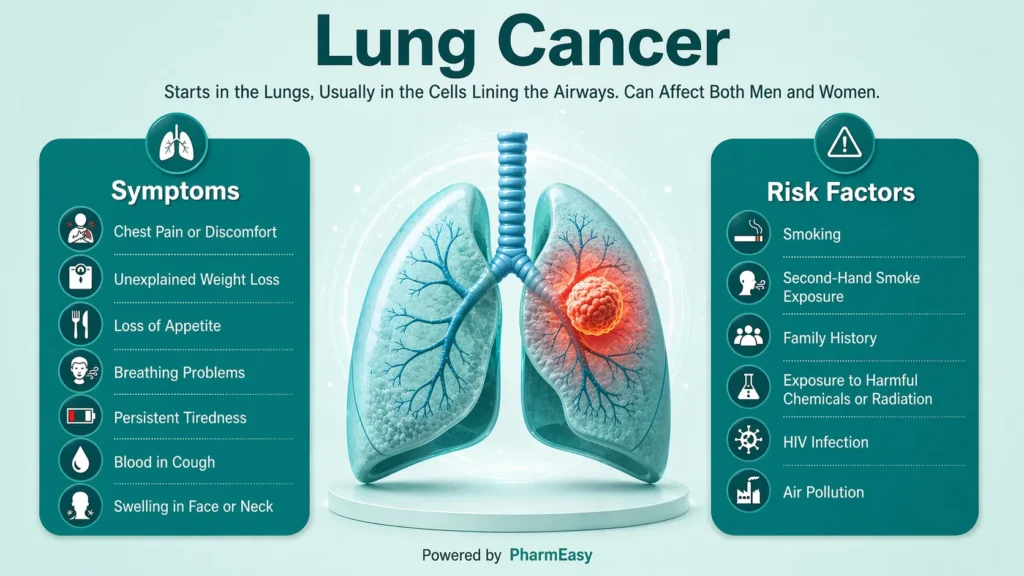
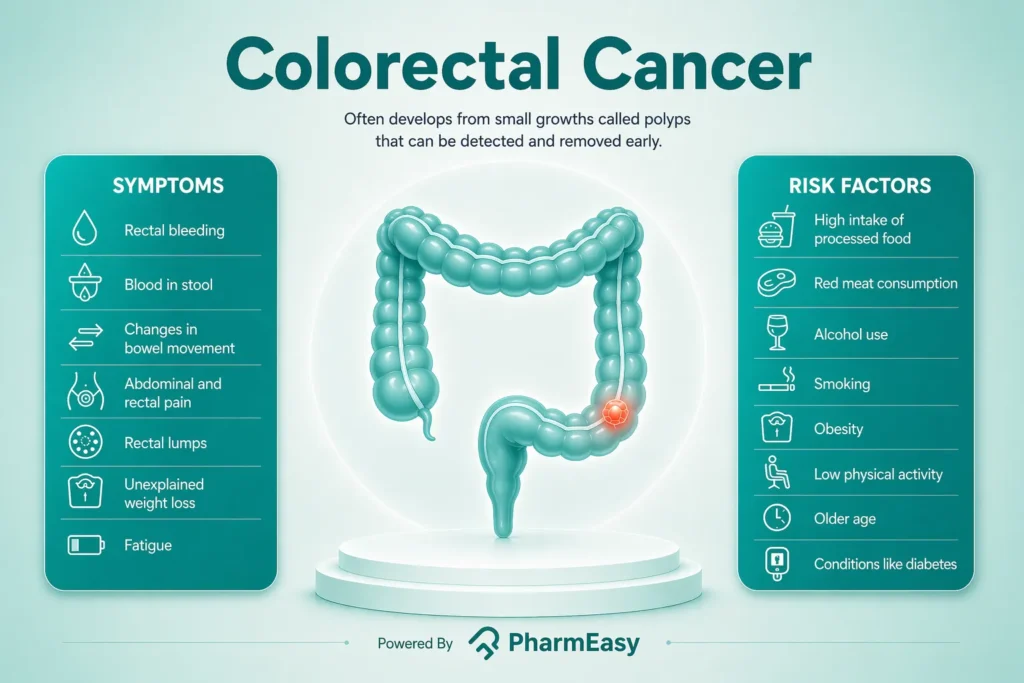
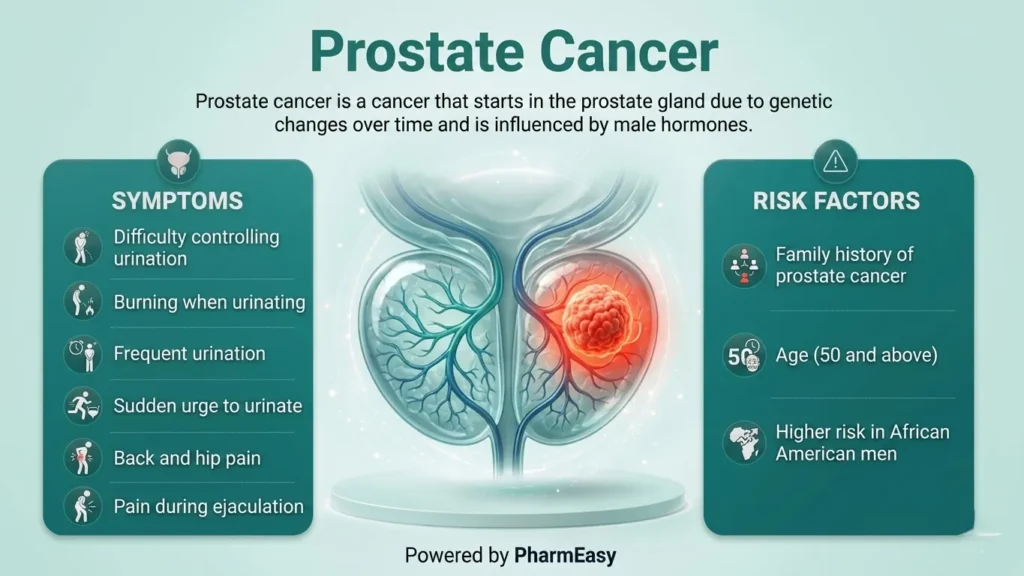
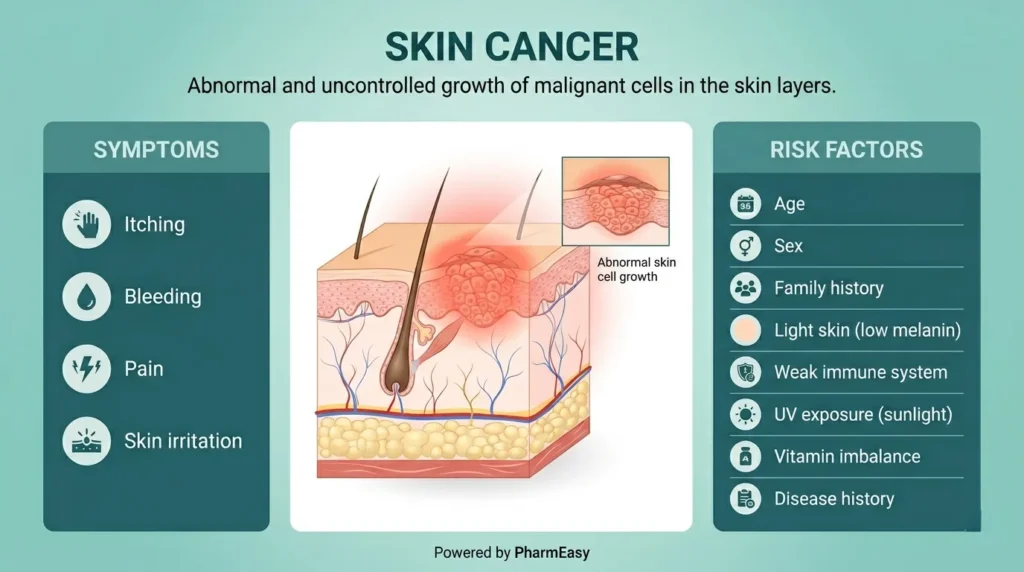
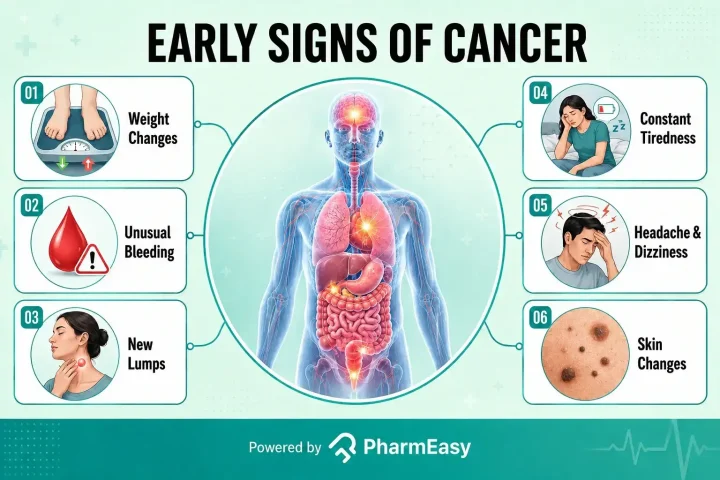
Although different types of cancer show different signs and symptoms, there are some warning signs to watch out for. The following are some early signs of cancer that you should not ignore.
Early detection of cancer plays a crucial role in improving outcomes and saving lives. The following says why early detection matters and how it is helpful to patients.
Note: Early detection helps improve outcomes in many cancers like breast, cervical, and colorectal cancer, but it is not equally effective for all cancers. Some, like pancreatic cancer, are often found late, while others (e.g., prostate or thyroid cancer) may be over diagnosed. Early treatment can improve well-being but may still cause side effects, and even advanced cancers can sometimes be managed with good care.
The following is a list of blood tests performed in early cancer detection.
Note: Diagnosis of cancer typically requires histopathological confirmation (biopsy); imaging or basic blood screening tests alone are generally not definitive for most cancers.
Also Read: How to Prevent Breast Cancer in Women
You should consider seeing a doctor if you notice:
Also Read: Does Masturbating Increase Risk of Prostate Cancer or Vice Versa?
Cancer is a serious condition, but it can often be effectively managed, especially with early detection. Recognising warning signs and going for regular check-ups can greatly improve treatment outcomes. Understanding different types of cancer and their symptoms helps you stay aware and take timely action. Prioritising your health and consulting a doctor when needed can make a life-saving difference.
Also Read: Testicular Cancer: Symptoms, Causes, Diagnosis, Treatment & Prevention
An MRI cannot test all types of cancer. It is good to detect cancer caused in the brain, soft tissues, breast and colon12,14,21. However, it has limitations in early diagnosis of some types of cancers like lung cancer21.
There are said to be more than 200 types of cancer which affect the organs, tissues, blood, bone marrow and immune system2.
Yes, it is possible for a person to have more than one type of cancer, either at the same time or one after another. This is called multiple primary cancers. Although it is not very common, these cancers start separately in different parts of the body and are not caused by the spread of an existing cancer22.
The silent signs of cancer include:
-Unexplained weight loss
-Lack of appetite
-New or unexplained pain2
-New mole or changes in existing mole (skin changes)
-Unusual bleeding or bruising
-Changes in bowel movement
-Long-term cough or hoarseness17
-Difficulty in breathing or swallowing, chest pain or discomfort, etc11
The most common types of cancer found in women are breast cancer, cervical cancer, ovarian cancer, uterine cancer, oral cancer and colorectal cancer23.
The most common types of cancer found in men are prostate cancer, colorectal cancer, lung cancer, oral cancer, stomach cancer and oesophageal cancer23.
1. Cancer. 2025. Doi: https://www.who.int/news-room/fact-sheets/detail/cancer
2. Cancer: NHS. 2025. Doi: https://www.nhs.uk/conditions/cancer/
3. Cancer: Medline. 2025. Doi: https://medlineplus.gov/cancer.html
4. Leukaemia. 2023. Doi: https://www.healthdirect.gov.au/leukaemia
5. Benign. 2025. Doi: https://medlineplus.gov/ency/article/002236.htm
6. Menon G, Santillan VR. Peritoneal Surface Malignancies. 2025. Doi: https://www.ncbi.nlm.nih.gov/books/NBK541114/
7. Lymphoma. 2025. Doi: https://www.healthdirect.gov.au/lymphoma
8. Myeloma Basics. 2025. Doi: https://www.cdc.gov/myeloma/about/index.html
9. Causes, Risk Factors, and Prevention of Soft Tissue Sarcomas. 2026. Doi: https://www.cancer.org/cancer/types/soft-tissue-sarcoma/causes-risks-prevention.html
10. Cancer Classification. Doi: https://training.seer.cancer.gov/disease/categories/classification.html
11. Lung Cancer. 2025. Doi: https://medlineplus.gov/lungcancer.html
12. Breast Cancer. 2025. Doi: https://medlineplus.gov/breastcancer.html
13. Colorectal Cancer. 2024. Doi: https://medlineplus.gov/colorectalcancer.html
14. Bowel cancer (colon and rectal cancer). 2023. Doi: https://www.healthdirect.gov.au/bowel-cancer
15. Prostate Cancer. 2024. Doi: https://medlineplus.gov/prostatecancer.html
16. Sathe NC, Zito PM. Skin Cancer. 2025. Doi: https://www.ncbi.nlm.nih.gov/books/NBK441949/
17. Symptoms of Cancer. 2019. Doi: https://www.cancer.gov/about-cancer/diagnosis-staging/symptoms
18. Imai M, Nakamura Y, Yoshino T. Transforming cancer screening: the potential of multi-cancer early detection (MCED) technologies. Int J Clin Oncol. 2025;30(2):180-193. doi:10.1007/s10147-025-02694-5. https://pubmed.ncbi.nlm.nih.gov/39799530/
19. Tumor Marker Tests in Common Use. 2023. Doi: https://www.cancer.gov/about-cancer/diagnosis-staging/diagnosis/tumor-markers-list
20. How Cancer Is Diagnosed. 2023. Doi: https://www.cancer.gov/about-cancer/diagnosis-staging/diagnosis
21. Sim AJ, Kaza E, Singer L, Rosenberg SA. A review of the role of MRI in diagnosis and treatment of early stage lung cancer. Clinical and Translational Radiation Oncology. 2020;24:16-22. doi:10.1016/j.ctro.2020.06.002. https://pmc.ncbi.nlm.nih.gov/articles/PMC7306507/
22. Vogt A, Schmid S, Heinimann K, et al. Multiple primary tumours: challenges and approaches, a review. ESMO Open. 2017;2(2):e000172. doi:10.1136/esmoopen-2017-000172. https://www.esmoopen.com/article/S2059-7029(20)32451-0/fulltext
23. Kalra K. Common Cancers in India, theirincreasing incidence. Symptomswhich need immediate attention. Doi: https://www.cghs.mohfw.gov.in/CGHSGrievance/FormFlowXACTION?hmode=ftpFileDownload&fileName=23052025114829_Common-Cancers-in-India-their-increasing-incidence-(9-November-2021)-.pdf&folderName=Circular&isGlobal=1
24. Nicholson BD, Hamilton W, O’Sullivan J, Aveyard P, Hobbs FR. Weight loss as a predictor of cancer in primary care: a systematic review and meta-analysis. Br J Gen Pract. 2018;68(670):e311-e322. doi:10.3399/bjgp18X695801. https://pubmed.ncbi.nlm.nih.gov/29632004/
Disclaimer: The information provided here is for educational/awareness purposes only and is not intended to be a substitute for medical treatment by a healthcare professional and should not be relied upon to diagnose or treat any medical condition. The reader should consult a registered medical practitioner to determine the appropriateness of the information and before consuming any medication. PharmEasy does not provide any guarantee or warranty (express or implied) regarding the accuracy, adequacy, completeness, legality, reliability or usefulness of the information; and disclaims any liability arising thereof.
Links and product recommendations in the information provided here are advertisements of third-party products available on the website. PharmEasy does not make any representation on the accuracy or suitability of such products/services. Advertisements do not influence the editorial decisions or content. The information in this blog is subject to change without notice. The authors and administrators reserve the right to modify, add, or remove content without notification. It is your responsibility to review this disclaimer regularly for any changes.


Comments

Leave your comment...
You may also like

























Comments