



Monk Fruit (Arhat Fruit): What Is It, Benefits, Side Effects & More!
By Dr. Mrunal Shirodkar +2 more

Medically reviewed by Dr. Mrunal Shirodkar
Last updated: Sep 11, 2026 Published on: Oct 12, 2023


Get,

to manage your symptom
Get your,

4 Cr+ families
benefitted

OTP sent to 9988776655



You’ve successfully subscribed to receive
doctor-approved tips on
Whatsapp

Get ready to feel your best.


Register to Avail the Offer
Send OTPBy continuing, you agree with our Privacy Policy and Terms and Conditions
Hi There,
Sign up on PharmEasy now!!


Trusted by 4 crore+ families

OTP sent to 9988776655
You have unlocked 25% off on medicines


Code: NU25

By Dr. Mrunal Shirodkar +2 more
Table of Contents
Monk fruit, or luo han guo, is a tiny melon-like fruit that is famous as an alternative sweetener. This fruit comes from southern China and is a key part of Chinese medicine1. Nowadays, as people are becoming more health-conscious, reducing sugar has become a common practice, while still trying to maintain the taste of the food. The use of artificial sweeteners is being discouraged due to their possible health hazards. This has made natural sweeteners like monk fruit very popular. In this blog, we’ll discuss this natural sweetener in detail. We’ll look at its origin, suggested health benefits, any side effects, and how it might be used as a sweetener.
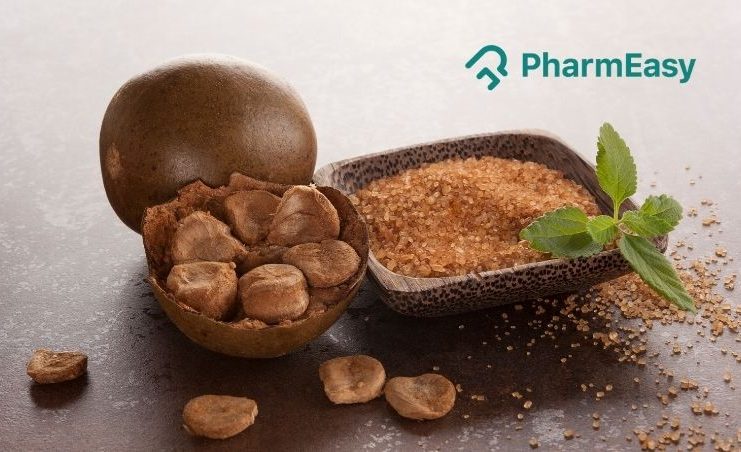
Monk fruit is a dark green fruit from China. Its name comes from Buddhist monks who grew it. The fruit’s sweetness comes mainly from natural compounds called mogrosides. These potentially make it up to 250 times sweeter than sugar1. Plus, it’s been said to have zero calories, fats and carbohydrates2.
Monk fruit is becoming increasingly popular as a natural sweetener. The making of monk fruit sweetener includes removing its seeds and skin. The fruit is then squeezed to obtain the juice. The extracted juice is then dried into a powder for use in foods and drinks3.
Monk fruit is found to have no calories and may not greatly affect blood sugar levels1,4. This may make it a good choice for a weight-management or diabetes-management diet.
Did You Know?
Monk fruit is not just a sugar substitute. Research shows that it might have health benefits as well, which include:

Monk fruit is proposed to be free from calories and carbohydrates2. Substituting sugar with monk fruit might help with weight management or maintenance, but more research is needed to confirm this benefit4.

Studies have found that monk fruit does not significantly affect blood sugar levels. This possibly makes it safe for people with diabetes. Furthermore, some studies suggest that monk fruit extract may even help reduce blood sugar levels, although more research is needed to confirm these findings4.

Monk fruit is known to have mogrosides. These antioxidants might assist in reducing the oxidative stress in the body4. Oxidative stress may contribute to inflammation and the development of chronic diseases5. Monk fruit may thus be helpful in boosting your health, however, stronger evidence by conducting more studies is needed to back this claim.
Monk fruit, according to research, works as an alternative to sugar. It is believed to be 100 times sweeter than sugar. Monk fruit has many health benefits including its action as an antioxidant and helping to reduce weight11.
Dr. Rajeev Singh, BAMS

Besides its antioxidant properties, research suggests that the mogrosides in monk fruit might also have anti-inflammatory effects, which may help relieve the symptoms of many health conditions linked to chronic inflammation. Further studies need to be carried out to confirm these properties4.

Studies to evaluate the anticancer properties of monk fruit are still ongoing, but initial research indicates that a compound in monk fruit, mogroside IVe, could potentially hinder cancer cell growth6.
Even though the FDA has classified monk fruit as generally recognised as safe, we should always be careful while using it.
Monk fruit sweetener can be a great addition to your diet and can be used as follows:
It has been found that monk fruit works as a natural sweetener. This fruit is small and round in shape and the sugar is extracted from compounds called mogrosides11.
Dr. Siddharth Gupta, B.A.M.S, M.D (Ayu)
To see how special monk fruit is, we can compare it with other common sweeteners.
Both monk fruit and stevia come from plants. But they do have differences. For instance, they are proposed to consist of different compounds that cause their sweetness. Also, stevia is sweeter than monk fruit9. But your choice between the two will likely come down to personal taste, how easy it is to find, and the cost.
Erythritol is a sugar alcohol often used as a substitute for sugar10. It’s less sweet than monk fruit and stevia. Some people get bloating or gas from a lot of erythritol, but these issues are seen less compared to other sugar alcohols. According to a recent study, erythritol may be associated with cardiovascular conditions like heart attack and stroke10. Therefore, monk fruit might be a better option than stevia for avoiding even the smallest chance of occurrence of these events.
Like monk fruit, agave nectar comes from a plant. But unlike monk fruit, it has calories and carbohydrates and can spike blood sugar levels10. So, if you’re trying to lose weight, limit carbohydrates, or manage your diabetes, monk fruit might be a better choice for you.
Also Read: Passion Fruit (Krishnabija): Uses, Benefits, Side Effects by Dr. Smita Barode
Monk fruit stands out as a sweet, versatile natural substitute for sugar. It is proposed to have several potential health benefits and can be used in countless recipes. The claims of its antioxidant and anti-inflammatory benefits along with its suggested effect on weight and blood sugar management, make this unique sweetener quite promising.
But as we learn more about this fruit’s long-term effects and safety, everyone should approach it with cautious optimism. By including monk fruit in your diet wisely and talking with your healthcare provider when you have concerns, you can enjoy a lower-sugar life that still satisfies your sweet cravings.
So far, no one has reported any problems with monk fruit. But as with any food or supplement, everyone’s reaction may differ. We also need more research to understand the safety of its long-term use.
Current research shows that monk fruit has some potential health benefits and is generally safe to eat. But remember, we still need more research to fully understand the long-term effects and safety of monk fruit as a sweetener.
Monk fruit is a natural sweetener, which is said to have no calories or carbohydrates. This makes it a good choice for individuals who watch their weight or manage diabetes. In addition, monk fruit’s proposed antioxidant and anti-inflammatory properties can potentially offer other health benefits.
Some potential benefits of monk fruit include its use in weight management, regulating blood sugar levels, and providing antioxidant and anti-inflammatory effects. Moreover, it may even have potential anticancer properties. More research is needed to fully understand these benefits.
Yes, monk fruit sweetener can be used in baking and in other recipes as a sugar substitute. However, since it is significantly sweeter than sugar, you might need to tweak the recipe to get the desired sweetness. Besides, some tweaks may be necessary to adjust for differences in texture and flavour when substituting.
Disclaimer: The information provided here is for educational/awareness purposes only and is not intended to be a substitute for medical treatment by a healthcare professional and should not be relied upon to diagnose or treat any medical condition. The reader should consult a registered medical practitioner to determine the appropriateness of the information and before consuming any medication. PharmEasy does not provide any guarantee or warranty (express or implied) regarding the accuracy, adequacy, completeness, legality, reliability or usefulness of the information; and disclaims any liability arising thereof.
Links and product recommendations in the information provided here are advertisements of third-party products available on the website. PharmEasy does not make any representation on the accuracy or suitability of such products/services. Advertisements do not influence the editorial decisions or content. The information in this blog is subject to change without notice. The authors and administrators reserve the right to modify, add, or remove content without notification. It is your responsibility to review this disclaimer regularly for any changes.
 1
1 
Comments

Leave your comment...
You may also like





















Comments