




Benefits of Eating Dinner Early for Better Health
By Dr. Nikita Toshi +2 more

Medically reviewed by Dr. Nikita Toshi
Last updated: Sep 15, 2026 Published on: May 31, 2022


Get,

to manage your symptom
Get your,

4 Cr+ families
benefitted

OTP sent to 9988776655



You’ve successfully subscribed to receive
doctor-approved tips on
Whatsapp

Get ready to feel your best.


Register to Avail the Offer
Send OTPBy continuing, you agree with our Privacy Policy and Terms and Conditions
Hi There,
Sign up on PharmEasy now!!


Trusted by 4 crore+ families

OTP sent to 9988776655
You have unlocked 25% off on medicines


Code: NU25

By Dr. Nikita Toshi +2 more
Table of Contents
After a long and busy day, something is comforting about digging into food. However, experts say that dinner should be the lightest meal of the day. Owing to our hectic schedule, we end up doing the reverse of what is recommended, we eat light breakfasts and stuff ourselves at dinner. As a result of this unhealthy lifestyle, most of us are prone to several health issues, including obesity, risk of heart disease and blood sugar.
One of the easiest ways to keep your blood sugar and weight in check is to finish your dinner(and no snacking!) at least 2 to 3 hours before bedtime. Regardless of the calories in the food, eating late dinner causes high blood sugar levels and weight gain.
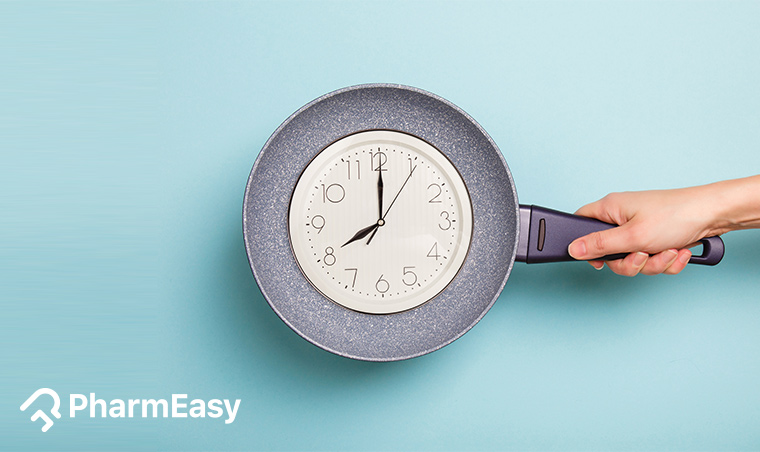
Read ahead to know the health benefits of eating breakfast like a king, lunch like a prince and dinner like a pauper. After all, we can only implement changes once we know what we will gain out of them.
Did you know that eating dinner late can contribute to metabolic dysfunctions, including impaired glucose metabolism? Studies7 have shown that humans experience negative effects on their metabolism when consuming meals late in the evening.
Dr. Rajeev Singh, BAMS
Experts suggest that dinner should be eaten within 7 pm. Eating an early and light dinner helps to improve sleep, improves digestion, boosts metabolism and also reduces blood pressure, keeping you healthy. Most health problems can be solved in a jiffy if we only start to eat our dinner early.

For those who are looking to lose weight, having an early and light dinner is the first and the most effective step in this journey1. Eating dinner early automatically leads to an effect similar to intermittent fasting, where the body converts the stored body fat into energy, rather than getting it from the glucose in the food that is currently being consumed. Stay healthy and steer clear of obesity, this is a silent killer!

Having an early dinner allows you at least 2-3 hours before bedtime. Since there is this gap, major parts of digestion have already occurred and the digestive system does not work when the body is at rest2. Also, the body works less to digest food and gets adequate rest. Eating late at night often causes indigestion, disturbing your sleep. As a result, you will end up waking more often and have disturbed sleep.
A properly functioning digestive system also improves bowel habits and makes the excretory system smoother.

Studies3 show that when we sleep, the blood pressure drops by nearly 10%, allowing the body to rest and recover. When we wake up, the blood pressure begins to rise. Eating a late dinner adversely affects blood pressure. As the blood pressure remains higher, there is an increased risk of heart attacks. Consuming dinner 2-3 hours before bedtime significantly reduces the chances of a heart attack.

Having late dinner increases the risk of type-II diabetes. Type-II diabetes occurs when the body is unable to use insulin correctly and efficiently. By eating dinner 2-3 hours before sleeping, the body is capable of utilizing insulin effectively. By maintaining proper insulin levels, the risk of type-II diabetes is significantly reduced4.

Eating late dinners often causes heartburn, increasing the risk of gastrointestinal diseases. Often, a burning sensation in the chest may be felt, caused by gas and a lot of bloating5. Experts suggest that people who eat their dinner early may have less acid reflux and heartburn.
Based on my experience, I have observed that individuals with duodenal ulcers often have higher levels of stomach acid in the early morning. To help improve your condition, I recommend having dinner around 6 pm, as this timing has shown to raise nocturnal gastric pH levels. By doing so, it may help reduce the acidity in your stomach and potentially alleviate symptoms associated with duodenal ulcers6.
Dr. Siddharth Gupta, B.A.M.S, M.D (Ayu)
Having an early dinner may sometimes be a hassle, often being difficult to do owing to work or other commitments. That being said, efforts must be made to eat as early as possible, keeping a sufficient gap between dinner and bedtime. Also, the dinner must be light, comprising fruits, vegetables, lentils and soups, rather than loaded with spices, thick curries, deep-fried food and excess sugar.
Also, light walking after dinner is considered to be effective in speeding up the digestive process. Sitting in vajrasana for 10 minutes is also proven to be effective.
Also Read: Drinking Water Before Bed – Is It A Good Idea?
Disclaimer: The information provided here is for educational/awareness purposes only and is not intended to be a substitute for medical treatment by a healthcare professional and should not be relied upon to diagnose or treat any medical condition. The reader should consult a registered medical practitioner to determine the appropriateness of the information and before consuming any medication. PharmEasy does not provide any guarantee or warranty (express or implied) regarding the accuracy, adequacy, completeness, legality, reliability or usefulness of the information; and disclaims any liability arising thereof.
Links and product recommendations in the information provided here are advertisements of third-party products available on the website. PharmEasy does not make any representation on the accuracy or suitability of such products/services. Advertisements do not influence the editorial decisions or content. The information in this blog is subject to change without notice. The authors and administrators reserve the right to modify, add, or remove content without notification. It is your responsibility to review this disclaimer regularly for any changes.
 20
20 
Comments

Leave your comment...
You may also like

























Comments