




7 Incredible Benefits Of Chia Seed Oil
By Dr. Malavika Athavale +2 more

Medically reviewed by Dr. Malavika Athavale
Last updated: Feb 19, 2026 Published on: Mar 2, 2022


Get,

to manage your symptom
Get your,

4 Cr+ families
benefitted

OTP sent to 9988776655



You’ve successfully subscribed to receive
doctor-approved tips on
Whatsapp

Get ready to feel your best.


Register to Avail the Offer
Send OTPBy continuing, you agree with our Privacy Policy and Terms and Conditions
Hi There,
Sign up on PharmEasy now!!


Trusted by 4 crore+ families

OTP sent to 9988776655
You have unlocked 25% off on medicines


Code: NU25

By Dr. Malavika Athavale +2 more
Table of Contents
Chia seed oil has gained attention as a plant-based source of omega-3 fatty acids and skin-nourishing nutrients. Extracted from chia seeds (Salvia hispanica), this oil is commonly used in cooking, supplements, and topical skincare products.
While chia seeds themselves are rich in fibre and protein, the oil primarily provides healthy fats, especially alpha-linolenic acid (ALA), a plant-derived omega-3 fatty acid. Because of its nutritional profile, chia seed oil is often discussed for its potential role in supporting heart health, skin hydration, and overall wellness when used as part of a balanced lifestyle1.
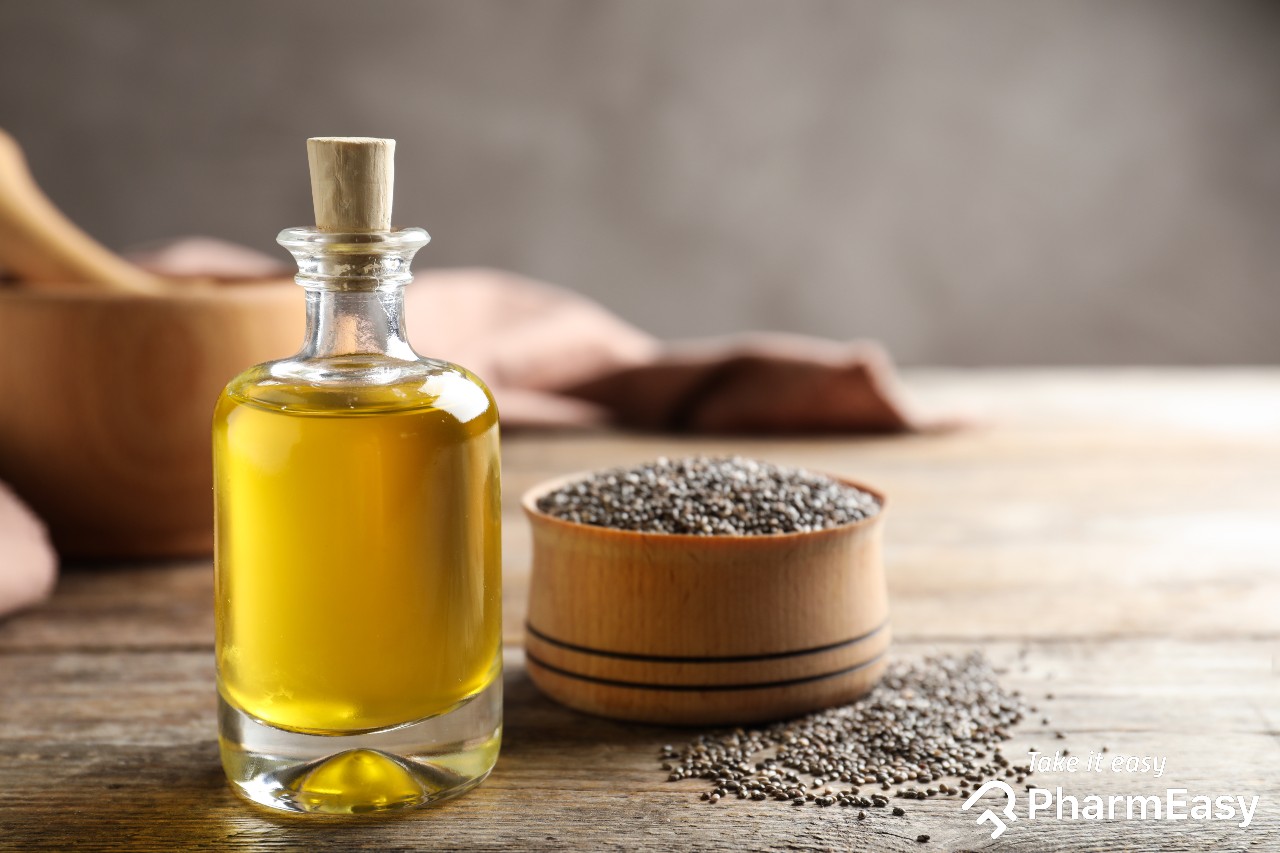
In this article, we explore its possible benefits, uses, safety considerations, and how it differs from whole chia seeds.
Chia seed oil is obtained by cold-pressing chia seeds to extract their natural fat content. Unlike whole chia seeds, which contain fibre and protein, the oil mainly consists of polyunsaturated fatty acids, particularly omega-32.
It is used in:
Because omega-3 fatty acids are sensitive to heat, chia seed oil is generally recommended for low-temperature or no-heat culinary use.
Chia seed oil is highly nutritious and is the best source of:
It does not provide significant amounts of fibre, protein, or minerals. These nutrients are mainly found in whole chia seeds and are largely absent in the oil form5.
Chia seeds and chia seed oil may sound similar, but they serve different purposes. Seeds offer fibre and fullness benefits, while the oil mainly delivers concentrated healthy fats. Here’s a quick comparison to help you understand which one fits your needs better3,6.
| Feature | Chia Seeds | Chia Seed Oil |
| Fibre | High | Minimal |
| Protein | Present | Minimal |
| Omega-3 and omega-6 | High | Very high concentration |
| Best Used For | Digestion & satiety | Skin & healthy fats |
Studies9 suggest that the essential oil found in chia seeds includes compounds believed to act as a repellent to many different types of insects. In my opinion, use and apply chia seed oil to stay protected from insects.
Dr. Siddharth Gupta, B.A.M.S, M.D (Ayu)
While research on chia seed oil is still evolving, its fatty acid profile suggests several areas where it may offer supportive benefits when included as part of a balanced diet or skincare routine.

Chia seed oil contains omega-3 and omega-6 fatty acids that may help maintain the skin’s natural barrier. These fats can support moisture retention and contribute to smoother, more hydrated skin when used topically or consumed as part of a varied diet3.

Its lightweight and non-greasy texture makes it suitable for individuals experiencing mild dryness. The fatty acids in the oil may help reduce moisture loss or itchiness and support skin comfort1, particularly in environments with low humidity.

When applied to the scalp or hair shaft, chia seed oil may help improve hair texture by reducing dryness and enhancing shine by nourishing your hair. It might also keep your hair moisturised, which may reduce the appearance of frizz and brittleness7.

The presence of plant-based omega-3 fatty acids in chia seed oil suggests a potential role in maintaining cardiovascular health. Diets containing healthy unsaturated fats in place of excessive saturated fats may help support cholesterol balance and overall heart function1,3.

Omega-3 fatty acids are associated with maintaining normal brain structure and function. While chia seed oil should not be considered a treatment for neurological conditions, incorporating plant-based omega-3 sources into a balanced diet may contribute to long-term cognitive wellness3,7.

Omega-3 fatty acids are known to play a role in regulating inflammatory processes in the body. Including a healthy source of these fats in the form of chia seed oil may help support joint comfort and general wellness when combined with a healthy lifestyle1.
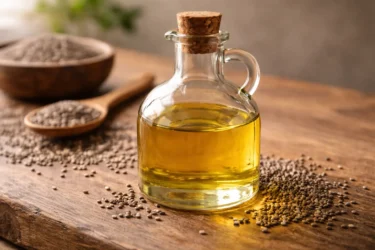
For individuals who consume little or no fish, chia seed oil may serve as a convenient plant-based option to help diversify fat intake and maintain dietary variety1.
Chia seed oil may be particularly useful for:
Sometimes, all the remedies you are looking for are in your kitchen; you just have to look for them. Here are some ways you can use chia seed oil to benefit your hair, skin, and body!
Although chia seed oil is generally well tolerated, the following precautions should be kept in mind:
Also Read: Chia Seeds: Uses, Benefits, Side Effects, and More!
Chia seed oil is a nutrient-rich, plant-based oil best known for its high omega-3 content and skin-friendly fatty acids. It may support skin hydration, hair nourishment, and overall wellness, especially for those following vegetarian or vegan diets. While it lacks the fibre and protein found in whole chia seeds, it can still be a valuable addition to a balanced diet or skincare routine when used in moderation and with proper precautions.
Chia seed oil contains concentrated healthy fats, especially omega-3 fatty acids, but lacks the fibre and nutrients present in whole seeds.
The moisturising properties of chia seed oil may help soothe dryness and flakiness when used as part of a regular scalp care routine.
Due to its omega-3 content and antioxidant properties, chia seed oil may help soothe mild redness or irritation when used topically. However, it should not replace prescribed treatments for chronic inflammatory skin conditions.
For most healthy individuals, moderate daily use of chia seed oil as part of a balanced diet or skincare routine may be suitable. Consistency should be guided by overall nutritional intake and personal tolerance.
Because it is sensitive to light and heat, storing it in a cool, dark place or refrigeration can help preserve its nutritional quality and prevent oxidation.
1. Paarakh PM, Mishra S, Tanushree, et al. Chia Seeds : A Comprehensive Review. 2025;18(2). doi:https://doi.org/10.52711/0974-360X.2025.00134
2. Akinfenwa AO, Cheikhyoussef A, Cheikhyoussef N, Hussein AA. Cold pressed chia (Salvia hispanica L.) seed oil. In: Cold Pressed Oils. Elsevier; 2020:181-190. doi:10.1016/B978-0-12-818188-1.00015-3. Available from: https://www.researchgate.net/publication/343183417_Cold_pressed_chia_Salvia_hispanica_L_seed_oil
3. Mburu M. The Role of Chia Seeds Oil in Human Health: A Critical Review. EJFOOD. 2021;3(4):1-4. doi:10.24018/ejfood.2021.3.4.270. Available from: https://www.researchgate.net/publication/353899036_The_Role_of_Chia_Seeds_Oil_in_Human_Health_A_Critical_Review
4. Kulczyński B, Kobus-Cisowska J, Taczanowski M, Kmiecik D, Gramza-Michałowska A. The Chemical Composition and Nutritional Value of Chia Seeds—Current State of Knowledge. Nutrients. 2019;11(6):1242. doi:10.3390/nu11061242. Available from: https://pubmed.ncbi.nlm.nih.gov/31159190/
5. Artisan Cold-Pressed Chia Oil. US Department of Agriculture. 2022. Doi: . Available from: https://fdc.nal.usda.gov/food-details/2284234/nutrients
6. Chia Seed. 2021. Doi: https://fdc.nal.usda.gov/food-details/2093316/nutrients.
7. Motyka S, Koc K, Ekiert H, Blicharska E, Czarnek K, Szopa A. The Current State of Knowledge on Salvia hispanica and Salviae hispanicae semen (Chia Seeds). Molecules. 2022;27(4):1207. doi:10.3390/molecules27041207. Available from: https://pubmed.ncbi.nlm.nih.gov/35208997/
8. Chia seed allergy and cross reactivity. 2018. Doi: https://www.aaaai.org/allergist-resources/ask-the-expert/answers/old-ask-the-experts/chia-seed
9. Ullah R, Nadeem M, Khalique A, Imran M, Mehmood S, Javid A, Hussain J. Nutritional and therapeutic perspectives of Chia (Salvia hispanica L.): a review. J Food Sci Technol. 2016 Apr;53(4):1750-8. doi: 10.1007/s13197-015-1967-0. Epub 2015 Oct 1. PMID: 27413203; PMCID: PMC4926888. Available from: https://pmc.ncbi.nlm.nih.gov/articles/PMC4926888/
Disclaimer: The information provided here is for educational/awareness purposes only and is not intended to be a substitute for medical treatment by a healthcare professional and should not be relied upon to diagnose or treat any medical condition. The reader should consult a registered medical practitioner to determine the appropriateness of the information and before consuming any medication. PharmEasy does not provide any guarantee or warranty (express or implied) regarding the accuracy, adequacy, completeness, legality, reliability or usefulness of the information; and disclaims any liability arising thereof.
Links and product recommendations in the information provided here are advertisements of third-party products available on the website. PharmEasy does not make any representation on the accuracy or suitability of such products/services. Advertisements do not influence the editorial decisions or content. The information in this blog is subject to change without notice. The authors and administrators reserve the right to modify, add, or remove content without notification. It is your responsibility to review this disclaimer regularly for any changes.
 29
29  1
1Comments

Leave your comment...
You may also like






















Comments