




Kokum (Garcinia Indica): Uses, Benefits, Side Effects and More!
By Dr. Malavika Athavale +2 more

Medically reviewed by Dr. Malavika Athavale
Last updated: Nov 21, 2025 Published on: Apr 28, 2022


Get,

to manage your symptom
Get your,

4 Cr+ families
benefitted

OTP sent to 9988776655



You’ve successfully subscribed to receive
doctor-approved tips on
Whatsapp

Get ready to feel your best.


Register to Avail the Offer
Send OTPBy continuing, you agree with our Privacy Policy and Terms and Conditions
Hi There,
Sign up on PharmEasy now!!


Trusted by 4 crore+ families

OTP sent to 9988776655
You have unlocked 25% off on medicines


Code: NU25

By Dr. Malavika Athavale +2 more
Table of Contents
Kokum, also known as Garcinia indica, is a plant native to India particularly thriving along the Western Ghats and coastal regions such as Maharashtra, Goa, Karnataka, and Kerala, though it is also found in the Eastern and North-Eastern states.
Kokum is known by different names in different regions. It is referred to as Goa butter tree or kokum butter tree in English, Bheranda in Marathi, Vrikshamla in Sanskrit, Punarpuli in Tulu, and Murgal- masala in Tamil. It mainly grows on the Western coasts of India but can also be found in the Eastern and North-Eastern states1.
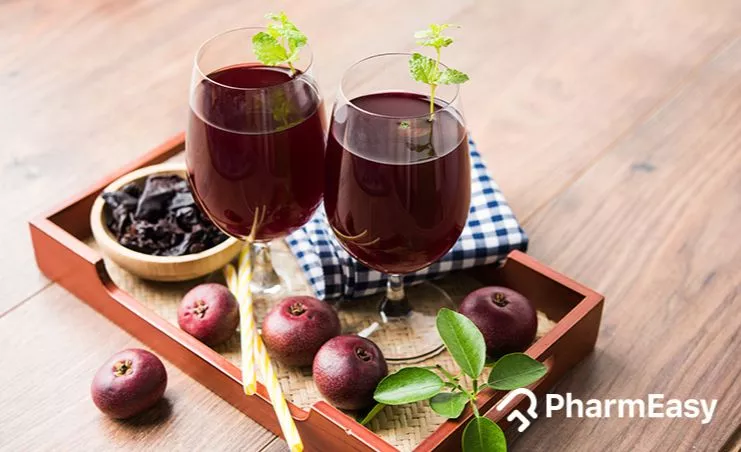
It can be widely used for culinary purposes, including fish pickling (known as Colombo curing), preparing refreshing drinks, and in the manufacture of cosmetics; however, its most significant application lies in Ayurveda, where it is valued for a wide range of potential therapeutic uses1,2.
Did you know?
Nutritional composition of kokum2:
Kokum may have a beneficial role in the food industry, particularly due to its high anthocyanin content, which gives it a deep red-purple hue. According to a recent article9, it could be an excellent natural source for colour extraction, making it a promising alternative to synthetic food colourants.
Dr. Siddharth Gupta, B.A.M.S, M.D (Ayu)
Kokum has been used since ancient times due to its beneficial properties.
Kokum is said to have several potential benefits for the body. It is used for several health purposes in traditional medicine. These include:

Kokum may help protect the liver; hence it might be used as a liver tonic2. It may also help in the digestion of food, acting as a natural antacid. Traditional preparations combining kokum with yoghurt and salt are believed to help alleviate gastric ulceration and reduce burning sensations in the stomach3. Additionally, kokum may assist in managing gastrointestinal issues such as dysentery (characterised by stools with blood and mucus), diarrhoea (watery stools), and piles (fissures caused by hard stools). Overall, kokum might be beneficial for digestive health, supporting the gut and potentially helping to stimulate the appetite. However, more studies are required to corroborate these.

Kokum may be beneficial for weight management as it may help reduce hunger and potentially increase energy expenditure1. It is also thought to suppress the production of fatty acids and may support their conversion into glycogen, which is stored in the liver for energy2. These combined mechanisms could contribute to managing body weight effectively. Kokum juice, in particular, is often suggested as a supportive beverage for this purpose. Additionally, kokum might promote better blood circulation and may help prevent the accumulation of fat in the blood vessels, further supporting cardiovascular health and overall metabolic function3. However, more research is required to confirm these claims.

Kokum butter may possess effective moisturising properties, making it a valuable ingredient in the cosmetic industry. As a result, it is commonly used in the formulation of products such as soaps, lip balms, and body lotions, where it helps to nourish and hydrate the skin. Traditionally, kokum butter has been used to treat dry skin due to its deeply moisturising nature. It may also be beneficial for soothing burns, healing cracked feet, and relieving fissures of the lips, as well as for managing ulcers and other minor skin irritations1,2,4. However, more research is required to prove these facts.

Kokum has potential antimicrobial properties and thus might be effective against bacteria. One of its key active components, garcinol, may serve as a substitute when conventional antibiotics cause side effects5.
Research2 suggests that kokum may be effective against bacteria such as Staphylococcus, which is responsible for various infections, and its action may be comparable to that of traditional antibiotics. Additionally, its potential to help treat gastric ulcers may be linked to its antimicrobial activity against Helicobacter pylori, the primary bacterium responsible for such conditions. It may also be effective against fungal infections of the skin and mouth and parasitic worms in the stomach3. However, more research is required in this field.

In a research study3, it was found that garcinol, which is one of the three primary active components of kokum may have potential anti-cancer properties. It appears to work by inhibiting the activity of certain enzymes associated with cancer development and may also promote the programmed death (apoptosis) of cancer cells. While these findings are promising, further scientific validation and clinical studies are necessary to confirm its efficacy and safety.
In a study, garcinol demonstrated the potential to inhibit the growth of human leukaemia (blood cancer) cells, suggesting that it may possess chemo preventive properties, that is, it might help reduce the development or progression of cancer. These findings highlight kokum’s promise in cancer research, although further clinical investigations are required to substantiate its therapeutic potential3.
Kokum may possess antioxidant properties, which could help neutralise free radicals in the body (unstable molecules that are known to contribute to the development of cancer and other chronic diseases). By reducing oxidative stress, kokum might play a role in protecting cells from damage and supporting overall health3. Even though there is some evidence that the use of kokum might help with cancer and inflammatory diseases, further studies are required in this field1,6.

Kokum has anti-inflammatory properties which are beneficial for heart health. Also, kokum is rich in minerals that help regulate blood pressure levels. Moreover, initial studies7 have shown that garcinol in kokum can help lower the risk of atherosclerosis (narrowing of arteries supplying the heart due to fat deposition) by maintaining blood lipid levels. These findings suggest that kokum holds good potential to help lower risk of cardiovascular complications. In ayurvedic medicine, it is used as a heart tonic to improve heart function. Although more research is needed to confirm this benefit.

Though there are studies that show the potential uses of kokum in various conditions, these are insufficient and there is a need for further studies to establish the true extent of benefits of kokum on human health.
Other than its medicinal and therapeutic uses, kokum has found its place in our delicacies as well. From my experience, Kokum is used in production industries for making butter, wine, health beverages, curries, and pickles.
Dr. Rajeev Singh, BAMS
Kokum is widely used in the manufacture of various products and is available in fvarious forms making it versatile for different applications, some common forms include3:
Your Ayurvedic physician will recommend the appropriate form and dosage based on your health condition.
You must consult a qualified doctor before taking any herbal supplements. Do not discontinue or replace an ongoing treatment of modern medicine with an ayurvedic/herbal preparation without consulting a qualified doctor.
Also Read: Ber Fruit: Uses, Benefits, Side Effects & More!
Kokum may have side effects, but there are insufficient reports currently insufficient reports to clearly define what these might be. Therefore, more research is needed to fully understand any adverse effects associated with its use. If you experience any side effects while using kokum, it is important to consult a doctor before continuing its use for health purposes.
It is advised to consult a physician before taking kokum as a treatment for any condition, particularly for pregnant or nursing women, elderly individuals, and children. Avoid self-medicating with kokum, and do not use it to replace, alter, or discontinue any prescribed treatments without professional guidance.
Since kokum may act as a weight-reducing agent, it has the potential to affect substances involved in insulin sensitivity. Therefore, it is important to consult a physician before combining kokum with such substances, and frequent monitoring may be necessary to ensure safety and effectiveness3. Consult a doctor before using kokum. One must always disclose all the current medications being used so that the doctor can make appropriate decisions and advise you accordingly.
Also Read: Shankhpushpi: Benefits, Side Effects, Precautions & More!
Kokum is a versatile plant with a history of traditional use in Indian cuisine and Ayurvedic medicine. It has been used traditionally for dealing with digestive issues, weight management, skin health and as a heart tonic. While preliminary studies emphasise on its potential health benefits, more research is needed to confirm these effects. Always consult a qualified healthcare professional before using kokum for medicinal purposes.
Also Read: Senna: Uses, Benefits, Side Effects and More By Dr. Rajeev Singh
Kokum might facilitate digestion and may act as a natural antacid. However, you should consult a doctor and do not self-medicate.
Yes, kokum may offer various potential health benefits, including support for ulcers, acidity, heart and liver protection, weight management, and suppression of tumour cell growth. However, more research is needed to confirm these effects in humans. It is important to consult a doctor for proper diagnosis and treatment, and to avoid self-medicating.
Yes, kokum butter can be used for cooking.
Kokum may possess anti-cancer and anti-tumour properties; however, there is currently no concrete evidence to support its use as a treatment for cancer. Further research is needed to establish its effectiveness and safety in this regard. More research is required to fully understand kokum’s potential benefits. Additionally, cancer is a serious condition that must be diagnosed and treated by a qualified doctor.
Yes, kokum may be used for the manufacture of cosmetics such as lip balms, lipsticks, and lotions. It may be beneficial for treating chapped skin and wounds, and it is also believed to help with ulcers.
1. Manoj R. Chate, Subhash B. Kakade and V.S. neeha (2019). Kokum (Garnicia indica) Fruit: A Review, Asian Journal of Diary and Food research. 38(4):329-332. Available from: https://arccjournals.com/journal/asian-journal-of-dairy-and-food-research/DR-1493
2. Kumar S, Tripathi, Sankar, Karunakaran. Kokum (Garcinia india) – A potential fruits of Western Ghats Bulletin [Internet]. 2014 [cited 2025 May 21]. Available from: https://www.researchgate.net/publication/303797768_Kokum_Garcinia_india
3. Lim SH, Lee HS, Lee CH, Choi CI. Pharmacological Activity of Garcinia indica (Kokum): An Updated Review. Pharmaceuticals [Internet]. 2021 Dec 20 [cited 2025 May 21];14(12):1338. Available from: https://pmc.ncbi.nlm.nih.gov/articles/PMC8708457/
4. Rai SR, Birla JD, Sayeed Ariba. 5. Kokum-The Superfood of India [Internet]. 2022 [cited 2025 May 23]. p. 23–32. Available from: https://www.researchgate.net/publication/364955192_5_Kokum-The_Superfood_of_India
5. R.L. Sutar, Mane SP, Ghosh JS. Antimicrobial activity of extracts of dried Kokum (Garcinia indica C.). International Food Research Journal [Internet]. 2012 Jan 1 [cited 2025 May 23];19(3):1207–10. Available from: https://www.researchgate.net/publication/282718743_Antimicrobial_activity_of_extracts_of_dried_Kokum_Garcinia_indica_C
6. Dr. Rahul C. Ranveer, Sahoo AK. Bioactive Constituents of Kokum and its Potential Health Benefits. ResearchGate [Internet]. 2017 Oct [cited 2025 May 23];1(6):236–2444. Available from: https://www.researchgate.net/publication/320372291_Bioactive_Constituents_of_Kokum_and_its_Potential_Health_Benefits
7. Kumar VD, Gurusamy K, Leneeygreen KB. Cardioprotective effects of Garcinia indica fruit rind extract and garcinol in isoprenaline hydrochloride induced cardiotoxicity in rats. Journal of Advanced Scientific Research. 2021 Jul 31;12(02 Suppl 2):246-55. Available from: https://sciensage.info/index.php/JASR/article/view/974
8. Madhuri K, Naik PR. Modulatory effect of garcinol in streptozotocin-induced diabetic Wistar rats. Arch Physiol Biochem. 2017;123(5):322-329. Available from: https://pubmed.ncbi.nlm.nih.gov/28598692/
9. Nayak CA. Bioactive constituents present in Garcinia indica Choisy and its potential food applications: a review. Int J Food Properties [Internet]. 2010 [cited 2025 Nov 21];13(4):441‑53. doi:10.1080/10942910802626754. Available from: https://www.tandfonline.com/doi/full/10.1080/10942910802626754#:~:text=Abstract,squash%20and%20jellies%20like%20products.
Disclaimer: The information provided here is for educational/awareness purposes only and is not intended to be a substitute for medical treatment by a healthcare professional and should not be relied upon to diagnose or treat any medical condition. The reader should consult a registered medical practitioner to determine the appropriateness of the information and before consuming any medication. PharmEasy does not provide any guarantee or warranty (express or implied) regarding the accuracy, adequacy, completeness, legality, reliability or usefulness of the information; and disclaims any liability arising thereof.
Links and product recommendations in the information provided here are advertisements of third-party products available on the website. PharmEasy does not make any representation on the accuracy or suitability of such products/services. Advertisements do not influence the editorial decisions or content. The information in this blog is subject to change without notice. The authors and administrators reserve the right to modify, add, or remove content without notification. It is your responsibility to review this disclaimer regularly for any changes.
 37
37  4
4Comments

Leave your comment...
You may also like




















Comments