
Malaria is one of the most dreaded diseases. It is widespread across more than 90 countries, particularly in sub-Saharan Africa, South Asia, and regions of South America. It occurs when the malaria parasite, Plasmodium, infects the female mosquito, Anopheles1. When the malaria mosquito bites humans, within a period of 10 to 15 days, the malaria symptoms start to occur2.
Malaria symptoms vary depending on the subspecies of the Plasmodium that has infected the Anopheles mosquito. Based on the malarial parasite involved, there are four different types of malaria. Each of these types have a different severity of symptoms and needs to be treated differently.
In this blog, we will discuss in detail about malaria; its type, symptoms and treatment. These will help you better understand this infection and know when to act promptly.
India carries a significant share of the malaria burden in the South-East Asia region, though cases have declined considerably over the past decade due to sustained control efforts. The disease is not evenly spread across the country; transmission tends to cluster in certain states and districts.
The highest-burden regions include the eastern and central states of Odisha, Chhattisgarh, Jharkhand, and Madhya Pradesh, along with parts of Maharashtra. The Northeastern states, including Assam, Meghalaya, Mizoram, Tripura, and Arunachal Pradesh, also report substantial malaria activity10.
Within these states, transmission is concentrated in forested, hilly, tribal, rural, and high-rainfall areas. Such regions often combine dense vegetation, water collection sites that allow mosquitoes to breed, and limited access to healthcare, which together create favourable conditions for the disease to spread. Both Plasmodium vivax and Plasmodium falciparum circulate in India, with their relative proportions varying by region. Plasmodium vivax accounts for a large proportion of reported malaria cases, while Plasmodium falciparum is associated with a higher risk of severe disease and complications. Understanding where malaria is common can help travellers and residents take timely precautions.
This is the most common kind of malaria. It is the most widely distributed kind, found all across the globe. More than half of malaria infections found across India are of this type. It may be present in dormant stages and its presence can lead to recurrent episodes of the disease.
More often than not, it does not prove fatal but can be severely debilitating. Common symptoms of this kind of malarial disease include fever and chills, diarrhoea, severe fatigue and flu-like symptoms3.
This is one of the least common types of malaria. It is found mostly in western countries of Africa. Rarely, it is also observed in areas of Philippines, Indonesia, and Papua New Guinea. The symptoms include high fevers and shaking chills, headache, cough, diarrhoea, abdominal/joint pain, and body aches. This malaria disease can be recurring as the parasite rests in the patient’s liver and can stay dormant for years. Relapse may occur at any time during this period, with red blood cells being attacked, and the symptoms appearing again. Among all the types of malaria, this one is dangerous, if not deadly4.
This is the deadliest subtype of malaria in the world. This subspecies of the parasite is found in Africa, Southeast Asia, and South America. Unlike the above species, this species does not cause liver-stage relapses.
The patient feels the malaria symptoms like nausea, fatigue, body aches, enlarged spleen, pain in the abdomen, muscles, and joints, fever, headaches, anaemia and specific neurological symptoms like confusion and seizures. The severity of this malaria disease are such that it needs to be checked for, diagnosed and treated in time to prevent fatalities. It can cause significant harm to the brain and the nervous system. Paralysis and convulsions can also occur in this malaria.
If you are travelling to any of the above areas, take your antimalaria medications to prevent this disease5. Additionally, malaria vaccines such as RTS,S/AS01 and R21/Matrix-M are now available to protect children against P. falciparum infection2.
This is the least common kind of malaria. Fever and chills are the usual malaria symptoms. Sub-Saharan Africa and the southwest Pacific are where the malaria parasite causing this kind of malaria is common. It may persist in the bloodstream at low levels for extended periods, causing chronic infection, but it does not remain in dormant form in the liver1,6.
| Feature | P. falciparum | P. vivax | P. ovale | P. malariae |
|---|---|---|---|---|
| Geographic distribution1 | Africa, Southeast Asia, South America | Worldwide, the most common type in India | Mainly West Africa; rarely Asia-Pacific | Sub-Saharan Africa, the southwest Pacific |
| Severity | Most severe | Usually mild to moderate, but severe | Usually mild | Usually mild |
| Can it come back after recovery? | Does not relapse, but reinfection can occur | Yes | Yes | No (but can persist at low levels in blood for years) |
| Key symptoms/complications | Fever, anaemia, organ involvement, cerebral malaria, seizures, and confusion | Fever, chills, fatigue, flu-like illness, recurrent episodes | fatigue, flu-like illness, recurrent episodes, fever, chills, headache, body aches | Fever, chills; chronic low-grade infection |
| Fatality risk2 | High if untreated | Low, rarely fatal | Low | Low |
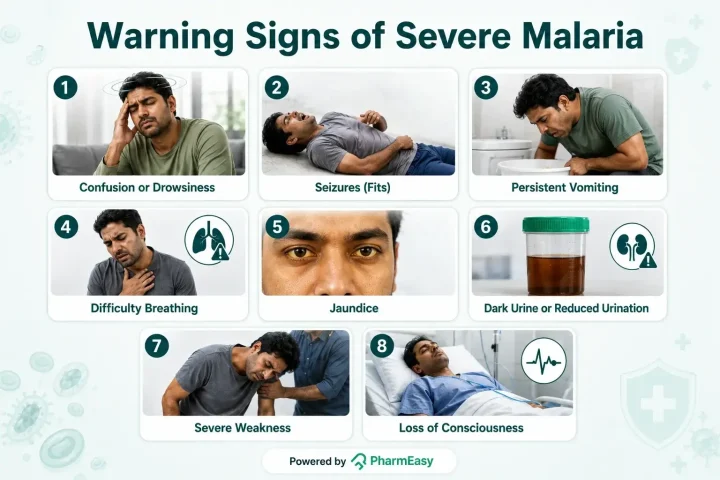
Most malaria infections can be treated effectively when diagnosed early. However, malaria, particularly P. falciparum, can sometimes progress rapidly and become life-threatening. Recognising the warning signs of severe malaria can help you or a loved one get help in time.
Children, pregnant women, older adults, and people with weakened immune systems may be at higher risk of severe malaria and should seek medical evaluation promptly if malaria is suspected.
Seek immediate medical care if a person with suspected or confirmed malaria develops any of the following11:
These signs may indicate that the infection is affecting vital organs such as the brain, lungs, or kidneys. Do not wait for symptoms to improve on their own.
Severe malaria is a medical emergency and requires urgent hospital treatment. If you notice any of these signs, seek emergency care without delay.
Various regimens are followed in the treatment of malaria, depending on the type and drug resistance in humans. Some common ones include7:
Note: Primaquine should be used with caution in G6PD-deficient patients.
While you may think it’s impossible to avoid getting bitten by a mosquito, malaria prevention methods are widely known and accepted. Here are a few8,9:
If you can avoid travelling to an area where malaria is common, then do that. This may mean changing your travel plans, but if you can’t avoid it follow the below-mentioned precautions.
There are standard medications you can take if you are planning to travel to a country where malaria is a risk.
A good way of protecting yourself is to wear clothing that covers the skin of your arms and legs. Additionally, you can also use mosquito-specific repellent sprays as well as topical creams and lotions. Look for the following ingredients in repellents for protection from mosquitoes:
Use mosquito nets to cover your sleeping area and install screens on doors and windows to keep mosquitoes out. For extra protection, use permethrin-treated nets and clothing, or apply 0.5% permethrin spray to gear such as boots, pants, socks, and tents.
If you are travelling to an area where malaria is common, your doctor may recommend preventive medication, known as chemoprophylaxis, taken before, during, and for a period after your trip. Because no preventive measure is fully protective on its own, these medicines are used alongside mosquito-bite prevention. Commonly used options include8:
The right choice depends on several factors, including your destination, how long you will be travelling, your medical history and any existing conditions, and the local drug-resistance patterns in the area. For this reason, you should consult a doctor or a travel-health clinic well before departure, ideally a few weeks ahead, so the medication can be started at the correct time. This blog does not provide dosages; medication and timing should always be decided by a healthcare professional.
Vaccines are now an important addition to malaria prevention. Two vaccines have been recommended by the World Health Organization for use in children living in regions where Plasmodium falciparum malaria is common13:
These vaccines are intended primarily to reduce severe P. falciparum malaria and deaths in young children, the group at most risk. Both have been shown to meaningfully lower the risk of malaria when delivered as part of routine childhood immunisation in endemic areas.
It is important to understand that these vaccines reduce risk but do not provide complete protection, and they are not a replacement for other measures. Children and families should continue to use mosquito nets, repellents, and other bite-prevention methods, and seek prompt treatment if malaria is suspected. Vaccine availability and rollout vary by country, so local health authorities can advise on what is offered in a given area.
Also Read: What Is Hantavirus? Symptoms, Causes, & Effective Prevention
While malaria is usually a non-fatal disease, some types may be dangerous and require prompt recognition and treatment. Knowing the types of malaria and their severity allows you to act immediately if you notice any symptoms.
Depending upon the type, several antimalarial medicines are available for treatment, used in various permutations and combinations with other drugs. Yet, the cornerstone of management remains taking adequate precautions to prevent the occurrence of these infections in the first place.
Also Read: Tuberculosis: Types, Causes, Treatment and Prevention
Disclaimer: The information provided here is for educational/awareness purposes only and is not intended to be a substitute for medical treatment by a healthcare professional and should not be relied upon to diagnose or treat any medical condition. The reader should consult a registered medical practitioner to determine the appropriateness of the information and before consuming any medication. PharmEasy does not provide any guarantee or warranty (express or implied) regarding the accuracy, adequacy, completeness, legality, reliability or usefulness of the information; and disclaims any liability arising thereof.
 22
22  3
3Malaria is a protozoan disease caused by Plasmodium species and is transmitted by the female Anopheles mosquito1. It is common during the monsoon season due to a rise in mosquito breeding. The disease can lead to systemic symptoms and metabolic stress, which can suppress immunity and increase nutritional needs.
Malaria typically presents with symptoms such as cyclical fever with chills, headache, muscle aches, vomiting, and fatigue1. The Anopheles mosquito transmits the Plasmodium parasite through its bite, introducing the parasite into the bloodstream of a healthy individual. To treat malaria, there is no specific diet, but one needs to ensure good supportive nutritional care to help the body fight the disease. A diet for malaria should focus on boosting the immune system without causing harm to other organs like the kidney, liver or digestive system. In this blog, we will discuss what you should eat and what to avoid during malaria, to help manage symptoms better and reduce risk of complications.
When the patient has malaria, the body’s metabolic rate increases due to fever. This means that the body’s nutritional requirements increase and also the need to intake calories.
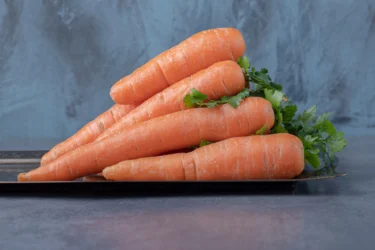
A high-carbohydrate diet can be good. Grains are a rich source but prefer rice over wheat and millets. Rice can be digested easily and can release energy faster. Fresh fruits and vegetables can also be great for malaria patients. According to studies3, vitamin A2 and vitamin C rich fruits and vegetables like beetroot, carrot, papaya, sweet lime, grapes, berries, lemon, orange, along with zinc, can help to boost the immunity, lower some symptoms and reduce risk of complications in patients suffering from malaria.
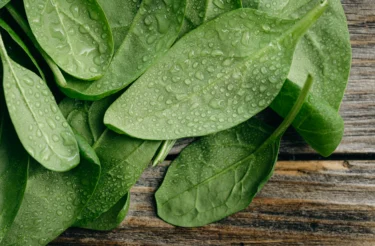
Malaria can lead to a temporary drop in haemoglobin levels due to the destruction of red blood cells11. Therefore, iron replenishment is an important part of recovery. Including iron-rich foods in your diet may help to restore energy levels and support faster recovery from weakness and fatigue.
Include foods such as:
Tip: Pair iron-rich foods with vitamin C-rich foods such as oranges, amla, guava, tomatoes, or lemons to improve iron absorption.
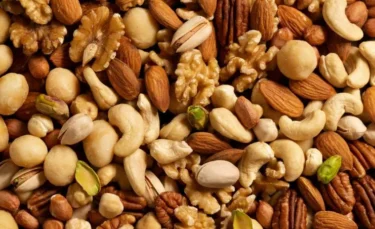
When you have malaria, you need to incorporate more phytonutrients into your diet that help to tackle antioxidative stress caused by an infection4. Nuts and seeds provide essential fatty acids, antioxidants, and protein. These nutrients help reduce oxidative stress and support healing. Choose unsalted, plain varieties and avoid commercially processed snacks.
I would like to share a helpful tip for dealing with malaria. Red palm oil contains antioxidants that might protect your body’s cells. It may reduce tissue damage and manage oxidative stress caused by malaria and other factors8. Always remember to consume it in moderation and consult with a healthcare professional for comprehensive malaria management.
Dr. Siddharth Gupta, B.A.M.S, M.D (Ayu)

Adequate hydration is essential to compensate for fluid loss due to vomiting and dehydration5. Oral rehydration solutions, fresh fruit juices, coconut water, and soups can be included. All water consumed should be boiled or filtered. Herbal remedies like ajwain water may help with bloating6, but should be used cautiously and not replace medical treatment.
While drinking water, make sure it is boiled or sterilized. Doctors usually recommend a daily fluid intake of at least 3 to 3.5 litres, if not more. Fluids will help in washing out the toxins from the body via urine and stools and help you get well sooner.

Since many antimalarial medications can place temporary stress on the liver, a liver-friendly diet can support detoxification and reduce metabolic burden during treatment and focus on early recovery13. Focus on light and freshly cooked meals such as khichdi, dal-rice, and vegetable soups and include fresh fruits like papaya, apple and citrus fruits in the diet. It is also important to stay adequately hydrated and avoid excessive consumption of alcohol during illness and recovery.

Protein is essential for tissue repair and immune function. Include well-cooked pulses, eggs, chicken, and dairy in your diet. If gastrointestinal symptoms are present, start with soups and broths. Some traditional foods like curd, lassi, and buttermilk is highly beneficial, but your doctor can guide you best on this.
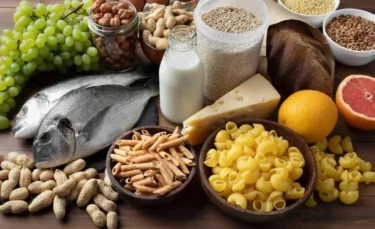
Limit fried or greasy foods, as they can worsen nausea or diarrhoea. Small amounts of healthy fats such as omega-3s from flaxseed, fish or walnuts are beneficial. They work well in reducing inflammation in the body7. Avoid trans fats and excessive dairy cream.
According to my knowledge, the seeds of the fever nut plant might be a helpful remedy for malaria10. They possess special properties that may help fight against the malaria-causing parasites. Additionally, these seeds also have anti-inflammatory effects!
Dr. Smita Barode, B.A.M.S, M.S.
Also Read: Excellent Health Benefits Of Sugarcane Juice
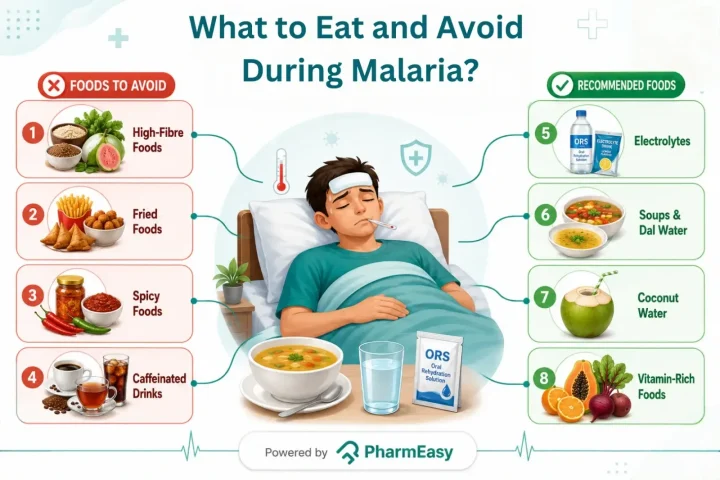
Avoid very high-fibre foods like green leafy vegetables, fruits with thick skin, and whole grain cereals, which may cause bloating or be hard to digest during acute illness. Refrain from high-fat, fried, or processed foods (e.g., chips, pastries, fast food). Also, refrain from having food that is spicy or acidic, like pickles and sauces. These can cause stomach problems and heartburn. Avoid intake of coffee, tea, cocoa, cola, or any other caffeinated beverages.
It is important to work on vitamin loss by drinking electrolytes5. Eating soups, stews, or drinking fruit juices or dal water, coconut water, etc., is important. Vitamin C and A-rich foods such as papaya, beetroots, and other citrus foods, etc., with vitamin B complex are important for a malaria patient.
I believe that it’s crucial to take precautions against mosquito bites to protect yourself from malaria. Applying mosquito repellent to exposed skin might be very helpful. Additionally, using mosquito nets over beds is highly recommended, especially while sleeping9. By following these simple steps, you may significantly lower your risk of contracting malaria.
Dr. Rajeev Singh, BAMS
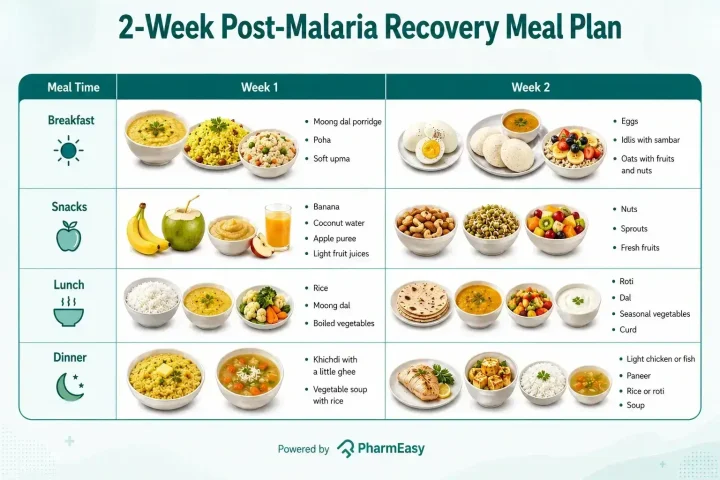
Even after fever and acute symptoms subside, the body continues to recover from internal inflammation14, nutrient depletion, and anaemia11. This recovery phase is important for restoring energy levels, rebuilding immunity, and preventing relapse or prolonged weakness. A gradual return to a balanced diet is recommended instead of immediately resuming a normal heavy diet.
The following 2-week meal plan may help your body to recover at its normal pace.
During the first week after the fever reduces, the digestive system remains sensitive. The focus should be on light, easily digestible foods.
Avoid heavy spices, fried foods, and raw salads during this phase.
In the second week, appetite and energy usually improve. This phase focuses on rebuilding strength and correcting nutritional deficiencies.
This gradual progression may help to restore haemoglobin levels, muscle strength, and overall immunity without overburdening digestion.
Also Read: 18 Best Foods to Ease Your Cough and Cold
After the acute symptoms of malaria subside and dietary recovery begins, it is important to monitor the body’s response to treatment. Malaria can cause temporary anaemia, weakness, and metabolic imbalance, and follow-up testing helps ensure complete recovery.
Routine evaluation is usually recommended if fatigue, weakness, or low-grade fever persists after treatment.
Note: Follow-up testing should be guided by your doctor based on your symptoms, malaria type, treatment received, and overall recovery.
Malaria, a parasite infection caused by mosquito bites, can adversely affect your immune system. Following the right diet during malaria can help in dealing with symptoms and avoiding risk of complications. This comprehensive list of foods to eat and avoid can help you meet the body’s unique demands during this infection. But remember, while nutritional care is essential, medical therapy must be followed as recommended by doctor. Moreover, prevention of mosquito bites through repellents, nets, and protective clothing remains the cornerstone of malaria control.
Also Read: Food for Dengue – What To Eat And What To Avoid!
To recover quickly, you must strictly finish your prescribed course of antimalarial medications, even if you start feeling better early. Pair this with absolute bed rest and high fluid intake such as water, coconut water, and fresh juices.
Yes, milk is generally safe to drink during malaria unless your doctor advises otherwise. It provides protein and other nutrients that can help support recovery. However, it should not replace fluids such as water or oral rehydration solutions if dehydration is a concern.
Yes, eggs are a good source of high-quality protein and can be included in a malaria recovery diet. They are easy to digest when cooked properly and may help support the body’s healing process. Choose boiled, poached, or lightly cooked eggs rather than heavily fried preparations.
Fruits rich in vitamins, minerals, and water content can be beneficial during malaria recovery. Options such as oranges, sweet lime, papaya, pomegranate, watermelon, and bananas can help provide hydration and essential nutrients. A variety of fruits is generally better than relying on a single fruit.
No drink can cure or stop malaria. Malaria requires treatment with prescribed antimalarial medications. However, drinking plenty of water, oral rehydration solutions, soups, and fresh fluids can help prevent dehydration and support recovery during treatment.
Yes, cucumber is generally safe to eat while being treated for malaria. Its high water content may help with hydration, especially if you have a fever. Make sure it is washed thoroughly before consumption to reduce the risk of foodborne infections.
Disclaimer: The information provided here is for educational/awareness purposes only and is not intended to be a substitute for medical treatment by a healthcare professional and should not be relied upon to diagnose or treat any medical condition. The reader should consult a registered medical practitioner to determine the appropriateness of the information and before consuming any medication. PharmEasy does not provide any guarantee or warranty (express or implied) regarding the accuracy, adequacy, completeness, legality, reliability or usefulness of the information; and disclaims any liability arising thereof.
Links and product recommendations in the information provided here are advertisements of third-party products available on the website. PharmEasy does not make any representation on the accuracy or suitability of such products/services. Advertisements do not influence the editorial decisions or content. The information in this blog is subject to change without notice. The authors and administrators reserve the right to modify, add, or remove content without notification. It is your responsibility to review this disclaimer regularly for any changes.
265
13


