




Top High Protein Vegan Foods You Should Eat
By Dr. Mrunal Shirodkar +2 more

Medically reviewed by Dr. Mrunal Shirodkar
Last updated: Feb 18, 2026 Published on: Dec 30, 2025


Get,

to manage your symptom
Get your,

4 Cr+ families
benefitted

OTP sent to 9988776655



You’ve successfully subscribed to receive
doctor-approved tips on
Whatsapp

Get ready to feel your best.


Register to Avail the Offer
Send OTPBy continuing, you agree with our Privacy Policy and Terms and Conditions
Hi There,
Sign up on PharmEasy now!!


Trusted by 4 crore+ families

OTP sent to 9988776655
You have unlocked 25% off on medicines


Code: NU25

By Dr. Mrunal Shirodkar +2 more
Table of Contents
Did you know your body needs protein to build tissues and make hormones, enzymes, and haemoglobin? Proteins are the major structural components of tissues, including muscles, in our body1. Proteins are made of amino acids. Human body needs twenty amino acids for its growth and metabolism. Out of these, twelve are nonessential, that is, the body can synthesize them1. The remaining amino acids which cannot be synthesized by the body are essential amino acids, and these should be received from our diet1.
Not only non-vegetarian foods but vegetarian sources also play a significant role in meeting protein requirements2. Plant-based foods hold all the essential amino acids which are necessary for human body. If chosen smartly, they can satisfy the nutritional needs of an individual2.
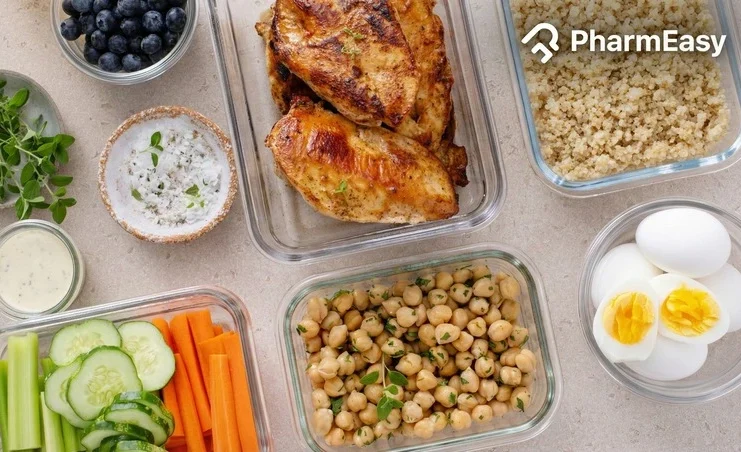
In this article, we will discuss why proteins are important, some high protein vegan foods and their benefits, how to include them in your diet and if their excess could cause any harm. So, let’s get started!
Proteins are the main building blocks of muscles and other body tissues. They are also used to produce enzymes, hormones, and hemoglobin1. They may also be used as a source of energy (but not primary source). Missing any of the essential amino acids might affect tissue growth, repair, and maintenance1.
Proteins play a crucial role in tissue repair. Tissues lost during injury or illness are replaced by proteins, by supporting the growth of new tissues for wound healing. Body starts using proteins for energy after an injury3.
Enzymes are proteins, which are involved in almost all of the chemical reactions happening inside the cells, such as metabolism. Certain hormones like growth hormones, insulin etc are also proteins, which carry signals to help different cells, tissues, and organs to work together4.
Proteins are the major structural components of muscles. Muscle mass is essential, especially for athletes who do intense workouts. High protein intake promotes muscle protein synthesis and increase in muscle mass, thereby strengthening the muscles1.
Proteins bind to atoms and molecules and transport them within the cells or throughout the body4. They help transport nutrients, ions, and metabolites into and out of cells to support normal body functions. Some transport proteins are also involved in metabolism5.
Antibodies are special protein which recognise different foreign particles such as viruses and bacteria. They protect the body by killing these organisms and prevent future infections. Antibodies are a major component of our immune system4.
Daily protein intake is essential to meet different bodily functions. The recommended dietary allowance (RDA) for an individual differs based on sex, age, and health.
Dietary requirement of protein differs from infants to adults based on their age. Here are the protein requirements for each age category according to WHO6.
Note: For healthy individuals’ consumption of 2 g / kg BW /day is considered safe.
The RDA for pregnant and lactating women differ from non-pregnant women. The need of protein is higher during this period.
Although getting too much protein from diet is usually rare, even a very high protein vegan diet consumed over long periods of time might affect your body and cause some health issues like:
There are wide variety of vegan protein sources which are beneficial for humans. Here’s a high protein vegan food list that can help you meet your daily requirements.
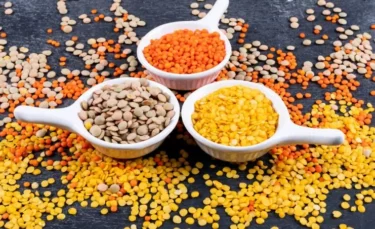
Lentils come under legume family, which are rich in protein, essential amino acids, and fibres. These are beneficial because they provide high quality plant protein with low cost. The protein content in raw lentils is about 25gm and cooked ranges between 9.0–17.8gm per 100gm. Lentils are also rich in folate, polyphenols and other bioactive compounds with antioxidant properties. They can help raise blood iron levels, lower sugar levels, manage weight, and support gut health8. Lentils are a common ingredient found in Indian kitchens, usually consumed cooked as curries or even boiled as salads.
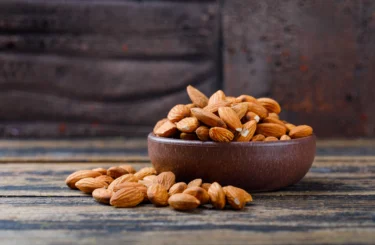
Almonds are nuts which are high in proteins. The protein content in almonds ranges between 16.8–25.4gm. Apart from protein, they have vitamins, minerals, and phytochemicals, that show anti-inflammatory and antioxidant effects. They are also rich in fibre. Due to their rich nutrient profile, regular consumption may help lower the risks associated with heart disease, diabetes, obesity, etc9. Almonds are a great snacking option that help curb hunger while meeting your nutrient requirements.
Chickpeas are good source of protein, which belong to legumes. Cooked chickpeas hold a protein of 8.86gm per 100gm. Besides, they are also rich in vitamins, folate, dietary fibre, and several minerals. They are especially helpful in reducing bad cholesterol (LDL), which is beneficial for heart health and also healthy for the gut10. Chickpeas can be included in your diet in several ways such as boiled chickpea salad, chickpea curries or ground chickpea (hummus).
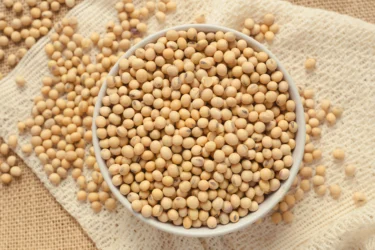
Soya or soybeans, which belongs to legumes, are considered as high source of protein, approximately 40% protein. They are rich in isoflavones, phytosterols, other antioxidants and good fats that help balance blood lipid and sugar levels and keep the heart healthy. Soyabean may also have cancer-protective action, help lower the risk of osteoporosis (bone loss), and aid in managing menopause symptoms11. Soybean can be consumed cooked with veggies or rice, as tofu or tempeh in salads or curries or as soy milk in smoothies, desserts or with cereals.
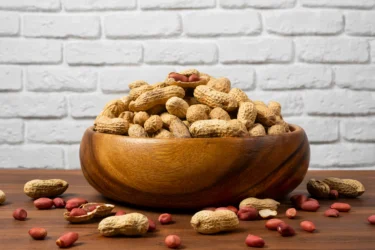
Peanuts are a great source of proteins along with fibres, vitamins, and minerals. They have highest protein levels compared to any other legumes. 100gm of peanuts have about 25.8gm of protein. They are also rich in phenolic acids, flavonoids, and phytosterols and may help manage cholesterol levels. The resveratrol found in peanuts is an antioxidant which reduces the risks of cancer, heart disease, nerve diseases, tumours, and inflammation12. Roasted peanuts (when consumed in moderation) are thus a healthy snacking option. However, some individuals might experience the acidity issues with peanuts. Removing the peanut eye might reduce its intensity. Roasting the peanuts is also helpful.
Note: Those who have peanut allergy should avoid consuming it.
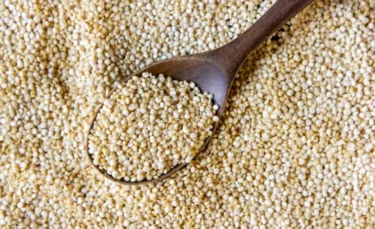
Quinoa, which is considered as a whole grain, is a very protein rich seed. It has all the essential amino acids needed for a human body. 100gm of quinoa contains 14.1gm of protein. Plus, it’s gluten-free and rich in vitamins, minerals, and folic acid. It has bioactive compounds which help prevent diseases such as heart diseases, diabetes, cancer, and obesity13. Quinoa can be substituted for rice or other grains, consumed with veggies, as khichdi, in salads or as a breakfast cereal.
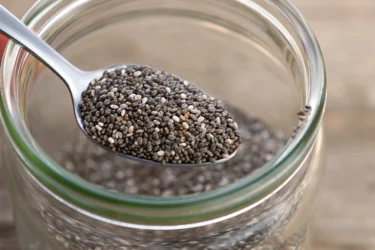
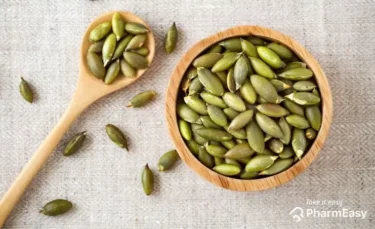
Seeds such as chia seeds and pumpkin seeds have high amounts of proteins and omega-3 fatty acids. There are about 24.2 gm of protein in 100 gm of Chia seeds, and 9.75 g of protein in 32.25 g of pumpkin seeds. Seeds have bioactive compounds which have a beneficial effect on metabolic health, help improve blood sugar and lipid levels, and may also help boost immunity13,14. They can be added to desserts or trail mix for a healthy flavourful treat.
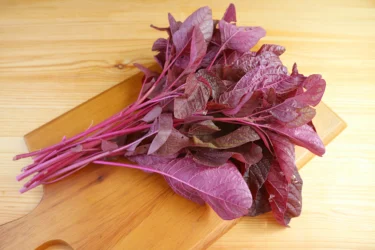
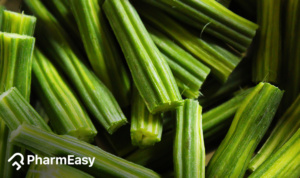
Leafy vegetables like amaranths, spinach, moringa etc are good sources of protein. These have a protein range of 9.31 g to 15.38 g per 100 g dry weight. They are also high in fibre and minerals like sodium, potassium, magnesium, and iron15. Other protein-rich vegetables include broccoli (4 g of protein per 148 g), asparagus (2 g per 93 g), sweet corn kernels (4 g per 90 g), and mushrooms (3 g per 84 g)16.
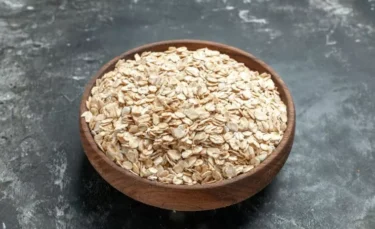
Oats are rich in protein and starch, and other nutrients like vitamin E, folate, and many minerals. They also contain dietary fibre, and phytochemicals17. They help in reducing cholesterol and have antioxidant properties. One cup of oats has about 4.75 g of protein18. Oats can be enjoyed with milk as breakfast cereals or with veggies as a replacement of high carb meals.
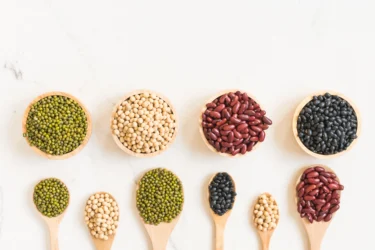
Beans are legumes rich in protein. They also contain other important micronutrients like magnesium, potassium, iron etc. They are beneficial in reducing the risk associated with heart disease, and diabetes. There are several types of beans. Black beans (86 g) contain 7.6 g of protein, Kidney beans (88.5 g) contain 7.7 g protein, Lima beans (94 g) contain 7.3 g protein, Navy beans (91 g) contain 7.5 g protein and Pinto beans (85 g) contain 7.7 g protein19. They can be consumed boiled as salads or cooked to make delicious curries.

Here are some easy-to-follow tips to include high-protein vegan foods in your routine diet and boost your protein intake:
The number of essential amino acids in different foods is different. Since all the essential amino acids are not found in all vegan sources, combining your high protein vegan foods is important25. Let’s see some examples:
Thus, consuming a diet which contains cereals, legumes, soy and nuts, will give all the essential amino acids required by the body25.
Myth: Vegan diets cannot supply enough proteins.
Fact: Vegans consume protein comparable to their requirement, and sometimes even more than the recommended value2. Average protein intake in vegans generally exceeds 0.8gm. Protein intakes of approximately 0.9–1.0 g/kg body weight was seen in several studies in vegans. A combined diet with plant-based sources like legumes, nuts, seeds, and whole grains provides all essential amnio acids, which is sufficient to meet the protein requirements for most adults.
Myth: Plant proteins lack essential amino acids, careful combination of vegan sources at each meal is essential.
Fact: Taking different protein rich vegan foods throughout the day is enough to meet the nutritional requirement (of all amino acids), and it is not necessary to combine them in every meal2.
Myth: Plant protein cannot keep muscle health, as they are of low quality.
Fact: Even though isolated plant proteins build muscle strength less efficiently than animal protein, with proper planning and sufficient intake, vegan diet will still provide enough protein for good long-term muscle health2,26.
Myth: There are not enough plant-based protein sources.
Fact: Vegans have several options like legumes, nuts, seeds, soy, vegetables, and whole grains, which will supply all essential amino acids when eaten in combination, to meet their protein need25.
Myth: Vegan protein is tasteless.
Fact: The taste of plant-based proteins can be improved through careful selection of ingredients and flavourings. Proper combinations of these can make vegan protein meals flavourful and enjoyable, like animal-based protein dishes27.
Also Read: Super Healthy Gluten Free Foods and Its Health Benefits
Proteins, which are essential for overall health, are made of essential and non-essential amino acids. The essential amino acids which should be supplied through food are abundantly found in a high protein vegan diet including legumes, nuts, cereals etc. These support muscle strength, immunity, and metabolic functions. There are several vegan options available, such soya, legumes, nuts, seeds, and protein-rich grains and vegetables, which can provide adequate protein and essential amino acids. Proper diet planning and intake can provide the daily RDA of protein from vegan sources, just as from animal sources, to meet an individual’s requirements.
Also Read: Calorie Deficit Diet: What Is It, How to Follow, Strategies and More!
There is no difference in the requirement of protein based on the type of source we consume. Protein requirements are regardless of any sources, provided the plant-protein diet includes a mix of sources2.
Human studies show that plant and animal proteins are almost equally digestible in humans, with only a tiny difference2.
High protein vegan diet rich in zinc such as chickpeas, nuts, lentils, and whole grains are best for immune system, as this mineral is essential for the development and proper functioning of immune cells28.
High protein vegan foods such as soy products (tofu and tempeh), legumes (beans and chickpeas) and wholegrains (quinoa) can be used as an alternative to meat or dairy sources for vegan athletes23.
Disclaimer: The information provided here is for educational/awareness purposes only and is not intended to be a substitute for medical treatment by a healthcare professional and should not be relied upon to diagnose or treat any medical condition. The reader should consult a registered medical practitioner to determine the appropriateness of the information and before consuming any medication. PharmEasy does not provide any guarantee or warranty (express or implied) regarding the accuracy, adequacy, completeness, legality, reliability or usefulness of the information; and disclaims any liability arising thereof.
Links and product recommendations in the information provided here are advertisements of third-party products available on the website. PharmEasy does not make any representation on the accuracy or suitability of such products/services. Advertisements do not influence the editorial decisions or content. The information in this blog is subject to change without notice. The authors and administrators reserve the right to modify, add, or remove content without notification. It is your responsibility to review this disclaimer regularly for any changes.


Comments

Leave your comment...
You may also like

















Comments