




Sagging Breasts: Causes, Treatment & Prevention Tips
By Dr. Charmi Shah +2 more

Medically reviewed by Dr. Charmi Shah
Last updated: Sep 30, 2026 Published on: May 5, 2026


Get,

to manage your symptom
Get your,

4 Cr+ families
benefitted

OTP sent to 9988776655



You’ve successfully subscribed to receive
doctor-approved tips on
Whatsapp

Get ready to feel your best.


Register to Avail the Offer
Send OTPBy continuing, you agree with our Privacy Policy and Terms and Conditions
Hi There,
Sign up on PharmEasy now!!


Trusted by 4 crore+ families

OTP sent to 9988776655
You have unlocked 25% off on medicines


Code: NU25

By Dr. Charmi Shah +2 more
Table of Contents
Breast sagging is a condition where the breast skin and tissues slowly stretch, causing the breasts to move downward over time1. It can be seen in different age groups and breast sizes, but becomes more noticeable in women in their late 20s to 30s and beyond. Studies show it is more noticeable with increasing age and after childbirth due to pregnancy-related body changes1,2. It may also occur due to weight changes and loss of skin elasticity1. This blog will explain the causes of sagging breasts and its treatment options, home remedies, and prevention tips.

Sagging breasts, meaning breast ptosis in medical terms, is a condition where the breast slowly moves lower on the chest and loses its natural lifted shape. In a healthy youthful breast, the nipple sits near the most outward point of the breast, and the lower part looks full and rounded. When this balance changes, the breast may look longer, flatter, or droopier. There are different patterns in which breast sagging can appear:
Several changes inside the body can lead to sagging breasts. The supporting tissues in the breast gradually stretch over time, especially with changes like pregnancy, weight fluctuations, and ageing that affect how the breast maintains its shape. As the skin also loses firmness and elasticity, it becomes less able to hold the breast in an elevated position. Together, these changes slowly alter breast shape and position, leading to a lowering of the breast and less firm appearance over time3.
Did You Know?
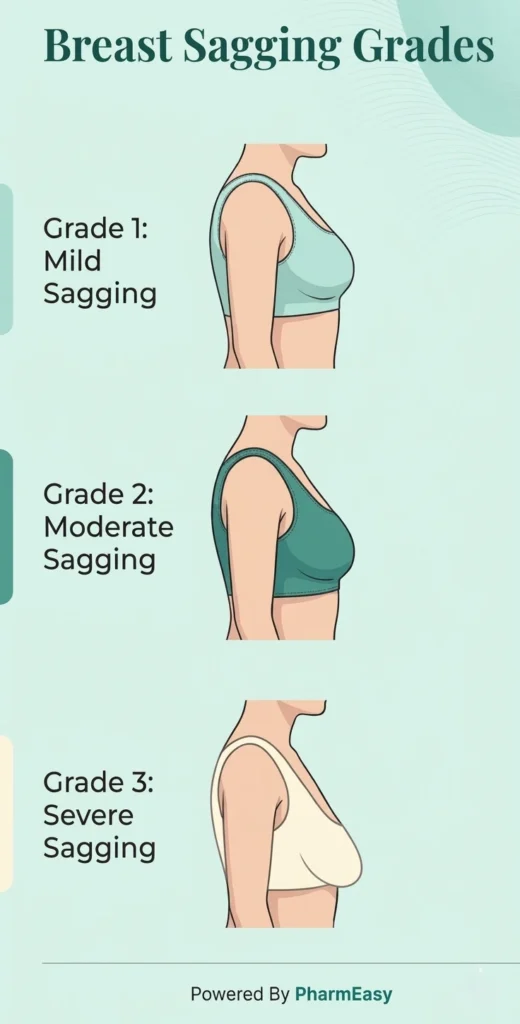
Breast sagging is assessed by checking how low the nipple sits compared to the inframammary fold (the fold under the breast)4. The Regnault classification system is used to describe how much the breast has sagged6.
These are the 3 main grades of breast sagging4,6:
Sometimes, the nipple stays near the fold, but most of the breast tissue hangs lower, this is called pseudoptosis6. Doctors use these grades to understand how much the breasts have sagged and to decide the right treatment or surgery if needed. Next, let us look at the causes of sagging breasts.
Breast sagging occurs when the skin, inner support, and breast tissue change over time. Below are some breast sagging reasons4,5:
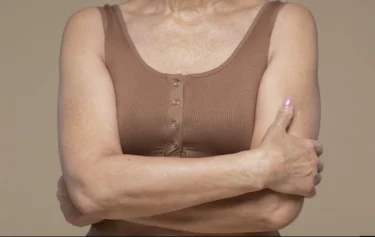
In some people, the skin may be less elastic, and the supportive bands (Cooper’s ligaments) within the breast may be weaker. When these support bands become loose, the breast may start to sag.
Breast heaviness and density can affect how the breast holds its shape as they place strain on the supporting tissues, which may contribute to sagging over time.
These may also contribute to breast sagging. Skin elasticity, collagen quality, and connective tissue strength differ from person to person. Because of these inherited traits, the skin and supportive bands in the breasts may stretch more easily over time in some individuals causing breast sagging7.

During pregnancy, the skin and inner support bands can lose their strength. Weight loss can also change the breast and lead to sagging. Weight cycling (yo-yo dieting) is a potential risk factor for breast sagging. Repeated instances of weight loss and weight gain can stretch and loosen breast skin multiple times, reducing its elasticity and weakening connective tissue support. Over time, this may contribute to breast ptosis, especially after major or repeated weight fluctuations8,9.

As women grow older, the skin and soft tissue support inside the breast become weaker, leading to sagging18.
Hormone changes after pregnancy or menopause can gradually affect breast volume and skin and tissue support over time, which may contribute to a less firm appearance. After menopause, a drop in oestrogen may cause the loss of breast fat, glandular tissue, and supporting structures, which makes the breasts more prone to sagging. The connective tissue also becomes less elastic, and the areola may shrink, while the nipple may slightly turn inward over time10.

Smoking and too much sun exposure can damage the breast tissues.
These causes can act together and slowly change the shape of the breast over time. In the next section, we will look at different ways to manage breast sagging.
The use of non-surgical and surgical options for breast sagging treatment depends on how mild or severe the condition is.
Non-surgical care mainly focuses on improving support and appearance through supportive bras, exercise, and skin care.
Surgical treatment is an option when correction may be needed in the position, shape, or volume of the breasts. Surgery can lift sagging breasts significantly, as it can remove the extra skin, reshape the breast tissue, and improve breast position.
The procedure is selected based on the degree of sagging and whether volume correction is also needed4. This allows the treatment to be tailored to individual breast shape and structure for a more balanced result.
Breast sagging is a natural change that can happen over time due to different internal and external factors. While it cannot be fully avoided, these simple steps may help support breast tissue health.
Smoking can reduce the normal elasticity of the skin, including elasticity of the skin around the breasts. Avoiding smoking helps maintain healthier and more supportive skin over time5.
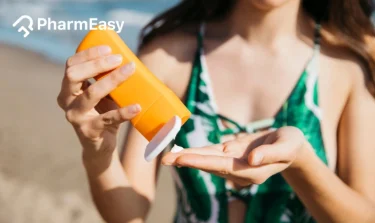
Too much sun exposure can damage the skin fibres and reduce skin tightness. This may slowly affect breast tissues4. Using sunscreen regularly helps protect the skin from UV rays. SPF 30 or higher is recommended23.

Breast sagging may be seen more in people who have higher body weight and higher BMI5. Keeping a healthy weight by eating balanced food, doing regular exercise, sleeping well, and managing stress may help support overall body and breast health24.
Women who rarely use bras may have less support for the soft tissues of the breasts, which can increase strain over time. Using a properly fitted bra can help provide better support and reduce stress on breast tissues during daily activities5,11.

Frequent high-impact exercises can cause movement-related discomfort and put stress on the soft tissues of the breasts if proper breast support is not used5. High-impact exercise means activities like running or jumping, where both feet leave the ground and the body feels repeated impact25. So, it is advisable to include a variety of exercises in your routine and allow enough rest between sessions26.
These simple habits may help support skin health and reduce the factors associated with breast sagging over time.
1. Myth: Breast sagging happens only because of pregnancy.
Fact: No. Breast sagging can also happen when the skin becomes weak, the support tissues inside the breast become less strong, or when body weight changes over time. Ageing can also lead to breast sagging4.
2. Myth: Only old age causes breast sagging.
Fact: No. Breast skin can also be affected by smoking (weakens the skin), too much sun exposure (damages the skin), and changes in the body during pregnancy or menopause4.
3. Myth: Breastfeeding always causes breast sagging.
Fact: No. Studies show that breastfeeding and the number of pregnancies do not always directly cause breast sagging. Breast shape changes depend more on skin strength, strength of the supportive ligaments in the breasts, ageing, and other body changes5.
Also Read: Breast Tenderness: Causes, Symptoms, Home Remedies and Prevention Tips
You should consult a doctor if you notice signs of breast ptosis (sagging) along with changes that may be concerning or different from usual age-related sagging.
These may include cosmetic changes (changes related to the appearance) due to ageing18, pregnancy, or weight fluctuations, such as:
You should also seek medical attention if you notice any of the following red flag symptoms that may need evaluation:
A doctor will examine your breast, check for underlying causes, and guide you on whether any treatment or follow-up is needed.
Breast sagging is a gradual change that happens over time due to ageing, pregnancy, weight changes, and hormonal factors that affect the skin and tissues supporting the breasts. While non-surgical methods like supportive bras, exercise, and skin care may help improve comfort and appearance, they cannot reverse the condition. Surgical options such as breast lift or augmentation are the only methods that can significantly correct breast shape and position when needed.
Also Read: Can You Increase Your Breast Size Naturally? Here’s What Doctors Want You To Know
Sagging breasts usually do not become fully firm again on their own because the skin and supportive tissues become loose over time. However, doctors can help improve breast shape and firmness using treatments like mastopexy (breast lift surgery), depending on the severity of the sagging4.
Breast ptosis can occur at any age and in any breast size, but it is mainly associated with ageing, pregnancy, weight changes, and hormonal factors1. It is more common after late 20s, and its occurrence generally increases in the 30s and 40s due to these progressive changes2.
No specific vitamin deficiency directly causes sagging breasts. However, vitamins A, C, and E support skin elasticity and collagen formation, so their deficiency may have a small effect on skin firmness28. Breast ptosis is mainly linked to ageing, pregnancy, weight changes, and hormonal factors rather than vitamins alone1.
Wearing a bra all the time may give support and comfort, but it does not stop breasts from sagging. Sagging occurs because of causes such as ageing, pregnancy, and gravity. A bra only helps with support and comfort rather than preventing these natural changes11.
Hormones are not the direct cause of breast sagging. Sagging is mainly caused by changes in breast tissue, volume, and skin support, leading to gradual loss of firmness over time due to the effect of hormones like oestrogen, progesterone, and prolactin during pregnancy and menopause11,29,30.
Exercise may help improve the appearance of sagging breasts. Strength training exercises like push-ups, chest presses, and chest flys strengthen the pectoral muscles underneath the breasts. This does not change breast tissue itself, but it improves the posture22 and gives a firmer, more lifted appearance14.
1. Martinez AA, Chung S. Breast Ptosis. In: StatPearls [Internet]. StatPearls Publishing; 2023. Accessed April 24, 2026. Available from: https://www.ncbi.nlm.nih.gov/sites/books/NBK567792/
2. Kim SJ, Kim M, Kim MJ. The Affecting Factors of Breast Anthropometry in Korean Women. Breastfeed Med. 2014;9(2):73-78. doi:10.1089/bfm.2013.0068. Available from: https://pubmed.ncbi.nlm.nih.gov/24180472/
3. Hammond DC. Mastopexy. In: Atlas of Aesthetic Breast Surgery. Elsevier; 2009:83-128. doi:10.1016/B978-1-4160-3184-0.00005-4. Available from: https://www.researchgate.net/publication/281874844_Atlas_of_Aesthetic_Breast_Surgery
4. Harrak SE, Jaadi D, Sqalli H, et al. Mastopexy: Management of Breast Ptosis and Complications. SAS J Surg. 2021;7(10):590-595. doi:10.36347/sasjs.2021.v07i10.015. Available from: https://saspublishers.com/media/articles/SASJS_710_590-595.pdf
5. (PDF) A Study on Predisposing Factors to Breast Ptosis. ResearchGate. Accessed April 24, 2026. Available from: https://www.researchgate.net/publication/325793381_A_Study_on_Predisposing_Factors_to_Breast_Ptosis
6. Breast Ptosis – Abstract – Europe PMC. Accessed April 24, 2026. Available from: https://europepmc.org/article/nbk/nbk567792#_article-73063_s1_
7. Geusens B, Haykal D. Genetic profiling and precision skin care: a review. Front Genet. 2025;16:1559510. doi:10.3389/fgene.2025.1559510. Available from: https://pubmed.ncbi.nlm.nih.gov/40529811/
8. Colicchia G, Di Pietro V, Cervelli V. Mastoplasty after massive weight loss: Redefinition and stabilization of the breast mound with submuscular autoprosthesis. J Cutan Aesthetic Surg. 2019;12(3):164. doi:10.4103/JCAS.JCAS_48_18. Available from: https://pubmed.ncbi.nlm.nih.gov/31619888/
9. Thillainadesan S, Lambert A, Cooke KC, et al. The metabolic consequences of ‘yo-yo’ dieting are markedly influenced by genetic diversity. Int J Obes. 2024;48(8):1170-1179. doi:10.1038/s41366-024-01542-2. Available from: https://pubmed.ncbi.nlm.nih.gov/38961153/
10. Aging changes in the breast: MedlinePlus Medical Encyclopedia. Accessed April 27, 2026. Available from: https://medlineplus.gov/ency/article/003999.htm
11. Isono M, Tateoka Y. Fundamental Research on the Invention of Breast Support Underwear with a Focus on Women’s Comfort. Sensors. 2022;23(1):25. doi:10.3390/s23010025. Available from: https://www.mdpi.com/1424-8220/23/1/25
12. McGhee DE, Steele JR, Zealey WJ, Takacs GJ. Bra–breast forces generated in women with large breasts while standing and during treadmill running: Implications for sports bra design. Appl Ergon. 2013;44(1):112-118. doi:10.1016/j.apergo.2012.05.006. Available from: https://pubmed.ncbi.nlm.nih.gov/22742876/
13. Rivard AB, Peterson DC. Anatomy, Thorax, Breast. In: StatPearls [Internet]. StatPearls Publishing; 2023. Accessed April 24, 2026. Available from: https://www.ncbi.nlm.nih.gov/books/NBK519575/
14. Schütz P, Zimmer P, Zeidler F, et al. Chest Exercises: Movement and Loading of Shoulder, Elbow and Wrist Joints. Sports. 2022;10(2):19. doi:10.3390/sports10020019. Available from: https://pubmed.ncbi.nlm.nih.gov/35202059/
15. Ibrahim AM, Sinno HH, Izadpanah A, Vorstenbosch J. Mastopexy for breast ptosis: Utility outcomes of population preferences. Plast Surg. 2015;23(2). doi:10.4172/plastic-surgery.1000916. Available from: https://pubmed.ncbi.nlm.nih.gov/26090352/
16. Ganceviciene R, Liakou AI, Theodoridis A, Makrantonaki E, Zouboulis CC. Skin anti-aging strategies. Dermatoendocrinol. 2012;4(3):308-319. doi:10.4161/derm.22804. Available from: https://pubmed.ncbi.nlm.nih.gov/23467476/
17. He X, Wan F, Su W, Xie W. Research Progress on Skin Aging and Active Ingredients. Molecules. 2023;28(14):5556. doi:10.3390/molecules28145556. Available from: https://pubmed.ncbi.nlm.nih.gov/37513428/
18. Fernandes A, Rodrigues PM, Pintado M, Tavaria FK. A systematic review of natural products for skin applications: Targeting inflammation, wound healing, and photo-ageing. Phytomedicine. 2023;115:154824. doi:10.1016/j.phymed.2023.154824. Available from: https://pubmed.ncbi.nlm.nih.gov/37119762/
19. Nagrik SU, Shivshankar M., Chharre VS, Dhage SM, Borey VS. Role of aloe vera in skincare: exploring its therapeutic benefits, formulations, and future innovations. Yemen J Med. 2024;03(03):197-206. doi:10.63475/j.yjom.2024.021. Available from: https://www.researchgate.net/publication/387072320_Role_of_aloe_vera_in_skincare_exploring_its_therapeutic_benefits_formulations_and_future_innovations
20. Prakoeswa CRS, Damayanti, Anggraeni S, et al. The Role of Moisturizer Containing Anti‐inflammatory on Skin Hydration in Mild‐Moderate Atopic Dermatitis Patients. Guglielmo A, ed. Dermatol Res Pract. 2024;2024(1):3586393. doi:10.1155/drp/3586393. Available from: https://pubmed.ncbi.nlm.nih.gov/39741562/
21. Breast augmentation surgery: MedlinePlus Medical Encyclopedia. Accessed April 24, 2026. Available from: https://medlineplus.gov/ency/article/002984.htm
22. Dung R. Managing Kyphosis: Preventive Strategies and Therapeutic Approaches for Spinal Health. 12(12). Available from: https://www.omicsonline.org/open-access-pdfs/managing-kyphosis-preventive-strategies-and-therapeutic-approaches-for-spinal-health.pdf
23. Faizan P, Prabhas M, Sharma DT. SUNSCREEN AS A COSMETIC PRODUCT: A COMPREHENSIVE REVIEW. Available from: https://www.ijarp.com/myimgup/994079394IJARP-2351.pdf
24. Steps for Losing Weight | Healthy Weight and Growth | CDC. Accessed April 24, 2026. Available from: https://www.cdc.gov/healthy-weight-growth/losing-weight/index.html
25. Khowailed IA, Pinjuv-Turney J, Lu C, Lee H. Stress Incontinence during Different High-Impact Exercises in Women: A Pilot Survey. Int J Environ Res Public Health. 2020;17(22):8372. doi:10.3390/ijerph17228372. Available from: https://pubmed.ncbi.nlm.nih.gov/33198262/
26. 10 Tips for Exercising Safely. Harvard Health. May 4, 2010. Accessed April 24, 2026. Available from: https://www.health.harvard.edu/healthbeat/10-tips-for-exercising-safely
27. Signs and Symptoms of Breast Cancer – NCI. Accessed April 24, 2026. Available from: https://www.cancer.gov/types/breast/symptoms
28. Januszewski J, Forma A, Zembala J, et al. Nutritional Supplements for Skin Health—A Review of What Should Be Chosen and Why. Medicina (Mex). 2023;60(1):68. doi:10.3390/medicina60010068. Available from: https://pubmed.ncbi.nlm.nih.gov/38256329/
29. Mammary Tissue Changes During Pregnancy and Breastfeeding | Springer Nature Link. Accessed April 24, 2026. Available from: https://link.springer.com/chapter/10.1007/978-3-030-43840-1_14
30. Ahmed G. El-Din Osman, M.D. MKhA MD;, Ahmed Ramadan El Sabbagh, M.Sc. SAAF MD; Comparison between Augmentation Mastopexy in One Session and Two Separate Sessions. Med J Cairo Univ. 2020;88(12):1985-1999. doi:10.21608/mjcu.2020.125137. Available from: https://mail.medicaljournalofcairouniversity.net/index.php/2014-10-22-23-17-30/vol-88-december-2020/4767-comparison-between-augmentation-mastopexy-in-one-session-and-two-separate-sessions
Disclaimer: The information provided here is for educational/awareness purposes only and is not intended to be a substitute for medical treatment by a healthcare professional and should not be relied upon to diagnose or treat any medical condition. The reader should consult a registered medical practitioner to determine the appropriateness of the information and before consuming any medication. PharmEasy does not provide any guarantee or warranty (express or implied) regarding the accuracy, adequacy, completeness, legality, reliability or usefulness of the information; and disclaims any liability arising thereof.
Links and product recommendations in the information provided here are advertisements of third-party products available on the website. PharmEasy does not make any representation on the accuracy or suitability of such products/services. Advertisements do not influence the editorial decisions or content. The information in this blog is subject to change without notice. The authors and administrators reserve the right to modify, add, or remove content without notification. It is your responsibility to review this disclaimer regularly for any changes.

 1
1Comments

Leave your comment...
You may also like













Comments