
Introduction
Assisted reproductive technology (ART) has advanced rapidly over the past few decades, transforming the landscape of infertility treatment worldwide. India, in particular, has witnessed one of the fastest-growing ART sectors, with a significant rise in the number of fertility centres and ART cycles performed each year1.
ART includes a range of medical techniques designed to help couples conceive by manipulating reproductive cells outside the human body2. Among these techniques, in vitro fertilization (IVF) stands out as the most widely used and well-established method2. And over the years, IVF has evolved with improvements in laboratory technology, culture systems, and embryology practices, leading to higher success rates and safer procedures3.
Through this article, we aim to explore what is IVF, how the procedure works, the detailed steps involved, its indications and benefits. We will also cover IVF side effects, potential risks, and what individuals or couples can expect throughout the process.
Advertisement
What is IVF?
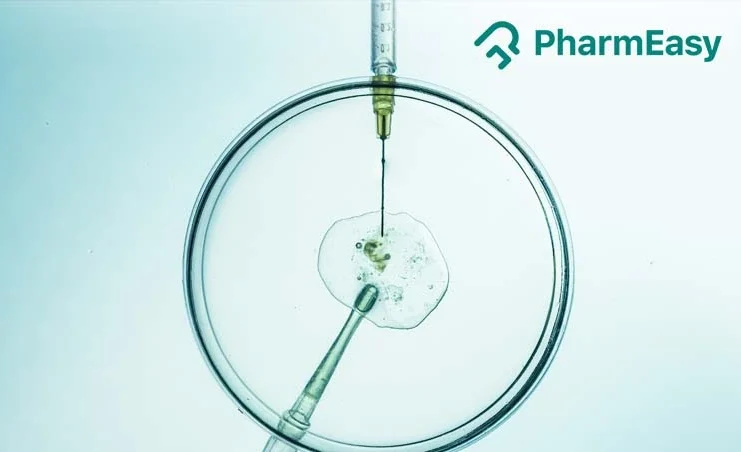
IVF is a specialised fertility treatment in which a woman’s egg and a man’s sperm are combined/fertilized outside the body. This is typically achieved in a controlled laboratory environment4.
Under normal circumstances, an egg and sperm meet inside the woman’s fallopian tube after intercourse. And if fertilization (fusion of egg and sperm) occurs, the resulting embryo travels to the uterus and implants in the uterine lining. This leads to a natural conception/pregnancy.
However, when this process does not occur on its own, IVF provides an alternative path to conception4. The term in vitro literally means “in glass,” referring to fertilization that occurs outside the natural reproductive system5.
IVF is one of the most widely practised forms of ART. The IVF process involves retrieving mature eggs from the ovaries, fertilizing them with sperm in a laboratory to create embryos, and then either2:
- transferring one or more of these embryos into the woman’s uterus, or
- freezing (cryopreserving) the embryos for future use
Benefits of IVF
IVF offers several important benefits that help individuals and couples overcome infertility and improve their chances of having a healthy pregnancy. Benefits of IVF include2:
- Aids couples with unexplained fertility issues who may have no other effective option2,4.
- Helps achieve pregnancy when natural conception is not possible (e.g., blocked tubes, low sperm count and blockage)4.
- Provides flexible options, meaning you can use your own eggs/sperm, or donor eggs/sperm/embryos when needed2.
- Allows embryo or egg freezing, helping people preserve fertility for the future (useful before cancer treatment or delaying pregnancy)2.
- Enables genetic testing of embryos, reducing the risk of inherited diseases and some chromosomal problems4.
- Higher success rates compared to many other fertility treatments6.
The IVF Procedure Step by Step
IVF involves a series of carefully planned steps that help eggs and sperm come together outside the body. This is followed by placing a healthy embryo into the uterus. The following outlines the IVF procedure step by step4:
Advertisement
Step 1: Ovarian Stimulation (Super-ovulation)
- The woman is given fertility medications to help her ovaries produce multiple mature eggs (instead of the single egg normally released each month).
- During this phase, doctors monitor the ovaries closely through regular ultrasounds and blood tests to track hormone levels and egg development.
Step 2: Egg Retrieval
- Once the eggs are ready, they are collected through a minor procedure called follicular aspiration.
- It is usually done under light sedation.
- Using ultrasound guidance, a thin needle is passed through the vagina into the ovaries to gently suction out the eggs from each follicle.
- The process may cause mild cramping, which typically resolves within a day.
- If a woman cannot produce eggs, donor eggs may be used.
Step 3: Fertilization (Insemination)
- The retrieved eggs are mixed with the man’s sperm in the laboratory.
- The sperm naturally fertilizes the egg a few hours after being combined.
- If there is a low chance of natural fertilization (due to male infertility), a technique called intracytoplasmic sperm injection (ICSI) may be used, where a single sperm is directly injected into the egg.
- Many fertility centres perform ICSI routinely for better fertilization outcomes, but this is only possible if the cause of infertility is related to the male partner.
Step 4: Embryo Culture
- After fertilization, the developing embryos are kept in a controlled environment and monitored for proper growth.
- By day 3 to 5, a healthy embryo will have divided into multiple cells.
- For couples at risk of genetic disorders, preimplantation genetic testing (PGT) may be offered to test embryos before transfer. This helps identify embryos free of specific genetic conditions.
Step 5: Embryo Transfer
- 3 to 5 days after fertilization, one or more healthy embryos are gently placed into the woman’s uterus.
- The procedure is quick and usually painless.
- A thin catheter is used to guide the embryo through the cervix into the womb.
- If the embryo implants in the uterine lining, pregnancy begins.
- Any remaining healthy embryos may be frozen for future use.
Medications and Procedures Used
Several medications are used during an IVF cycle to help the ovaries produce eggs, control hormone levels, and prepare the uterus for embryo transfer. The main types include:
- Ovarian Stimulation Medications: These medicines help the ovaries produce multiple mature eggs instead of just one. Common examples2:
- Exogenous gonadotropins [follicle stimulating hormone (FSH) and luteinizing hormone (LH)]
- Selective oestrogen receptor modulators (clomiphene citrate)
- Aromatase inhibitors (letrozole)
- Medications to Prevent Premature Ovulation: These drugs stop the body from releasing eggs too early. Common options2:
- Gonadotropin-releasing hormone (GnRH) agonists
- GnRH antagonists (GnRHa)
- Trigger Shot (Final Maturation Injection): Once the eggs are developed, a “trigger shot” is given to help the eggs mature fully before retrieval. Examples2:
- hCG (human chorionic gonadotropin)
- Progesterone Support: After egg retrieval and embryo transfer, progesterone is given to prepare the uterine lining and support early pregnancy2. Forms include7:
- Vaginal gel
- Vaginal capsules/tablets
Preparation for IVF
Before starting an IVF cycle, individuals undergo several important evaluations to ensure the treatment is safe, appropriate, and has the best chance of success. These assessments help identify any factors that may affect egg quality, sperm health, or embryo implantation.
1. Assessment of Ovarian Reserve (Female Partner)
Tests are done to understand how many good-quality eggs the woman may be able to produce. Common tests include2:
If the results show poor ovarian reserve, IVF is still possible, but the woman may need to consider options such as donor eggs.
2. Semen Analysis (Male Partner)
The male partner provides a semen sample to assess2:
- Sperm count
- Motility (movement)
- Morphology (shape)
These results help determine if standard IVF is suitable or if ICSI (Intracytoplasmic Sperm Injection) is needed.
3. Evaluation of the Uterine Cavity
Imaging tests help identify structural issues that may interfere with embryo implantation, such as2:
- Fibroids
- Polyps
- Adhesions
- Uterine septum
Addressing these problems beforehand improves the chances of a successful pregnancy.
4. Infectious Disease Screening
Both partners are screened for infections such as2:
- HIV
- Hepatitis B & C
- Syphilis
This ensures patient safety and prevents transmission during treatment.
5. Coordinated Care and Emotional Support
IVF requires a multidisciplinary team, including doctors, nurses, embryologists, counsellors, and lab staff2.
- Good communication and strong emotional support are essential, as the IVF process can be stressful.
- Providing patient-centred care and clear guidance helps individuals feel supported and improves their overall IVF experience.
Important: Alcohol and smoking may negatively influence ART/IVF outcomes8. Therefore, individuals undergoing ART should follow a balanced diet and avoid alcohol and smoking to support better treatment outcomes.
IVF Treatments
Different approaches may be used during an IVF cycle depending on the couple’s fertility issues, age, and medical history. The most commonly used treatment options include:
- Standard IVF (Conventional IVF): In this method, multiple sperm are mixed with each mature egg in the laboratory and fertilization occurs naturally4.
- ICSI: A single healthy sperm is directly injected into each mature egg to achieve fertilization4.
- Use of Donor Eggs or Donor Sperm: Donor eggs or sperm may be used when one partner cannot produce healthy gametes2.
- Frozen Embryo Transfer (FET): Previously created and frozen embryos are thawed and transferred in a later cycle9. Frozen embryo transfer success rates are equal to the fresh transfers, and no additional abnormalities occur.
- PGT: Embryos are tested for chromosomal abnormalities or specific genetic diseases before transfer2,4.
- IVF with Donor Embryos: Embryos donated by other couples are transferred to the recipient’s uterus2. The 2021 ART Act in India oversees that ART clinics and donor banks to ensure safe, ethical, and transparent practices10.
- Gestational Surrogacy: An embryo created through IVF is transferred to a surrogate who carries the pregnancy11.
What to Expect During and After the Procedure
IVF can bring both emotional and physical challenges, but support is available throughout the process. Your team of doctors, counsellors, and fertility support groups can help you navigate this journey.
- Counselling: Counselling provides a confidential space to discuss your feelings, worries, and expectations. It is recommended for everyone undergoing IVF, and clinics generally offer access to a counsellor before, during, and after treatment12.
- After the Procedure: Post embryo transfer, light rest may be advised for the remainder of the day. Full bed rest is not usually required unless there is a risk of ovarian hyperstimulation syndrome (OHSS). Most women can return to normal activities the following day4. You may be advised to avoid heavy exercise and intercourse until the pregnancy test.
- Progesterone Support: Daily progesterone (injections or pills) may be required for 8 to 10 weeks after embryo transfer. Some women may continue progesterone supplementation for 8 to 12 weeks if pregnancy occurs4. This should only be considered if advised by a doctor.
- Pregnancy Test: A blood test to check for pregnancy is done 12 to 14 days after the embryo transfer4.
Joining support groups and connecting with others going through similar experiences can be reassuring during this phase12.
IVF Side Effects
Women taking fertility medicines may experience4:
- Bloating
- Abdominal discomfort
- Mood swings
- Headaches
- Bruising at injection sites
These symptoms are usually temporary and related to the hormonal changes during treatment.
Risks and Complications
IVF is generally safe, but like all medical treatments, it carries certain physical, emotional, and financial risks. These may vary from mild to more serious.
- Risks from Egg Retrieval Procedure: There may be some risks associated with retrieving eggs. These include4:
- Reaction to anaesthesia
- Bleeding or infection
- Injury to nearby organs (bowel or bladder)
- Multiple Pregnancy: Transferring more than one embryo increases the risk of twins or higher-order multiples4,12.
- This increases the chances of premature delivery, low birth weight, and various health complications for both the mother and the babies.
- Ectopic Pregnancy: A fertilized egg may implant outside the uterus (usually in the fallopian tube). This needs urgent medical care12.
- Ovarian torsion: Rare risk of ovarian torsion, particularly in patients with polycystic ovarian syndrome (PCOS) who may develop enlarged ovaries during stimulation13.
- OHSS (rare but serious): This occurs when the ovaries over-respond to fertility medications. However, with modern techniques/medications, this risk is much less prevalent. Symptoms may include4:
- Severe bloating and abdominal pain
- Rapid weight gain (over 10 pounds in 3 to 5 days)
- Decreased urination
- Nausea or vomiting
- Shortness of breath
Mild cases may improve with rest, but severe cases may require draining fluid or hospitalisation.
- Emotional and Financial Stress: IVF requires significant time, emotional energy, and financial resources. Many couples may experience stress, anxiety, or depression during treatment. In addition to this, treatment costs are also high, and insurance coverage may be limited4.
Success Rates and Results
IVF success varies widely and depends on several factors, such as maternal age, egg quality, embryo type (fresh or frozen), and the underlying cause of infertility. Although effective, the chance of pregnancy from a single fresh embryo transfer remains modest.
For women (under 35), general success rates are:
- Successful implantation with fresh embryos ranges from 30 and 45% per cycle14.
- Success increases cumulatively across multiple cycles, reaching 60% after 3 cycles15.
Note: Success rates may decline with advancing maternal age, especially after 40 years16.
When to See a Doctor?
After IVF, it is important to watch for symptoms that may indicate complications. Contact your doctor immediately if you experience4,12:
- Fever above 100.5°F (38°C)
- Pelvic pain
- Heavy vaginal bleeding
- Blood in the urine
- Feeling faint
- Coughing up blood
Urgent medical help may be required in the following cases12:
- Difficulty breathing
- Chest pain or pain in the upper back
- Severe thirst with reduced urination
- Swelling anywhere in the body
- Sharp lower abdominal pain on one side
- Pain at the tip of the shoulder
These symptoms may indicate severe OHSS or an ectopic pregnancy and require urgent medical attention.
Also Read: 6 Essential Vitamins For Women That You Need To Know About
Conclusion
IVF is a widely used and effective fertility treatment, but its success depends on many factors, including age, egg and embryo quality, and underlying medical conditions. The process involves several steps, requires careful preparation, and may come with emotional, physical, and financial challenges. Thus, understanding the procedure, potential risks, and expected outcomes can help individuals make informed decisions.
As you consider or undergo IVF, it is important to maintain realistic expectations, seek strong emotional support, and work closely with an experienced medical team. Many individuals and couples can achieve a successful and rewarding outcome with the right guidance and care.
Also Read: Best Guide to Breast Pumping For New Mothers
Frequently Asked Questions (FAQs)
What are the 5 stages of IVF? The five basic steps of IVF are: ovarian stimulation (fertility medicines to produce multiple eggs), egg retrieval, fertilization (standard IVF or ICSI), embryo culture, and finally embryo transfer4.
How long is an IVF pregnancy? An IVF pregnancy lasts the same duration as a natural pregnancy, which is about 9 months after fertilization4.
Can you choose gender with IVF? Gender selection may be done through preimplantation genetic testing17. However, under the Pre-Natal Diagnostic Techniques (Regulation and Prevention of Misuse) Act of 1994, gender testing is strictly prohibited in India18.
What is the biggest risk of IVF? The most significant risks include ovarian hyperstimulation syndrome (OHSS) and multiple pregnancy (twins or more)11. Other risks include ectopic pregnancy and emotional/financial stress12.
Can IVF be done after menopause? Women who are postmenopausal no longer produce eggs. However, the uterus can still carry a pregnancy with hormonal support and donor embryos19.
Can IVF be successful with PCOS?Women with polycystic ovarian syndrome (PCOS) often respond well to IVF and may have good success rates. However, they have a higher risk of OHSS, so careful monitoring is required20.
Can IVF be done after tubal ligation? IVF bypasses the fallopian tubes entirely21. So, it is a common option for women who have had their tubes tied.
Can IVF cause cancer? Current research shows no clear evidence that IVF or fertility medications increase the risk of cancer22. So, we can say that studies so far have been reassuring.
Are IVF children as healthy as naturally conceived children?IVF children are just as healthy as those conceived naturally. There is no increased risk of major congenital anomalies, and the slightly higher chance of prematurity is mostly linked to parental age and underlying infertility factors, not IVF techniques themselves23.
References
- Malhotra N, Shah D, Pai R, Pai HD, Bankar M. Assisted reproductive technology in India: A 3 year retrospective data analysis. J Hum Reprod Sci. 2013 Oct;6(4):235-40. Available from: https://pmc.ncbi.nlm.nih.gov/articles/PMC3963305/
- Choe J, Shanks AL. In vitro fertilization [Internet]. Treasure Island (FL): StatPearls Publishing; [cited 2025 Dec 05]. Available from: https://www.ncbi.nlm.nih.gov/books/NBK562266/
- Eskew AM, Jungheim ES. A History of Developments to Improve in vitro Fertilization. Mo Med. 2017 May-Jun;114(3):156-159. Available from: https://pmc.ncbi.nlm.nih.gov/articles/PMC6140213/
- MedlinePlus. In vitro fertilization (IVF) [Internet]. U.S. National Library of Medicine; [cited 2025 Dec 05]. Available from: https://medlineplus.gov/ency/article/007279.htm
- Taffs L, Kerridge I, Lipworth W. The silent world of assisted reproduction: A qualitative account of communication between doctors and patients undergoing in vitro fertilisation in Australia. Health Expect. 2023 Dec;26(6):2340-2348. Available from: https://pmc.ncbi.nlm.nih.gov/articles/PMC10632647/
- Bano T, Shaheen MA, Shabbir NA, Jadoon AK, Ameen S, Atta M, Noor S, Khattak MI, S A. Clinical Outcomes of In Vitro Fertilization (IVF) Versus Intrauterine Insemination (IUI) in Infertile Patients: Toward Evidence-Based Fertility Planning. Cureus. 2025 Sep 17;17(9):e92511. Available from: https://pmc.ncbi.nlm.nih.gov/articles/PMC12535426/
- MedlinePlus. Progesterone Vaginal [Internet]. U.S. National Library of Medicine; [cited 2025 Dec 03]. Available from: https://medlineplus.gov/druginfo/meds/a623013.html
- Mínguez-Alarcón L, Chavarro JE, Gaskins AJ. Caffeine, alcohol, smoking, and reproductive outcomes among couples undergoing assisted reproductive technology treatments. Fertil Steril. 2018 Sep;110(4):587-592. Available from: https://pmc.ncbi.nlm.nih.gov/articles/PMC11002791/
- Tocariu R, Niculae LE, Niculae AȘ, Carp-Velișcu A, Brătilă E. Fresh versus Frozen Embryo Transfer in In Vitro Fertilization/Intracytoplasmic Sperm Injection Cycles: A Systematic Review and Meta-Analysis of Neonatal Outcomes. Medicina (Kaunas). 2024 Aug 22;60(8):1373. Available from: https://pmc.ncbi.nlm.nih.gov/articles/PMC11356234/
- Jamwal VDS, Yadav AK. The Assisted Reproductive Technology (Regulation) Act, 2021: A Step in the Right Direction. Indian J Community Med. 2023 Jan-Feb;48(1):4-6. Available from: https://pmc.ncbi.nlm.nih.gov/articles/PMC10112746/
- Patel NH, Jadeja YD, Bhadarka HK, Patel MN, Patel NH, Sodagar NR. Insight into Different Aspects of Surrogacy Practices. J Hum Reprod Sci. 2018 Jul-Sep;11(3):212-218. Available from: https://pmc.ncbi.nlm.nih.gov/articles/PMC6262674/
- National Health Service. IVF: Tests and treatments [Internet]. NHS; [cited 2025 Dec 05]. Available from: https://www.nhs.uk/tests-and-treatments/ivf/
- Krishnan S, Kaur H, Bali J, Rao K. Ovarian torsion in infertility management – Missing the diagnosis means losing the ovary: A high price to pay. J Hum Reprod Sci. 2011 Jan;4(1):39-42. Available from: https://pmc.ncbi.nlm.nih.gov/articles/PMC3136068/
- Levin D, Jun SH, Dahan MH. Predicting pregnancy in women undergoing in-vitro fertilization with basal serum follicle stimulating hormone levels between 10.0 and 11.9 IU/L. J Turk Ger Gynecol Assoc. 2015 Mar 1;16(1):5-10. Available from: https://pmc.ncbi.nlm.nih.gov/articles/PMC4358314/
- Stern JE, Brown MB, Luke B, Wantman E, Lederman A, Missmer SA, Hornstein MD. Calculating cumulative live-birth rates from linked cycles of assisted reproductive technology (ART): data from the Massachusetts SART CORS. Fertil Steril. 2010 Sep;94(4):1334-1340. Available from: https://www.sciencedirect.com/science/article/pii/S0015028209012448
- Tan TY, Lau SK, Loh SF, Tan HH. Female ageing and reproductive outcome in assisted reproduction cycles. Singapore Med J. 2014 Jun;55(6):305-9. Available from: https://pmc.ncbi.nlm.nih.gov/articles/PMC4294057/
- Gill P, Whitehead C, Werner M, Seli E. Best quality vs. sex selection – an analysis of embryo selection preferences for patients undergoing preimplantation genetic testing for aneuploidy over a 10-year period. J Assist Reprod Genet. 2024 Aug;41(8):2211-2216. Available from: https://pmc.ncbi.nlm.nih.gov/articles/PMC11339188/
- Ghoshal S. India cracks down on sex-determination tests. CMAJ. 2002 Mar 19;166(6):800. Available from: https://pmc.ncbi.nlm.nih.gov/articles/PMC99483/
- Borini A, Bafaro G, Violini F, Bianchi L, Casadio V, Flamigni C. Pregnancies in postmenopausal women over 50 years old in an oocyte donation program. Fertil Steril. 1995 Feb;63(2):258-61. Available from: https://pubmed.ncbi.nlm.nih.gov/7843427/
- Namavar Jahromi B MD, Parsanezhad ME MD, Shomali Z MD, Bakhshai P MD, Alborzi M MD, et al. Ovarian Hyperstimulation Syndrome: A Narrative Review of Its Pathophysiology, Risk Factors, Prevention, Classification, and Management. Iran J Med Sci. 2018 May;43(3):248-260. Available from: https://pmc.ncbi.nlm.nih.gov/articles/PMC5993897/
- Malacova E, Kemp A, Hart R, Jama-Alol K, Preen DB. Effectiveness of in vitro fertilization in women with previous tubal sterilization. Contraception. 2015 Mar;91(3):240-4. Available from: https://pubmed.ncbi.nlm.nih.gov/25499586/
- Kroener L, Dumesic D, Al-Safi Z. Use of fertility medications and cancer risk: a review and update. Curr Opin Obstet Gynecol. 2017 Aug;29(4):195-201. Available from: https://pmc.ncbi.nlm.nih.gov/articles/PMC5551049/
- Lu YH, Wang N, Jin F. Long-term follow-up of children conceived through assisted reproductive technology. J Zhejiang Univ Sci B. 2013 May;14(5):359-71. Available from: https://pmc.ncbi.nlm.nih.gov/articles/PMC3650450/
Disclaimer: The information provided here is for educational/awareness purposes only and is not intended to be a substitute for medical treatment by a healthcare professional and should not be relied upon to diagnose or treat any medical condition. The reader should consult a registered medical practitioner to determine the appropriateness of the information and before consuming any medication. PharmEasy does not provide any guarantee or warranty (express or implied) regarding the accuracy, adequacy, completeness, legality, reliability or usefulness of the information; and disclaims any liability arising thereof.
Links and product recommendations in the information provided here are advertisements of third-party products available on the website. PharmEasy does not make any representation on the accuracy or suitability of such products/services. Advertisements do not influence the editorial decisions or content. The information in this blog is subject to change without notice. The authors and







































Comments