




Gond Katira: Uses, Benefits, Side Effects & More
By Dr. Raghuveer +2 more

Medically reviewed by Dr. Raghuveer
Last updated: Mar 2, 2026 Published on: Dec 17, 2025


Get,

to manage your symptom
Get your,

4 Cr+ families
benefitted

OTP sent to 9988776655



You’ve successfully subscribed to receive
doctor-approved tips on
Whatsapp

Get ready to feel your best.


Register to Avail the Offer
Send OTPBy continuing, you agree with our Privacy Policy and Terms and Conditions
Hi There,
Sign up on PharmEasy now!!


Trusted by 4 crore+ families

OTP sent to 9988776655
You have unlocked 25% off on medicines


Code: NU25

By Dr. Raghuveer +2 more
Table of Contents
Gond Katira (scientifically known as gum tragacanth) is a natural gum derived from plants that is valued for its unique cooling properties. Such gums form as pathological exudates (secretions) produced by plants in response to injury or stressful environmental conditions (like drought) through a process known as gummosis1.
Gond Katira is primarily sourced from Central Asia and Eastern regions, with Iran being the world’s largest producer and exporter. It exports approximately 300 to 500 metric tons annually to major markets in Europe, North America, and Asia. Although India is not a major producer, small-scale cultivation in the northwestern parts of the country contributes approximately 50 to 100 metric tons annually to the domestic market2.
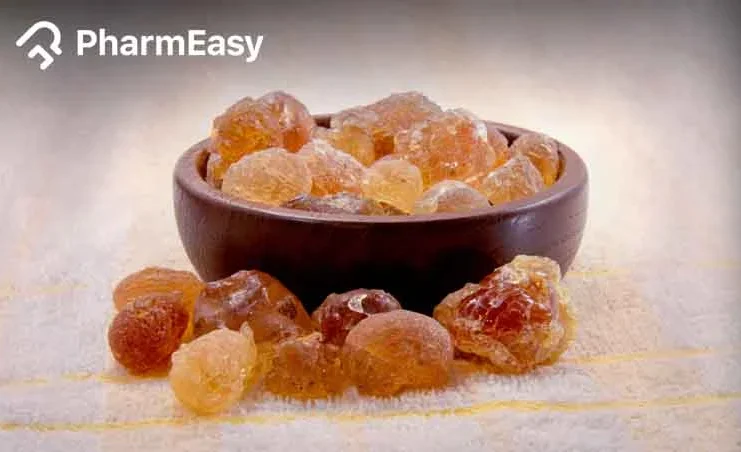
Gond Katira continues to gain prominence in both traditional and modern applications because of its emulsifying, stabilising, and cooling properties. So, through this article, we aim to help you understand the potential Gond Katira uses, its composition, benefits, and any possible side effects.
As mentioned earlier, Gond Katira is the hardened exudate obtained from certain shrubs. These shrubs belong to the genus Astragalus (family Fabaceae), which typically grows in arid and semi-arid mountainous regions. The major species commercially used to produce Gond Katira include Astragalus gummifer, Astragalus microcephalus, and others adapted to harsh climates in Western Asia1.
Gond Katira is produced when the plant is injured or under environmental stress. When this happens, the sap of the plant comes out from the stems or branches. This sap eventually dries and forms flakes or ribbon-like structures1,3.
Gond Katira has two main fractions1:
Commercially available gum is found in ribbon or flake form, with ribbons generally considered of higher quality due to their uniformity and purity1.
Note: The physical grade depends on species, collection and drying method, which in turn affect purity and the swelling capacity of Gond Katira.
Gond Katira is used mainly as a gum/thickener (food additive) rather than a food commodity, so the nutritional profile of Gond Katira varies across commercial sources4.
Below are some commonly reported values for Gond Katira nutrition1:
| Item | Moisture | Carbohydrate | Protein | Bassorin fraction | Tragacanthin fraction |
| Gond Katira (per 100 g) | 8.79 to 12.94 g | 83.81 to 86.52 g | 1.65 to 2.59 g | Around 60 to 70% | Around 30 to 40% |
Gond Katira has been traditionally used in Ayurveda and is known for its health-supportive and promising functional properties. Common Gond Katira benefits include:

Gond Katira is traditionally valued for its cooling effect in hot weather, where it is consumed to moderate body heat and support hydration. Its ability to swell and form a gel-like mucilage helps retain water, potentially supporting fluid balance and providing a soothing effect during heat stress5.

Gond Katira may aid bowel movement regulation and help relieve mild constipation. The mucilaginous nature may coat the gastrointestinal lining gently, which could reduce irritation and support smoother passage of stool5.

Gond Katira has been promoted as a natural skin-supportive agent. The gel-matrix that forms when it absorbs water may help maintain skin hydration from within. It may also help with skin problems such as dryness, minor burns, rashes, and prickly heat when applied externally5.

The anti-inflammatory potential of Gond Katira suggests that it may help to support muscular or joint discomfort5. While not a substitute for medical therapy, it may possibly serve as a supportive adjunct.

Gond Katira’s mucilaginous fibres increase satiety5. This may help in reducing overeating and unnecessary snacking, making it a supportive natural ingredient for individuals aiming to manage weight.

The oligosaccharides in Gond Katira may help protect the liver by reducing damage, lowering oxidative stress, and improving blood sugar levels6. This suggests they may support liver health and help manage fatty liver conditions.

Gond Katira has immunomodulatory properties that may help support the body’s natural defence processes. In Ayurveda, it is traditionally believed to boost immune function, though more human research is needed to confirm these effects3.

Gond Katira has the ability to form gel. This along with its mild antimicrobial/antioxidant properties can make it useful in biomedical materials (such as hydrogels) for wound dressings and tissue scaffolds7.
Note: While several Gond Katira benefits are rooted in traditional Ayurvedic and Unani practices, only some are supported by emerging scientific evidence. Further large-scale human trials are needed to corroborate the traditional uses. Therefore, it should not be considered a substitute for medical advice. Moreover, individual responses may vary based on grade, species, quality, preparation, and dosage of Gond Katira.
Gond Katira is a highly adaptable natural ingredient and can swell into a soft and jelly-like consistency when soaked. This makes it ideal for preparing refreshing summer foods and drinks. Let us see how to prepare Gond Katira with a step-by-step preparation guide5:
Once soaked and prepared following the above guide, Gond Katira can be incorporated into a wide range of foods, beverages, and functional preparations. The following are some practical and enjoyable ways to include Gond Katira in the diet5:

Its jelly-like texture enhances taste while helping the body retain moisture. This makes these Gond Katira drinks a refreshing option in summer.
To prepare: Take the soaked Gond Katira and mix it into rose sherbet, lemon coolers, or sweetened herbal drinks.
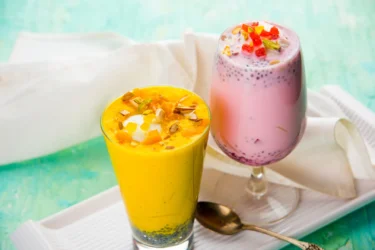
Gond Katira adds a soft, slippery texture that complements other cooling ingredients, making falooda a refreshing drink.
To prepare: After soaking, layer the swollen Gond Katira with falooda sev, soaked basil seeds, chilled milk, and rose syrup.

Gond Katira’s mucilaginous fibre can give creaminess and enhance hydration. It may also support digestive comfort when added to blended beverages.
To prepare: Blend the soaked gel of Gond Katira with yoghurt or milk along with fruits like mango, banana, or berries.

Gond Katira adds a refreshing element to chilled fruit salads. This may help enhance its cooling effect during hot weather.
To prepare: Mix the soaked Gond Katira gel gently with cut fruits such as watermelon, muskmelon, citrus, or pomegranate.

Gond Katira’s natural gelling property creates light as well as hydrating desserts with a smooth and soft consistency.
To prepare: Combine the swollen gel of Gond Katira with milk or plant-based bases and flavour it with rose, cardamom, saffron, or vanilla.

Gond Katira enhances the smoothness of frozen desserts by improving texture and possibly reducing ice-crystal formation. This offers a naturally creamy finish without synthetic stabilisers.
To prepare: Blend the soaked Gond Katira into kulfi mixes or ice cream bases before freezing them.
And not just in your meals, Gond Katira may also be used in experimental skincare formulations as topical gels and natural cosmetic bases. It’s moisture-retention and soothing properties make it it suitable as a hydrating base in skincare formulations. You can prepare a smooth gel with the soaked Gond Katira and incorporate it into topical formulations (like after-sun gels, cooling masks, and lightweight lotions) to enhance hydration.
Gond Katira is usually well tolerated, and no major adverse effects are reported. Even long-term toxicity assessments have found no carcinogenic, genotoxic, or systemic toxic effects at tested doses in animals3,8.
However, Gond Katira is a viscous soluble fibre, and such fibres may increase the viscosity of intestinal contents, which can slow down the movement of food in the gut9. This may slightly delay digestion and reduce the speed at which certain nutrients are absorbed. In addition, as with any natural product, there may be a possibility of allergic reactions. Thus, Gond Katira should always be consumed in moderation.
Note: Gond Katira should never be consumed in its dry form, as it rapidly swells and may pose a choking risk.
As already discussed, Gond Katira is generally safe and beneficial, but certain precautions, such as the following, must be followed to ensure proper and safe use.
Important: Gond Katira should be sourced from reputable suppliers, free from contaminants, adulterants, or preservatives. Remember to prefer organic or pharmaceutical-grade material for both dietary and topical use.
Gond Katira may influence the effect of certain medications in the body:
Due to its mild cooling and potential blood-pressure-lowering effects, Gond Katira may enhance the action of antihypertensive medications. This may increase the risk of dizziness or hypotension5. Thus, people taking these medications should consult a doctor before using Gond Katira.
If you have any medical conditions or are taking any medication, it’s ideal to consult your doctor before incorporating any natural remedy in your routine diet including Gond Katira.
Also Read: Malkangani: Uses, Benefits, Side Effects & More!
A traditional and commonly recommended amount of Gond Katira ranges from 5 to 10 grams per day, depending on individual needs and digestive comfort5.
This quantity is typically enough to provide cooling, hydrating, and mild digestive benefits. Yet, it’s best to consult a registered ayurvedic practitioner to know the right dose for you depending upon your needs.
Also Read: Radish (Mooli): Uses, Benefits, Side Effects and More!
Gond Katira is a multifunctional natural gum valued for its cooling, hydrating, and digestive-supportive qualities. This makes it beneficial during hot climates and for overall wellness. Its unique ability to swell into a soothing gel allows it to be used in a wide variety of traditional and modern preparations that range from refreshing beverages and desserts to cosmetic formulations. While generally safe when properly soaked and consumed in moderation, mindful use is essential, particularly for individuals with specific health conditions or those taking medications.
As scientific interest grows, Gond Katira holds promising potential for future applications in natural health products, skincare, and functional foods.
Also Read: Sattu: Uses, Benefits, Side Effects & More
Gond Katira can generally be consumed daily in small amounts (around 5 to 10 g soaked) as traditionally practised. It is safe for most people, but overuse may cause bloating due to its high mucilage content5. However, individual tolerance may vary, so it is advisable to discuss regular use with a doctor, especially if you have medical conditions, take medications, or are pregnant or breastfeeding.
For both males and females, Gond Katira can be used for cooling, hydration, and digestive comfort, especially in hot weather. To use Gond Katira, it should be soaked beforehand for 6 to 8 hours. It can then be added to sherbets, milk drinks, smoothies, yoghurt, or lassi. It is important to keep in mind that pregnant or breastfeeding women should consult a doctor first due to limited safety data5.
Yes, Gond Katira mixes well with both hot and cold milk once soaked. It is often used in falooda, thandai, flavoured milk, kulfi mixes, and smoothies. Remember, to always use the soaked gel, never the dry crystals5.
Traditional practices (Ayurveda/Unani) have used Gond Katira as a natural cooling and strengthening agent, but there is no strong scientific evidence proving direct benefits for sperm count or motility5. It may support overall hydration and gut health, but it should not be considered a fertility treatment.
Disclaimer: The information provided here is for educational/awareness purposes only and is not intended to be a substitute for medical treatment by a healthcare professional and should not be relied upon to diagnose or treat any medical condition. The reader should consult a registered medical practitioner to determine the appropriateness of the information and before consuming any medication. PharmEasy does not provide any guarantee or warranty (express or implied) regarding the accuracy, adequacy, completeness, legality, reliability or usefulness of the information; and disclaims any liability arising thereof.
Links and product recommendations in the information provided here are advertisements of third-party products available on the website. PharmEasy does not make any representation on the accuracy or suitability of such products/services. Advertisements do not influence the editorial decisions or content. The information in this blog is subject to change without notice. The authors and administrators reserve the right to modify, add, or remove content without notification. It is your responsibility to review this disclaimer regularly for any changes.
 1
1 
Comments

Leave your comment...
You may also like





















Comments