




Right Shoulder Pain in Women: Causes, Symptoms, Treatment & More
By Dr. Parth Mehta +2 more

Medically reviewed by Dr. Parth Mehta
Last updated: Aug 17, 2026 Published on: Apr 29, 2026


Get,

to manage your symptom
Get your,

4 Cr+ families
benefitted

OTP sent to 9988776655



You’ve successfully subscribed to receive
doctor-approved tips on
Whatsapp

Get ready to feel your best.


Register to Avail the Offer
Send OTPBy continuing, you agree with our Privacy Policy and Terms and Conditions
Hi There,
Sign up on PharmEasy now!!


Trusted by 4 crore+ families

OTP sent to 9988776655
You have unlocked 25% off on medicines


Code: NU25

By Dr. Parth Mehta +2 more
Table of Contents
Right shoulder pain in women is a common setback that can affect daily comfort and routine activities. It may begin as mild discomfort while lifting household items, working long hours at a desk, or sleeping in an uncomfortable position. Over time, this pain can make simple movements such as reaching overhead, carrying bags, or performing repetitive tasks more difficult.
Shoulder pain is one of the most frequently reported musculoskeletal problems in the general population. Research findings suggest that the community prevalence estimates vary widely across populations, with a median prevalence of about 16% and higher rates generally reported among women compared to men1.

In this blog, we’ll discuss about the causes, symptoms and treatment of right shoulder pain in women. A better understanding of these can help you manage the condition more effectively.
Right shoulder pain in women refers to discomfort or pain felt in the shoulder joint or surrounding structures on the right side of the body. The shoulder is a highly mobile joint that allows a wide range of movements, including lifting, rotating, and extending the arm. Because of this flexibility, it is also more vulnerable to strain, inflammation, and injury.
Pain might arise from problems involving muscles, tendons, ligaments, or joints within the shoulder. In some cases, the pain may develop gradually due to overuse, poor posture, or repetitive activities such as prolonged computer work or carrying weight on one side. When left unaddressed, it can interfere with routine activities and gradually reduce overall quality of life1.
Right shoulder pain symptoms can vary depending on the underlying cause and the structures involved. Some individuals may experience mild discomfort that develops gradually, while others may notice sudden or persistent pain that interferes with routine movements.
Common symptoms include:
Right shoulder pain causes can vary widely depending on lifestyle habits, physical strain, underlying joint conditions, or referred pain from nearby structures. In many cases, the discomfort develops gradually due to repetitive movements or poor posture, while in others it may be linked to medical conditions affecting muscles, nerves, or internal organs.
The causes of right shoulder pain can be divided into:
Diagnosing right shoulder pain in women starts with a detailed medical history and physical examination, followed by imaging or other tests if needed.
It is difficult to diagnose the exact cause of shoulder pain however8, early and accurate diagnosis can help guide appropriate right shoulder pain treatment and prevent worsening of symptoms.
Right shoulder pain treatment depends on the underlying cause, severity of symptoms, and duration of discomfort. In many cases, conservative measures can help relieve pain and improve shoulder function.

A doctor may recommend over-the-counter pain-relief medicines or anti-inflammatory drugs like diclofenac, ibuprofen, and naproxen to help reduce discomfort and inflammation. These should be used only under appropriate medical guidanc8,9.

Structured physiotherapy programs can help improve shoulder mobility, strengthen surrounding muscles, and reduce stiffness. Regular guided exercises may support recovery and help prevent recurrence of pain.

Avoiding repetitive strain, heavy lifting, or prolonged overhead activities may allow the shoulder tissues to heal and reduce further irritation 2,9.

When symptoms persist despite conservative management, doctor may consider corticosteroid injections (Inj. triamcinolone and methyl prednisone) to help reduce inflammation and pain in selected conditions. These injections are typically used as part of a broader treatment plan that may include physiotherapy and activity modification2,9,10.

Surgical treatment may be considered in certain cases with structural damage, severe functional limitation, or persistent pain that does not improve with non-surgical approaches. The choice of procedure depends on the underlying diagnosis and overall patient condition2,9.
Your doctor will suggest the most appropriate treatment based on your needs.
Certain home remedies may help relieve mild right shoulder pain and support recovery when used alongside appropriate medical advice2,11.

Using an ice pack for short periods may help reduce inflammation and swelling, especially after strain or minor injury. Heat therapy may help relax tight muscles and improve comfort once the acute pain phase has passed.

Limiting activities that trigger pain, such as heavy lifting or repetitive overhead movements, may allow the shoulder tissues time to recover.

Using supportive pillows and avoiding pressure on the affected shoulder while sleeping may help reduce discomfort.

Slow and controlled shoulder stretches may help improve flexibility and reduce stiffness. These should be performed carefully and stopped if pain worsens.

Gentle massage around the shoulder and upper-back region may help relieve muscle tension and improve blood circulation.

Topical anti-inflammatory gels or creams (Diclofenac, ibuprofen and ketoprofen) may help provide temporary relief from mild shoulder discomfort when applied to the affected area. These are often used as supportive measures alongside rest, stretching, and posture correction. It is advisable to use such products as directed and seek medical advice if symptoms persist.
These home remedies may help manage mild discomfort, but persistent or severe right shoulder pain symptoms should be evaluated by a healthcare professional.
Also Read: Types of Bone Fracture: Symptoms, Treatment and Prevention
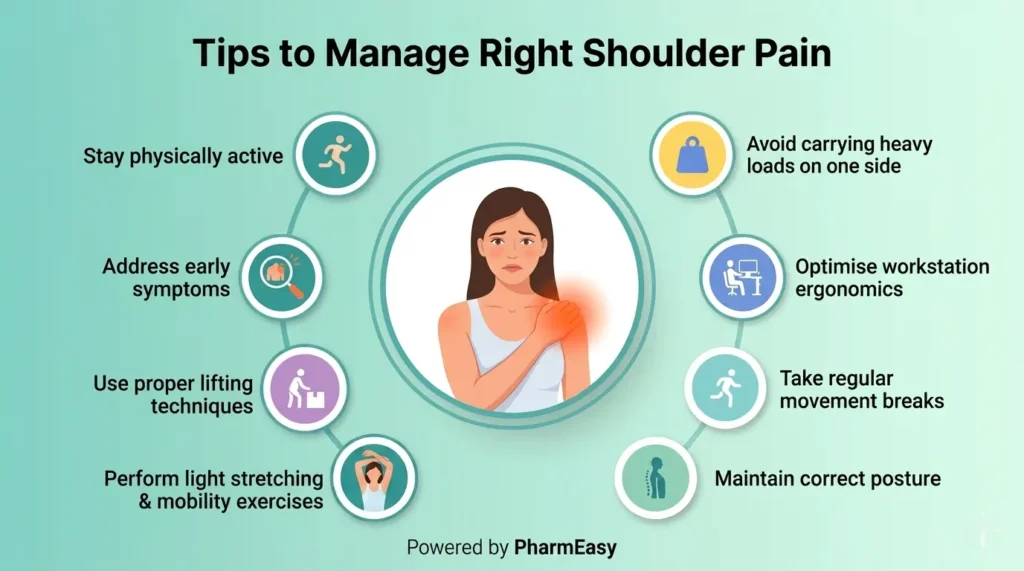
Certain daily habits and ergonomic adjustments can help prevent right shoulder pain and reduce existing discomfort2,11.
Also Read: How High Heels Affect the Body?
While mild right shoulder discomfort may improve with rest and activity modification, medical evaluation is important if symptoms persist or worsen.
You should consider consult a doctor if:
Also Read: Best Exercises for Knock Knees (Genu Valgum) You Should Try
Right shoulder pain in women can be caused from a variety of causes, including muscle strain, poor posture, repetitive movements, nerve-related issues, or underlying medical conditions. While mild discomfort may improve with simple lifestyle adjustments and conservative treatment, persistent or worsening symptoms should not be ignored.
Paying attention to early symptoms, making small adjustments in daily habits, and maintaining good workplace ergonomics can help reduce repeated strain on the shoulder. Timely medical consultation may help identify the underlying cause and guide appropriate management when symptoms do not resolve.
Although shoulder pain related to heart conditions is more commonly felt on the left side, some individuals may experience discomfort in the right shoulder. This is more likely when shoulder pain is accompanied by symptoms such as chest tightness, shortness of breath, dizziness, or sweating. In such cases, immediate medical attention is important12.
Shoulder discomfort during pregnancy may occur due to posture changes, muscle strain, or ligament relaxation. However, persistent pain, severe discomfort, or pain associated with abdominal symptoms should be discussed with a healthcare professional for proper evaluation13.
Certain internal organ conditions such as gallbladder disorders or liver-related issues may sometimes cause referred pain to the right shoulder. This happens because nerves from these organs share pathways with shoulder nerves6,7.
Right shoulder pain reasons without obvious injury may include poor posture, repetitive strain, nerve irritation from the neck, or inflammatory joint conditions. Lifestyle factors such as prolonged desk work or lack of physical activity may also contribute2.
In some situations, inflammation or enlargement of the liver may lead to referred pain toward the right shoulder region. This type of pain is usually associated with other symptoms and requires medical assessment7.
Kidney stones typically cause pain in the lower back or abdomen rather than the shoulder14. However, it’s best to consult your doctor in case of persistent shoulder and back pain to rule out any medical causes.
Disclaimer: The information provided here is for educational/awareness purposes only and is not intended to be a substitute for medical treatment by a healthcare professional and should not be relied upon to diagnose or treat any medical condition. The reader should consult a registered medical practitioner to determine the appropriateness of the information and before consuming any medication. PharmEasy does not provide any guarantee or warranty (express or implied) regarding the accuracy, adequacy, completeness, legality, reliability or usefulness of the information; and disclaims any liability arising thereof.
Links and product recommendations in the information provided here are advertisements of third-party products available on the website. PharmEasy does not make any representation on the accuracy or suitability of such products/services. Advertisements do not influence the editorial decisions or content. The information in this blog is subject to change without notice. The authors and administrators reserve the right to modify, add, or remove content without notification. It is your responsibility to review this disclaimer regularly for any changes.


Comments

Leave your comment...
You may also like

























Comments