




Uneven Skin Tone: Causes, Home Remedies, Treatments, and More!
By Dr. Raina N. Nahar +2 more

Medically reviewed by Dr. Raina N. Nahar
Last updated: Apr 28, 2026 Published on: Mar 5, 2026


Get,

to manage your symptom
Get your,

4 Cr+ families
benefitted

OTP sent to 9988776655



You’ve successfully subscribed to receive
doctor-approved tips on
Whatsapp

Get ready to feel your best.


Register to Avail the Offer
Send OTPBy continuing, you agree with our Privacy Policy and Terms and Conditions
Hi There,
Sign up on PharmEasy now!!


Trusted by 4 crore+ families

OTP sent to 9988776655
You have unlocked 25% off on medicines


Code: NU25

By Dr. Raina N. Nahar +2 more
Table of Contents
Have you ever noticed your skin looking patchy or darker in some areas, despite following your daily skincare routine faithfully? You cleanse, moisturise (maybe even apply sunscreen), and yet your complexion still doesn’t look as smooth and balanced as you’d like? If this sounds familiar, you’re not alone.
Uneven skin tone is a common concern that affects people of all ages and skin types, often showing up as dark spots, pigmentation, redness, dull patches, or discolouration. It can be caused by several factors (such as sun exposure and acne marks) that can disrupt your skin’s natural balance1. The good news? It can be managed with the right combination of lifestyle changes, home remedies, and professional treatments (when needed).
In this article, we’ll explore the common causes of uneven skin tone, simple remedies you can try at home, and advanced treatment options under professional guidance to help improve your complexion.
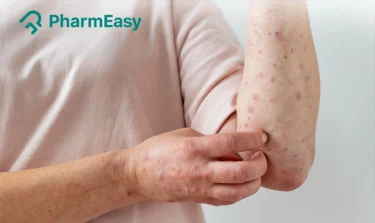
Uneven skin tone simply means your skin colour is not uniform. Instead of looking smooth and consistent, certain areas may appear darker, lighter, redder, or duller than the surrounding skin. These changes often show up as dark spots, patches, acne marks, sunspots, or areas of hyperpigmentation.
At the core of this concern is melanin, which is produced by specialised cells called melanocytes. It is the natural pigment that is responsible for the colour of your skin. When melanin production is evenly distributed, the skin appears balanced and even. However, when these cells become overactive or underactive in certain areas, they produce either excess or reduced pigment. This leads to uneven skin tone and makes you wonder, ‘how to get rid of uneven skin tone’2.
Uneven skin tone on face and body can occur due to various internal and external triggers that stimulate or disrupt melanocyte activity, factors which we will explore in detail in the next section.
Below are some common medical and environmental factors responsible for uneven skin tone on body and face:
Below are some home remedies that may help improve uneven dark skin tone when used consistently3:
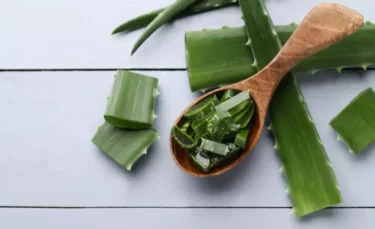
Aloe vera contains aloin, a natural compound that may help lighten hyperpigmented areas. It may also help soothe inflammation and support skin healing.
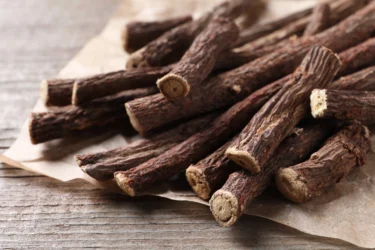
Liquorice contains glabridin and glycyrrhizin, which are known to have antioxidant, anti-inflammatory, and tyrosinase-inhibiting properties (tyrosinase is a key enzyme involved in melanin production). This may help you manage dark spots and calm irritated skin.
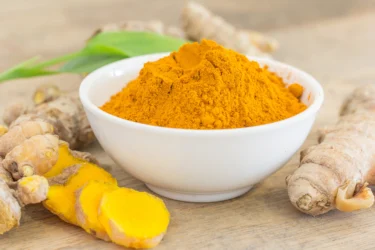
Curcumin (the active compound in turmeric) has anti-inflammatory and antioxidant properties. It also inhibits tyrosinase activity and, therefore, may help reduce hyperpigmentation over time.
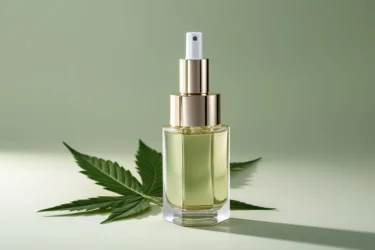
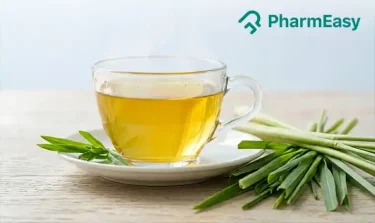
Green tea contains catechins and epigallocatechin gallate (EGCG), which reduce oxidative stress and may inhibit melanin production. It also helps soothe inflammation and protect against UV damage.
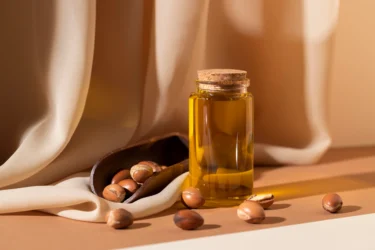
These oils are rich in antioxidants and essential fatty acids that reduce inflammation, support skin repair, and improve overall brightness.
Important Note: Natural remedies may support the management of skin pigmentation, but the results are gradual and require a consistent skincare routine for uneven skin tone. However, if uneven skin tone persists or worsens, consult a dermatologist for professional evaluation and treatment options.
If home remedies do not provide sufficient improvement, the following topical medicines (active ingredients) may help support an even skin tone when used appropriately3:
Vitamin C is a powerful antioxidant that inhibits tyrosinase. It may help reduce dark spots, brighten dull skin, and protect against oxidative stress caused by UV exposure.
Niacinamide reduces the transfer of melanin from melanocytes to the skin cells. It may also help strengthen the skin barrier, reduce redness, and improve overall skin texture.
Kojic acid works by directly inhibiting tyrosinase, thereby reducing melanin production. It is effective for melasma, age spots, and post-inflammatory pigmentation.
Retinol helps to increase skin cell turnover, helping to fade pigmentation faster and improve overall skin texture.
Note: Prescription retinoids like tretinoin should be used only under medical supervision.
Chemical peels (e.g., glycolic, salicylic, or lactic acid peels) exfoliate the top layer of the skin, removing pigmented cells and promoting fresh, even-toned skin regeneration.
Note: If you’re exploring how to manage uneven skin tone, remember that long-term improvement requires consistency and sun protection. Always start with the lowest effective concentration, especially if you are new to active ingredients. Introduce one product at a time and increase frequency or strength gradually, only if your skin tolerates it well. Overuse or combining multiple strong medicines can lead to skin irritation, skin barrier damage, and worsening pigmentation. Additionally, it is essential to use a good moisturiser to maintain the skin barrier and apply broad-spectrum sunscreen daily, as most of these medicines increase sun sensitivity. If you experience redness, burning, or peeling while using any of the above-mentioned medicines, discontinue use and consult a dermatologist.
Learning how to remove uneven skin tone involves combining skincare consistency with the following healthy lifestyle habits:
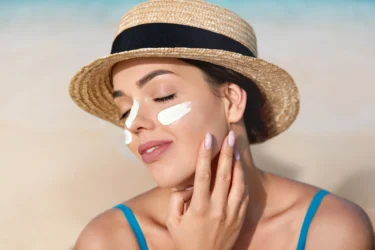
Sun exposure is one of the biggest triggers for pigmentation. Using a broad-spectrum sunscreen (SPF30 or higher) every day helps avoid dark spots from worsening and protects your skin from further damage. Reapply when outdoors and consider protective clothing for added coverage7.
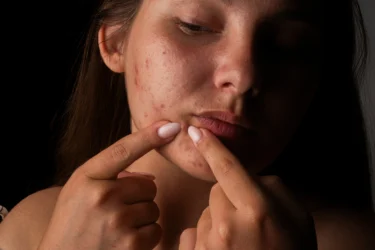
Picking at acne can cause inflammation, which may lead to post-inflammatory hyperpigmentation8. Therefore, be gentle with your skin to maintain a healthy skin barrier.

A nutrient-rich diet supports overall skin health. Foods high in antioxidants (such as fruits and vegetables) help combat oxidative stress that could contribute to uneven tone9.

Hormonal fluctuations can influence melanin production and trigger pigmentation3. If you notice persistent or sudden changes in skin tone, seeking medical advice may be helpful.

Chronic stress and poor sleep can affect hormonal balance and increase inflammation, indirectly impacting skin tone10. Thus, prioritising
7-8 hours of quality sleep and engaging in stress-relieving activities may support healthier-looking skin.
While mild uneven skin tone can often be managed with home care and over-the-counter topical medicines, you should consult a dermatologist if you observe11:
Additionally, if uneven skin tone is accompanied by symptoms such as itching, pain, scaling, or bleeding, or if you suspect a hormonal imbalance or underlying medical condition, it is advisable to consult a doctor for uneven skin tone treatment.
Also Read: Black Spots on Skin: Causes, Types, Treatment & Prevention
Uneven skin tone is a common concern that can affect people of all ages and skin types. It often results from imbalanced melanin production triggered by factors such as sun exposure, inflammation, hormonal changes, ageing, or lifestyle habits.
While there is no single way to completely cure uneven skin tone, it can be significantly improved with proper care and patience. This typically involves a combination of consistent sun protection, gentle skincare, natural home remedies, or targeted active ingredients (when needed), along with healthy lifestyle habits. Most importantly, patience and consistency are key, as uneven skin tone takes time to improve and requires ongoing care to maintain results.
Uneven skin tone appears as patches of skin that are darker, lighter, redder, or duller than the surrounding areas. It may show up as dark spots, sunspots, acne marks, melasma patches, redness, or general discolouration that makes the complexion look patchy rather than uniform3,11.
Hyperpigmentation refers specifically to darker areas caused by excess melanin production. Uneven skin tone is a broader term that includes hyperpigmentation, hypopigmentation (lighter patches), redness, and overall patchiness3.
In many cases, uneven skin tone can be significantly improved, but whether the change is permanent depends on the underlying cause. This is because conditions triggered by sun exposure or inflammation can return if triggers persist. Thus, consistent sun protection and maintenance of skincare are essential to avoid recurrence.
Deficiencies in certain vitamins, particularly vitamin B12, may contribute to uneven skin tone5. However, not all uneven skin tone is related to a vitamin deficiency. Only a doctor can confirm this through proper evaluation.
Vitamin C may help even skin tone. It works by inhibiting tyrosinase (an enzyme involved in melanin production) and acts as an antioxidant, helping to reduce dark spots and brighten the complexion over time when used consistently3.
Diet can influence overall skin health. A diet rich in antioxidants (such as fruits and vegetables), healthy fats, and adequate hydration supports skin repair and may help reduce oxidative stress that contributes to uneven tone9. However, diet alone may not fully correct pigmentation concerns.
1. Moolla S, Miller-Monthrope Y. Dermatology: how to manage facial hyperpigmentation in skin of colour. Drugs Context. 2022;11:2021-11-12. doi:10.7573/dic.2021-11-2. Available from: https://pmc.ncbi.nlm.nih.gov/articles/PMC9165630/
2. Schlessinger DI, Rahimi N, Schlessinger J. Biochemistry, Melanin. In: StatPearls. StatPearls Publishing; 2025. Accessed February 18, 2026. Available from: http://www.ncbi.nlm.nih.gov/books/NBK459156/
3. Thawabteh AM, Jibreen A, Karaman D, Thawabteh A, Karaman R. Skin Pigmentation Types, Causes and Treatment—A Review. Molecules. 2023;28(12):4839. doi:10.3390/molecules28124839. Available from: https://pmc.ncbi.nlm.nih.gov/articles/PMC10304091/
4. Paik K, Na JI, Huh CH, Shin JW. Particulate Matter and Its Molecular Effects on Skin: Implications for Various Skin Diseases. Int J Mol Sci. 2024;25(18):9888. doi:10.3390/ijms25189888. Available from: https://pubmed.ncbi.nlm.nih.gov/39337376/
5. Kannan R, Ng MJM. Cutaneous lesions and vitamin B12 deficiency. Can Fam Physician. 2008;54(4):529-532. Accessed February 18, 2026. Available from: https://pmc.ncbi.nlm.nih.gov/articles/PMC2294086/
6. Sibaud V. Anticancer treatments and photosensitivity. J Eur Acad Dermatol Venereol. 2022;36(Suppl 6):51-58. doi:10.1111/jdv.18200. Available from: https://pubmed.ncbi.nlm.nih.gov/35738806/
7. Gabros S, Patel P, Zito PM. Sunscreens and Photoprotection. In: StatPearls. StatPearls Publishing; 2025. Accessed February 18, 2026. Available from: http://www.ncbi.nlm.nih.gov/books/NBK537164/
8. Lawrence E, Syed HA, Al Aboud KM. Postinflammatory Hyperpigmentation. In: StatPearls. StatPearls Publishing; 2025. Accessed February 18, 2026. Available from: http://www.ncbi.nlm.nih.gov/books/NBK559150/
9. Cao C, Xiao Z, Wu Y, Ge C. Diet and Skin Aging—From the Perspective of Food Nutrition. Nutrients. 2020;12(3):870. doi:10.3390/nu12030870. Available from: https://pmc.ncbi.nlm.nih.gov/articles/PMC7146365/
10. Xu J, Cai X, Qiao J, Fang H. The Impact of Sleep Quality on Skin Color. Indian Dermatol Online J. 2025;16(6):887-893. doi:10.4103/idoj.idoj_1011_24. Available from: https://pubmed.ncbi.nlm.nih.gov/41143336/
11. Patchy skin color: MedlinePlus Medical Encyclopedia. Accessed February 18, 2026. Available from: https://medlineplus.gov/ency/article/003224.htm
Disclaimer: The information provided here is for educational/awareness purposes only and is not intended to be a substitute for medical treatment by a healthcare professional and should not be relied upon to diagnose or treat any medical condition. The reader should consult a registered medical practitioner to determine the appropriateness of the information and before consuming any medication. PharmEasy does not provide any guarantee or warranty (express or implied) regarding the accuracy, adequacy, completeness, legality, reliability or usefulness of the information; and disclaims any liability arising thereof.
Links and product recommendations in the information provided here are advertisements of third-party products available on the website. PharmEasy does not make any representation on the accuracy or suitability of such products/services. Advertisements do not influence the editorial decisions or content. The information in this blog is subject to change without notice. The authors and administrators reserve the right to modify, add, or remove content without notification. It is your responsibility to review this disclaimer regularly for any changes.


Comments

Leave your comment...
You may also like




















Comments