




What Is Ovulation? Understanding The Ovulation Process and Symptoms
By Dr. Charmi Shah +2 more

Medically reviewed by Dr. Charmi Shah
Last updated: Mar 23, 2026 Published on: Mar 23, 2026


Get,

to manage your symptom
Get your,

4 Cr+ families
benefitted

OTP sent to 9988776655



You’ve successfully subscribed to receive
doctor-approved tips on
Whatsapp

Get ready to feel your best.


Register to Avail the Offer
Send OTPBy continuing, you agree with our Privacy Policy and Terms and Conditions
Hi There,
Sign up on PharmEasy now!!


Trusted by 4 crore+ families

OTP sent to 9988776655
You have unlocked 25% off on medicines


Code: NU25

By Dr. Charmi Shah +2 more
Table of Contents
Ovulation is a fundamental biological process within the menstrual cycle that plays a central role in reproductive health. In simple terms, the term ovulation refers to the release of a mature egg from the ovary, making fertilisation possible1.
Factors such as stress, medications, lifestyle habits and certain health conditions can influence hormonal balance. As a result, some women may experience conditions that can affect ovulation such as irregular cycles, delayed ovulation, or absence of ovulation.Click or tap here to enter text. One of the most common conditions affecting ovulation is polycystic ovary syndrome (PCOS), a hormonal disorder that can interfere with normal ovulatory cycles.Click or tap here to enter text. Studies suggest that PCOS affects approximately 8–13% of women of reproductive age worldwide, making it one of the leading causes of ovulatory dysfunction and infertility2.
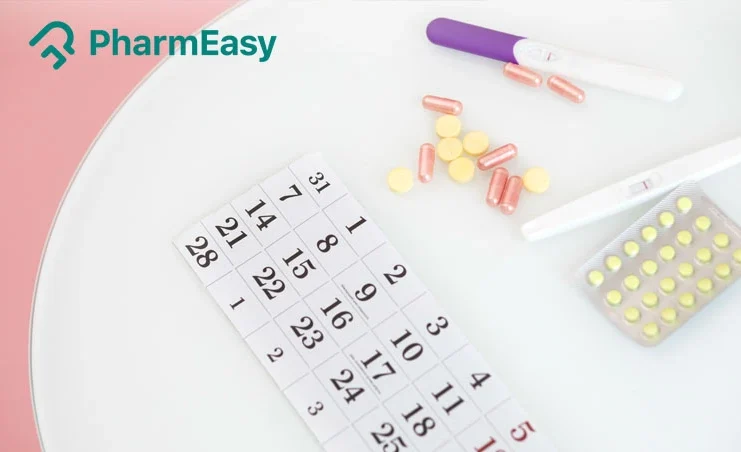
As ovulation occurs only during specific days within the menstrual cycle, recognising the ovulation period is important for individuals who want to understand their fertility patterns.
A typical menstrual cycle lasts about 28 days and consists of three main phases. It begins with menstruation (day 1–5), followed by the follicular phase, which lasts from day 1 until ovulation meaning, approximately 14 days before the start of the next menstrual period. The cycle then continues with the luteal phase, which usually lasts from day 15 to day 281.
The term ovulation refers to the process in which a mature egg is released from one of the ovaries, where then enters the fallopian tube where fertilisation can occur if compatible sperm is present. Because of this, ovulation is considered as the time when the chances of pregnancy are highest1.
Ovulation is the result of coordinated interaction between hormones released by the brain and the ovaries.
A complete menstrual cycle consists of the following events:
It is the first day of menstrual bleeding. At this stage, the levels of oestrogen and progesterone are low. So, the brain signals the pituitary gland to release follicle stimulating hormone (FSH), which begins the development of ovarian follicles1.
During the follicular phase, a group of ovarian follicles begins to develop under the influence of follicle-stimulating hormone (FSH), although typically only one becomes dominant. As these follicles grow, they produce oestrogen, which helps rebuild and thicken the uterine lining1.
When oestrogen levels rise to a certain level, there’s a sudden increase in luteinising hormone (LH) released by the pituitary gland in the brain. This rapid rise in LH is known as the LH surge and it triggers ovulation1.
During ovulation, the dominant follicle ruptures and releases the mature egg from the ovary. The egg is then captured by the fimbriae of the fallopian tube and moves into the fallopian tube where fertilisation may occur1.
After ovulation, the egg survives for about 12–24 hours. Sperm can survive in the female reproductive tract for up to five days. Fertilisation most commonly occurs in the ampulla of the fallopian tube1.
After ovulation, the ruptured follicle becomes the corpus luteum, which produces progesterone. This hormone helps maintain the uterine lining in preparation for a possible pregnancy.
If fertilisation does not occur, the corpus luteum degenerates and hormone levels decline. As progesterone and oestrogen fall, the uterine lining sheds and menstruation begins again, starting a new cycle1.
Ovulation usually occurs around the middle of the menstrual cycle, although the exact timing can vary between individuals. In a typical 28-day menstrual cycle, ovulation often occurs around 14 days before the start of next menstrual period1,3. However, many women do not have perfectly regular cycles, resulting in variation in ovulation timing.
For example, in shorter cycles ovulation may occur closer to day 10-12, while in longer cycles it may occur around day 16–18. Because menstrual cycles can vary from month to month, the exact timing of ovulation is not always predictable4.
In individuals with irregular cycles, ovulation may occur at different times each month, making it more difficult to estimate ovulation days accurately. Factors such as stress, hormonal changes, illness, medications, or underlying conditions like PCOS may also influence ovulation timing5.
The ovulation period refers to the time in the menstrual cycle when a person is most likely to conceive. It includes the day ovulation occurs as well as the days immediately before it, when fertilisation is most likely to happen3.
Although ovulation itself usually lasts only a short time, the ovulation period is slightly longer, also including the days before ovulation. Often referred to as the fertile window, this period usually includes the five days before ovulation and the day of ovulation itself. Research suggests that sperm may remain viable in the female reproductive tract for up to five days under favourable conditions3. Hence, pregnancy is more likely to occur during this six day period as viable sperm may be present in the female reproductive tract on these days, allowing fertilisation to occur when the egg is released6.
It is important to understand the difference between ovulation day and the ovulation period (fertile window). Ovulation day refers specifically to the moment when the ovary releases a mature egg. On the other hand, ovulation period refers to the few days before ovulation and the day of ovulation itself when the chances of pregnancy are higher6.
Many individuals notice certain physical changes around the time of ovulation. These changes occur due to hormonal fluctuations, particularly the rise in oestrogen and the luteinising hormone (LH) surge that triggers ovulation. Some changes are considered observable signs, while others are experienced as ovulation symptoms.
Tracking ovulation symptoms can help individuals better understand their menstrual cycle and identify the time when ovulation is most likely to occur.
The methods include:
Regular ovulation generally suggests normal functioning of the hypothalamic pituitary ovarian axis, although it does not rule out all fertility-related or reproductive health concerns. In simple terms, when ovulation occurs regularly, it generally suggests that the hormonal signals between the brain, ovaries, and reproductive organs are functioning properly.
Regular ovulation is also associated with relatively predictable menstrual cycles. Individuals who ovulate consistently often experience menstrual cycles that occur at regular intervals. In contrast, irregular or absent ovulation may lead to menstrual disturbances such as irregular periods or missed cycles9.
Changes in ovulation patterns may sometimes signal underlying health conditions such as hormonal imbalances or polycystic ovary syndrome (PCOS). Recognising changes in ovulation patterns may therefore help individuals identify when medical evaluation may be helpful2.
Ovulation patterns can vary slightly between menstrual cycles. However, persistent changes may sometimes indicate an underlying health concern.
Consulting a doctor may be helpful if menstrual cycles become consistently irregular, ovulation appears to stop for several months, or periods are frequently missed1.
Medical advice may also be needed if a person experiences severe pelvic pain during ovulation, heavy bleeding between cycles, or sudden unexplained changes in menstrual patterns1.
Individuals who have been trying to conceive for an extended period without success may also consider discussing ovulation patterns with their doctor1. Generally, individuals under 35 years of age who have been trying to conceive for 12 months without success, or those aged 35 years and above who have been trying for 6 months, may consider consulting a doctor13.
Early consultation can help identify possible causes and ensure appropriate evaluation if needed.
Ovulation is a crucial part of the menstrual cycle and plays an important role in reproductive health. It refers to the release of a mature egg from the ovary, making fertilisation possible if sperm is present. Understanding about ovulation and ovulation period, identifying common signs of ovulation and recognising ovulation patterns can help improve chances of conception in individuals planning pregnancy. Tracking ovulation patterns may also provide useful insight into overall reproductive health. Moreover, awareness of the ovulation period and changes in menstrual cycles can help individuals recognise normal patterns and know when medical guidance may be helpful.
Ovulation usually occurs around the middle of the menstrual cycle. In a typical 28-day cycle, ovulation often happens about 12–14 days after the first day of the period. However, the timing may vary depending on the length of the menstrual cycle1.
In most menstrual cycles, ovulation occurs only once. However, more than one egg may sometimes be released within the same ovulation period, usually within a short time frame. This can occasionally lead to the possibility of fraternal twins14.
Yes, high levels of physical or emotional stress may influence hormonal balance and temporarily affect ovulation. Stress can sometimes lead to delayed ovulation or irregular menstrual cycles2.
Some individuals may experience mittelschmerz (pain and light spotting) around the time of ovulation. This can occur due to hormonal fluctuations, stretching of the ovary due to the release of the egg. However, heavy or persistent bleeding should be discussed with a healthcare professional.8
Certain nutrients such as folate, vitamin D, vitamin B12, and iron are known to support overall reproductive health. Maintaining a balanced diet that provides these nutrients may help support normal hormonal function15.
Folic acid plays an important role in reproductive health and is commonly recommended for individuals planning pregnancy. While it supports overall reproductive function, it is not specifically used as a treatment to induce ovulation15.
Disclaimer: The information provided here is for educational/awareness purposes only and is not intended to be a substitute for medical treatment by a healthcare professional and should not be relied upon to diagnose or treat any medical condition. The reader should consult a registered medical practitioner to determine the appropriateness of the information and before consuming any medication. PharmEasy does not provide any guarantee or warranty (express or implied) regarding the accuracy, adequacy, completeness, legality, reliability or usefulness of the information; and disclaims any liability arising thereof.
Links and product recommendations in the information provided here are advertisements of third-party products available on the website. PharmEasy does not make any representation on the accuracy or suitability of such products/services. Advertisements do not influence the editorial decisions or content. The information in this blog is subject to change without notice. The authors and administrators reserve the right to modify, add, or remove content without notification. It is your responsibility to review this disclaimer regularly for any changes.


Comments

Leave your comment...
You may also like























Comments