Get,

Free Doctor Tips

to manage your symptom

Get your,

FREE Doctor Tips Now!!

4 Cr+ families

benefitted

Enter your Phone Number

+91

|

Enter a valid mobile number

Send OTP

Verify your mobile number

OTP sent to 9988776655

CONGRATULATIONS!!!

You’ve successfully subscribed to receive

doctor-approved tips on Whatsapp


Get ready to feel your best.

Hi There,

Download the PharmEasy App now!!

AND AVAIL

AD FREE reading experience
Get 25% OFF on medicines
Banner Image

Register to Avail the Offer

Send OTP

By continuing, you agree with our Privacy Policy and Terms and Conditions

Success Banner Image
Verify your mobile number

OTP sent to 9988776655

Comments

Subscribe
Notify of
guest
0 Comments
Inline Feedbacks
View all comments

Leave your comment here

Your email address will not be published. Required fields are marked *

25% OFF on medicines

Collect your coupon before the offer ends!!!

COLLECT

Does Low Testosterone Cause Weight Gain?  

By Dr. Vishesh Bharucha +2 more

Introduction

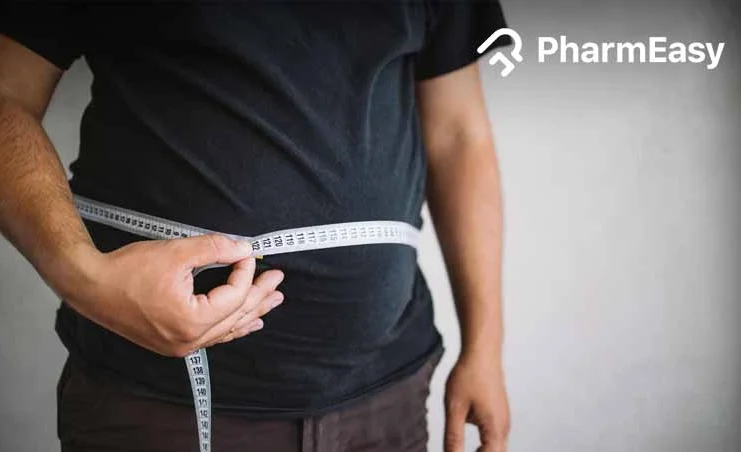
Many men notice small but frustrating changes as they grow old. This may include a constant feeling of tiredness despite adequate rest, a drop in energy levels, reduced muscle strength, or unexpected weight gain (particularly around the abdomen)1,2. But these changes are often overlooked (or not paid attention to) as a normal part of ageing or attributed solely to lifestyle factors.  

Testosterone levels are known to decline naturally with age, at an average rate of about 1% per year after 30 to 40 years3. In most men, this age-related decline does not result in a clinically significant disease, however, the condition may often go under-recognized even in cases where symptoms are more pronounced, mostly relating them to aging or lifestyle factors, while an underlying hormonal imbalance, specifically low testosterone (Low T) may play a significant role in these cases1,2

does low testosterone cause weight gain

Therefore, through this article, we aim to examine the causes and symptoms of low testosterone, its impact on weight gain, and discuss management tips, available treatment options, and some preventive strategies. 

What is Testosterone?

Testosterone is the primary male sex hormone (produced mainly by the testicles and small amounts by the adrenal glands)4. It plays a central role in the physiology of numerous organs and tissues, including reproductive organs, muscle, bone, and the central nervous system. It works by binding to androgen receptors in target tissues and influences much more than sexual health alone5


In men, testosterone alone and after converting to estradiol is essential for4,5

  • Sexual development 
  • Muscle strength 
  • Bone density 
  • Fat distribution 
  • Energy levels 
  • Mood regulation 

It is also responsible for primary sexual development before birth and during puberty, as well as secondary male characteristics such as facial hair growth and voice maturity4

What Causes Low Testosterone in Men?

Low testosterone could result from several medical and lifestyle related factors. Common causes include: 

  • Age-related decline: Testosterone levels naturally begin to decline gradually in men starting around 30 to 40 years of age. This is a normal part of ageing and should not be considered a medical problem4
  • Medication-related effects: Certain medicines (such as chemotherapy agents, opioids, anabolic steroids, gonadotropin-releasing hormone agonists, glucocorticoids, and ketoconazole) can sometimes suppress testosterone production4,10.  
  • Testicular damage or disease: Injury to the testes, testicular cancer, infections, or surgical removal can impair testosterone production3,11
  • Disorders of the hypothalamic–pituitary axis: Conditions affecting the hypothalamus or pituitary gland can disrupt hormonal signalling required for testosterone production4,5
  • Thyroid dysfunction: Hypothyroidism (low thyroid function) may be associated with reduced testosterone levels4
  • Obesity: Excess body fat can lower testosterone levels by increasing estrogen conversion and reducing hormone availability2,4. In obese individuals, measurement of free testosterone may be necessary for accurate assessment4
  • Chronic illnesses and systemic conditions: Long-standing diseases, infections, or medical treatments can negatively affect testosterone production4,12

Low Testosterone Symptoms in Men

Some men with low testosterone may not experience any noticeable symptoms, while others may develop a range of physical, sexual, and psychological changes. Common low testosterone symptoms in men include4

  • Reduced sex drive 
  • Difficulty achieving/maintaining an erection 
  • Increased body fat 
  • Depressive mood or low motivation 
  • Difficulty with concentration and memory 
  • Sleep disturbances, including insomnia 
  • Low sperm count  
  • Decreased muscle mass and strength 
  • Loss of bone density 

It is important to note that some of these changes can occur as part of normal ageing. For example, a mild decline in sexual interest with age is common. However, a complete loss of interest in sex is not considered normal. Additionally, similar symptoms may arise from other medical conditions, such as diabetes or high blood pressure, or from certain medications. Therefore, if any of these symptoms are persistent or troubling, it is advisable to consult a doctor for proper evaluation. 

The Connection Between Low Testosterone and Weight Gain

Testosterone plays an important role in regulating body composition, energy balance, and metabolic health in men. This raises the common question: Does low testosterone cause weight gain?  


Evidence shows that low testosterone levels are frequently observed in men with obesity, and the decline often becomes more common as body weight increases13,14.  

Low testosterone causes a decline in energy levels and physical inactivity that may lead to weight gain in men. Moreover, it affects blood sugar control, insulin utilisation and fat metabolism causing a hormonal shift that further contributes to fat accumulation13. The excess adipose tissue releases metabolic and inflammatory mediators that interfere with normal hypothalamic–pituitary–testicular (HPT) axis function (the hormonal control system that regulates testosterone production in men), creating a self-reinforcing cycle2

The disruption in hypothalamic signalling causes a reduction in the release of gonadotropin-releasing hormone (GnRH), leading to decreased secretion of luteinizing hormone (LH) and follicle-stimulating hormone (FSH) from the pituitary gland, which ultimately leads to lowered testosterone production by the testes. Low testosterone further leads to weight gain by promoting increased fat storage and reducing lean muscle mass13,14

1. Rise in Estrogen

At the same time, excess adipose tissue enhances the conversion of testosterone into estrogen (estradiol). Elevated estrogen levels suppress GnRH release from the hypothalamus, further reducing LH (major impact) and FSH (minimal impact) secretion and aggravating testosterone deficiency. 

2. Insulin Resistance

Additionally, obesity-related insulin resistance lowers levels of sex hormone-binding globulin (SHBG), the protein responsible for transporting testosterone in the bloodstream. Reduced SHBG results in lower circulating total testosterone levels15

3. Leptin Resistance

Further, leptin, a hormone produced by adipose tissue, is often elevated in obesity but accompanied by reduced hypothalamic sensitivity due to leptin resistance. Under normal conditions, leptin has a stimulatory effect on the HPT axis and supports testosterone synthesis. However, in obesity, leptin resistance disrupts this signalling, so elevated leptin levels fail to enhance testosterone production and may further contribute to suppression of the reproductive axis16

4. Inflammatory Cytokines

Obesity is linked to higher levels of inflammation in the body, including increased TNF-alpha and IL-6, as well as oxidative stress. These inflammatory substances can interfere with the normal functioning of Leydig cells in the testes, which are responsible for producing testosterone. As a result, the testes respond less effectively to LH. Inflammation can also disrupt the HPT axis, further lowering testosterone levels16

Together, these factors contribute to the hypogonadal–obesity cycle, in which excess body fat lowers testosterone levels and testosterone deficiency accelerates fat accumulation. This cycle contributes to metabolic dysfunction and makes sustained weight management more challenging in affected men. 

Tips to Manage Weight with Low Testosterone

Weight reduction plays an important role in improving testosterone levels in men with low testosterone and obesity. The close link between testosterone and weight loss has been well documented, with reductions in body fat and body mass index (BMI) associated with significant increases in testosterone levels. Some practical tips include: 

  • Strength training: Resistance exercise (3 times a week) supports healthy testosterone levels and helps build muscle and reduce fat mass, thereby helping with weight management17.  
  • Increase protein intake: High-protein foods help preserve muscle during weight loss and improve satiety. However, very high-protein diets (> 3.4 g/kg/day) might negatively impact testosterone levels, so moderation is important18
  • Low carbohydrate intake: Low-carbohydrate or Mediterranean-style diets rich in whole foods, healthy fats, and lean proteins that support hormonal balance16
  • Cut down on sugar: Reduce refined sugar. This improves insulin sensitivity and weight control, which may indirectly affect testosterone19
  • Stay physically active daily: Regular movement beyond structured workouts can also help maintain long-term weight control. 

Note: Weight loss can help improve testosterone levels in men with obesity-related secondary (functional) hypogonadism, but it is unlikely to be effective in cases of primary testicular failure or genetically determined hypogonadism. 

Treatments for Low Testosterone

Treatment for low testosterone aims to restore testosterone levels to the normal range and relieve symptoms. Please note that testosterone replacement therapy (TRT) is recommended only in men with confirmed hypogonadism and related symptoms, after appropriate evaluation. The main goal of TRT is to alleviate symptoms while maintaining testosterone in the mid-normal physiological range and avoiding supraphysiological levels. 

Several formulations, such as the following, are available20

  • Topical gels and creams: These are applied directly on the skin. They provide steady testosterone levels but require precautions to avoid skin-to-skin transfer. 
  • Transdermal patches: These patches deliver continuous hormone levels. However, skin irritation may occur, so precautions should be taken. 
  • Injectable testosterone: These injections are given intramuscularly. They are effective and affordable but may cause fluctuations in hormone levels, so they should never be taken without consulting a doctor first.  
  • Subcutaneous pellets: These are implanted under the skin. They may provide long-term testosterone release, but precautions should be taken. 
  • Nasal or buccal formulations: These come under non-invasive options and may require multiple doses. However, medical advice should be taken before starting. 

Important Considerations

TRT may suppress the body’s natural testosterone production and sperm formation, and can worsen acne, untreated sleep apnoea or increase red blood cell levels. Therefore, regular monitoring of testosterone levels, haematocrit, and prostate health is generally recommended by the doctor and should not be used for men desiring fertility. Keep in mind that TRT is not recommended solely for age-related testosterone decline or obesity without low testosterone symptoms in men20

How to Prevent Low Testosterone

Maintaining healthy testosterone levels depends largely on lifestyle and metabolic health. So, adopting the following habits may help reduce the risk of low testosterone and support overall hormonal balance. 

  • Maintain a healthy weight: Excess body fat, particularly abdominal fat, lowers testosterone levels and increases its conversion to estrogen2,16. So, achieving and maintaining a healthy body weight helps preserve normal testosterone production. 
  • Exercise regularly: Physical activity, especially strength and resistance training, supports testosterone production by increasing muscle mass and reducing fat. Therefore, aim to include strength training at least 3 times per week, along with regular physical movements16,17
  • Eat a balanced, nutrient-rich diet: Diets rich in lean protein, healthy fats, whole grains, fruits, and vegetables support hormonal health. Additionally, limiting sugar, refined carbohydrates, and ultra-processed foods helps prevent insulin resistance, which is linked to low testosterone16,21
  • Manage stress effectively: Chronic stress raises cortisol levels, which may suppress testosterone production22. Thus, stress-reduction practices such as meditation, deep breathing, yoga, or regular physical activity might help maintain hormonal balance. 
  • Prioritise quality sleep: Poor or insufficient sleep may significantly lower testosterone levels16. Therefore, aim for 6 to 8 hours of uninterrupted sleep per night to support normal hormone secretion. 
  • Limit alcohol and avoid smoking: Excessive alcohol intake and smoking can impair testosterone production and even testicular function23. Thus, people who are heavy smokers or drinkers should understand that moderation/avoidance can support long-term hormonal health. 
  • Address medical conditions early: Conditions such as obesity, type 2 diabetes, and sleep apnea are associated with low testosterone16,22. Therefore, early diagnosis and management may help avoid hormonal decline. 

Note: Age-related decline in testosterone cannot be prevented. Lifestyle interventions may improve functional or obesity-related suppression of testosterone but do not prevent normal physiological ageing or primary hypogonadism. Also, exercise improves body composition and insulin sensitivity, but sustained increases in basal testosterone levels may need additional support under medical guidance. 

When to See a Doctor?

Low testosterone can sometimes be managed through lifestyle changes, but medical evaluation is important when symptoms are persistent or affecting daily life. You should consider seeing a doctor if you experience24

  • Ongoing fatigue or low energy that does not improve with rest or lifestyle changes 
  • Reduced sex drive or erectile difficulties 
  • Unexplained weight gain (especially increased abdominal fat) 
  • Mood changes, such as low motivation, irritability, or depression 
  • Poor concentration or memory problems 
  • Reduced bone strength or frequent fractures 

Note: Men should also seek medical advice if symptoms occur at a younger age, worsen rapidly, or are accompanied by conditions such as obesity, diabetes, or sleep apnea. A doctor can evaluate symptoms, order blood tests to measure testosterone levels, identify underlying causes, and recommend appropriate treatment or lifestyle interventions.  

Conclusion

Low testosterone and obesity are closely interconnected through a complex, bidirectional relationship that adversely affects metabolic and reproductive health in men. Excess body fat suppresses testosterone production through multiple mechanisms, including disruption of the hypothalamic–pituitary–testicular axis, increased conversion of testosterone to estrogen, reduced sex hormone-binding globulin levels, and hormonal dysregulation associated with insulin resistance and leptin resistance. In turn, testosterone deficiency promotes fat accumulation and loss of lean muscle mass, reinforcing the hypogonadal–obesity cycle. 

The connection between testosterone and weight loss explains why many men struggle to lose weight when testosterone levels are low. Evidence consistently demonstrates that weight loss, particularly reductions in body fat and BMI, may lead to significant improvements in testosterone levels. To achieve this, lifestyle interventions such as regular exercise (especially resistance training), balanced nutrition, adequate sleep, and stress management remain the cornerstone of prevention and management. While testosterone replacement therapy may be beneficial in selected individuals, these approaches require careful patient selection and medical supervision. 

Frequently Asked Questions (FAQs)

Is it hard to lose weight with low testosterone? 

Low testosterone reduces muscle mass and slows metabolism, which makes the body burn fewer calories at rest. It also promotes fat storage and worsens insulin sensitivity, which might make weight loss more difficult13. However, weight loss is still possible with a consistent diet and exercise, especially strength training. 

Will increasing your testosterone help you lose weight? 

It can help, but it should not be considered as a magic solution. Improving testosterone levels through weight loss, exercise, or medically supervised therapy can support fat loss by increasing muscle mass, energy levels, and motivation17,21. Testosterone replacement therapy may improve body composition in men with confirmed hypogonadism, but lifestyle changes remain essential25

Does low testosterone increase belly fat? 

Low testosterone is strongly associated with increased visceral (abdominal) fat. Testosterone helps regulate fat distribution, and when levels fall, fat tends to accumulate around the abdomen, increasing the risk of metabolic disorders14,15

Can low testosterone cause gynecomastia? 

There is an indirect connection. Low testosterone, especially in the presence of obesity, increases the conversion of testosterone to estrogen15. Higher estrogen relative to testosterone could stimulate breast tissue growth, which may lead to gynecomastia in some men26

Does low testosterone cause hair loss? 

Male pattern hair loss is more closely linked to dihydrotestosterone (DHT) and genetic sensitivity, and not low testosterone27. In fact, very low testosterone may reduce body hair growth14

Does low testosterone cause muscle loss? 

Testosterone is essential for muscle protein synthesis and muscle maintenance28. Low levels may lead to reduced muscle mass and decreased strength, which also contributes to lower metabolic rate and increased fat gain13,14

References

  1. Tsujimura A. The Relationship between Testosterone Deficiency and Men’s Health. World J Mens Health. 2013 Aug;31(2):126-35. Available from: https://pmc.ncbi.nlm.nih.gov/articles/PMC3770847/ 
  2. Fui MN, Dupuis P, Grossmann M. Lowered testosterone in male obesity: mechanisms, morbidity and management. Asian J Androl. 2014 Mar-Apr;16(2):223-31. Available from: https://pmc.ncbi.nlm.nih.gov/articles/PMC3955331/ 
  3. Shores MM. The implications of low testosterone on mortality in men. Curr Sex Health Rep. 2014 Dec 1;6(4):235-243. Available from: https://pmc.ncbi.nlm.nih.gov/articles/PMC4323275/ 
  4. MedlinePlus. Could you have low testosterone? [Internet]. National Library of Medicine (US); [cited 2025 Dec 16]. Available from: https://medlineplus.gov/ency/patientinstructions/000722.htm 
  5. Nassar GN, Leslie SW. Physiology, testosterone [Internet]. StatPearls. Treasure Island (FL): StatPearls Publishing; [cited 2025 Dec 16]. Available from: https://www.ncbi.nlm.nih.gov/books/NBK526128/ 
  6. Marudhai S, Patel M, Valaiyaduppu Subas S, Ghani MR, Busa V, Dardeir A, Cancarevic I. Long-term Opioids Linked to Hypogonadism and the Role of Testosterone Supplementation Therapy. Cureus. 2020 Oct 5;12(10):e10813. Available from: https://pmc.ncbi.nlm.nih.gov/articles/PMC7645309/ 
  7. Hislop MS, Ratanjee BD, Soule SG, Marais AD. Effects of anabolic-androgenic steroid use or gonadal testosterone suppression on serum leptin concentration in men. Eur J Endocrinol. 1999 Jul;141(1):40-6. Available from: https://pubmed.ncbi.nlm.nih.gov/10407221/ 
  8. Raja T, Sud R, Addla S, Sarkar KK, Sridhar PS, Talreja V, Jain M, Patil K. Gonadotropin-releasing hormone agonists in prostate cancer: a comparative review of efficacy and safety. Indian J Cancer. 2022 Mar;59(Suppl 1):S142–S159. Available from: https://journals.lww.com/indianjcancer/fulltext/2022/59001/gonadotropin_releasing_hormone_agonists_in.12.aspx 
  9. Mohammed AG, Mansour AA, Ahmed JH. Effect of exogenous glucocorticoids on male hypogonadism. Biomed Rep. 2020 Sep;13(3):12. Available from: https://pmc.ncbi.nlm.nih.gov/articles/PMC7391295/ 
  10. Grosso DS, Boyden TW, Pamenter RW, Johnson DG, Stevens DA, Galgiani JN. Ketoconazole inhibition of testicular secretion of testosterone and displacement of steroid hormones from serum transport proteins. Antimicrob Agents Chemother. 1983 Feb;23(2):207-12. Available from: https://pubmed.ncbi.nlm.nih.gov/6301363/ 
  11. Sharma A, Minhas S, Dhillo WS, Jayasena CN. Male infertility due to testicular disorders. J Clin Endocrinol Metab. 2021 Jan 23;106(2):e442-e459. Available from: https://pmc.ncbi.nlm.nih.gov/articles/PMC7823320/ 
  12. Zitzmann M. Testosterone deficiency and chronic kidney disease. J Clin Transl Endocrinol. 2024 Aug 14;37:100365. Available from: https://pmc.ncbi.nlm.nih.gov/articles/PMC11381468/ 
  13. Kelly DM, Jones TH. Testosterone and obesity. Obes Rev. 2015 Jul;16(7):581-606. Available from: https://pubmed.ncbi.nlm.nih.gov/25982085/ 
  14. Muir CA, Wittert GA, Handelsman DJ. Approach to the Patient: Low Testosterone Concentrations in Men With Obesity. J Clin Endocrinol Metab. 2025 Aug 7;110(9):e3125-e3130. Available from: https://pmc.ncbi.nlm.nih.gov/articles/PMC12342380/ 
  15. George BT, Jhancy M, Dube R, Kar SS, Annamma LM. The Molecular Basis of Male Infertility in Obesity: A Literature Review. Int J Mol Sci. 2023 Dec 22;25(1):179. Available from: https://pmc.ncbi.nlm.nih.gov/articles/PMC10779000/ 
  16. Okobi OE, Khoury P, De la Vega RJ, Figueroa RS, Desai D, Mangiliman BDA, et al. Impact of Weight Loss on Testosterone Levels: A Review of BMI and Testosterone. Cureus. 2024 Dec 21;16(12):e76139. Available from: https://pmc.ncbi.nlm.nih.gov/articles/PMC11745839/ 
  17. Moradi F. Changes of Serum Adiponectin and Testosterone Concentrations Following Twelve Weeks Resistance Training in Obese Young Men. Asian J Sports Med. 2015 Dec;6(4):e23808. Available from: https://pmc.ncbi.nlm.nih.gov/articles/PMC4691303/ 
  18. Whittaker J. High-protein diets and testosterone. Nutr Health. 2023 Jun;29(2):185-191. Available from: https://pmc.ncbi.nlm.nih.gov/articles/PMC10114259/ 
  19. Davis JN, Ventura EE, Shaibi GQ, Weigensberg MJ, Spruijt-Metz D, Watanabe RM, Goran MI. Reduction in added sugar intake and improvement in insulin secretion in overweight latina adolescents. Metab Syndr Relat Disord. 2007 Jun;5(2):183-93. Available from: https://pmc.ncbi.nlm.nih.gov/articles/PMC2847394/ 
  20. Rivas AM, Mulkey Z, Lado-Abeal J, Yarbrough S. Diagnosing and managing low serum testosterone. Proc (Bayl Univ Med Cent). 2014 Oct;27(4):321-4. Available from: https://pmc.ncbi.nlm.nih.gov/articles/PMC4255853/ 
  21. World Health Organization. Could you have low testosterone? [Internet]. WHO; [cited 2025 Dec 16]. Available from: https://www.who.int/initiatives/behealthy/healthy-diet 
  22. Khan SU, Jannat S, Shaukat H, Unab S, Tanzeela, Akram M, et al. Stress Induced Cortisol Release Depresses The Secretion of Testosterone in Patients With Type 2 Diabetes Mellitus. Clin Med Insights Endocrinol Diabetes. 2023 Jan 3;16:11795514221145841. Available from: https://pmc.ncbi.nlm.nih.gov/articles/PMC9830570/ 
  23. Koh K, Kim SS, Kim JS, Jung JG, Yoon SJ, Suh WY, et al. Relationship between Alcohol Consumption and Testosterone Deficiency according to Facial Flushes among Middle-Aged and Older Korean Men. Korean J Fam Med. 2022 Nov;43(6):381-387. Available from: https://pmc.ncbi.nlm.nih.gov/articles/PMC9708857/ 
  24. Morales A, Bebb RA, Manjoo P, Assimakopoulos P, Axler J, Collier C, et al. Canadian Men’s Health Foundation Multidisciplinary Guidelines Task Force on Testosterone Deficiency. Diagnosis and management of testosterone deficiency syndrome in men: clinical practice guideline. CMAJ. 2015 Dec 8;187(18):1369-1377. Available from: https://pmc.ncbi.nlm.nih.gov/articles/PMC4674408/ 
  25. Traish AM. Testosterone and weight loss: the evidence. Curr Opin Endocrinol Diabetes Obes. 2014 Oct;21(5):313-22. Available from: https://pmc.ncbi.nlm.nih.gov/articles/PMC4154787/ 
  26. Cuhaci N, Polat SB, Evranos B, Ersoy R, Cakir B. Gynecomastia: Clinical evaluation and management. Indian J Endocrinol Metab. 2014 Mar;18(2):150-8. Available from: https://pmc.ncbi.nlm.nih.gov/artihttps://pmc.ncbi.nlm.nih.gov/articles/PMC3987263/cles/PMC3987263/ 
  27. Ho CH, Sood T, Zito PM. Androgenetic alopecia [Internet]. Treasure Island (FL): StatPearls Publishing; [cited 2025 Dec 17]. Available from: https://www.ncbi.nlm.nih.gov/books/NBK430924/ 
  28. Griggs RC, Kingston W, Jozefowicz RF, Herr BE, Forbes G, Halliday D. Effect of testosterone on muscle mass and muscle protein synthesis. J Appl Physiol (1985). 1989 Jan;66(1):498-503. Available from: https://pubmed.ncbi.nlm.nih.gov/2917954/ 

Disclaimer: The information provided here is for educational/awareness purposes only and is not intended to be a substitute for medical treatment by a healthcare professional and should not be relied upon to diagnose or treat any medical condition. The reader should consult a registered medical practitioner to determine the appropriateness of the information and before consuming any medication. PharmEasy does not provide any guarantee or warranty (express or implied) regarding the accuracy, adequacy, completeness, legality, reliability or usefulness of the information; and disclaims any liability arising thereof.

Links and product recommendations in the information provided here are advertisements of third-party products available on the website. PharmEasy does not make any representation on the accuracy or suitability of such products/services. Advertisements do not influence the editorial decisions or content. The information in this blog is subject to change without notice. The authors and administrators reserve the right to modify, add, or remove content without notification. It is your responsibility to review this disclaimer regularly for any changes.

Advertisement

Comments

Leave your comment...