




Baby Rash: Causes, Types, Home Remedies & Prevention
By Dr. Anmol Batra +2 more

Medically reviewed by Dr. Anmol Batra
Last updated: Jan 16, 2026 Published on: Jan 15, 2026


Get,

to manage your symptom
Get your,

4 Cr+ families
benefitted

OTP sent to 9988776655



You’ve successfully subscribed to receive
doctor-approved tips on
Whatsapp

Get ready to feel your best.


Register to Avail the Offer
Send OTPBy continuing, you agree with our Privacy Policy and Terms and Conditions
Hi There,
Sign up on PharmEasy now!!


Trusted by 4 crore+ families

OTP sent to 9988776655
You have unlocked 25% off on medicines


Code: NU25

By Dr. Anmol Batra +2 more
Table of Contents
Seeing a rash on your baby’s soft and delicate skin can be worrying for any parent. But it is important for parents to know that these rashes are one of the most common skin problems in infants. In fact, most babies develop a skin rash at some point during early childhood1.
Baby skin rash is a common problem because infants are born with an underdeveloped skin barrier that differs from adult skin. This barrier increases the vulnerability of skin to irritation and moisture loss, which makes babies more susceptible to skin rashes2.
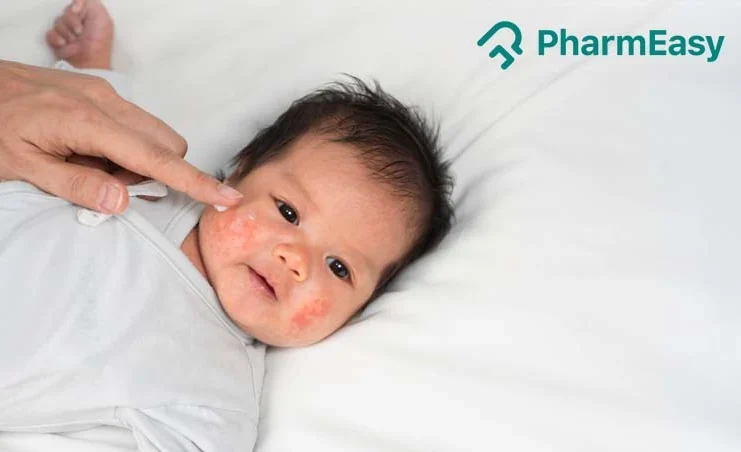
However, the good news is that most rashes in infants are mild and resolve with simple care1,3. So, understanding the common causes, recognising different types of rashes, and knowing basic management and preventive strategies can help parents effectively support their baby’s skin health and comfort.
Baby skin rash refers to any noticeable change in the colour, appearance, or texture of a baby’s skin. It may appear suddenly or develop gradually and can vary in how it looks and feels.
A baby rash can be bumpy or flat, red, skin-coloured, or slightly lighter or darker than the surrounding skin. It may sometimes even appear dry, rough, or scaly1.
Note: Most baby rashes are harmless and temporary. In most cases, they reflect the sensitivity of an infant’s delicate skin and its response to irritation, moisture, allergens, or mild infections.
Baby rashes on the body occur primarily because an infant’s skin is delicate, sensitive, and still developing. Common causes include1:
Note: Irritants such as urine, faeces, heat, soaps, or rough fabrics can easily disrupt the skin barrier, which leads to inflammation and visible rashes. In some cases, rashes may also result from fungal overgrowth, immune reactions, or underlying skin conditions.
Baby skin rashes are common in early childhood and can appear in many different forms, ranging from mild and temporary skin changes to conditions that may require simple home care or medical baby skin rashes treatment. Most common types of baby rashes include:
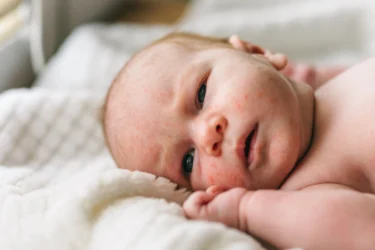
Baby acne appears as small red or white bumps on the skin. They are most commonly on the cheeks, nose, and forehead. Baby acne is generally caused by the baby’s exposure to maternal hormones before birth. This type of rash is harmless and usually clears on its own1,4. For management, gentle cleansing with water and using mild baby products are usually sufficient. Aapplying breast milk over acne might also be helpful. However, please note that acne treatments meant for adults should be avoided3.
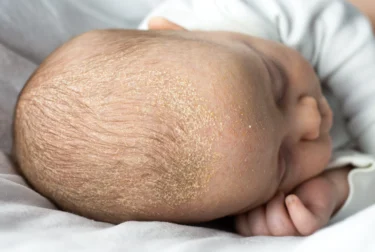
Cradle cap presents as greasy, yellowish, scaly or crusty patches. It is mainly seen on the scalp, but it may also affect the face, ears, and neck. Cradle cap is a common and normal condition in babies and is not painful or itchy (if it is, then you should see a doctor). It often resolves without treatment. For management, regular washing with baby shampoo and gentle brushing may help4.
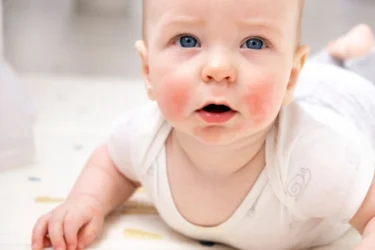
Eczema causes dry, itchy, red, and sometimes cracked skin. In babies, it often appears on the face and scalp and may later affect the folds of the elbows and knees4. It is linked to a family history of eczema, asthma, or allergies1. For management, keeping the skin well moisturised and avoiding harsh soaps could help4. Sometimes mild steroid ointments (only after being prescribed by a doctor) can be used in severe cases1.
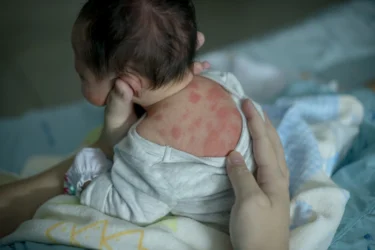
This harmless newborn rash appears as blotchy red patches, sometimes with small white bumps in the centre1. It commonly affects the face, body, arms, and thighs and usually develops within the first few days after birth1,4. No treatment is generally required, and the rash typically disappears within a few days1. Sometimes doctors may prescribe an antibiotic ointment in severe cases.
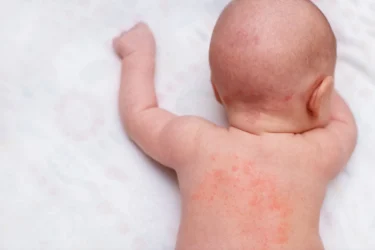
Heat rash appears as tiny red bumps or small blisters. It often occurs on the neck, chest, back, or skin folds. Heat rash is commonly caused by blocked sweat glands, especially in hot or humid conditions or when babies are overdressed1. For management, keeping the baby cool, dressing them in light clothing, and avoiding overheating usually helps.
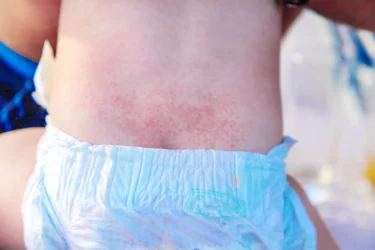
Nappy rash causes red, irritated skin in the diaper area (including the buttocks and genital region). Most of the time, it is triggered by prolonged exposure to wet or soiled nappies1,3. For management, frequent nappy changes every 3 to 4 hrs, keeping the area clean and dry, and using barrier creams may help1. If the infection is caused by a yeast, you may need to see a doctor for antifungal treatment.
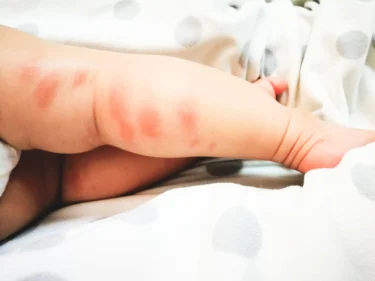
Hives appear as raised, red, itchy welts. They can occur anywhere on the body and may change position over time. Hives are often triggered by an allergic reaction (usually to milk, eggs, nuts and seafood), although the exact cause is sometimes unclear. Mild cases usually settle on their own, but medical advice may be needed if symptoms persist4.
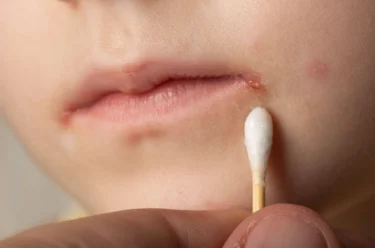
Impetigo is a contagious bacterial skin infection that causes sores and blisters, often with a crusted appearance. It can occur anywhere on the body. Impetigo requires medical attention1,4.
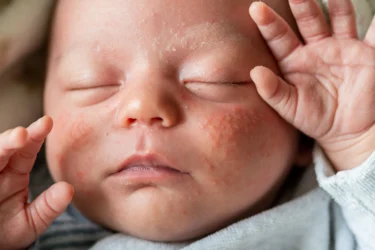
Milia are tiny white spots caused by blocked pores. They commonly appear on a baby’s face, particularly on the nose and cheeks. Milia are harmless and usually disappear on their own within a few weeks without needing treatment4.
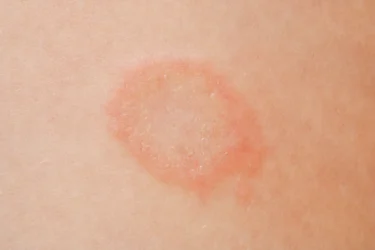
Ringworm appears as a circular red rash and is caused by a fungal infection. It can affect various parts of the body, including the scalp and skin. For management, doctors usually prescribe an antifungal cream4.
Many mild baby rashes (especially diaper rash) can be cared for safely at home with simple, soothing measures that protect the skin and support healing. Some common home remedies for baby rash on the body include:

Aloe vera has natural soothing and anti-inflammatory properties that may help calm the irritated skin of the baby. Evidence from clinical studies indicates that the topical application of aloe vera gel has the potential to reduce the severity of diaper rash by relieving redness and discomfort5. This suggests that it supports skin healing by maintaining moisture and protecting the damaged skin barrier.
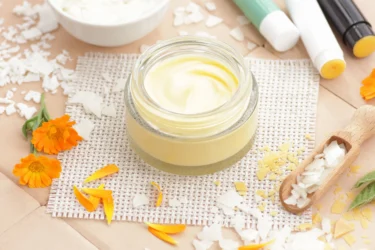
Calendula is a medicinal herb traditionally used for its anti-inflammatory and wound-healing effects. Clinical evidence shows that calendula ointment is helpful in reducing the severity and extent of diaper rash in infants5. This makes it a gentle and effective home remedy for baby rashes, particularly diaper rash.
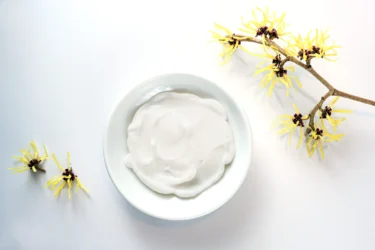
Hamamelis ointment has been shown to be an effective and well-tolerated option for managing mild skin conditions in children, including diaper rash and localised skin inflammation6. This means that it can be considered as a safe and effective home-care option for certain minor baby skin rashes.

Breast milk contains bioactive and antimicrobial components that may help soothe inflamed skin and support healing. It has been observed that the topical application of breast milk on a rash can significantly improve skin condition and reduce skin damage over a few days7. Thus, it can be considered as a safe and accessible option for parents to use in cases of mild rashes in babies.

Coconut or Olive oil can be used as a simple and effective home remedy particularly for diaper rash due to its soothing and skin-protective properties8,9. Evidence from a study showed that applying olive oil to the affected diaper area helped reduce inflammation, redness, and blisters in infants with diaper rash, while another study showed that coconut oil helped reduce water loss from the skin of infants8,9. Thus, it may be considered as a practical option that parents can safely use at home for mild diaper rashes.
Note: These home remedies are intended only for mild rashes and should not be used as a substitute for medical treatment. If symptoms worsen or persist, it is very important to seek medical advice.
Preventing baby rashes begins with gentle daily skin-care practices that help protect the baby’s delicate skin barrier and reduce exposure to common irritants. Some tips include:
Also Read: An Easy Beginner’s Guide to Baby Massage
You should contact a pediatrician if your baby has a rash along with any of the following signs:
Note: Medical evaluation helps ensure proper diagnosis and the start of baby skin rashes treatment, especially when symptoms suggest infection or when the rash does not improve as expected.
Also Read: A Complete Guide to Baby Care and Newborn Hygiene
Baby rashes are common in infancy and are usually mild, temporary, and manageable with proper skin care and simple home remedies. Therefore, understanding the different types of baby rashes, their causes, and early signs can help parents and caregivers respond appropriately and prevent discomfort. Additionally, it is important to note that gentle cleansing, regular moisturisation, careful diaper care, as well as maintaining a suitable environment play a key role in keeping an infant’s skin healthy.
While most rashes resolve on their own, recognising warning signs and seeking medical attention when needed is essential to prevent complications. Parents and caregivers can effectively protect their baby’s delicate skin and promote overall comfort and well-being with informed care and timely intervention.
You can identify your baby’s rash by looking at how it appears, where it is located, and whether it seems to bother your baby. Note the colour (red, pink, or darker), texture (flat, bumpy, scaly, or blistered), and location (diaper area, face, skin folds, or body). Also, observe if your baby is uncomfortable, itchy, or otherwise well1,4.
Most mild baby rashes last a few days to about one week and improve with gentle care. However, some rashes, like baby acne or eczema, may last longer but usually improve gradually1,4. If a rash does not improve after 3 days of home care, it is important that you see a doctor for medical advice1.
A rash is usually okay if your baby is feeding well, active, comfortable, and the rash is not spreading, oozing, blistering, or worsening1,3. Improvement in redness or irritation over a few days is a good sign. However, any signs of infection or distress should be checked by a doctor.
Many baby rashes are caused by skin irritation, heat, moisture, allergies, or normal skin changes, not infections1. These types of rashes often occur without fever and are usually harmless1,3.
A rash may be serious if it is accompanied by fever, breathing difficulty, poor feeding, extreme sleepiness, blisters, swelling, bruising like spots that do not fade when pressed, or rapid spreading1,3. Rashes in babies under 3 months should also be checked by a doctor1,4.
Vaseline (petroleum jelly) might be helpful for mild diaper rash. It could act as a barrier and protect the skin from moisture and irritation10. However, if the rash worsens or does not improve, consult a doctor.
Disclaimer: The information provided here is for educational/awareness purposes only and is not intended to be a substitute for medical treatment by a healthcare professional and should not be relied upon to diagnose or treat any medical condition. The reader should consult a registered medical practitioner to determine the appropriateness of the information and before consuming any medication. PharmEasy does not provide any guarantee or warranty (express or implied) regarding the accuracy, adequacy, completeness, legality, reliability or usefulness of the information; and disclaims any liability arising thereof.
Links and product recommendations in the information provided here are advertisements of third-party products available on the website. PharmEasy does not make any representation on the accuracy or suitability of such products/services. Advertisements do not influence the editorial decisions or content. The information in this blog is subject to change without notice. The authors and administrators reserve the right to modify, add, or remove content without notification. It is your responsibility to review this disclaimer regularly for any changes.


Comments

Leave your comment...
You may also like



















Comments