




An Easy Beginner’s Guide to Baby Massage
By Dr. Sarthak Soni +2 more

Medically reviewed by Dr. Sarthak Soni
Last updated: Feb 24, 2026 Published on: Jan 15, 2026


Get,

to manage your symptom
Get your,

4 Cr+ families
benefitted

OTP sent to 9988776655



You’ve successfully subscribed to receive
doctor-approved tips on
Whatsapp

Get ready to feel your best.


Register to Avail the Offer
Send OTPBy continuing, you agree with our Privacy Policy and Terms and Conditions
Hi There,
Sign up on PharmEasy now!!


Trusted by 4 crore+ families

OTP sent to 9988776655
You have unlocked 25% off on medicines


Code: NU25

By Dr. Sarthak Soni +2 more
Table of Contents
Touch is one of the most powerful ways we connect with our babies. For a new-born, your gentle hands are their first lesson in feeling safe and truly loved. Baby massage is more than just a way to relax. It is a quiet, beautiful conversation between you and your little one that builds a strong bond without needing any words. When you take a moment for this simple ritual, you aren’t just calming their body but also helping them feel secure and creating a foundation of trust that will last a lifetime.
Beyond the emotional connection, gentle massage is a wonderful tool for your baby’s physical health. It helps in calming, makes digestion easier, and even supports their natural growth. When you make massage a daily habit, you are doing so much more than just soothing your little one. You are giving them a healthy, happy start that helps them grow strong and feel confident in their new world.
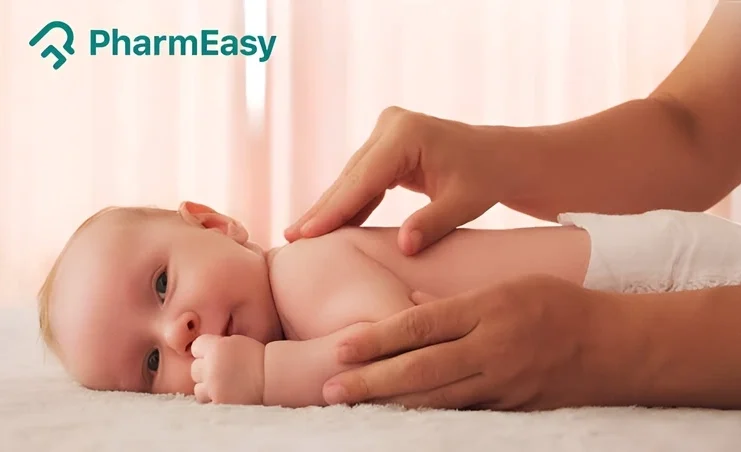
Baby massage is a traditional caregiving practice characterized by the gentle application of oil using minimal pressure to soothe and stimulate an infant. It involves a combination of rhythmic stroking, manual stretching of large joints like the elbows and knees, and targeted pressing on specific areas such as the joints, umbilicus, and the sides of the nose. These techniques are designed to provide comfort to the baby and support their physical growth and development1.
For hundreds of years, families in places like India and other Asian countries have used massage as a daily ritual to help babies develop strong bones and improve their blood circulation. This ancient art has recently become very popular as a therapy for parents and professionals across the Western world2.
Regular baby massage is a nurturing practice that combines the power of touch with proven physiological benefits to support your infant’s growth, relaxation, and emotional well-being. Following are baby massage benefits:

During massage, both the mother and the baby release oxytocin, often called the “love hormone.” This creates a deep sense of security and trust. For parents, it provides a dedicated time to learn their baby’s non-verbal cues, which builds confidence in their parenting abilities3.

Massaging a baby helps regulate their sleep-wake cycle. The gentle strokes stimulate the production of melatonin, the hormone that helps the body sleep4. New-born baby massage also helps to lower stress hormones and calms the nervous system, helping infants to stay relaxed and sleep better5.

Massage helps calm a baby’s digestive system by activating their rest and digest mode. This relaxes the intestines, making it easier for them to digest food and pass gas, which provides relief from the pain of colic6.
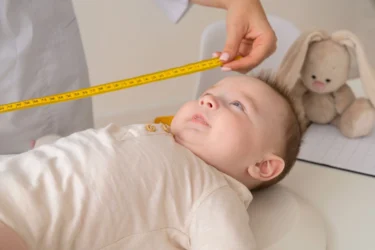
For new-borns and growing infants, massage helps improve blood circulation and performance of muscle. It can be particularly beneficial for babies born prematurely, as it encourages healthy weight gain and the development of muscle mass7.
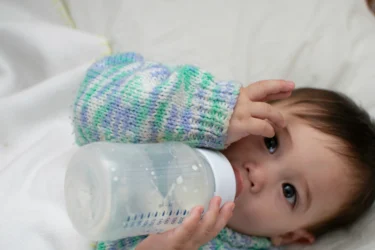
Gentle massage stimulates the vagus nerve (a key component of the nervous system that regulates the digestive tract). This stimulation increases intestinal peristalsis (the muscle contractions that move food through the gut), which speeds up gastric emptying. As the stomach processes food more efficiently, the infant naturally feels hungry more often, which can lead to better weight gain7.
By stimulating the body’s natural systems through touch, massage serves as a powerful tool to optimize your infant’s physiological development and long-term well-being.
It is common for parents to feel unsure about when to start oil massage for a newborn.
Massaging your baby is a beautiful way to bond, but because a new-born’s skin is incredibly delicate, timing is important. For healthy infants, massage is typically initiated within the first week of life, though it is usually delayed if the baby is unwell1. While you can begin gentle, skin-to-skin touch almost immediately, introducing oil requires a little more patience. It is recommended to wait 4 to 6 weeks postpartum. This allows your baby’s skin to mature and gives them time to settle into a comfortable rhythm at home8.
Before you begin the massage, here are the key preparation steps to focus on:
If you have any doubts about how to begin or if your baby has an underlying health condition, please seek medical advice from your doctor before starting.
Not all oils are created equal. Some traditional favourites can actually disrupt the skin barrier, while others may trigger hidden allergies. Choosing the right massage oil for your baby is more than just a grooming choice; it acts as a protective layer for their developing skin.
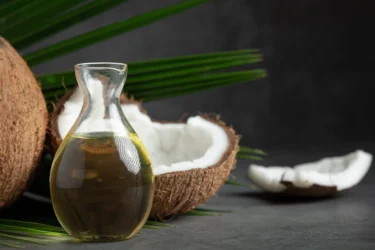
Coconut oil contains special fats and vitamins that help a baby’s skin mature faster. This creates a better barrier that not only maintain the skin’s hydration but also keep the baby warm and stable, which helps prevent dangerous drops in body temperature (hypothermia)10.
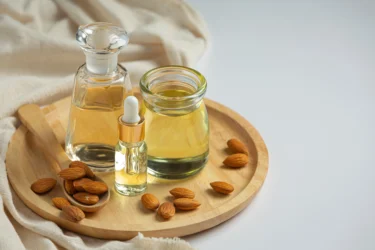
Massaging preterm infants with sweet almond oil significantly improves skin hydration and barrier health while simultaneously supporting weight gain and nerve growth when combined with sensory-motor stimulation11.

It acts as a barrier repairer, preventing water loss from the skin. It helps in locking in moisture and avoid the risk of infections11.
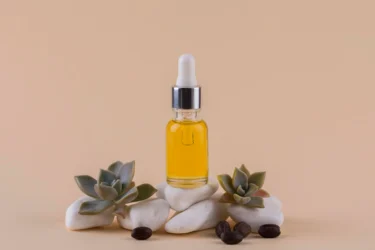
Jojoba is a liquid wax that mimics natural human sebum (natural oil produced by sebaceous gland) which contains 25% wax, allowing it to effectively moisturize and soften skin due to its similar chemical structure. It is rich in vitamin E and can help repair skin barrier12.
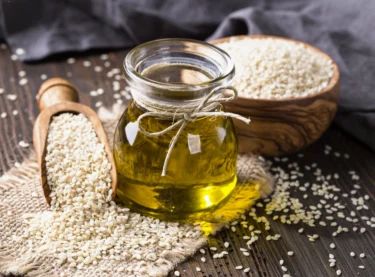
Sesame oil massage in baby can be beneficial as it not just helps keep the skin moist but also enhances physical growth. Studies have shown that sesame oil massage can help increase length and limb circumference. It improves blood circulation and sleep quality more effectively than massage alone13.
While studies have shown beneficial effects of these oils when used for baby massage, further large-scale research may be needed to confirm these. Using plain, natural cold-pressed oils (which are less processed) can be safer for the baby’s delicate skin.
Since most cases of eczema develop during a baby’s first year, protecting the maturing skin barrier is essential. Some common oils specifically olive, mustard seed, and soybean oil, can actually interfere with this development. When massaging your baby, it is best to avoid oils high in oleic acid, like olive oil, as they may negatively impact sensitive skin14.
Note: If your baby has a pre-existing skin condition like eczema, extreme dryness, or hypersensitivity, it is essential to consult a paediatrician or dermatologist before introducing a new oil. Always do a patch test before introducing any new oil.
Creating a soothing routine through massage can significantly enhance the physical and emotional connection between you and your baby. Before starting, ensure the room is warm, your hands are clean, and you are using a baby safe oil.
Before applying the oil to your baby’s delicate skin, pour a small amount into your palms and rub them together to warm the oil and your hands simultaneously. Now let’s see how to massage a baby:
You can massage the body in any order you like. However, many parents find it best to start with the legs, as babies are often less sensitive there and it helps them ease into the session.
There is no specific age limit to stop baby massage; you can continue the practice for as long as your child enjoys it. However, it is essential to monitor their skin for any allergic reactions to the oils used and to stop immediately if your baby becomes fussy or resistant, as their comfort is the priority. If you notice any unusual physical changes or signs of discomfort, pause the sessions and consult a paediatrician before continuing.
Avoid massaging your baby if they are asleep, hungry, or crying. You should also skip the massage if your infant has a raised temperature or a known infection16.
Also Read: Baby Crawling Guide: Stages, Types & How to Encourage Crawling
Baby massage is about more than just physical health; it is a quiet moment of connection that helps your little one feel safe and cherished. By incorporating these gentle touches into your daily routine, you are supporting your baby’s development while building a bond of trust that grows alongside them. Whether it’s to soothe a tummy ache or help them drift off to sleep, this simple practice is a beautiful gift of comfort and love for both you and your child.
While not strictly medically necessary for survival, baby massage is recommended by experts for its significant developmental and emotional benefits. It promotes better sleep, digestion, and physical growth while serving as a powerful way to strengthen the bond between you and your little one3,4.
When your infant is calm, alert, and showing relaxed behavior, it is an ideal time to introduce a gentle massage. Try incorporating it into your daily routine, such as during nappy changes or as a soothing step before bedtime16.
While certain oils are widely regarded as the best choices for infants, they may not be suitable for every baby’s unique skin type. To ensure safety, it is always recommended to perform a 24-hour patch test before fully introducing any new oil into your baby’s routine9.
Grapeseed oil can be beneficial for the skin because it is rich in vitamins, phenolic compounds, and essential fatty acids. These components, particularly vitamin E and polyphenols, provide potent antioxidant and anti-inflammatory properties. However, grapes may have blood-thinning quality upon systemic absorption and hence its use in babies is controversial17. It’s best to discuss with your paediatrician before considering it for infant massage.
Disclaimer: The information provided here is for educational/awareness purposes only and is not intended to be a substitute for medical treatment by a healthcare professional and should not be relied upon to diagnose or treat any medical condition. The reader should consult a registered medical practitioner to determine the appropriateness of the information and before consuming any medication. PharmEasy does not provide any guarantee or warranty (express or implied) regarding the accuracy, adequacy, completeness, legality, reliability or usefulness of the information; and disclaims any liability arising thereof.
Links and product recommendations in the information provided here are advertisements of third-party products available on the website. PharmEasy does not make any representation on the accuracy or suitability of such products/services. Advertisements do not influence the editorial decisions or content. The information in this blog is


Comments

Leave your comment...
You may also like






















Comments