



Black Coffee for Weight Loss: Benefits, Best Time to Drink, and How to Make It
By Dr. Malavika Athavale +2 more

Medically reviewed by Dr. Malavika Athavale
Last updated: Mar 16, 2026 Published on: Jan 23, 2026


Get,

to manage your symptom
Get your,

4 Cr+ families
benefitted

OTP sent to 9988776655



You’ve successfully subscribed to receive
doctor-approved tips on
Whatsapp

Get ready to feel your best.


Register to Avail the Offer
Send OTPBy continuing, you agree with our Privacy Policy and Terms and Conditions
Hi There,
Sign up on PharmEasy now!!


Trusted by 4 crore+ families

OTP sent to 9988776655
You have unlocked 25% off on medicines


Code: NU25

By Dr. Malavika Athavale +2 more
Table of Contents
All of us need some morning fuel to start our day, don’t we? For some, it is tea and for others, it is coffee. But do you know that coffee is more than just a morning beverage? Particularly the black coffee? Black coffee has recently gained popularity among individuals trying to manage weight as it may have weight-management benefits1.
Black coffee may have several benefits that can support your weight management journey; however, it is essential to understand its effects and potential drawbacks. In this article, we will discuss aspects like black coffee benefits for weight loss, how to make it, and its side effects to help you make the right decisions.

Black coffee may be able to help with weight management, especially when combined with a healthy lifestyle. It contains bioactive compounds such as caffeine and trigonelline, which may improve body composition and metabolism in individuals who are overweight2. Some studies indicate that unsweetened caffeinated or decaffeinated coffee is linked to less weight gain over time1. Hence, the weight management effect of coffee is more prominent when it is plain and unsweetened.
In short, black coffee for weight loss may support weight management when paired with appropriate lifestyle and diet strategies and is best planned by a nutritionist to achieve good results.
Black coffee might help you support weight management through several mechanisms. Here are a few of them:

Caffeine, which is one of the main components in coffee, helps stimulate the central nervous system and improve metabolic efficiency. This may help the body burn more energy even when you are at rest3. A study published by The American Journal of Clinical Nutrition suggests that coffee/caffeine increases the calorie and fat burn in both obese and lean people4. This is because caffeine helps the body produce more heat and release stored fat, which can be used by the body for energy. This might be helpful for people who are trying to reduce or manage body fat3. However, it is recommended to consult a healthcare professional before increasing your caffeine intake.

Coffee might help reduce hunger by influencing the body’s hunger and fullness signals. It can reduce the hormones that make you hungry and enhance the signals to make you feel full, especially after a meal. It also slows down the release of sugar into the blood. Overall, although coffee might help reduce your appetite, its effects vary from person to person3.

Black coffee, when consumed without sugar, cream or milk, has very few calories5. This makes it an good replacement for high-calorie beverages like sweetened coffee, soft drinks, or packaged juice. Choosing coffee over such beverages helps with reducing unnecessary calorie intake.

Studies indicate that consuming a caffeinated drink, such as black coffee, before exercise might help you burn more fat during workouts. Along with increased fat utilisation, caffeine also improves oxygen use during moderate-intensity workouts, whether you have eaten or not. Additionally, it can also improve alertness and energy, which might help you move more or exercise longer with better focus1.
Note: Drinking coffee may cause stomach discomfort in some individuals5. Therefore, avoid drinking coffee on an empty stomach or take it with a small snack, such as biscuits or nuts, to avoid acid reflux.

Some short-term studies suggest that caffeinated coffee might help the body process blood sugar. In a small study involving obese men with higher fasting blood sugar levels, men who consumed caffeinated coffee showed better glucose control after meals compared to those who consumed decaffeinated coffee or no coffee at all. The study also showed a reduction in waist size in the caffeinated group, showing that coffee may help support metabolic health1. Hence, coffee might help control blood sugar level, which in turn might help support fat metabolism and manage weight over time.
Now that you know the black coffee benefits for weight loss, it is also important to know how to make it to get the best out of it. Here is how to make black coffee for weight loss at home.
Enjoy your coffee once it is fully ready. Note that coffee alone cannot contribute to weight loss; you will need to combine it with proper exercise, diet, and lifestyle for the best results.
Although black coffee has many potential benefits, its excess consumption might cause several side effects. Following are some common side effects of black coffee:

The caffeine in coffee stimulates the central nervous system, which in turn triggers the release of adrenaline (a hormone). This might make you feel anxious or increase the risk of anxiety if consumed in excess. Studies indicate that this is more likely to happen when caffeine intake is more than 400mg1,6.

Although moderate coffee consumption is beneficial for the heart, its brewing method is very important. Boiled or unfiltered coffee might have excess diterpenes, which can increase blood cholesterol levels and that, in turn, can increase the risk of heart disease7. In addition, excess caffeine might also cause heart palpitations (a sensation of increased heart rate)5.

Since coffee is acidic in nature, excess coffee consumption might increase stomach acid production, causing gastric issues like acid reflux and peptic ulcers. This might lead to discomfort and long-term digestive issues3.

According to some studies, coffee might significantly interfere with sleep, reducing it by approximately 30-45 minutes1. It might also cause insomnia-related symptoms like trouble falling asleep, frequent awakenings during the night, and feeling sleepy during the daytime8.

The excess consumption of coffee might cause dehydration as it has a diuretic effect. This means it can increase urine output, thus leading to fluid loss3.
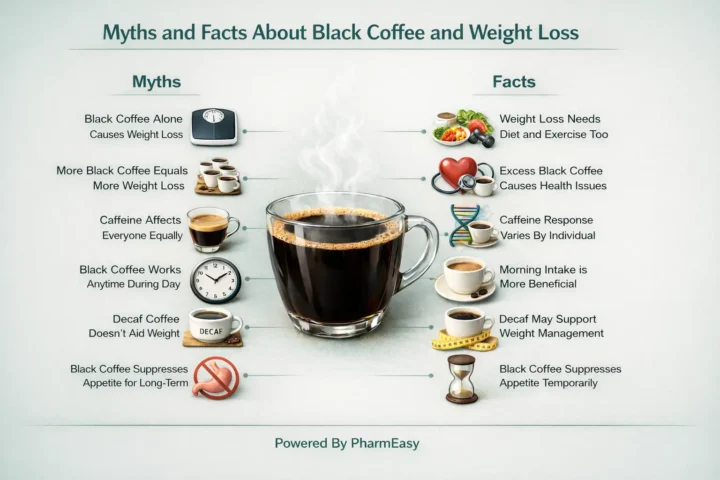
Although black coffee may offer some benefits for weight management, it is surrounded by many myths and misconceptions. Here are a few common ones, along with the facts.
1. Myth: Coffee alone is enough for weight loss.
Fact: No, coffee alone cannot significantly reduce weight. It might help increase metabolism and suppress appetite3, but effective weight management needs a balanced diet with calorie control and regular physical activity.
2. Myth: Consuming more coffee means more weight loss.
Fact: This is not true. A moderate amount of coffee consumption might help you in managing weight, while excess coffee consumption is associated with several health issues like anxiety, gastric troubles, and sleep issues3.
3. Myth: Black coffee or caffeine works the same for everyone.
Fact: This is false. Everybody processes caffeine differently; a moderate dose for one might be a high dose for someone else. Factors such as metabolism, body weight, and the use of several medicines might influence how caffeine affects an individual9.
4. Myth: Black coffee is effective at any time of the day.
Fact: No, this is not true. Consuming coffee in the morning may be more beneficial because it won’t disrupt the sleep pattern and may help reduce inflammation that occurs earlier in the morning10. Consuming coffee late at night might interfere with your sleeping patterns; therefore, studies recommend drinking coffee at least 8 hours before you sleep1.
5. Myth: Decaffeinated coffee does not play any role in weight management.
Fact: This is not true. Decaffeinated coffee, like caffeinated coffee, is linked with less weight gain, suggesting that it might help with weight management1.
6. Myth: Black coffee can suppress appetite for a long time.
Fact: No, black coffee might suppress your appetite only temporarily. This is because the caffeine in the coffee stimulates the hypothalamus, a part of the brain that regulates hunger, making you feel fuller for a short period3.
Black coffee might help you in your weight management journey by playing a role in improving functions like metabolism and appetite control. However, you can get better benefits from it when you combine it with a healthy lifestyle, regular exercise, and a proper diet. Do not forget that moderate intake of coffee is crucial, as excessive consumption may lead to serious side effects. It is best to consult a healthcare professional for personalised advice.
Also Read: Jeera Water for Weight Loss: Benefits, How to Use & Best Ways to Drink It
Drinking 1-3 cups of black coffee between morning and early afternoon is suggested to help boost metabolism and suppress appetite.
While research on caffeine’s effect on men and women has mixed opinions, it boosts exercise performance in everybody. Simply thinking that you have had caffeine might improve your performance, while some studies show men might benefit a bit more11.
Consuming coffee every day may be linked to a lower risk of health issues like diabetes, stroke, breathing issues, memory decline, and some types of cancer like liver and uterine cancer1.
Disclaimer: The information provided here is for educational/awareness purposes only and is not intended to be a substitute for medical treatment by a healthcare professional and should not be relied upon to diagnose or treat any medical condition. The reader should consult a registered medical practitioner to determine the appropriateness of the information and before consuming any medication. PharmEasy does not provide any guarantee or warranty (express or implied) regarding the accuracy, adequacy, completeness, legality, reliability or usefulness of the information; and disclaims any liability arising thereof.
Links and product recommendations in the information provided here are advertisements of third-party products available on the website. PharmEasy does not make any representation on the accuracy or suitability of such products/services. Advertisements do not influence the editorial decisions or content. The information in this blog is subject to change without notice. The authors and administrators reserve the right to modify, add, or remove content without notification. It is your responsibility to review this disclaimer regularly for any changes.


Comments

Leave your comment...
You may also like
























Comments