Get,

Free Doctor Tips

to manage your symptom

Get your,

FREE Doctor Tips Now!!

4 Cr+ families

benefitted

Enter your Phone Number

+91

|

Enter a valid mobile number

Send OTP

Verify your mobile number

OTP sent to 9988776655

CONGRATULATIONS!!!

You’ve successfully subscribed to receive

doctor-approved tips on Whatsapp


Get ready to feel your best.

Hi There,

Download the PharmEasy App now!!

AND AVAIL

AD FREE reading experience
Get 25% OFF on medicines
Banner Image

Register to Avail the Offer

Send OTP

By continuing, you agree with our Privacy Policy and Terms and Conditions

Success Banner Image
Verify your mobile number

OTP sent to 9988776655

Comments

Subscribe
Notify of
guest
0 Comments
Inline Feedbacks
View all comments

Leave your comment here

Your email address will not be published. Required fields are marked *

25% OFF on medicines

Collect your coupon before the offer ends!!!

COLLECT

Avocado Oil vs Olive Oil: Health Benefits, Nutrition, and Best Uses

By Dr. Malavika Athavale +2 more

Join Health Talk by PharmEasy on WhatsApp

Introduction

Choosing the healthiest cooking oil can be challenging, especially when deciding between avocado oil and olive oil. Understanding their nutritional profiles, potential health benefits, and cooking uses can help you make a more informed choice. This blog will give you a scientific breakdown of these two favoured cooking oils, their extraction steps, nutritional details, and health benefits.  
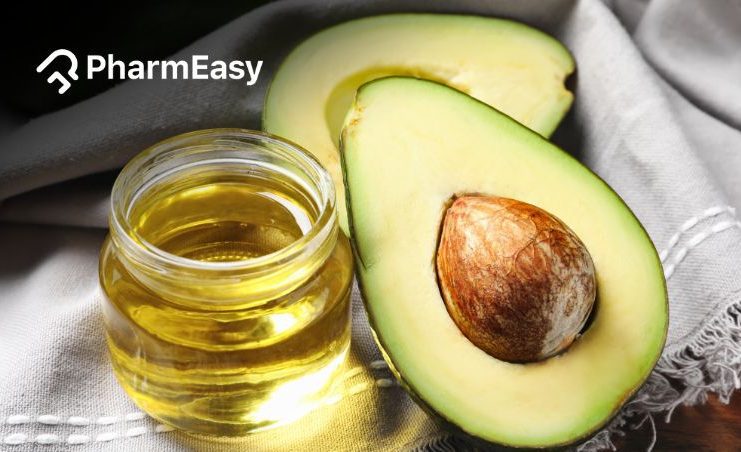
What Is Avocado Oil?

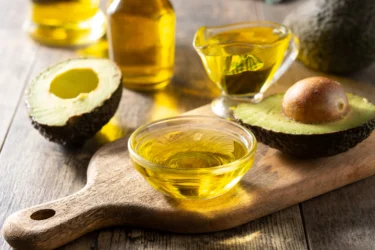
Avocado oil is becoming popular as a healthy and tasty cooking oil. It is derived from the fruit of the avocado tree (Persea Americana), which is native to Central America1.

1. Extraction Methods 

There are two main ways of extracting avocado oil: 


  • Cold-pressed: Cold-pressed avocado oil retains its natural colour, taste, and nutrients. In this method, the fruit is pressed at cooler temperatures to extract the oil, which ensures that the oil doesn’t get much heat exposure1.
  • Expeller-pressed: With expeller-pressed avocado oil, heat and sometimes chemical solvents are used. The processed oil often goes through bleaching and deodorising, which may reduce both its taste and nutritional value1.

2. Composition 

Avocado oil holds many helpful compounds like: 

  • Fatty acids: Unsaturated fatty acids are key in avocado oil, which is rich in monounsaturated fats and polyunsaturated fats. Saturated fats are somewhat low1.
  • Vitamins and minerals: Avocado oil, which is rich in vitamins and minerals like vitamin E and potassium, respectively, has antioxidant perks2. It is believed to help improve immune function and keep the heart healthy1.

3. Uses in Cooking and Beauty Products 

Avocado oil, full of flavour and flexibility, has many uses in the kitchen and cosmetic products. Its mild, butter-like flavour enhances a lot of dishes1. Also, its softening nature makes it a great add-in for skin and hair care items. 

From what I have seen, avocado oil might be highly placed for its numerous potential benefits, particularly in the realm of skincare. One notable advantage of avocado oil might be its rapid absorption rate when applied to the skin. This characteristic may allow for quick absorption, delivering its nourishing qualities effectively18

Dr. Siddharth Gupta, B.A.M.S, M.D (Ayu)

What Is Olive Oil?

A staple in the Mediterranean diet, olive oil is made by pressing olives. There are various kinds of olive oil, each with its unique traits and nutritional properties. 

1. Types of Olive Oil

Olive oil is available in different forms, depending on how it is processed3

  • Extra virgin olive oil: The least processed and most nutritious, extra virgin olive oil is made by cold-pressing olives. This preserves its natural flavours, smell, and nutrients. 
  • Virgin olive oil: A bit more processed than extra virgin olive oil, virgin olive oil still has many health perks. It can be used for cooking or as a finishing oil. 
  • Pure olive oil: Pure olive oil blends cold-pressed oil and refined oil extracted using heat or chemicals. It’s less flavourful and nutritious compared to extra virgin and virgin olive oil. 
  • Light and extra light olive oil: These olive oils go through more heat and chemical processing. They end up with a lighter colour and taste and poorer nutritional content. 

2. Extraction Methods

Like avocado oil, olive oil is made by either cold-pressing or heat and chemical processing methods4


  • Cold-pressed: Extra virgin and virgin olive oils are produced through cold-pressing. This ensures the oils’ nutrients, flavour, and aroma stay intact. 
  • Heat and chemical processing: This method is used to extract more processed types of olive oil, like pure, light, and extra-light. While allowing for a bigger yield, it cuts down on the final product’s nutritional value. 

3. Composition 

Olive oil is made up of a number of good compounds, including: 

  • Fatty acids: Oleic acid, a monounsaturated omega-9 fatty acid, is the main component in olive oil. It’s known to lower inflammation and improve overall health5
  • Vitamins and minerals: Vitamin E and other antioxidants found in olive oil bring about health perks and act as anti-inflammatory agents5.

4. Uses in Cooking, Beauty Products, and Traditional Medicine 

Olive oil is often used for cooking, dipping, drizzling, and finishing dishes, showing its cooking versatility. Add to this, its moisturising and emollient properties, which make it a go-to ingredient in beauty products. They also form the base of many traditional medicine remedies6.

Based on my observations, I may say that olive oil might serve as a considerably healthier alternative to dietary fats, particularly those derived from animals. When it comes to cooking, olive oil may provide a nutritious substitute for butter, margarine, and various other types of fat. Moreover, a study conducted in this regard demonstrated a remarkable correlation: replacing unhealthy fats with olive oil might be linked to a reduced risk of mortality19

Dr. Rajeev Singh, BAMS

Nutritional Comparison

To make a smart choice between avocado oil and olive oil, it’s vital to understand their nutritional differences. 

1. Fatty Acid Profiles 

Although avocado oil and olive oil are mainly made of monounsaturated fats, their fatty acid profiles differ slightly: 

  • Monounsaturated fats: Both oils have a similar amount of monounsaturated fats, mainly oleic acid. Foods rich in oleic acid shown to reduce inflammation and blood pressure levels7,9
  • Polyunsaturated fats: Avocado oil slightly beats olive oil in polyunsaturated fat content. Although they’re good for you, polyunsaturated fats are easier to oxidise8,9. This makes them less stable at high temperatures. 
  • Saturated fats: Saturated fat content in both oils is fairly low and in nearly equal amounts9.

2. Vitamin and Mineral Content 

Although both oils have important vitamins and minerals, the quantities can vary. 

3. Caloric Content 

Calories per tablespoon (15 mL) are similar for both avocado and olive oil. Each provides around 120 calories. 

4. Nutrient Content of Avocado Oil vs. Olive Oil 

  • Calories 
    • Avocado Oil: 120 (per 15 mL)9 
    • Olive Oil: 120 (per 15 mL)9
  • Total fat 
    • Avocado Oil: 14 grams (per 15 mL)9 
    • Olive Oil: 14 grams (per 15 mL) 9
  • Monounsaturated fat 
    • Avocado Oil: 10 grams (per 15 mL) 
    • Olive Oil: 10 grams (per 15 mL) 
  • Polyunsaturated fat 
    • Avocado Oil: 2 grams (per 15 mL) 
    • Olive Oil: 1.5 grams (per 15 mL)] 
  • Saturated Fat 
    • Avocado Oil: 2 grams (per 15 ml) 
    • Olive Oil: 2 grams (per 15 mL) 
  • Vitamin E 
    • Avocado Oil: 23% of Daily Value (DV) 
    • Olive Oil: 33% of DV 

I may attest to the benefits of avocado oil in skincare products. When incorporated into soaps, it might noticeably improve lathering, creating a luxurious and abundant foam. Additionally, when used in creams, it may impart a smoother texture, resulting in a delightful and velvety application18

Dr. Smita Barode, B.A.M.S, M.S.

Benefits Comparison 

Avocado oil and olive oil provide loads of health benefits, but they differ slightly in the benefits they offer. 

1. Heart Health 

supports heart health

The high content of monounsaturated fats and oleic acid in both oils improves cholesterol levels. It also helps regulate blood pressure. 

  • Cholesterol levels: Both avocado oil and olive oil have been seen to raise HDL cholesterol (the “good” cholesterol). They also lower LDL cholesterol (the “bad” cholesterol). Thanks to their high monounsaturated fat content7.
  • Blood pressure regulation: Both oils can positively affect blood pressure. The oleic acid-rich content in avocado and olive oil can help decrease inflammation. This may lead to lower blood pressure levels7.

2. Weight Management 

weight management

Adding either oil to your diet could help with managing your weight. The unsaturated fats in both oils can curb hunger/help with appetite control. This prevents eating too much and helps with managing meal sizes10.

3. Anti-inflammatory Properties 

reduces inflammation

Oleic acid, polyphenols, carotenoids, and tocopherols add up to the anti-inflammatory properties of avocado oil and olive oil. These compounds work well together to lower inflammation in the body1.

4. Digestive Health 

digestive system

Adding avocado oil or olive oil to your diet could boost digestive health. The monounsaturated fats in these oils reduce inflammation in the gut1. Also, the flavonoids in olive oil are known to have antibacterial effects11. They could protect against harmful gut bugs. 

Menopausal women may often face challenges due to hormonal changes, such as emotional fluctuations, hot flashes, depression, anxiety, and vaginal dryness. During these times, I think that olive oil might be a helpful solution. It possesses antioxidant and anti-inflammatory properties that may help ease symptoms and help cope with menopause20

Dr. Anuja Bodhare, B.A.M.S, M.D (Ayu)

5. Antioxidant Content

Image Source: freepik.com

Antioxidants are needed to fight oxidative stress and they protect body cells. 

  • Polyphenols: Both oils contain polyphenols that provide antioxidant benefits. However, olive oil may be a stronger antioxidant source3,12
  • Carotenoids and Tocopherols: Carotenoids and tocopherols found in both avocado oil and olive oil provide antioxidant protection. They’re key for healthy skin and eyes3,12.

6. Skin Health 

good for skin

Avocado oil and olive oil provide soothing and nourishing effects due to their natural ingredients. Therefore, they are popular picks for skin care. 

  • Moisturisation and Nourishment: The high levels of monounsaturated fats and vitamin E in both oils help nourish and moisturise the skin. As such, they’re amazing choices for a healthy complexion13.
  • Anti-aging benefits: Both oils hold antioxidants that work against free radicals that can cause premature aging and harm cells in the skin. The regular intake of these oils may lead to a younger-looking complexion13
  • Protection against sun damage: The antioxidants, including carotenoids, in avocado oil and olive oil can help shield skin from harmful UV rays and visible light. They reduce the risk of sunburn and other skin damage caused by sunlight13

Smoke Point

Knowing the value of smoke point in cooking oils is key to retaining their nutritional value. It also keeps the overall quality of the dishes you’re preparing. 

1. Importance of Smoke Point in Cooking 

The smoke point is the temperature at which an oil starts to break down and release harmful free radicals. Cooking oils at or below their smoke point will maintain both their flavour and their health perks. 

2. Comparing Smoke Points of Avocado Oil and Olive Oil 

Avocado oil’s smoke point is higher than that of olive oil, which means it’s less likely to degrade during high-temperature cooking methods. Avocado oil’s unrefined smoke point is about 480℉ (250℃), while extra virgin olive oil’s smoke point is between 350℉ – 410℉14,15

3. Best Uses for Each Oil Based on Smoke Point 

Avocado oil is fitting for high-heat cooking techniques, like sautéing, grilling, searing, and baking. This is due to its higher smoke point. On the other hand, olive oil fits best for lower heat methods, like simmering, stewing, and medium-heat sautés. 

Nutrient Absorption

Both avocado oil and olive oil play a key role in nutrient absorption, especially when consumed with beneficial nutrients in other foods. 

Role of Fat in Nutrient Absorption 

Fats, like those found in avocado oil and olive oil, aid in absorbing fat-soluble nutrients, such as vitamins A, D, E, and K. Consuming high-fat foods along with these nutrients improves their availability and uptake by the body. 

Comparing the Nutrient Absorption Qualities of Avocado Oil and Olive Oil 

Both oils help absorb nutrients due to their content of monounsaturated fats. A study found that dressing a salad with avocado oil greatly boosted the absorption of carotenoids from the veggies16. Likewise, adding olive oil to tomato juice was seen to boost the absorption of the carotenoid lycopene17

Best Use Cases for Each Oil in Terms of Health Benefits

Although both avocado oil and olive oil offer countless health benefits like heart health, weight management, anti-inflammatory properties, and skin care, there might be times where one is more beneficial. For example, olive oil might be better for people who put a premium on its higher polyphenol content. Meanwhile, avocado oil might be a better fit for high-heat cooking due to its higher smoke point. 

Overall Comparison and Recommendations

In general, both avocado oil and olive oil add health benefits to your diet. However, do think about personal tastes and specific health needs before buying the oil. This will guide you in choosing the right oil for how you live or as per your lifestyle. 

Also Read: Canola Oil: Uses, Benefits, Side Effects by Dr. Smita Barode

Conclusion

Summing it up, avocado oil and olive oil provide a lot of health benefits, flexibility in cooking, and taste. Knowing their nutritional differences and proper uses, you can make an educated choice on the best oil for your diet. 

Ultimately, personal taste and individual needs will play a big part in deciding the best oil for you. Grab the chance to test and try out each oil. Then, find your own balance. Logic and some new insights can help you make an educated choice on the best cooking oil. 

Frequently Asked Questions (FAQs)

Can I use avocado oil and olive oil interchangeably in recipes? 

In many cases, yes. However, remember that their taste profiles and smoke points differ. For high-heat cooking methods, avocado oil might be a better fit. At the same time, olive oil is more suitable for lower-heat applications or as a finishing oil. 

Is it worth the cost to buy extra virgin olive oil or cold-pressed avocado oil? 

Extra virgin olive oil and cold-pressed avocado oil often rank higher in terms of quality and nutritional worth. Yes, they’re pricier. But if your main goal is getting the max health benefits, paying more might be worth it. 

How should I store avocado oil and olive oil to ensure freshness?

Keep both oils in a cool, dark place. Keep them away from heat and direct sunlight. This will extend their shelf life and keep their flavour and nutrients. Also, always seal the container tightly after each use. 

Are there any potential downsides or risks associated with using avocado oil or olive oil? 

As long as they’re part of a balanced diet, there are little risks with avocado oil or olive oil. But it’s important to pick quality products. Also, pay attention to the oils’ smoke points while cooking to avoid harmful free radicals. 

References

  1. Roberta K, Cristine G, Clara Prestes Ferreira, Matheus, Gama E, Nunes R. Supercritical Technology as an Efficient Alternative to Cold Pressing for Avocado Oil: A Comparative Approach. Foods [Internet]. 2024 Jul 31 [cited 2024 Aug 16];13(15):2424–4. Available from: https://www.mdpi.com/2304-8158/13/15/2424 
  1. Flores M, Saravia C, Vergara C, Avila F, Valdés H, Ortiz-Viedma J. Avocado Oil: Characteristics, Properties, and Applications. Molecules [Internet]. 2019 Jun 10;24(11):2172. Available from: https://www.ncbi.nlm.nih.gov/pmc/articles/PMC6600360/ 
  1. Olive Oil and Olive-Pomace Oil Grades and Standards | Agricultural Marketing Service [Internet]. Usda.gov. 2020. Available from: https://www.ams.usda.gov/grades-standards/olive-oil-and-olive-pomace-oil-grades-and-standards 
  1. Durazzo A, Fawzy Ramadan M, Lucarini M. Editorial: Cold Pressed Oils: A Green Source of Specialty Oils. Frontiers in Nutrition. 2022 Feb 11;8. Available from: https://pmc.ncbi.nlm.nih.gov/articles/PMC8873110/ 
  1. Jimenez-Lopez C, Carpena M, Lourenço-Lopes C, Gallardo-Gomez M, Lorenzo JM, Barba FJ, et al. Bioactive Compounds and Quality of Extra Virgin Olive Oil. Foods [Internet]. 2020 Aug 1;9(8):1014. Available from: https://pmc.ncbi.nlm.nih.gov/articles/PMC7466243/ 
  1. Albini A, Albini F, Corradino P, Dugo L, Calabrone L, Noonan DM. From antiquity to contemporary times: how olive oil by-products and waste water can contribute to health. Frontiers in Nutrition. 2023 Oct 16;10. Available from: https://pmc.ncbi.nlm.nih.gov/articles/PMC10615083/ 
  1. Terés S, Barceló-Coblijn G, Benet M, Alvarez R, Bressani R, Halver JE, et al. Oleic acid content is responsible for the reduction in blood pressure induced by olive oil. Proceedings of the National Academy of Sciences of the United States of America [Internet]. 2008 Sep 16;105(37):13811–6. Available from: https://pmc.ncbi.nlm.nih.gov/articles/PMC2544536/  
  1. MedlinePlus. Facts about polyunsaturated fats: MedlinePlus Medical Encyclopedia [Internet]. Medlineplus.gov. 2015. Available from: https://medlineplus.gov/ency/patientinstructions/000747.htm 
  1. U.S. Department of Agriculture. FoodData Central [Internet]. FoodData Central. 2024. Available from: https://fdc.nal.usda.gov/ 
  1. DiNicolantonio JJ, O’Keefe JH. Monounsaturated Fat vs Saturated Fat: Effects on Cardio-Metabolic Health and Obesity. Missouri Medicine [Internet]. 2022 Jan;119(1):69. Available from: https://pmc.ncbi.nlm.nih.gov/articles/PMC9312452/ 
  1. Nazzaro, Fratianni, Cozzolino, Martignetti, Malorni, De Feo, et al. Antibacterial Activity of Three Extra Virgin Olive Oils of the Campania Region, Southern Italy, Related to Their Polyphenol Content and Composition. Microorganisms. 2019 Sep 5;7(9):321. Available from: https://pmc.ncbi.nlm.nih.gov/articles/PMC6780878/ 
  1. Priscila A, Elita M, Paula A, Barros AN. Bioactive Compounds, Technological Advances, and Sustainable Applications of Avocado (Persea americana Mill.): A Critical Review. Foods. 2025 Aug 6;14(15):2746–6. Available from: https://pmc.ncbi.nlm.nih.gov/articles/PMC12346796/ 
  1. Abdalla S, Aroua MK, Gew LT. A Comprehensive Review of Plant-Based Cosmetic Oils (Virgin Coconut Oil, Olive Oil, Argan Oil, and Jojoba Oil): Chemical and Biological Properties and Their Cosmeceutical Applications. ACS Omega. 2024 Oct 25;9(44). Available from: https://pmc.ncbi.nlm.nih.gov/articles/PMC11541506/ 
  1. Aktar T, Adal E. Determining the Arrhenius Kinetics of Avocado Oil: Oxidative Stability under Rancimat Test Conditions. Foods. 2019 Jun 30;8(7):236. Available from: https://pmc.ncbi.nlm.nih.gov/articles/PMC6679119/ 
  1. Oil AO. Olive Oil Smoke Point [Internet]. www.aboutoliveoil.org. Available from: https://www.aboutoliveoil.org/olive-oil-smoke-point 
  1. Unlu NZ, Bohn T, Clinton SK, Schwartz SJ. Carotenoid Absorption from Salad and Salsa by Humans Is Enhanced by the Addition of Avocado or Avocado Oil. The Journal of Nutrition [Internet]. 2005 Mar 1;135(3):431–6. Available from: https://pubmed.ncbi.nlm.nih.gov/15735074/ 
  1. Vallverdú-Queralt A, Regueiro J, de Alvarenga J, Torrado X, Lamuela-Raventos R. Carotenoid Profile of Tomato Sauces: Effect of Cooking Time and Content of Extra Virgin Olive Oil. International Journal of Molecular Sciences. 2015 Apr 28;16(12):9588–99. Available from: https://pmc.ncbi.nlm.nih.gov/articles/PMC4463606/ 
  2. Woolf A, Ashton J, Moreau RA, Kamal-Eldin A. Avocado oil [Internet]. In: Moreau RA, Kamal-Eldin A, editors. Gourmet and Health-Promoting Specialty Oils. Urbana, IL: AOCS Press; 2009 [cited 2026 Feb 4]. Available from: https://www.researchgate.net/publication/289919058_Avocado_Oil
  3. American Heart Association. The benefits of adding a drizzle of olive oil to your diet [Internet]. Dallas, TX: American Heart Association; 28 Sep 2022 [cited 2026 Feb 4]. Available from: https://www.heart.org/en/news/2022/09/28/the-benefits-of-adding-a-drizzle-of-olive-oil-to-your-diet
  4. Ly TTG, Yun J, Lee D-H, Chung J-S, Kwon S-M. Protective effects and benefits of olive oil and its extracts on women’s health. Nutrients. 2021;13(12):4279. doi:10.3390/nu13124279. Available from: https://www.ncbi.nlm.nih.gov/pmc/articles/PMC8705829/

Disclaimer: The information provided here is for educational/awareness purposes only and is not intended to be a substitute for medical treatment by a healthcare professional and should not be relied upon to diagnose or treat any medical condition. The reader should consult a registered medical practitioner to determine the appropriateness of the information and before consuming any medication. PharmEasy does not provide any guarantee or warranty (express or implied) regarding the accuracy, adequacy, completeness, legality, reliability or usefulness of the information; and disclaims any liability arising thereof. 

Links and product recommendations in the information provided here are advertisements of third-party products available on the website. PharmEasy does not make any representation on the accuracy or suitability of such products/services. Advertisements do not influence the editorial decisions or content. The information in this blog is subject to change without notice. The authors and administrators reserve the right to modify, add, or remove content without notification. It is your responsibility to review this disclaimer regularly for any changes. 

Advertisement

Comments

Leave your comment...