



Delhi Chokes From Severe Air Pollution Levels!
By Dr. Nikita Toshi +2 more

Medically reviewed by Dr. Nikita Toshi
Last updated: Oct 16, 2026 Published on: Nov 5, 2019


Get,

to manage your symptom
Get your,

4 Cr+ families
benefitted

OTP sent to 9988776655



You’ve successfully subscribed to receive
doctor-approved tips on
Whatsapp

Get ready to feel your best.


Register to Avail the Offer
Send OTPBy continuing, you agree with our Privacy Policy and Terms and Conditions
Hi There,
Sign up on PharmEasy now!!


Trusted by 4 crore+ families

OTP sent to 9988776655
You have unlocked 25% off on medicines


Code: NU25

By Dr. Nikita Toshi +2 more
Table of Contents
Delhi can’t breathe! The thick grey haze that has enveloped the National Capital Territory has left the entire country worried. Recently, Delhi’s Air Quality Index has been fluctuating between 350 and 450 in many areas for the last few weeks1. Delhi and surrounding cities are experiencing severe air pollution. This can adversely affect people’s health. Delhi is in the middle of a climate emergency.
What has triggered it? And how can the residents of Delhi save themselves from pollution? Read on to find out.
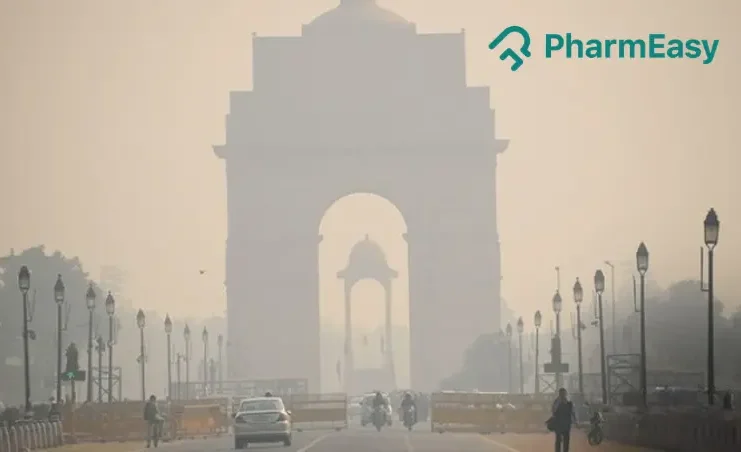
Delhi is gasping, and so are its people. For weeks, a heavy grey cloud has taken over the city, pushing the AQI to a shocking 350–450 in several areas. Eyes burn, throats itch, and the air smells of smoke. It’s not just pollution anymore. Delhi is standing in the middle of a climate emergency.
But here’s the real question:
What suddenly pushed the city into this hazardous haze? And more importantly, what can residents actually do to protect themselves right now? The answers are deeper (and more urgent) than most people think. Let’s uncover what’s really happening and how Delhi can fight back.
Delhi’s ‘hazard’ levels of pollution are due to the interplay of multiple factors:
Seasonal Influence: These pollutants are then trapped over the city due to low wind speeds and cold temperatures, which makes the air heavier and exacerbates the problem, especially during the winter season.
The risk of death significantly increases with long-term exposure to polluted air. For instance, people susceptible to heart disease are at higher risk.
Dr. M.G. Kartheeka, MBBS, MD(Pediatrics)
Delhi’s pollution levels are indeed a health emergency. Every year during November and December, Delhi’s PM2.5 (pollutant particles with a radius of 2.5 micrometres) level exceeds 300 or sometimes 400 – the normal range of PM2.5 level is 0-50. This puts Delhi in the ‘severe’ category for air pollution1.
These particles directly enter our bloodstream through the lungs, causing severe damage that affects the body in multiple ways.
Air pollution is also linked to lung damage and limited lung function. Air pollution can also have an inflammatory effect on the heart; it can elevate blood pressure and aggravate pre-existing conditions of the heart.
Dr. M.G. Kartheeka, MBBS, MD(Pediatrics)
According to the World Health Organisation, the rising levels of pollution are responsible for nearly one-third of the cases of stroke, heart disorders and lung cancers in Delhi8.
Both short and long-term exposure to air pollution can lead to a wide range of diseases, including chronic obstructive pulmonary disease, trachea, bronchus and lung cancers, aggravated asthma and lower respiratory infections. Children and adolescents are particularly vulnerable because their bodies, organs and immune systems are still developing.
Dr. Ashish Bajaj , M.B.B.S, M.D. in Clinical Pharmacology and Toxicology
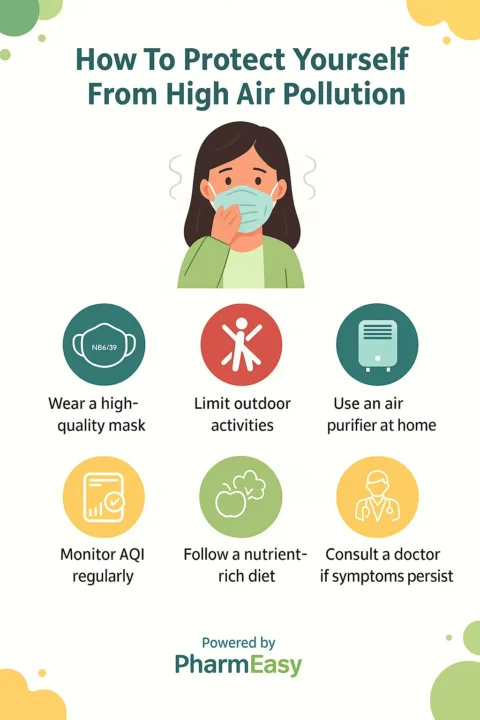
To minimise exposure and health risks during severe pollution, the following measures can help:
Air pollution in Delhi and the surrounding areas poses a risk to everyone living there. Adopt the precautionary measures outlined above to protect yourself from the harmful effects of pollution. Consult a doctor when needed. People with pre-existing respiratory illnesses (asthma, COPD, pneumonia, etc), pregnant women, and newborns need extra care and protection from pollutants.
Also Read: Smog: What Is It, Causes and Ways To Protect Yourself From It
Disclaimer: The information provided here is for educational/awareness purposes only and is not intended to be a substitute for medical treatment by a healthcare professional and should not be relied upon to diagnose or treat any medical condition. The reader should consult a registered medical practitioner to determine the appropriateness of the information and before consuming any medication. PharmEasy does not provide any guarantee or warranty (express or implied) regarding the accuracy, adequacy, completeness, legality, reliability or usefulness of the information; and disclaims any liability arising thereof.
Links and product recommendations in the information provided here are advertisements of third-party products available on the website. PharmEasy does not make any representation on the accuracy or suitability of such products/services. Advertisements do not influence the editorial decisions or content. The information in this blog is subject to change without notice. The authors and administrators reserve the right to modify, add, or remove content without notification. It is your responsibility to review this disclaimer regularly for any changes.


Comments

Leave your comment...
You may also like






















Comments