




Foods to Eat in Loose Motion & What to Avoid
By Dr. Vishesh Bharucha +2 more

Medically reviewed by Dr. Vishesh Bharucha
Last updated: Aug 17, 2026 Published on: Apr 20, 2026


Get,

to manage your symptom
Get your,

4 Cr+ families
benefitted

OTP sent to 9988776655



You’ve successfully subscribed to receive
doctor-approved tips on
Whatsapp

Get ready to feel your best.


Register to Avail the Offer
Send OTPBy continuing, you agree with our Privacy Policy and Terms and Conditions
Hi There,
Sign up on PharmEasy now!!


Trusted by 4 crore+ families

OTP sent to 9988776655
You have unlocked 25% off on medicines


Code: NU25

By Dr. Vishesh Bharucha +2 more
Table of Contents
It often starts suddenly; frequent trips to the bathroom, discomfort, and a feeling of weakness that disrupts your entire day. Loose motion, also known as diarrhoea, is a common digestive problem characterised by the passage of three or more loose stools in a day, and it may be associated with increased bowel frequency accompanied by abdominal pain, cramps or bloating1.
This condition can result from several causes such as infections, food poisoning, sudden dietary changes, stress, drug-related, malabsorption syndrome, inflammatory bowel disease and certain other medical conditions. Although it is usually temporary, it can lead to dehydration and electrolyte imbalance1 if not addressed for a long time.
One among the important factors in recovery is a proper diet. During loose motion, the fluids and essential electrolytes lost need to be replenished to avoid dehydration. Easily digestible foods like bland foods might help reduce strain on the digestive system and support restoration of normal bowel function. At the same time, avoiding certain foods that might irritate the gut or worsen the symptoms is also important.
In this article, we will discuss about the foods to eat in loose motion, the foods to avoid, and when to seek help. But first let’s see how your body reacts when you have loose motions.
Loose motion causes fluid loss as it disrupts the intestine’s ability to absorb water and electrolytes, which in turn causes them to stay in the bowel and come along with stool2 . This causes electrolyte imbalance due to the loss of electrolytes like sodium, potassium, bicarbonate, chloride and dehydration due to water loss3 . In severe cases, this can lead to metabolic acidosis4 (when the body becomes too acidic due to the loss of bicarbonate).
Loose motion can also affect digestion and gut health. Inflammation or damage in the gut lining can lead to improper nutrient absorption. It can also affect the digestion of carbohydrates such as lactose (lactose intolerance) and cause temporary digestive discomfort, including bloating, cramps, and fatigue4.
Because of these changes, eating the right food becomes very important. Easily digestible, gentle foods help reduce stress on the intestines and support healing of the gut lining, as they are better tolerated5. At the same time, consuming fluids and electrolyte-rich foods help restore the lost minerals and balance water in the body6. On the other hand, heavy, spicy, or fatty foods can further irritate the digestive system and delay recovery.
Along with proper rest, the following foods can be helpful while you have loose motion:
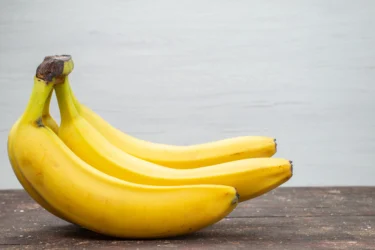
Might help improve nutrient absorption, support gut health and reduce water loss from conditions such as lactose intolerance, due to the presence of starch and pectin in them4,7.
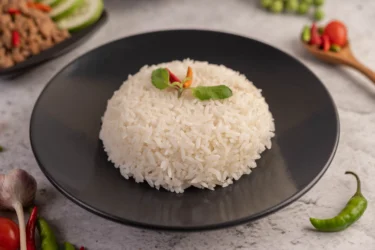
Gentle on the stomach1,7; helps reduce stool volume as it is low-residue and easily digestible5. It might also not irritate the gut as it has easily digestible carbohydrates8.
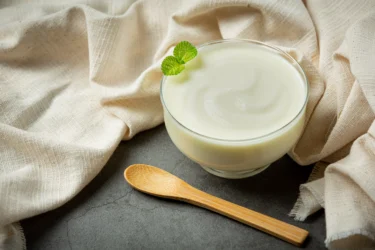
Might support the gut in healing, and help restore the natural balance of intestinal microbes, possibly shortening the duration of diarrhoea due to the presence of probiotic bacteria (good bacteria), supporting the recovery9.
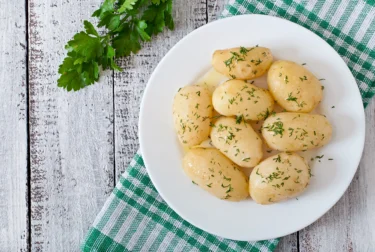
Well tolerated and easy to digest, and provide energy due to their starch content. Also, help replace lost electrolytes such as potassium10.
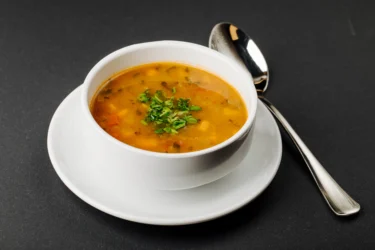
Help the body stay hydrated by providing fluids and also support the replacement of electrolytes, such as sodium, potassium, and chloride, that are lost during loose motion11. However, soups are not suggested to replace primary rehydration like oral rehydration solutions (ORS).
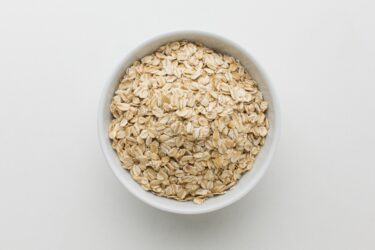
Are gentle on the stomach; help absorb electrolytes like sodium, as they contain proteins (amino acids) and carbohydrates. Also, it provides energy due to the presence of starch11.
Note: Proper hydration and food intake are very important during this period due to electrolyte and fluid loss. Too much food and water limitation can cause severe dehydration, weakness and several complications associated with nutrient imbalance. The given foods are recommended to be considered along with the diet prescribed by the doctor, not to replace it. Always seek medical guidance before making changes to your diet.
Several foods can trigger or worsen loose motion. The following is a list of what not to eat in loose motion.

Can worsen loose motion as they are high in fat, which slows digestion. They are often poorly tolerated during diarrhoea as they put extra stress on the digestive system and may delay recovery7,12. Eg: French fries, fried chicken, fried snacks, etc.
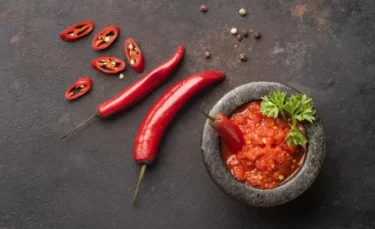
Might worsen gut irritation, inflaming the intestinal lining, making loose stools more frequent and uncomfortable7,12. Eg: spicy curries, snacks, rolls made with chillies, hot sauces, excess pepper, etc.
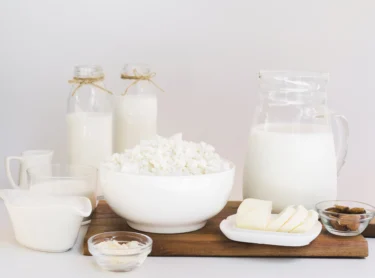
Might trigger loose motion and cause bloating by worsening digestion and interrupting intestinal microbiota due to the presence of lactose, especially in people with lactose intolerance4,12. Eg: Milk, cheese. Ice cream, etc.
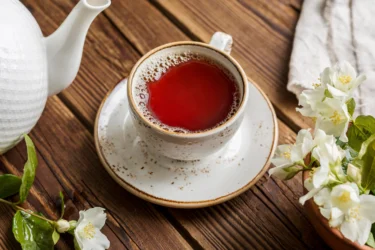
Might trigger gastric problems like upset stomach or heartburn and also increase gut motility which can worsen the symptoms5,12. Eg: Coffee, tea, chocolate, flavoured drinks, etc.
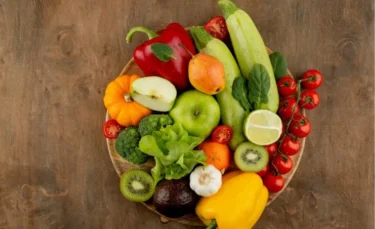
Can enhance bowel movement by improving movement of food through the gut by irritating it and producing more stool13. Eg: Vegetables such as ( green peas, broccoli, Brussels sprouts and leafy greens), fruits (pears, berries, citrus fruits, etc.), legumes, whole grains, etc.

Might stimulate bowel movements, causing the intestines to contract more frequently, which can lead to faster passage of stool and contribute to greater loss of water and important nutrients12. Eg: Cakes, pastries, jelly candies, sugary beverages (energy drinks, sweetened soda, etc.), etc.
Also Read: Worst Foods for Diarrhea, According to Experts
The duration of loose motion (diarrhoea) depends on the cause, severity, and individual health status. It can generally be classified into two:
The following are the signs that you may notice once you start recovering from loose motion:
In loose motion what to eat and what not is very important to replace lost fluid and electrolytes, heal the gut and promote recovery. But there are still cases where the loose motion may not resolve even after following this; under such conditions, it’s important to seek medical advice to ensure safety and proper treatment. Following are the signs suggested to be considered for seeking medical attention when having diarrhoea:
Seeing a doctor doesn’t always mean something is serious; it helps you recover faster, avoid problems, and get care that’s right for you. It’s better to check early than to wait and worry.
Also Read: Gastroesophageal Reflux Disease (GERD): Symptoms, Causes, Treatment & More
Loose motion is usually temporary and improves with hydration, gentle foods, and rest. Choosing the right foods and avoiding gut irritants can speed recovery. Seek medical advice if symptoms persist or warning signs appear; early care helps you feel better faster.
You may eat idlis, as they are fermented and easy on the stomach. Fermented foods are said to reduce the duration and alleviate symptoms associated with diarrhoea15.
To stop or manage diarrhoea, the first thing to do is keep your body hydrated. The drinks which might help in this include ORS, sports drinks1,7. (seek doctor’s guidance before using), coconut water, etc.; these might hydrate your body along with providing the essential electrolytes lost through loose motion.
According to some studies, the unripe fruit of the Bael tree (Aegle marmelos) is considered as anti-diarrhoeal fruit16. However, further long-term studies are needed to confirm the findings and so this should not be considered as a replacement for medical treatment if needed.
According to traditional medicines, ginger is one of the best herbs that might alleviate the symptoms associated with diarrhoea17. It’s best taken as adjunctive to the prescribed treatment.
You may manage diarrhoea at home by:
Taking proper rest
Taking enough fluids during intervals to replace lost fluids and electrolytes
Avoiding harsh foods, alcohol and caffeine
Eating bland food such as rice, bananas, baked potatoes, etc1,7.
According to some studies, jeera water is known to reduce diarrhoea and related symptoms such as bloating, vomiting, etc., in patients with gastritis (inflammation of the protective lining of the stomach)18. However, further research is needed.
1. Healthdirect Australia. Diarrhoea [Internet]. Sydney: Healthdirect Australia; [cited 2026 Apr 20]. Available from: https://www.healthdirect.gov.au/diarrhoea
2. Anbazhagan AN, Priyamvada S, Alrefai WA, Dudeja PK. Pathophysiology of IBD associated diarrhea. Tissue Barriers. 2018;6(2):e1463897. doi:10.1080/21688370.2018.1463897 https://pubmed.ncbi.nlm.nih.gov/29737913/
3. World Health Organization. Diarrhoeal disease [Internet]. Geneva: World Health Organization; 2024 Mar 7 [cited 2026 Apr 20]. Available from: https://www.who.int/news-room/fact-sheets/detail/diarrhoeal-disease
4. Khan S, Sultan MT, Abbas A, et al. The interplay between malnutrition, persistent diarrhea, lactose intolerance, and food associated gut dysbiosis in children: a comprehensive review. BMC Pediatr. 2026;26(1):113. doi:10.1186/s12887-026-06529-8. Available from: https://pmc.ncbi.nlm.nih.gov/articles/PMC12910894/
5. Daley SF, Sharma S. Therapeutic diets for the management of gastrointestinal conditions and preoperative and postoperative care. In: StatPearls [Internet]. Treasure Island (FL): StatPearls Publishing; 2026 Jan– [updated 2025 Aug 9; cited 2026 Apr 20]. Available from:https://www.ncbi.nlm.nih.gov/books/NBK538500/
6. National Library of Medicine (US). Fluid and electrolyte balance [Internet]. Bethesda (MD): MedlinePlus; 2024 May 16 [cited 2026 Apr 20]. Available from: https://medlineplus.gov/fluidandelectrolytebalance.html
7. National Library of Medicine (US). When you have diarrhea [Internet]. Bethesda (MD): MedlinePlus; 2025 Oct 1 [cited 2026 Apr 20]. Available from: https://medlineplus.gov/ency/patientinstructions/000121.htm
8. Klein S. Brown rice versus white rice: a head-to-head comparison [Internet]. Boston: Harvard Health Publishing; 2024 Nov 8 [cited 2026 Apr 20]. Available from:https://www.health.harvard.edu/diet-and-nutrition/brown-rice-versus-white-rice-a-head-to-head-comparison
9. Hadjimbei E, Botsaris G, Chrysostomou S. Beneficial effects of yoghurts and probiotic fermented milks and their functional food potential. Foods. 2022;11(17):2691. doi:10.3390/foods11172691. Available from: https://pubmed.ncbi.nlm.nih.gov/36076876/
10. Xu J, Li Y, Kaur L, Singh J, Zeng F. Functional food based on potato. Foods. 2023;12(11):2145. doi:10.3390/foods12112145. Available from: https://pubmed.ncbi.nlm.nih.gov/37297391/
11. Sethi S, Wadhwa V. Diarrhea. In: StatPearls [Internet]. Treasure Island (FL): StatPearls Publishing; 2026 Jan– [updated 2025 Jan 15; cited 2026 Apr 20]. Available from: https://www.ncbi.nlm.nih.gov/books/NBK219096/
12. Harvard Health Publishing. Is something in your diet causing diarrhea? [Internet]. Boston: Harvard Health Publishing; 2026 Mar 30 [cited 2026 Apr 20]. Available from: https://www.health.harvard.edu/diseases-and-conditions/is-something-in-your-diet-causing-diarrhea
13. El-Salhy M, Ystad SO, Mazzawi T, Gundersen D. Dietary fiber in irritable bowel syndrome (review). Int J Mol Med. 2017;40(3):607–613. doi:10.3892/ijmm.2017.3072. Available from: https://pubmed.ncbi.nlm.nih.gov/28731144/
14. State Government of Victoria. Diarrhoea [Internet]. Melbourne: Better Health Channel; 2023 Oct 16 [cited 2026 Apr 20]. Available from: https://www.betterhealth.vic.gov.au/health/conditionsandtreatments/diarrhoea
15. Olayanju A, Mellor D, Khatri Y, Pickles N. The efficacy of fermented foods in the treatment and management of diarrhoeal diseases: a systematic review and meta-analysis. Nutr Health. 2023;29(1):71–83. doi:10.1177/02601060221095678. Available from: https://pubmed.ncbi.nlm.nih.gov/35484792/
16. Brijesh S, Daswani P, Tetali P, Antia N, Birdi T. Studies on the antidiarrhoeal activity of Aegle marmelos unripe fruit: validating its traditional usage. BMC Complement Altern Med. 2009;9:47. doi:10.1186/1472-6882-9-47. Available from: https://link.springer.com/article/10.1186/1472-6882-9-47
17.Zhang C, Huang Y, Li P, Chen X, Liu F, Hou Q. Ginger relieves intestinal hypersensitivity of diarrhea predominant irritable bowel syndrome by inhibiting proinflammatory reaction. BMC Complement Med Ther. 2020;20(1):279. doi:10.1186/s12906-020-03059-3. Available from: https://pubmed.ncbi.nlm.nih.gov/32928188/
18. Hn ML, Prashanth D Mr, P MR, Malini DS. Impact of Jeera Water On Gastritis: A Quasi-Experimental Study. Int J Pharma Bio Sci. 2024;15(1):34-41. doi:10.22376/Ijpbs.2024.15.1.p34-41 Available from: https://ijpbs.net/details.php?article=7172&articleid=NzE3Mg==&subs=QXV0aG9ycw==
Disclaimer: The information provided here is for educational/awareness purposes only and is not intended to be a substitute for medical treatment by a healthcare professional and should not be relied upon to diagnose or treat any medical condition. The reader should consult a registered medical practitioner to determine the appropriateness of the information and before consuming any medication. PharmEasy does not provide any guarantee or warranty (express or implied) regarding the accuracy, adequacy, completeness, legality, reliability or usefulness of the information; and disclaims any liability arising thereof.
Links and product recommendations in the information provided here are advertisements of third-party products available on the website. PharmEasy does not make any representation on the accuracy or suitability of such products/services. Advertisements do not influence the editorial decisions or content. The information in this blog is subject to change without notice. The authors and administrators reserve the right to modify, add, or remove content without notification. It is your responsibility to review this disclaimer regularly for any changes.


Comments

Leave your comment...
You may also like




















Comments