




What Is Eye Strain and How Can You Reduce It in the Digital Age
By Dr. Poonam Rai +2 more

Medically reviewed by Dr. Poonam Rai
Last updated: Sep 16, 2026 Published on: Feb 19, 2026


Get,

to manage your symptom
Get your,

4 Cr+ families
benefitted

OTP sent to 9988776655



You’ve successfully subscribed to receive
doctor-approved tips on
Whatsapp

Get ready to feel your best.


Register to Avail the Offer
Send OTPBy continuing, you agree with our Privacy Policy and Terms and Conditions
Hi There,
Sign up on PharmEasy now!!


Trusted by 4 crore+ families

OTP sent to 9988776655
You have unlocked 25% off on medicines


Code: NU25

By Dr. Poonam Rai +2 more
Table of Contents
Eye strain is when your eyes feel tired, uncomfortable, or irritated after looking at something for a long time. Many people experience it even if their vision is normal1. Today, eye strain has become very common because of our increasing use of digital devices like computers, smartphones, and tablets. Long hours spent on screens can cause symptoms such as headaches, blurred vision, dry, itchy, or watery eyes2. Other factors, like poor lighting, not blinking enough, or sitting in the wrong posture, can make it worse1. In this blog, we will see what is eye strain and what are the simple steps we can take to reduce it and protect our eyes in today’s digital world.

Eye strain is the fatigue or irritation felt in eyes because of how the eyes work and how they react to light. It usually happens when the eyes work hard for a long time, such as reading, writing, or looking at screens1,3.
It can also develop after extended periods of tasks that require continuous visual attention, such as driving or detailed reading, as well as prolonged use of electronic devices like computers, tablets, and smartphones.
Eye strain usually goes away after resting the eyes. However, it may cause tiredness and reduced alertness, which can affect work performance and daily activities, especially for individuals who cannot avoid visually demanding tasks. Although it does not cause permanent damage, it can reduce concentration and make a person feel fatigued, and may cause discomforting symptoms(discussed below)3.
Eye strain can present in different ways. Changes in vision or other signs may show that the eyes are tired or overworked. Common eye strain symptoms include:
These signs help people understand that they may have eye strain.
Eye strain can be caused by many different factors related to how we use our eyes, the lighting around us, our posture, and the health of our eyes. They include:
Other eye strain causes include dry eyes, uneven tear layers, or changes on the eye surface causing blurring and discomfort. Age, genetics, and individual differences also affect eye strain severity1.
Digital eye strain is a condition where prolonged use of digital screens causes eye and body discomfort. It can occur with computers, tablets, smartphones, and e-readers. According to the American Optometric Association, DES includes a group of vision problems and eye discomfort caused by extended screen use. Reports from The Vision Council show that nearly 70% of adults experience at least one symptom, highlighting how common this condition has become2.
Eye strain caused by screen use happens mainly because of how the eyes move and focus and problems related to dry eyes. Here are its common causes:
Digital eye strain affects both the eyes and other parts of the body. The symptoms may appear after long periods of screen use. The eye-related symptoms include:
Sometimes, excessive screen use can cause a condition called asthenopia, which just means eye fatigue. It includes eye strain symptoms like headaches, tired eyes, blurred vision, and dry eyes. Other body symptoms can include:
Digital eye strain is more likely to affect certain people because of their age, eye condition, screen habits, and environment. The main risk factors are:
Now that you understand what digital eye strain is, its causes, symptoms, and risk factors, you can take steps to protect your eyes and reduce discomfort during screen use.
Digital eye strain can be reduced by following proper eye care habits, correct screen use, and a healthy environment. They include
Following these habits can help reduce eye strain and keep the eyes comfortable. In the next section, we will see simple eye exercises for eye strain5.
Eye exercises help relax the eye muscles and improve comfort during long periods of screen use. These exercises are simple and can be done at home or school.

Sit comfortably and stretch one arm forward holding a card with an “X.” Move your arm slowly left and right while keeping your eyes on the “X.” Rest and repeat. Benefits: Improves focus, coordination, and may reduce screen-related eye strain.

Sit or stand relaxed, gently close your eyes, squeeze your eyelids tightly for five seconds, then relax. Repeat a few times. Benefits: Strengthens eye muscles, reduces tiredness, and promotes relaxation.

Keep your head still and look up, holding five seconds, then down, left, and right. Repeat slowly. Benefits: Enhances eye movement and flexibility, eases stiffness, and reduces fatigue.

Sit comfortably, open your eyes wide while raising your eyebrows. Hold for a few seconds, then relax. Repeat several times. Benefits: Activates eye muscles, boosts blood flow, and relieves discomfort6.
Practising these simple eye exercises for eye strain can support eye comfort, and in the next section, we will learn easy daily habits that can help protect the eyes from strain.
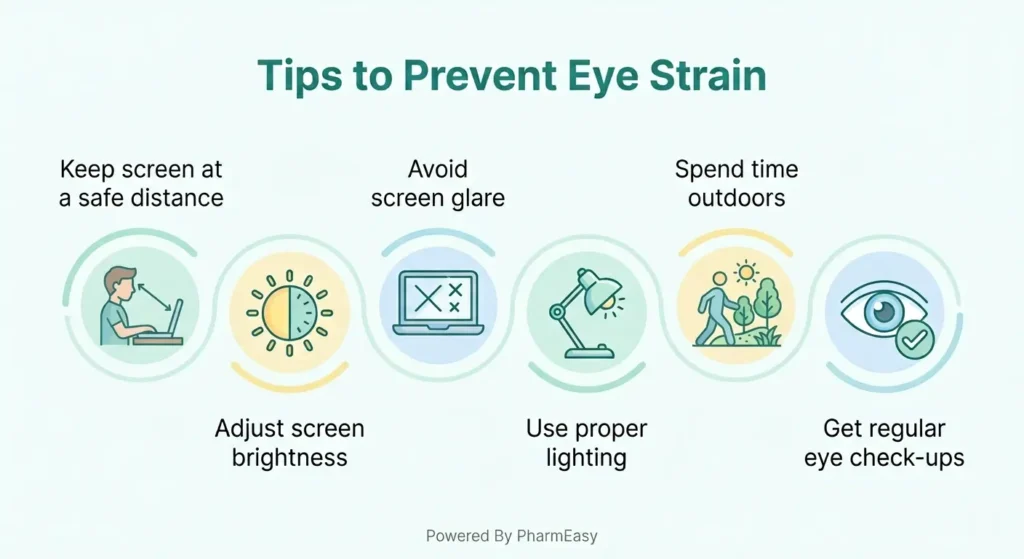
Eye strain can be prevented by following healthy habits, using screens correctly, and maintaining a comfortable environment. These include
Following these preventive steps can help protect the eyes and reduce discomfort caused by digital screens.
Eye strain usually temporary and gets better with rest and home care. But if it continues even after self-care, you should see a doctor3. Also, see a doctor if you have any of these:
Seeing a doctor makes sure there is no serious problem and helps keep your eyes healthy.
Also Read: Struggling with Dry Eyes? Causes, Symptoms, Treatments & Prevention
In today’s digital world, eye strain is common but usually goes away with rest. It happens because of long screen use, poor lighting, and dry eyes. Taking regular breaks, blinking often, keeping screens at a good distance, and doing simple eye exercises can help. Spending time outdoors and getting eye check-ups keeps eyes healthy. Persistent or severe symptoms should be checked by a doctor to rule out serious problems.
Also Read: Eye Pain: Causes, Treatment & Home Remedies
Eye strain is usually temporary. The discomfort and tiredness in the eyes often go away after resting or taking a break from screens. However, for people who use computers for long hours, these symptoms can happen frequently and last longer, sometimes affecting work or daily activities9.
Eye strain by itself does not cause floaters. Floaters are tiny spots or strings that move in your vision, caused by changes in the jelly inside your eye10. Using screens like phones, iPads, or LCDs, which can cause eye strain, may speed up these changes and make floaters more noticeable11.
Eye strain usually goes away after the eyes rest, as rest allows them to recover and symptoms gradually disappear3.
Some eye problems can have symptoms very similar to digital eye strain (DES). These include dry eye disease and uncorrected vision problems like needing glasses or having the wrong prescription. DES symptoms, such as eye irritation, tiredness, and blurred vision, can also overlap with these conditions12.
Yes, poor sleep quality can worsen digital eye strain symptoms. Being tired or having trouble sleeping makes the eyes more sensitive and easily strained during long periods of screen use13.
Eye strain alone usually does not cause vertigo and is mostly not related. Vertigo happens when the balance system in your ears and brain, which controls eye movements, is affected. Changes in eye movement, like nystagmus (rapid involuntary eye movement), show how the balance system works. Eye strain may make your eyes feel tired, but it rarely leads to actual dizziness14.
Disclaimer: The information provided here is for educational/awareness purposes only and is not intended to be a substitute for medical treatment by a healthcare professional and should not be relied upon to diagnose or treat any medical condition. The reader should consult a registered medical practitioner to determine the appropriateness of the information and before consuming any medication. PharmEasy does not provide any guarantee or warranty (express or implied) regarding the accuracy, adequacy, completeness, legality, reliability or usefulness of the information; and disclaims any liability arising thereof.
Links and product recommendations in the information provided here are advertisements of third-party products available on the website. PharmEasy does not make any representation on the accuracy or suitability of such products/services. Advertisements do not influence the editorial decisions or content. The information in this blog is subject to change without notice. The authors and administrators reserve the right to modify, add, or remove content without notification. It is your responsibility to review this disclaimer regularly for any changes.
 1
1 
Comments

Leave your comment...
You may also like

























Comments