
Introduction
Did you just notice that your baby’s bottom looks red and irritated and feel a sudden wave of worry? Don’t panic. While it can look uncomfortable (and scary for parents), in most cases, it’s not serious. And most importantly, you don’t need to rush or feel guilty because this is something almost every parent deals with.
What you’re seeing is very likely diaper rash, one of the most common skin conditions in babies, affecting nearly 50% of infants at some point1. A diaper rash can develop quite easily on your baby’s delicate skin as it is constantly exposed to moisture, friction, and irritants inside a diaper2.
The good news? Most diaper rashes are mild, manageable at home, and often clear within a few days with simple care2. In this blog, we’ll talk about why babies get diaper rash, the different types of rash, and some simple home remedies that will help you confidently deal with your baby’s sensitive skin.
Advertisement
What Is a Diaper Rash?
A diaper rash is a common skin irritation that is usually limited to the skin covered by the diaper, including the buttocks and thighs, and the genital area (labia and vagina in girls and penis and scrotum in boys)2.
If your baby has a diaper rash, you may notice the following symptoms2:
- A bright red rash that may slowly get bigger
- Red, inflamed, or scaly skin
- Small red patches that can spread and merge with nearby areas
- In some cases, tiny pimples, blisters, sores, or pus-filled bumps
- Older babies may seem uncomfortable or try to scratch when the diaper is removed
Note: One important thing to remember is that diaper rashes typically do not spread beyond the diaper area2. If the redness extends outside this area or doesn’t improve with basic care, it may need medical attention.
Causes of Diaper Rash
Diaper rash occurs when the sensitive skin in your baby’s diaper area becomes irritated. Several factors can act together to cause this:
- Increased moisture and friction: Diapers create a warm, damp environment that softens the skin and increases rubbing, making it more prone to irritation1,2.
- Prolonged wetness and soiling: Staying in contact with urine and stool for too long irritates the skin by raising the skin’s pH1,2.
- Fungal (yeast) infection: Overgrowth of Candida albicans can occur in moist areas, leading to a bright red rash with small surrounding bumps1.
- Bacterial infection: In some cases, bacteria such as Staphylococcus aureus or Streptococcus may infect already irritated skin1.
- Allergic or product-related irritation: Reactions to dyes present in the diapers can cause an allergic reaction, leading to redness and itching3.
Types of Diaper Rash in Babies
Identifying the type of diaper rash can help parents understand why it’s happening and how best to manage it. Below are the most common diaper rash types:
- Irritant Diaper Rash: This is the most common type of diaper rash. It forms when the skin stays in contact with urine, stool, moisture, and friction for too long. This type of rash looks like red, mildly scaly skin over the buttocks and thighs2,4.
- Candidal (Yeast) Diaper Rash: This rash occurs due to overgrowth of Candida albicans in warm, moist diaper areas (often after antibiotics or persistent irritation)2,4. It appears as a bright red, sharply defined rash involving skin folds, with small red bumps around it called satellite lesions1,2.
- Bacterial Diaper Rash (Impetigo): This is caused by bacterial infection, commonly Staphylococcus aureus, especially in young infants during warm weather. It appears as fluid-filled blisters or oozing sores in the diaper area1.
- Infantile Seborrheic Dermatitis: This type starts as well-defined redness in the diaper area that may be accompanied by greasy scales. Within one to two weeks, similar patches may start to appear on the scalp (cradle cap), face, and skin folds4.
- Folliculitis: Folliculitis occurs when hair follicles become infected, usually by bacteria. It shows up as small red or pus-filled bumps on the buttocks, thighs, or lower abdomen and is more common during hot, humid months4.
- Noduloulcerative Diaper Rash: This is a rare but severe form of rash that develops after long-standing diaper rash. It presents as large, raised sores or ulcers with rolled edges on prominent areas like the genitalia, buttocks, and thighs4. The rash may look painful and needs medical attention.
Home Remedies for Diaper Rash
Many mild baby diaper rashes can be safely managed at home with gentle care that soothes the skin and supports healing. Here are some options you may consider:
Advertisement
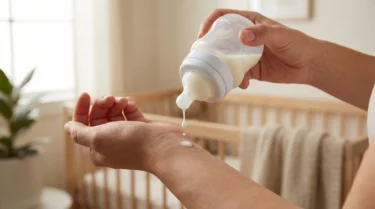
1. Breast milk
It has been observed that human breast milk can help in the healing of diaper rash in babies. This is likely due to its natural antimicrobial properties5,6. Therefore, applying a few drops to the affected area and allowing it to air-dry may help improve mild diaper rash over a few days.
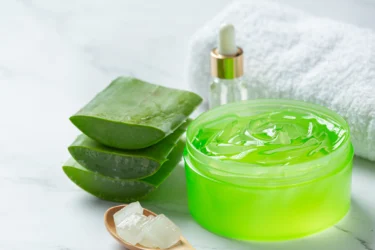
2. Aloe vera gel
Aloe vera has soothing and anti-inflammatory properties7. Using a thin layer of pure aloe vera gel may help soothe redness, irritation, and discomfort, while supporting the skin’s natural healing process.
3. Sunflower seed oil
Natural vegetable oils, such as sunflower seed oil, act as a natural emollient that can help soften the skin and reduce irritation8. A small amount applied to clean, dry skin may help soothe inflammation and protect against further moisture damage.
4. Coconut oil
Virgin coconut oil has antifungal, antibacterial, and moisturising properties9. Applying a thin layer on clean, dry skin may soothe mild irritation and support healing.
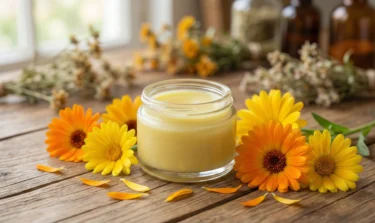
5. Calendula ointment
Calendula is a medicinal herb known for its calming and wound-healing effects7. Calendula-based creams or ointments could help reduce the severity and spread of diaper rash and are generally gentle enough for baby skin.
Note: These remedies are meant for mild rashes only and should not replace medical evaluation or diaper rash treatment if the rash is severe, worsening, or not improving. Discuss with your paediatrician before using any of the above-mentioned remedies (especially on broken skin) and discontinue immediately if irritation occurs or skin condition worsens.
Baby Diaper Rash Treatment
Most baby diaper rashes improve with home care and the right products. Treatment mostly depends on the severity and cause of the rash. Here are some steps you may follow:
- Basic skin care (first step for all rashes)2:
- Change diapers frequently and keep the area clean and completely dry.
- Gently clean with water or fragrance-free wipes.
- Allow diaper-free time whenever possible.
- Barrier creams and ointments: Applying a thick layer of zinc oxide or petroleum jelly–based creams on clean, dry skin helps protect against moisture and irritation2. These should be used with every diaper change.
- Low-potency steroid creams (after consulting a doctor): If the rash does not improve within 2 to 3 days of basic care, a short course of low-potency corticosteroid may be prescribed by a doctor1.
- Treatment for yeast (Candida) diaper rash: If your doctor suspects a yeast infection, they will prescribe topical antifungal creams such as nystatin or azoles1.
- Treatment for bacterial infection: If signs of bacterial infection are present, topical antibiotics may be prescribed by your doctor. Severe infections (such as perianal streptococcal dermatitis) may even require oral antibiotics under medical supervision1.
Diaper Rash Prevention Tips
Baby diaper rash prevention is often easier than treating it. With a few simple daily habits, you can greatly reduce irritation and keep your baby’s skin healthy.
Here’s what to do2:
- Wash your hands before (and even after) every diaper change. This will ensure that germs do not spread.
- Change diapers frequently and as soon as possible after your baby urinates or passes stool.
- Clean gently at every diaper change using water and a soft cloth or cotton ball.
- Avoid rubbing or scrubbing the skin beneath and around the diaper.
- Dry the skin well by gently patting or allowing the area to air-dry before putting on a new diaper.
- Avoid tight diapers because diapers that fit too snugly may trap moisture and rub against the skin, increasing irritation.
- Choose absorbent diapers to help keep moisture away from the skin and reduce the risk of infection.
- Avoid wipes or skincare products containing alcohol or perfume (stick to gentle and fragrance-free products), as these can dry and irritate the skin.
- Do not use talcum powder, as it can be inhaled and may harm your baby’s lungs.
If you use cloth diapers2:
- Avoid plastic or rubber pants over diapers. Always choose breathable diaper covers instead.
- Do not use fabric softeners or dryer sheets, as they may worsen skin irritation.
- Wash cloth diapers thoroughly and rinse two to three times to remove all soap residue. This is especially important if your baby has had diaper rash before.
How Frequently Should You Change Your Baby’s Diaper
Keeping your baby’s diaper clean and dry is one of the best ways to protect their skin and prevent diaper rash, infections, and discomfort. Here’s how often you should plan to change diapers and how long diapers are typically used as babies grow.
How Often to Change Diapers
The American Academy of Dermatology (AAD) recommends frequent diaper changes to help avoid diaper rashes. Diapers should be changed every 1 to 3 hours during the day. They should also be changed as soon as they are soiled and at least once during the night10.
Until What Age Do Babies Wear Diapers?
There’s no single age when all children stop wearing diapers, since it largely depends on when your child is ready for toilet training.
Most children naturally start showing signs of readiness for potty training between 18 months and 3 years, but some may be ready earlier or later11.
Keep in mind that there isn’t a strict “cut-off” age; rather, diapers are used until your child shows developmental readiness and can reliably stay dry for longer periods.
Also Read: How to Clean Baby Ear Safely
When to Consult a Doctor?
Early medical advice helps ensure the right treatment and avoid complications, especially in very young infants or when signs of infection are present. Therefore, you should contact your child’s doctor if you notice any of the following signs:
- Fever or other unexplained symptoms along with the rash2,12.
- Significant itching or scratching12.
- Rash spreading beyond the diaper area to the abdomen, back, arms, or face2.
- Wet, oozing, crusted, or intensely red areas (indicating infection)12.
- Pimples, blisters, ulcers, large bumps, or pus-filled sores2
- No improvement within 2 to 3 days despite proper home care12.
- A rash that does not blanch (turn white) when you press a clear glass against it (could be a sign of meningitis and requires immediate emergency care)13.
- A stiff neck or is bothered by light.
- Seems confused, unusually drowsy, agitated, or not responding normally.
- Has breathing problems (fast breathing, breathlessness, grunting, or the tummy pulling in under the ribs).
- Has pale, blue, grey, or blotchy skin, lips, or tongue.
- Develops sudden swelling of the lips, mouth, tongue, or throat, or has trouble swallowing14.
Also Read: Top Immunity Boosting Foods for Kids
Conclusion
Diaper rash is a very common and usually mild condition in babies, and while it can look uncomfortable, it is rarely serious when managed early and correctly. Therefore, understanding the causes and different diaper rash types can help parents respond confidently and choose the right care.
Most mild rashes improve with frequent diaper changes, gentle cleansing and keeping the diaper area dry, and using protective barrier creams or simple home remedies. However, some rashes may need medical treatment, especially if they are persistent, spreading, infected, or occur in very young infants.
Remember, every baby’s skin is different, and the occasional diaper rash does not reflect poor care. Trust your instincts as a parent, and if a rash doesn’t improve or your baby seems unwell, seeking medical advice is always the right step.
Also Read: Mosquito Bites on Babies: Home Remedies, Treatment, and Prevention
Frequently Asked Questions (FAQs)
How long does a diaper rash take to heal? Most mild diaper rashes improve within 2 to 3 days with proper care2. However, more severe or infected rashes may take longer and may need medical treatment under guidance.
What worsens diaper rash? Many factors can make a diaper rash worse. These include prolonged wetness, infrequent diaper changes, tight diapers, friction, scented wipes, harsh soaps, and untreated yeast or bacterial infections2.
Why does my baby suddenly have a diaper rash?Your baby may have a diaper rash suddenly due to many reasons. These could include increased stool frequency, diarrhoea, antibiotic use, new foods, or a reaction to a new diaper or wipe1,2.
Is coconut oil good for diaper rash? Virgin coconut oil may help mild diaper rash due to its moisturising and mild antibacterial and antifungal properties9. It should always be applied as a thin layer on clean and dry skin.
Can teething cause diaper rash? Teething itself doesn’t directly cause diaper rash, but it may lead to looser stools or more frequent bowel movements15. This may irritate the diaper area or lead to a diaper rash.
Can you use Vaseline for diaper rash? Petroleum jelly (Vaseline) may be used as a barrier to protect the skin from moisture and prevent irritation16. It could work well for both prevention and managing mild diaper rash.
References
- Benítez Ojeda AB, Méndez MD. Diaper dermatitis [Internet]. Treasure Island (FL): StatPearls Publishing; [cited 2026 Jan 20]. Available from: https://www.ncbi.nlm.nih.gov/books/NBK559067/
- MedlinePlus. Diaper rash [Internet]. National Library of Medicine (US); [cited 2026 Jan 20]. Available from: https://medlineplus.gov/ency/article/003259.htm
- Alberta L, Sweeney SM, Wiss K. Diaper dye dermatitis. Pediatrics. 2005 Sep;116(3):e450-2. Available from: https://pubmed.ncbi.nlm.nih.gov/16140691/
- Rasmussen JE. Classification of diaper dermatitis: an overview. Pediatrician. 1987;14 Suppl 1:6-10. Available from: https://pubmed.ncbi.nlm.nih.gov/2955294/
- Seifi B, Jalali S, Heidari M. Assessment Effect of Breast Milk on Diaper Dermatitis. Dermatol Reports. 2017 Mar 13;9(1):7044. Available from: https://pmc.ncbi.nlm.nih.gov/articles/PMC5472239/
- Farahani LA, Ghobadzadeh M, Yousefi P. Comparison of the effect of human milk and topical hydrocortisone 1% on diaper dermatitis. Pediatr Dermatol. 2013 Nov-Dec;30(6):725-9. Available from: https://pubmed.ncbi.nlm.nih.gov/23600719/
- Panahi Y, Sharif MR, Sharif A, Beiraghdar F, Zahiri Z, Amirchoopani G, et al. A randomized comparative trial on the therapeutic efficacy of topical aloe vera and Calendula officinalis on diaper dermatitis in children. ScientificWorldJournal. 2012;2012:810234. Available from: https://pmc.ncbi.nlm.nih.gov/articles/PMC3346674/
- Summers A, Visscher MO, Khatry SK, Sherchand JB, LeClerq SC, Katz J, et al. Impact of sunflower seed oil versus mustard seed oil on skin barrier function in newborns: a community-based, cluster-randomized trial. BMC Pediatr. 2019 Dec 23;19(1):512. Available from: https://pmc.ncbi.nlm.nih.gov/articles/PMC6927111/
- Verallo-Rowell VM, Dillague KM, Syah-Tjundawan BS. Novel antibacterial and emollient effects of coconut and virgin olive oils in adult atopic dermatitis. Dermatitis. 2008 Nov-Dec;19(6):308-15. Available from: https://pubmed.ncbi.nlm.nih.gov/19134433/
- Sobowale K, Clayton A, Smith MV. Diaper Need Is Associated with Pediatric Care Use: An Analysis of a Nationally Representative Sample of Parents of Young Children. J Pediatr. 2021 Mar;230:146-151. Available from: https://pmc.ncbi.nlm.nih.gov/articles/PMC9269865/
- InformedHealth.org. Overview: Potty training [Internet]. Institute for Quality and Efficiency in Health Care; [cited 2026 Jan 20]. Available from: https://www.ncbi.nlm.nih.gov/books/NBK279296/
- MedlinePlus. Rash – child under 2 years [Internet]. U.S. National Library of Medicine; [cited 2026 Jan 20]. Available from: https://medlineplus.gov/ency/article/003259.htm
- Meningitis symptoms [Internet]. NHS. [cited 2026 Jan 28]. Available from: https://www.nhs.uk/conditions/meningitis/symptoms/
- National Health Service. Rashes in babies and children [Internet]. NHS; [cited 2026 Jan 20]. Available from: https://www.nhs.uk/symptoms/rashes-babies-and-children/
- Wuni A, Iddrisu M, Angliengmene AA, Salia SM, Chanayireh L, Mohammed IS, Musah A, Ibrahim MM, Kpentey AA, Kwarteng C, Nyarko BA, Doat AR. Knowledge and management practices of infant teething symptoms among mothers in a tertiary facility in Ghana. Pan Afr Med J. 2024 Feb 13;47:65. Available from: https://pmc.ncbi.nlm.nih.gov/articles/PMC11055185/
- Czarnowicki T, Malajian D, Khattri S, Correa da Rosa J, Dutt R, Finney R, et al. Petrolatum: Barrier repair and antimicrobial responses underlying this “inert” moisturizer. J Allergy Clin Immunol. 2016 Apr;137(4):1091-1102.e7.Available from:https://pubmed.ncbi.nlm.nih.gov/26431582/
Disclaimer: The information provided here is for educational/awareness purposes only and is not intended to be a substitute for medical treatment by a healthcare professional and should not be relied upon to diagnose or treat any medical condition. The reader should consult a registered medical practitioner to determine the appropriateness of the information and before consuming any medication. PharmEasy does not provide any guarantee or warranty (express or implied) regarding the accuracy, adequacy, completeness, legality, reliability or usefulness of the information; and disclaims any liability arising thereof.
Links and product recommendations in the information provided here are advertisements of third-party products available on the website. PharmEasy does not make any representation on the accuracy or suitability of such products/services. Advertisements do not influence the editorial decisions or content. The information in this blog is subject to change without notice. The authors and administrators reserve the right to modify, add, or remove content without notification. It is your responsibility to review this disclaimer regularly for any changes.































Comments