




Eye Pain: Causes, Treatment & Home Remedies
By Dr. Poonam Rai +2 more

Medically reviewed by Dr. Poonam Rai
Last updated: Aug 19, 2026 Published on: Feb 3, 2026


Get,

to manage your symptom
Get your,

4 Cr+ families
benefitted

OTP sent to 9988776655



You’ve successfully subscribed to receive
doctor-approved tips on
Whatsapp

Get ready to feel your best.


Register to Avail the Offer
Send OTPBy continuing, you agree with our Privacy Policy and Terms and Conditions
Hi There,
Sign up on PharmEasy now!!


Trusted by 4 crore+ families

OTP sent to 9988776655
You have unlocked 25% off on medicines


Code: NU25

By Dr. Poonam Rai +2 more
Table of Contents
Eye pain is a common symptom that can be confusing and concerning. It may show up as a burning, aching, stabbing, or throbbing feeling in or around the eye1. Sometimes it’s just mild discomfort, like the tired and sore feeling you get after long screen time, but at other times, the pain can be more intense and linked to inflammation or more serious eye problems1,2. Therefore, eye pain should never be brushed aside.
Sometimes, eye pain may settle on its own. But quite often, timely intervention is needed to protect the eyes and avoid lasting damage to vision. That’s why identifying the cause early really matters. In this blog, we will help you understand the common causes of eye pain, what the symptoms may mean, when you should seek medical care, and the management and home care options that can help keep your eyes safe and healthy.

Eye pain is an uncomfortable or painful sensation felt in the eye itself or around it. It can feel very different from person to person. Some may describe it as burning, stinging, stabbing, throbbing, gritty, or aching, while others feel pressure or sharp pain1. It usually occurs when the nerves supplying the eye become irritated, inflamed, injured, or overstimulated due to various causes, which we will discuss in the subsequent sections3.
While the terms are often used interchangeably, eye strain and eye pain are not the same.
Eye strain (or “sleepy/tired eyes”) usually happens from overusing the eyes, such as long screen time, reading, driving, or working in poor lighting. It commonly causes tired or heavy eyes, mild aching, dryness or a gritty feeling, and may be accompanied by headaches or neck and shoulder discomfort. It is important to understand that eye strain is temporary and typically improves with rest, blinking, better lighting, good posture, and regular screen breaks4.
Eye pain, however, is more likely caused by an underlying eye problem. It tends to be more intense or persistent and may be accompanied by redness, watering, discharge, swelling, blurred vision, light sensitivity, headache, or nausea. Unlike eye strain, eye pain does not always improve with rest, often requiring medical evaluation and guidance1.
Eye pain can occur in many parts of and around the eye. Since different eye structures have distinct nerve supply and functions, identifying the location of the pain helps doctors narrow down the possible causes and decide how urgent is the need for treatment. Common areas where eye pain can occur include5:
Note: The location of the pain helps doctors diagnose the cause and choose the most appropriate treatment. Thus, paying attention to where pain is felt (along with other symptoms) can be crucial in protecting vision and eye health.
The eyes are richly supplied by nerves that respond to physical, chemical, thermal, and inflammatory stimuli. Here are some common eye pain reasons:
Mild eye pain is often related to strain, dryness, or irritation and can usually be managed at home. Please note that these remedies are meant for temporary relief and are only helpful when there is no injury, infection, or sudden vision change.

One of the most common causes of eye pain today is digital eye strain. In such cases, giving your eyes a regular break (especially from screens) can significantly help reduce discomfort4.

Both of these help in different ways:
Note: When using compresses for eye discomfort, cold compresses are generally safer and better tolerated. They may help reduce pain, redness, and swelling. Warm compresses should be used with caution, as heat may worsen certain conditions, especially active infections or inflammation inside the eye. If you are unsure about the cause of eye pain, it is best to avoid warm compresses and seek medical advice before using them.

Dry eyes are a very common cause of burning, aching, or gritty sensations. In such cases, over-the-counter lubricating eye drops (use preservative-free if possible) may help restore moisture and reduce irritation9.

If eye pain is caused by dust, smoke, or mild irritants, gently rinse the eyes with clean, running water or sterile saline. This may help flush out the irritant and relieve discomfort. However, avoid rubbing the eyes, as it can aggravate the irritation10.

If you have an eye injury, avoid wearing contact lenses until the eye has fully healed. You may switch to glasses during this time to prevent further irritation or infection. Wearing dark sunglasses for the next couple of days can also help reduce light sensitivity and discomfort while the eye recovers10.
Note: The home remedies mentioned in this section are meant only for temporary relief of mild eye discomfort such as strain, dryness, or irritation. They are not a substitute for medical evaluation or treatment. If eye pain is severe, sudden, persistent, associated with vision changes, redness, discharge, injury, or sensitivity to light, seek medical care immediately. Also, always consult a qualified doctor before trying any remedy if you have an existing eye condition.
The treatment of eye pain depends entirely on the underlying cause. After proper examination, a doctor may recommend one or more of the following5:
Important: Eye pain should never be self-treated with any kind of prescription eye drops. Using the wrong medication can worsen the condition and lead to serious complications. Always seek professional evaluation for persistent, severe, or vision-affecting eye pain.
Also Read: Swollen Eyes: Causes, Symptoms, Treatment, Home Remedies, and Prevention
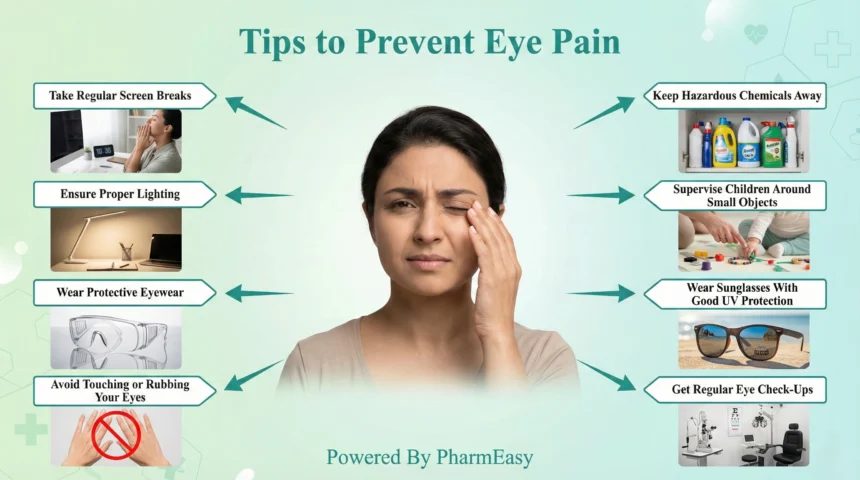
You can reduce the risk of eye pain and keep your eyes comfortable by following these simple, everyday tips:
Also Read: Eye Floaters: What They Are, Causes, Types, Treatment, and Prevention
Most times, eye pain is not dangerous, but some symptoms do need urgent medical attention. The key is knowing when to act without panicking. Seek urgent medical care if you notice eye pain that1,10:
Also Read: How to Clean Your Eyes Safely and Maintain Healthy Eyes
Eye pain can range from mild and short-lived discomfort to indicating a more serious eye problem. While issues like eye strain or dryness often improve with simple self-care and rest, pain that is persistent, severe, or associated with other symptoms should never be ignored. Therefore, understanding where the pain occurs, what it feels like, and what may be causing it can help you recognise when home care is enough and when medical attention is needed.
The good news is that most causes of eye pain are treatable, especially when addressed early. You can prevent complications and safeguard your vision by protecting your eyes, practising healthy visual habits, and seeking timely medical advice when warning signs appear.
Remember, when it comes to eye pain, listening to your body and acting early is the best care you can give your eyes.
Also Read: How to Take Care of Your Eyes?
Mild eye discomfort from eye strain or dryness may improve on its own, but eye pain should not be ignored, especially if it is severe, persistent, or is accompanied by vision changes, redness, swelling, or discharge1. When in doubt, it’s best to get it checked.
Dehydration may be linked to dry eye disease11. This dryness could cause a burning, aching, or gritty sensation that may feel like eye pain.
Sinus congestion or infection can cause pressure and pain around or behind the eyes. Along with the eyes, it can also cause a sensation of pain and pressure around the forehead, cheeks, or nose12.
Eye pain caused by eye strain, mild dryness, or temporary irritation may resolve with rest and proper care1. However, pain that persists, worsens, or is linked to other symptoms needs medical attention.
Stress itself doesn’t directly damage the eyes, but it may lead to muscle tension and headaches13, both of which can contribute to eye strain and discomfort.
Migraines often cause pain around or behind one eye and may be accompanied by light sensitivity, blurred vision, nausea, or headache. The good news is that eye pain linked to migraines usually improves once the migraine is treated.
Disclaimer: The information provided here is for educational/awareness purposes only and is not intended to be a substitute for medical treatment by a healthcare professional and should not be relied upon to diagnose or treat any medical condition. The reader should consult a registered medical practitioner to determine the appropriateness of the information and before consuming any medication. PharmEasy does not provide any guarantee or warranty (express or implied) regarding the accuracy, adequacy, completeness, legality, reliability or usefulness of the information; and disclaims any liability arising thereof.
Links and product recommendations in the information provided here are advertisements of third-party products available on the website. PharmEasy does not make any representation on the accuracy or suitability of such products/services. Advertisements do not influence the editorial decisions or content. The information in this blog is subject to change without notice. The authors and administrators reserve the right to modify, add, or remove content without notification. It is your responsibility to review this disclaimer regularly for any changes.


Comments

Leave your comment...
You may also like

























Comments