




Okra Water: What Is It, Benefits, Side Effects & How to Make It
By Dr. Mrunal Shirodkar +2 more

Medically reviewed by Dr. Mrunal Shirodkar
Last updated: Aug 7, 2026 Published on: Feb 2, 2026


Get,

to manage your symptom
Get your,

4 Cr+ families
benefitted

OTP sent to 9988776655



You’ve successfully subscribed to receive
doctor-approved tips on
Whatsapp

Get ready to feel your best.


Register to Avail the Offer
Send OTPBy continuing, you agree with our Privacy Policy and Terms and Conditions
Hi There,
Sign up on PharmEasy now!!


Trusted by 4 crore+ families

OTP sent to 9988776655
You have unlocked 25% off on medicines


Code: NU25

By Dr. Mrunal Shirodkar +2 more
Table of Contents
The trend of using simple, homemade drinks to stay healthy is on the rise. Natural drinks made from fruits and vegetables are becoming popular because they are easy to prepare using everyday ingredients. People who want to follow a healthy lifestyle often prefer such drinks as part of their daily routine1,2.
Okra, also known as lady’s finger or bhindi, is a commonly used green vegetable in many Indian dishes. It belongs to a plant family called Malvaceae and is rich in fibre and important nutrients. Usually, okra is eaten as a vegetable, added to soups, or cooked with other foods. In recent times, soaking okra in water to make okra water has become popular as a homemade wellness drink. Although okra water is not a medicine, some people include it in their daily routine to support general health3,4. In this blog, we will understand how okra water is made and its nutritional value, possible benefits, and side effects.
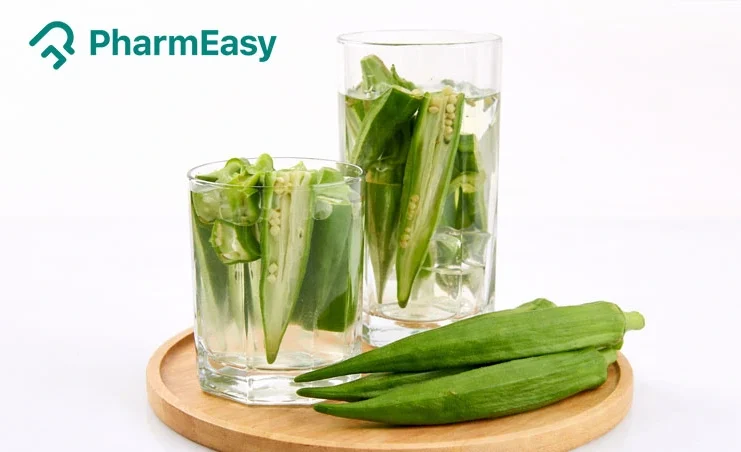
Okra water is a simple drink made by soaking okra pods in water overnight. Almost every part of the okra plant is useful, including its leaves, flowers, stem, seeds, and pods. The green pods are the young fruits of the plant and are usually eaten as vegetables. They can be boiled, fried, dried, or added to soups and stews. When boiled or soaked in water, they release a natural, sticky substance called mucilage. This substance gives okra water a slightly thick texture. Making okra water is easy. Fresh pods are cut into pieces and soaked in water overnight. The water absorbs some of the stickiness and flavour from the pods. This simple drink allows you to use okra without fully cooking it5,6.
Okra water has good nutritional value as okra pods are contain nutrients like protein, vitamins, minerals, and fibre. Drinking this is an easy way to get okra water benefits without cooking it. The green pods and their seeds are especially rich in protein and important amino acids that the body needs for growth and strength.
Key Nutrients in Okra (per 100 g pods)
| Nutrient | Amount |
| Energy | 33 calories |
| Carbohydrates | 7 g |
| Protein | 2 g |
| Dietary fibre | 3.2 g |
| Starch | 0.3 g |
| Natural sugars | 1.2 g |
| Total fat | 0.1 g |
| Saturated fat | 0 g |
| Cholesterol | 0 mg |
| Omega-3 fats | 0.001 g |
| Omega-6 fats | 0.026 g |
| Plant sterols | 0.024 g |
Minerals in Okra (per 100 g raw pods)
| Mineral | Amount |
| Potassium | 303 mg |
| Calcium | 81 mg |
| Phosphorus | 63 mg |
| Magnesium | 57 mg |
| Copper | 0.1 mg |
| Selenium | 0.7 µg |
| Manganese | 1.0 mg |
| Zinc | 0.6 mg |
| Sodium | 8 mg |
| Iron | 0.8 mg |
Okra pods contain 11 essential amino acids, including aspartic acid. These help the body grow, build muscles, and stay healthy. Although okra has fewer essential amino acids than soybeans, it is still a good source of plant protein3.
Okra is rich in vitamins A and C, which support vision, immunity, and overall health. The minerals in okra, like calcium, iron, magnesium, and zinc, strengthen bones, blood, and the immune system. The fibre in okra swells when soaked in water, forming a gel-like texture. This slows digestion, keeps you full for a longer duration, and helps manage portion sizes.
Okra seeds contain healthy fats called unsaturated fatty acids, such as linoleic acid, vitamin E, and 16-17% of protein.
Overall, okra water is a simple and nutritious way to get protein, vitamins, minerals, fibre, and healthy fats. Let us understand what does okra water do for our body7,8.
Okra water contains fibre, vitamins, and minerals and may provide several health benefits when it is a part of a healthy diet. Here are some okra water benefits:

Okra contains a high amount of fibre, especially in its peel and seeds. This fibre may slow down how quickly sugar enters the blood from the intestines. Some natural substances in okra may work like insulin, helping support balanced blood sugar levels. For this reason, okra is often considered a diabetes-friendly food.

Okra contains a type of fibre called pectin. This fibre may help reduce the amount of bad cholesterol absorbed by the body and help remove extra cholesterol through waste. This may support heart health and reduce fat buildup.

Okra supports good gut bacteria, which help keep the digestive system healthy. These bacteria also help produce certain B vitamins. Okra works like yoghurt by supporting a healthy balance of gut bacteria.

The fibre and natural slimy texture of okra help soften stools and make bowel movements easier. This supports smooth digestion and may help prevent constipation.

Okra contains insoluble fibre that helps clean the digestive tract by moving waste out of the body faster. This may lower the risk of colon-related problems.

Okra contains vitamin C and antioxidants that help the body fight harmful substances called free radicals. Minerals like calcium, iron, magnesium, and manganese also support immune health.

Okra provides vitamins such as vitamin A, B vitamins, and vitamin C; folic acid; calcium; zinc; and fibre. These nutrients support healthy baby growth and may help reduce constipation during pregnancy.

Okra has low calorie content and high fibre content. Fibre helps you feel full for longer, thus reducing overeating.

The sticky substance in okra may help bind cholesterol and waste products, supporting natural liver cleansing. Okra also contains antioxidants like glutathione.

Vitamin C helps repair skin tissues and may help reduce acne and pigmentation. Okra is also used as a natural hair conditioner that keeps hair soft and shiny.

The vitamin K in okra supports strong bones and blood clotting. Iron and folate in it help form healthy red blood cells.

Okra contains antioxidants like lutein and beta-carotene that support eye health. The flavonoids in it may help support memory, learning, and healthy blood vessels5,7.
Although okra water has many nutrients and possible benefits, you need to follow a balanced diet and healthy lifestyle along with it. Okra water should not be treated as a cure for any disease. Next, let us see how to make okra water.
Okra water can be easily prepared at home by soaking fresh okra pods in water so that some of their natural fibre mixes with the water. Follow this step-by-step procedure to make Okra water:
The best time to drink okra water may be early in the morning on an empty stomach. Okra water prepared by soaking sliced okra pods overnight may help digestion, act as a mild laxative, and support overall health. This practice has been followed for generations as a natural and simple health habit. It is believed to help in managing blood sugar levels and blood pressure because of its natural fibre content however, scientific evidence is limited. Therefore, okra water should be considered a supportive lifestyle practice and not a replacement for medical treatment6,9.
Okra water is mostly safe for regular use, but it may sometimes cause mild side effects. Drinking too much may lead to bloating, gas, or stomach discomfort as the fibre in it is difficult to digest. Rarely, some people may have allergic reactions, such as itchy skin, eye irritation, throat discomfort, or swelling. However, these reactions are extremely uncommon and usually occur in people who handle okra at work, like farmers or packers, rather than from drinking okra water. Children or people with severe pollen or food allergies may be more sensitive. If any unusual symptoms occur after drinking okra water, it is best to stop using it and talk to a doctor10,11.
Also Read: Detox Water for Weight Loss: Benefits, How to Use & Best Ways to Drink It
Although okra water may offer many health benefits, it should be consumed with caution if:
Always drink enough water with it, as its fibre content may lead to constipation or dehydration10,12.
Also Read: Saunf Water (Fennel Water): Benefits, Side Effects, How to Make It & More
Okra water is a simple, natural drink made from fresh okra pods soaked in water. While okra water is not a medicine, it can be a helpful and nutritious addition to your daily routine. Benefits of drinking okra water include helping digestion, helping manage blood sugar, and providing vitamins and minerals. Since it is easy to make at home, you can include it as part of your healthy diet. For best results, drink it regularly but in moderation.
Also Read: Magnesium Rich Foods: Your Ultimate Guide to Essential Nutrition
You may drink okra water every day, as studies indicate daily use may be able to help regulate blood sugar. Some studies also suggest it may help avoid kidney disease. However, you should always check with your dietitian or doctor before consuming it9,12.
Yes, okra water can be beneficial during pregnancy when taken in moderation. It contains folic acid, vitamins, minerals, and fibre that may support healthy foetal development and may help ease common pregnancy issues like constipation.
Yes, okra water benefits may also extend to individuals with diabetes as the fibre in okra water slows sugar absorption, which supports blood sugar control. It may also help protect the kidneys from damage caused by diabetes. However, always check with your doctor before drinking it daily7.
There is no clear evidence that drinking okra water at night helps. Drinking it on an empty stomach in the morning may give better health benefits6.
Okra water can taste slimy or strong. You can make it more palatable by adding lime juice, spices, and a little salt13.
Okra water may be applied on the face. Animal studies have shown that it may have anti-inflammatory, antimicrobial, and antioxidant effects and may help in skin regeneration14.
Disclaimer: The information provided here is for educational/awareness purposes only and is not intended to be a substitute for medical treatment by a healthcare professional and should not be relied upon to diagnose or treat any medical condition. The reader should consult a registered medical practitioner to determine the appropriateness of the information and before consuming any medication. PharmEasy does not provide any guarantee or warranty (express or implied) regarding the accuracy, adequacy, completeness, legality, reliability or usefulness of the information; and disclaims any liability arising thereof.
Links and product recommendations in the information provided here are advertisements of third-party products available on the website. PharmEasy does not make any representation on the accuracy or suitability of such products/services. Advertisements do not influence the editorial decisions or content. The information in this blog is subject to change without notice. The authors and administrators reserve the right to modify, add, or remove content without notification. It is your responsibility to review this disclaimer regularly for any changes.
 3
3 
Comments

Leave your comment...
You may also like






















Comments