




Cardio for Weight Loss: Types, Benefits, Myths & More!
By Dr. Naresh Chandra Singh +2 more

Medically reviewed by Dr. Naresh Chandra Singh
Last updated: Jul 1, 2026 Published on: Jan 21, 2026


Get,

to manage your symptom
Get your,

4 Cr+ families
benefitted

OTP sent to 9988776655



You’ve successfully subscribed to receive
doctor-approved tips on
Whatsapp

Get ready to feel your best.


Register to Avail the Offer
Send OTPBy continuing, you agree with our Privacy Policy and Terms and Conditions
Hi There,
Sign up on PharmEasy now!!


Trusted by 4 crore+ families

OTP sent to 9988776655
You have unlocked 25% off on medicines


Code: NU25

By Dr. Naresh Chandra Singh +2 more
Table of Contents
Have you ever felt out of breath just walking up a hill or climbing the stairs? Or maybe you’re trying really hard to lose weight and wish you could see results more quickly? If so, you’re just like many others!
When people want to get fit and lose weight, one kind of exercise always comes up is Cardio, this just means any activity that gets your heart pumping, like walking fast, jogging, cycling, or dancing. Cardio is popular because it’s a fantastic way to make your body work harder, which burns off calories and helps you shed pounds. It’s the go-to exercise to help you not only reach your weight loss goals but also feel more energetic every day!
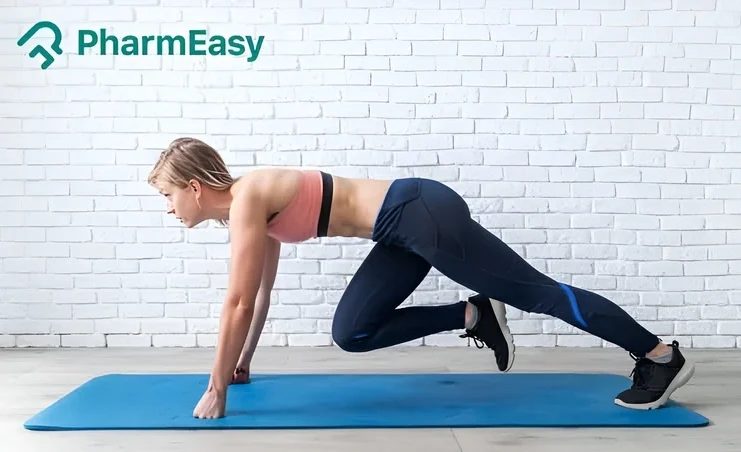
Let us explore the benefits of cardio for weight loss and overall health and see the different types of cardio exercises you can do to find the perfect fit for your routine!
Cardio exercise, also known as cardiovascular or aerobic exercise, is any physical activity that significantly increases and sustains your heart rate, prompting your heart to pump faster and harder to deliver the extra oxygen required by your working muscles1. Cardio exercise makes your heart and lungs work harder, which strengthens your lung health and improves blood flow throughout your body2.
If you are wondering ‘Is Cardio good for weight loss’, then the answer is, yes! Cardio exercise works by accelerating calorie expenditure and enhancing metabolic efficiency to help to lose weight. It:
While cardio can accelerate fat loss, it is not necessary to do it in excess. Prioritizing nutrition remains a critical factor for achieving your fat loss goals.
Cardiovascular exercise is typically categorized by the intensity level maintained during the workout. This helps determine how hard your heart and lungs are working.

This refers to any activity maintained for 30 minutes or more at a low pace, where the goal is to keep the heart rate controlled and steady throughout the duration.

This intensity level signifies working at a pace that causes harder breathing, an elevated heart rate, and a noticeable sweat. You know you have hit moderate intensity when you can talk freely but find it too difficult to sing your favourite tune.

This technique involves rapidly switching between short intervals of maximum intensity exercise and quick, controlled breaks for rest or light activity.
While HIIT quickly maximizes calorie burn, LISS is better suited for prolonged periods of fat burning4.
Regular cardio training offers a profound array of health benefits. Here is list of the health benefits of cardio exercises:

Regular cardio is a powerful workout for your heart and lungs, significantly strengthening them to boost cardiorespiratory endurance (the ability of your body to efficiently supply oxygen to muscles and utilize it for physical activities). They help improve blood circulation and regulate blood pressure, thereby avoiding the risk of hypertension. Moreover, regular cardio helps balance cholesterol levels, raising beneficial HDL (high density lipoprotein) and lowering harmful LDL (low density lipoprotein), keeping arteries clear and reducing the overall risk of heart disease and stroke3.

Cardio is essential for weight control because it actively burns calories during exercise3. Beyond immediate fat loss, this increased metabolic activity, when combined with a calorie-deficit diet, helps prevent weight regain and is crucial for maintaining a healthy body composition over time7.

As mentioned, cardio exercises help improve cardiopulmonary endurance and strengthen your heart and lungs. During exercise, your lung activity increases to meet the body’s demand for energy and the need to remove waste. When you do regular exercise, your lung capacity increases overtime to meet this demand8.

Regular activity releases mood elevating hormones like endorphins, serotonin, dopamine, and oxytocin, while simultaneously reducing the stress hormone cortisol. This powerful combination lessens anxiety and depression, enhances cognitive functions (memory and focus), and helps reset the circadian rhythm for deeper, more restorative sleep3.

When you exercise, your heart and lungs become more efficient, which means you won’t get tired as easily and will feel more awake. Stick to a daily cardio routine to boost your staying power. You may notice yourself getting fitter and faster every single day9.

Exercise is a powerful tool for dealing with certain chronic conditions. It reduces pain for people with arthritis (joint inflammation) and helps those with disabilities stay strong enough to handle daily life on their own9.
Thus, regular cardio exercise is a powerful step to your long-term physical and mental health, offering benefits that span from a stronger heart to improved mood and sleep.
Cardiovascular exercise is crucial for creating a calorie deficit, which is essential for losing weight. The American Heart Association recommends doing 150 minutes of moderate-intensity or 75 minutes of vigorous-intensity activity per week, which would be approximately 30 min a day for 5 days5. Following are some best cardio exercises for weight loss:

Walking is an accessible and highly beneficial form of physical activity that is suitable for individuals across all fitness levels, if you have a treadmill this can be done at home itself.

High-intensity exercises, such as running, are excellent for burning your calories, which aids in weight management when combined with healthy eating.

Cycling (or bike riding) is an excellent, environmentally friendly activity that benefits your mental and physical health at the same time allows you to enjoy the outdoors and travel efficiently.

Swimming is a versatile, low impact sport suitable for all ages and fitness levels. By increasing your speed, swimming can become a high-intensity activity that significantly contributes to your fitness.

This fitness option is inexpensive, compact, and portable, making it an excellent tool for getting into shape quickly.

Dancing is a fun and social work out that strengthens your heart, bones, and muscles at the same time improves your balance. It is such an enjoyable way to stay active that you might not even realise you are exercising.

Hiking is a long, walk in nature, usually on trails or through mountainous terrain, done for exercise and enjoyment.
To avoid boredom and keep your routine engaging, plan to incorporate a variety of different exercises daily.
Note: Always consult your doctor before starting any new exercise plan, especially if you have an existing health condition.
Cardiovascular exercise, or cardio, should not be viewed as a burden or a chore; rather, it ought to be an activity that you find sustainable and genuinely enjoyable over long term. For this, you can make use of the following tips:
Always prioritize your safety and be mindful of your physical limits. If you experience any pain or tightness in your chest, sudden shortness of breath, or dizziness, you must immediately stop exercising and rest. Do not hesitate to seek medical help if your symptoms persist or worsen.
It’s time to debunk the persistent myths surrounding cardio exercise and weight loss, some common myths are as follows:
1. Myth: To achieve results, you must dedicate hours of cardio exercise daily.
Fact: Shorter bursts of exercise are also beneficial; the recommended amount is 150 minutes of moderate-intensity or 75 minutes of vigorous-intensity activity per week. You can break this up. Multiple 10 or 15-minute sessions throughout the day can be just as effective as one long session. Incorporate movement into your daily life by taking short activity breaks like stair climbing, 10-minute walks, or spontaneous dancing on your favourite music etc.
2. Myth: Cardio is the Only Exercise You Need for Weight Loss.
Fact: While cardio is useful for calorie burn, sustainable weight loss requires the triple combination of cardio, strength training, and a nutritional yet low calorie diet18.
3. Myth: Cardiovascular exercise grants you complete dietary flexibility.
Fact: While physical activity is essential, it must be paired with mindful eating, as fitness and nutrition both together can give a better result.
Cardio exercise is a fundamental pillar for weight loss. It efficiently burns calories and boosts your metabolism, offering flexibility through intensity options ranging from the sustained pace of LISS to the rapid calorie-burning bursts of HIIT. Beyond slimming down, consistent cardio profoundly benefits your health by strengthening your heart and improving your overall mood. However, to unlock the most effective and sustainable weight loss results, combining your chosen, consistent cardio routine (aiming for about 150 minutes weekly) with dedicated strength training to maintain muscle mass, and a proper nutritional support is important. Finally choose an activity you enjoy to ensure long-term consistency.
Also Read: Best Aerobic Exercise for Weight Loss
HIIT exercise like running and jogging are some best way to burn fat, you can plan and add on some strengthening exercise along with a healthy diet plan for a better result. If you are a beginner, start with mild exercise steps and gradually progress, rather than immediately attempting high-intensity interval training4.
It is challenging but achievable to burn 500 calories in one hour. Focus on HIIT exercise like jumping rope, running, swimming etc. But listen to your body, don’t push through sharp pain; taking occasional rest is crucial for preventing injury and allowing muscles to recover and grow stronger19.
Yes, 30 minutes of cardio exercise can burn fat and calories, focus on moderate-to-high-intensity cardio exercise for better outcomes5.
There are certain exercises that can be done at home like jumping rope, burpees, running in place, climbing stairs, dancing and even some household work like mopping or vacuuming. If you have a treadmill at home, you can use it for walking, running, and jogging20,21.
Yes, cardio exercise can lower blood pressure by improving the health of blood vessels, specifically by reducing vascular stiffness and enhancing endothelial function. There are lot of studies that says cardio exercise can help lower blood pressure22.
Disclaimer: The information provided here is for educational/awareness purposes only and is not intended to be a substitute for medical treatment by a healthcare professional and should not be relied upon to diagnose or treat any medical condition. The reader should consult a registered medical practitioner to determine the appropriateness of the information and before consuming any medication. PharmEasy does not provide any guarantee or warranty (express or implied) regarding the accuracy, adequacy, completeness, legality, reliability or usefulness of the information; and disclaims any liability arising thereof.
Links and product recommendations in the information provided here are advertisements of third-party products available on the website. PharmEasy does not make any representation on the accuracy or suitability of such products/services. Advertisements do not influence the editorial decisions or content. The information in this blog is subject to change without notice. The authors and administrators reserve the right to modify, add, or remove content without notification. It is your responsibility to review this disclaimer regularly for any changes.


Comments

Leave your comment...
You may also like






















Comments