




Dry Skin in Winters: Causes, Home Remedies & Prevention Tips
By Dr. Raina N. Nahar +2 more

Medically reviewed by Dr. Raina N. Nahar
Last updated: Jun 16, 2026 Published on: Dec 19, 2025


Get,

to manage your symptom
Get your,

4 Cr+ families
benefitted

OTP sent to 9988776655



You’ve successfully subscribed to receive
doctor-approved tips on
Whatsapp

Get ready to feel your best.


Register to Avail the Offer
Send OTPBy continuing, you agree with our Privacy Policy and Terms and Conditions
Hi There,
Sign up on PharmEasy now!!


Trusted by 4 crore+ families

OTP sent to 9988776655
You have unlocked 25% off on medicines


Code: NU25

By Dr. Raina N. Nahar +2 more
Table of Contents
Ever noticed how once the temperature drops, your skin starts feeling dry? You’re not alone! That tight, itchy, and sometimes flaky feeling is the unofficial sign that winter has arrived. We all love cozy sweaters and hot drink but what about our skin? It has a much harder time, between the chilly air outside and the central heaters inside, it can feel like a battle just to keep your skin hydrated and comfortable1.
But don’t worry! This doesn’t mean you have to suffer throughout the winter season. In this blog, we’re going to understand the reasons behind this seasonal dryness and share some easy-to-follow tips that will transform your skin from irritated to smooth and happy again.

Dry skin, also medically known as xeroderma or xerosis, is often irritating. This condition can be caused by a variety of contributing factors:
In the winter season especially, the chilly air outside naturally contains very little moisture, causing the surrounding atmosphere to become quite dry. This lack of humidity aggressively draws water away from the skin’s surface. Because of this constant moisture loss, the skin’s outer protective layer can become temporarily weakened, leading to the familiar feelings of dryness, tightness, and sometimes a flaky or itchy texture. It is essential to keep your skin moisturised throughout the colder months to help seal in hydration1.
When skin lacks adequate moisture, it can lead to uncomfortable symptoms like3,4 :
While dry skin can affect any part of your body, it is most often noticed on the hands, feet, arms, and lower legs.
Winter dry skin can be quite frustrating, but there are a few home remedies you can try out to keep your skin moisturised and hydrated during these months:

Plant-based oils such as coconut, olive and jojoba are packed with natural emollients and fatty acids, making them excellent skin hydrators. They create a protective barrier to prevent moisture loss and provide nourishing vitamins and antioxidants to the skin5. Apply the oil 15 to 20 minutes before your shower. Wash it off using lukewarm water and avoid using any harsh chemical soaps.
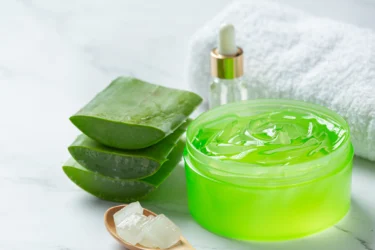
This natural gel obtained from the aloe vera plant makes the flaky top cells of skin stick together and helps soften dry skin. The amino acids in it also help smooth out any hardened skin cells, while zinc aids in tightening the pores. It thus helps in moisturizing dry skin and improving skin integrity6. Aloe Vera gel can be applied both before and after your shower. Use just enough so that the application is not too sticky. You can also use this as part of your night care regimen.
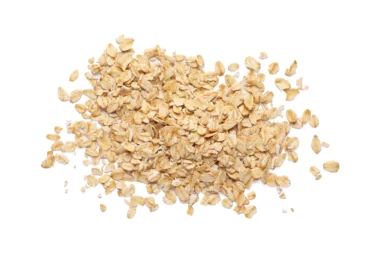
Colloidal oatmeal (finely ground and then boiled) contains moisturising, cleansing, antioxidant, and anti-inflammatory properties. It is used for many skin conditions, especially dry skin7. Mix this colloidal oatmeal with milk or plain water and apply it 15 to 20 minutes before shower.
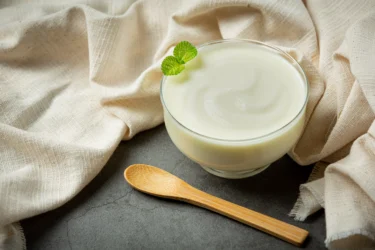
Yogurt contains lactic acid, which works as a good moisturiser providing hydration to the skin. It helps lock-in moisture and gives a smooth supple skin8. Apply yogurt on your skin before shower and leave it for 20 minutes and rinse it with lukewarm water.
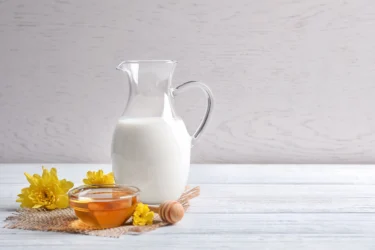
Honey offers numerous skin benefits such antimicrobial and wound-healing effects and is a popular ingredient in many cosmetic products. Furthermore, it possesses valuable humectant and moisturising properties making it suitable as for application on dry skin9. Honey and milk can be combined and used as a moisturising face pack. Mix 2 tablespoons of honey with 2 teaspoons of whole milk, apply the mixture to your face, leave it on for 15 minutes, and then rinse it off first with lukewarm water.
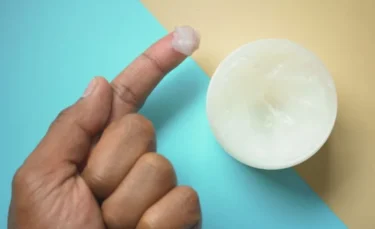
Petroleum jelly is a thick, odourless greasy substance derived from petroleum (a mixture of oily liquids found in the earth). It is used topically to prevent skin dryness and to aid in the healing of scrapes and burns10. Petroleum jelly can be applied to skin immediately after a bath to form a protective barrier that locks in moisture.
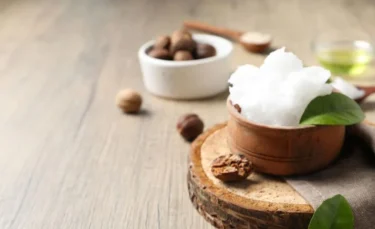
Shea butter is the fat extracted from the nut of the African Shea tree (Vitellaria paradoxa). It supports in fast healing of small wounds, cuts and scrapes. In addition to its role as an anti-inflammatory agent, it also provides natural UV protection and acts as a good moisturiser11,12. Apply shea butter as a moisturiser immediately after your shower while your skin is still damp to maximize moisture retention.
If these don’t provide relief or you have intense itchiness, you may need a commercially formulated dry skin moisturizer. If inflammation is present, a cool compress may be used, and a mild over-the-counter hydrocortisone product may be needed3.
Note: Home remedies may help to reduce your dry skin to some extent, but results may vary from person to person. These remedies should not be replaced with any medical advice or treatments for medical condition related skin dryness. Always patch-test new products and consult a dermatologist, especially if you have sensitive skin, allergies, or underlying skin conditions.
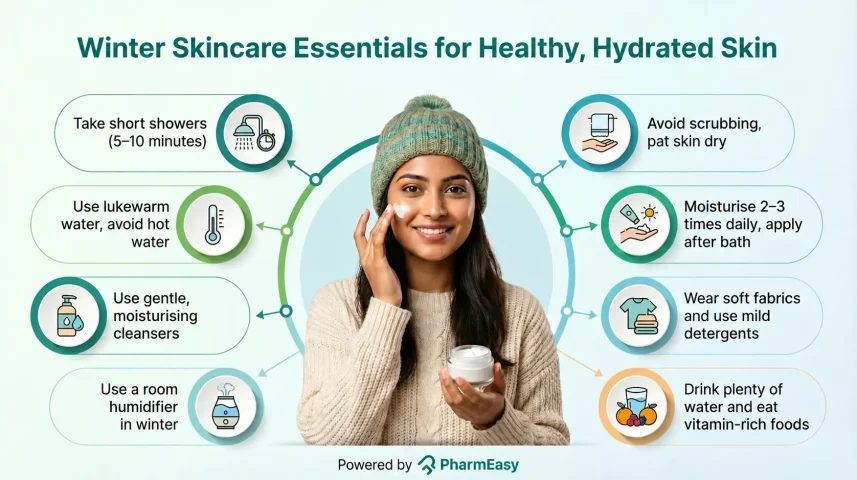
Overcome winter’s harsh effects on skin with essential skincare adjustments to keep your skin hydrated and healthy 3,2:
By consistently incorporating these simple, protective steps, ranging from bath time adjustments to daily hydration and moisturizing, you can successfully deal with dry winter skin and maintain a healthy, comfortable skin throughout the season.
Also Read: Is Glycerine Good for Skin?
While most cases of dry winter skin can be managed at home, certain symptoms require professional medical attention like3:
Don’t hesitate to seek professional help if these severe symptoms arise, a doctor can determine if your dry skin requires a treatment or is a sign of an underlying skin condition.
Also Read: Squalane: What Is It, Uses, Benefits, Side Effects, & More
Dry skin is very common for many people during the winter months; it’s generally considered a normal seasonal reaction rather than a serious concern. It is often manageable with simple care.
Moisturising regularly and staying well-hydrated are the crucial steps to keep your skin happy. While certain home remedies such as plant and mineral oils, aloe-vera gel, oatmeal, milk and yoghurt can provide relief, it is essential to consult a doctor if you experience any significant discomfort or if your symptoms begin to worsen. A happy skin is a silent sign of your overall well-being, that glows when you nourish it well. Let’s make a dedicated effort every winter to achieve happy, well-moisturized skin.
Also Read: Home Remedies for Pink Lips
Yes, coconut oil works as an excellent moisturizer, providing deep, soothing hydration. As a powerful emollient, it effectively softens and conditions dry skin while supporting the crucial function of the skin barrier, helping to prevent moisture loss throughout the harsh winter months5.
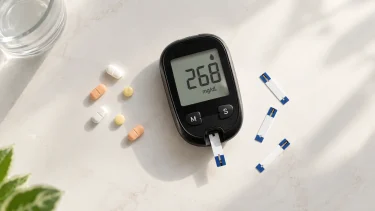
Yes, at times dry skin can be a symptom of diabetes. Excess blood sugar forces the body to pull fluid from your cells, increasing urine production to flush out the sugar, this fluid loss can lead to dehydration, resulting in dry skin13.
Dry skin during winters can be due to deficiency of vitamin A and D, zinc or iron these all are crucial from skin moisture retention, which is worsened by cold weather and low humidity2.
Cold winter air lacks moisture, which causes the surrounding atmosphere to dry out your skin. This constant moisture loss weakens your skin’s protective layer, resulting in dryness, tightness, and itchiness1.
Look for creams with ingredients like hyaluronic acid, glycerine, ceramides, lactic acid, and petrolatum. These create a barrier that prevents water loss and keeping skin hydrated2.
Disclaimer: The information provided here is for educational/awareness purposes only and is not intended to be a substitute for medical treatment by a healthcare professional and should not be relied upon to diagnose or treat any medical condition. The reader should consult a registered medical practitioner to determine the appropriateness of the information and before consuming any medication. PharmEasy does not provide any guarantee or warranty (express or implied) regarding the accuracy, adequacy, completeness, legality, reliability or usefulness of the information; and disclaims any liability arising thereof.
Links and product recommendations in the information provided here are advertisements of third-party products available on the website. PharmEasy does not make any representation on the accuracy or suitability of such products/services. Advertisements do not influence the editorial decisions or content. The information in this blog is subject to change without notice. The authors and administrators reserve the right to modify, add, or remove content without notification. It is your responsibility to review this disclaimer regularly for any changes.
 1
1 
Comments

Leave your comment...
You may also like




















Comments