Last updated: Jun 26, 2026Published on: May 30, 2025
Table of Contents
Introduction
Non-alcoholic fatty liver disease (NAFLD) is often referred to simply as fatty liver. It is one of the most common liver conditions affecting people worldwide1. This condition involves the buildup of excess fat in the liver that is not caused by the consumption of alcohol2.
In India, adult NAFLD rates have been reported as high as 38.6% in adults and 35.4% in children, and the prevalence is known to increase with age and lifestyle related health issues3. Fatty liver can range in severity from simple fat accumulation (non-alcoholic fatty liver or NAFL) to a more serious form called non-alcoholic steatohepatitis (NASH), which can lead to liver fibrosis, cirrhosis, or even liver cancer if left unaddressed1.
The good news is that regular physical activity is one of the most effective ways to manage fatty liver1,3. In this article, we will explore the causes and symptoms of fatty liver and highlight the most effective exercises you can incorporate into your routine to support liver health and manage this condition. Keep in mind that choosing the best exercise for fatty liver means focusing on activities that improve cardiovascular health as well as promote weight loss.
Advertisement
How Is Fatty Liver Disease Caused?
Fatty liver develops when there is an abnormal buildup of fat in liver cells, more than 5% of the liver’s weight2,5. This fat accumulation occurs due to various conditions:
Unhealthy Lifestyle: The most common cause of fatty liver disease is an unhealthy lifestyle. This includes being overweight, not getting enough exercise, and eating too much unhealthy food. These factors can make the body less responsive to insulin (a hormone that controls blood sugar), which leads to insulin sensitivity and more fat being made and stored in the liver1,6.
Beyond this, several other conditions and factors can contribute to NAFLD:
Medical Conditions: Having conditions like diabetes, kidney disease, or high cholesterol4,5.
Genetic Factors: Diseases such as glycogen storage diseases and Wilson’s disease2.
Medications: Certain medications such as selective oestrogen receptor modulators, antimetabolites, and antiarrhythmics2.
NAFLD or NASH is now often referred to as Metabolic Dysfunction-associated Steatotic Liver Disease (MASLD), and the most common cause for this is obesity or being overweight22,23.
Most people with fatty liver disease (especially in the early stages) may not experience any symptoms1. However, as the condition progresses, some people might start to notice signs that something isn’t quite right.
Below, we have mentioned some common symptoms of a fatty liver:
It’s important to note that these symptoms are not exclusive to fatty liver disease and may be associated with other health conditions. However, as the condition progresses to NASH and cirrhosis, signs like abdominal/leg swelling, itchy skin, and spider-like veins may appear9. That’s why regular health check-ups are crucial, especially if you have risk factors like obesity, diabetes, or high cholesterol.
Advertisement
If you’re concerned about your liver health, you can get a simple test, such as Liver Function Test (LFT), to check how well your liver is working. This blood test measures levels of liver enzymes and can help detect early signs of liver problems.
Easy Exercises to Reverse Fatty Liver?
One of the most effective ways to improve fatty liver disease is through regular exercise. Are you wondering what the best exercise for fatty liver is? The answer lies in a combination of aerobic activities like walking and strength training for lasting benefits. Studies have shown that both aerobic (cardio) and resistance (strength) training have been proven to reduce fat in the liver10,11.
Here are some simple and effective exercises for fatty liver that you can include in your daily routine:
Why it helps: Reduces stress, supports weight loss, and liver function15,16
Note: While exercise and yoga offer certain benefits for fatty liver, it is important to perform activities within your comfort level and under the guidance of fitness and yoga professionals. Additionally, if you have any underlying health conditions, it is important to take medical clearance with the medical practitioner before pursuing any exercise regime.
There is a growing trend pf NAFLD in children which is closely linked to rising childhood obesity24.
Yoga Postures for Fatty Liver and Overall Liver Health
Yogais a powerful tool that not only reduces stress but also helps stimulate internal organs like the liver, enhancing detoxification and improving its function16. Hence, itcan be particularly beneficial for individuals with fatty liver disease. Here are some asanas that you can try out:
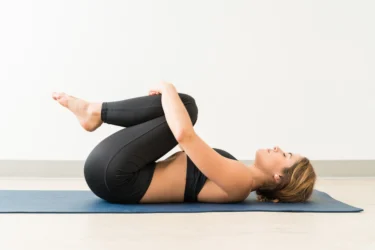
Stimulates liver and intestines, helping with detoxification.
Note: Always practice yoga for fatty liver with awareness and within your comfort level. If you have any underlying health conditions, recent surgeries, or are pregnant, consult your doctor before starting20. It’s best to learn and perform yoga under the guidance of a certified yoga instructor to ensure proper technique and safety. Ideally, practice yoga in the early morning or at a time when your stomach is empty for better results and comfort17.
No particular exercise can specifically target the fat in liver. Generally incorporating any type of physical activity is one of the many lifestyle measures that can be taken to inch towards a healthy liver. When concerning symptoms do show up, consulting your doctor is important.
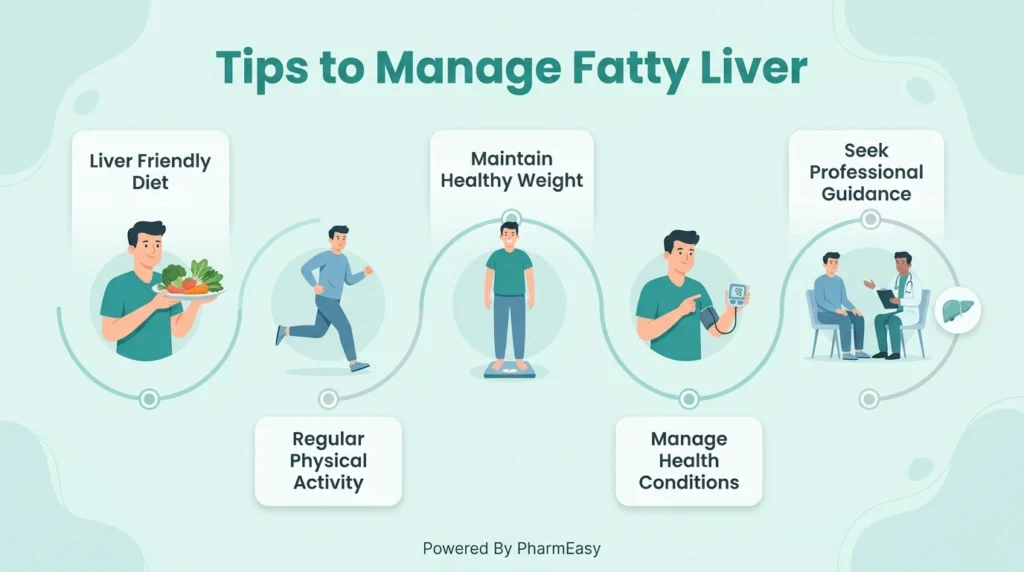
In addition to medical guidance and structured treatment, individuals with fatty liver disease can adopt several practical lifestyle measures to support liver health:
Adopt a liver-friendly diet: Focus on including fruits, vegetables, whole grains, and healthy fats in your diet. Additionally, limit intake of refined sugars, sugary beverages, trans fats, and saturated fats21.
Engage in regular physical activity: Aim for at least 150 to 200 minutes of moderate-intensity exercise for fatty liver per week (e.g., brisk walking, cycling, aerobics, strength training)21.
Achieve and maintain a healthy weight: Target gradual weight loss of 7 to 10%, or more if overweight, to significantly improve liver enzymes, inflammation, and fat accumulation21.
Manage associated health conditions: Control diabetes, obesity, high cholesterol, and hypertension as they may contribute to NAFLD progression2.
Seek professional guidance: Consult with a doctor, nutritionist, or fitness expert for personalised advice and to safely implement lifestyle changes.
Fatty liver disease often develops silently, but timely medical consultation is advised when you notice the above-mentioned symptoms to rule out this condition. If the disease progresses, it becomes crucial to seek immediate medical attention. You must visit the doctor if you experience any of the following, as these may indicate that the liver disease has advanced:
Worsening of symptoms (discussed above)
Itching, spider-like blood vessels, or red palms
Yellowing of skin or eyes
Swelling/fluid retention, especially in the abdomen or legs
As NAFLD progresses, it may develop into non-alcoholic steatohepatitis (NASH), a more severe form that includes inflammation and liver cell damage. If left unmanaged, NASH can progress to fibrosis, cirrhosis, or liver cancer2. Therefore, regular medical check-ups and early lifestyle interventions such as exercise for fatty liver are key to managing fatty liver disease and avoiding long-term complications.
Exercise and yoga play a vital role in managing fatty liver disease by promoting weight loss, enhancing insulin sensitivity, reducing liver fat, and improving overall metabolic health. While there is no single best exercise for fatty liver approved solely for NAFLD, consistent physical activity, combined with mindful practices like yoga, can significantly halt the progression of the disease.
By adopting a healthier lifestyle that includes regular exercise, a balanced diet, stress reduction, and mindful habits such as yoga, individuals can not only manage fatty liver more effectively but also improve their overall well-being. Regular consultation with a doctor with early intervention and sustained lifestyle changes is key to avoiding complications and leading a healthier, more energetic life.
Exercise is an important aspect of managing fatty liver disease that can significantly help reduce liver fat. However, it works best when combined with a healthy diet and lifestyle changes20.
Is high-intensity exercise necessary to reduce liver fat?
No, moderate-intensity exercise is sufficient for most people to improve liver health11. Vigorous or high-intensity exercise can help, but it is not mandatory and should be done only if comfortable and safe.
Are there any risks or precautions I should consider before starting exercise?
Always start at your own pace and avoid pushing yourself too hard. If you experience pain, dizziness, or difficulty breathing during exercise, you should stop immediately and consult a doctor. Individuals with existing health conditions should always seek medical advice before starting any new exercise or yoga regimen.
How soon can I expect to see improvements in my liver health?
Improvements can vary but typically occur over weeks to months with regular exercise and lifestyle changes. Liver fat reduction and better insulin sensitivity often start within 3 to 4 months of consistent physical activity11–15.
References
Pouwels S, Sakran N, Graham Y, Leal A, Pintar T, Yang W, Kassir R, Singhal R, Mahawar K, Ramnarain D. Non-alcoholic fatty liver disease (NAFLD): a review of pathophysiology, clinical management and effects of weight loss. BMC Endocr Disord. 2022 Mar 14;22(1):63. Available from: https://pmc.ncbi.nlm.nih.gov/articles/PMC8919523/
Antunes C, Azadfard M, Hoilat GJ, Gupta M. Fatty Liver [Internet]. Treasure Island (FL): StatPearls Publishing; 2025 Jan; [updated 2023 Jan 1; cited 2025 May 23]. Available from: https://www.ncbi.nlm.nih.gov/books/NBK441992/
Shalimar, Elhence A, Bansal B, Gupta H, Anand A, Singh TP, Goel A. Prevalence of Non-alcoholic Fatty Liver Disease in India: A Systematic Review and Meta-analysis. J Clin Exp Hepatol. 2022 May-Jun;12(3):818-829. Available from: https://pmc.ncbi.nlm.nih.gov/articles/PMC9168741/
Zarghamravanbakhsh P, Frenkel M, Poretsky L. Metabolic causes and consequences of nonalcoholic fatty liver disease (NAFLD). Metabol Open. 2021 Nov 16;12:100149. Available from: https://pubmed.ncbi.nlm.nih.gov/34870138/
Wijarnpreecha K, Aby ES, Ahmed A, Kim D. The association of weight gain with nonalcoholic fatty liver disease and fibrosis detected by FibroScan in the United States. Ann Gastroenterol. 2022 Mar-Apr;35(2):194-202. Available from: https://pmc.ncbi.nlm.nih.gov/articles/PMC8922259/
Khoonsari M, Mohammad Hosseini Azar M, Ghavam R, Hatami K, Asobar M, Gholami A, Rajabi A, Safarnezhad Tameshkel F, Amirkalali B, Sohrabi M. Clinical Manifestations and Diagnosis of Nonalcoholic Fatty Liver Disease. Iran J Pathol. 2017 Spring;12(2):99-105. Epub 2017 Apr 1. Available from: https://pmc.ncbi.nlm.nih.gov/articles/PMC5831064/
Kudaravalli P, John S. Nonalcoholic Fatty Liver [Internet]. StatPearls Publishing; 2025 Jan; . [Updated 2023 Apr; cited 2025 May 27]. Available from: https://www.ncbi.nlm.nih.gov/books/NBK541033/
Zelber-Sagi S, Buch A, Yeshua H, Vaisman N, Webb M, Harari G, Kis O, Fliss-Isakov N, Izkhakov E, Halpern Z, Santo E, Oren R, Shibolet O. Effect of resistance training on non-alcoholic fatty-liver disease a randomized-clinical trial. World J Gastroenterol. 2014 Apr 21;20(15):4382-92. Available from: https://pmc.ncbi.nlm.nih.gov/articles/PMC3989975/
Keating SE, Hackett DA, Parker HM, O’Connor HT, Gerofi JA, Sainsbury A, Baker MK, Chuter VH, Caterson ID, George J, Johnson NA. Effect of aerobic exercise training dose on liver fat and visceral adiposity. J Hepatol. 2015 Jul;63(1):174-82. Available from: https://pubmed.ncbi.nlm.nih.gov/25863524/
Schneider CV, Zandvakili I, Thaiss CA, Schneider KM. Physical activity is associated with reduced risk of liver disease in the prospective UK Biobank cohort. JHEP Rep. 2021 Mar 2;3(3):100263. Available from: https://pmc.ncbi.nlm.nih.gov/articles/PMC8056270/
Oh S, So R, Shida T, Matsuo T, Kim B, Akiyama K, Isobe T, Okamoto Y, Tanaka K, Shoda J. High-Intensity Aerobic Exercise Improves Both Hepatic Fat Content and Stiffness in Sedentary Obese Men with Nonalcoholic Fatty Liver Disease. Sci Rep. 2017 Feb 22;7:43029. Available from: https://pmc.ncbi.nlm.nih.gov/articles/PMC5320441/
Liu X, Miller YD, Burton NW, Brown WJ. A preliminary study of the effects of Tai Chi and Qigong medical exercise on indicators of metabolic syndrome, glycaemic control, health-related quality of life, and psychological health in adults with elevated blood glucose. Br J Sports Med. 2010 Aug;44(10):704-9. Available from: https://pubmed.ncbi.nlm.nih.gov/18927159/
Singh AK, Kaur N, Kaushal S, Tyagi R, Mathur D, Sivapuram MS, Metri K, Bammidi S, Podder V, Modgil S, Khosla R, Sharma K, Anand A, Malik N, Boroiah V, Nagarathna R, Nagendra HR, Anand A. Partitioning of radiological, stress and biochemical changes in pre-diabetic women subjected to Diabetic Yoga Protocol. Diabetes Metab Syndr. 2019 Jul-Aug;13(4):2705-2713. Available from: https://pubmed.ncbi.nlm.nih.gov/31405697/
Telles S, Sharma SK, Kala N, Pal S, Gupta RK, Balkrishna A. Twelve Weeks of Yoga or Nutritional Advice for Centrally Obese Adult Females. Front Endocrinol (Lausanne). 2018 Aug 17;9:466. Available from: https://pmc.ncbi.nlm.nih.gov/articles/PMC6107686/
Ministry of External Affairs, Government of India. Yoga Postures – 17 [Internet]. New Delhi: MEA; [cited 2025 May 20]. Available from: https://www.mea.gov.in/yoga-postures-17.htm
Ahmed IA, Mikail MA, Mustafa MR, Ibrahim M, Othman R. Lifestyle interventions for non-alcoholic fatty liver disease. Saudi J Biol Sci. 2019 Nov;26(7):1519-1524. Available from: https://pmc.ncbi.nlm.nih.gov/articles/PMC6864195/
22. Li B, Zhang C, Zhan YT. Nonalcoholic Fatty Liver Disease Cirrhosis: A Review of Its Epidemiology, Risk Factors, Clinical Presentation, Diagnosis, Management, and Prognosis. Can J Gastroenterol Hepatol. 2018 Jul 2;2018:2784537. doi: 10.1155/2018/2784537. PMID: 30065915; PMCID: PMC6051295.Available from: https://pmc.ncbi.nlm.nih.gov/articles/PMC6051295/
23. Sharma B, John S. Nonalcoholic Steatohepatitis (NASH) [Updated 2023 Apr 7]. In: StatPearls [Internet]. Treasure Island (FL): StatPearls Publishing; 2025 Jan-. Available from: https://www.ncbi.nlm.nih.gov/books/NBK470243/
Disclaimer: The information provided here is for educational/awareness purposes only and is not intended to be a substitute for medical treatment by a healthcare professional and should not be relied upon to diagnose or treat any medical condition. The reader should consult a registered medical practitioner to determine the appropriateness of the information and before consuming any medication. PharmEasy does not provide any guarantee or warranty (express or implied) regarding the accuracy, adequacy, completeness, legality, reliability or usefulness of the information; and disclaims any liability arising thereof.






















 3
3 



















Comments