




Brown Egg Vs White Eggs: Decoding Nutritional Facts and Myths
By Dr. Malavika Athavale +2 more

Medically reviewed by Dr. Malavika Athavale
Last updated: Oct 19, 2026 Published on: Sep 4, 2023


Get,

to manage your symptom
Get your,

4 Cr+ families
benefitted

OTP sent to 9988776655



You’ve successfully subscribed to receive
doctor-approved tips on
Whatsapp

Get ready to feel your best.


Register to Avail the Offer
Send OTPBy continuing, you agree with our Privacy Policy and Terms and Conditions
Hi There,
Sign up on PharmEasy now!!


Trusted by 4 crore+ families

OTP sent to 9988776655
You have unlocked 25% off on medicines


Code: NU25

By Dr. Malavika Athavale +2 more
Table of Contents
Ever found yourself confused at the grocery store, not sure if you should go for brown or white eggs? No need to feel alone, most people are in the same boat. Some folks think that one kind of egg might be a better pick health-wise or flavour-wise over the other. This article aims to wipe away such confusion by breaking down the facts about brown and white eggs. We will delve into what affects the colour of an eggshell, compare the nutritional values of brown and white eggs, and talk about how they influence taste, cooking and cost. In the end, you will be able to make a wise choice when buying eggs and know what truly sets brown eggs apart from white ones.
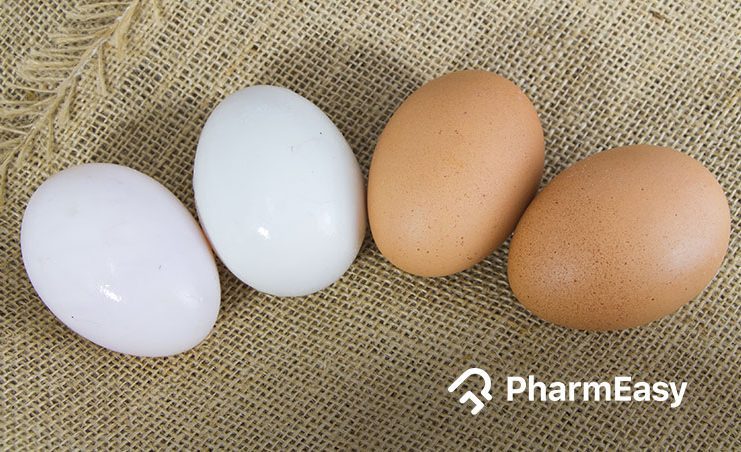
Many people believe that the colour of an egg determines its health benefits or nutrients. But the colour of an egg, whether white, brown or even blue, is determined by the chicken breed and its genes. The primary pigment in brown eggshells is something called protoporphyrin IX, and blue eggshells get their colour primarily from the pigment biliverdin1,2. While factors like the chicken’s feed or environment might bring in shade variations, they don’t change the eggshell’s main colour.
Did you know?
Several myths about egg colour have been circulating for quite some time, and it is time to bring the truth to light:
After debunking these myths, let’s look at how brown and white eggs stack up nutritionally.
It is important to note that brown and white eggs have about the same nutritional value5. The only difference lies in the eggshell colour, which is determined by the chicken breed and genes.
Both brown and white eggs are rich in high-quality protein and healthy fats and have trace amounts of carbs with no significant differences in macronutrient profiles6. Regardless of the egg size, grade, and colour, they will provide all the vital nutrients your body needs.
Eggs, both brown and white, are loaded with essential vitamins and minerals, such as vitamins D, B12, A, and E, as well as iron, calcium, and phosphorus6. These nutrients support various functions like boosting immunity, improving brain function, and strengthening the bones6.
Cholesterol is crucial for our cells and helps provide vital hormones. Studies have shown that dietary cholesterol doesn’t affect blood cholesterol levels for most people6. Since both brown and white eggs have similar cholesterol levels7, whether you eat brown eggs or white, the chances of them hurting your heart’s health are low.
As seen earlier, there is no major nutritional difference between brown and white eggs. But does the colour of the eggshell matter when it comes to taste and cooking?
Whether an egg is tasty or not is not determined by its outer shell. It depends on factors like the hen’s diet, the environment it was raised in, and how fresh the egg is4. Therefore, brown, and white eggs do not have any inherent taste differences.
You can use white or brown eggs interchangeably in almost all recipes without noticing any changes in flavour, texture, or appearance. Please note that minor differences may be noticed during cooking based on egg freshness and size.
Baking with brown or white eggs gives the same results. Just make sure to use eggs of the same size as mentioned in the recipe, regardless of shell colour, and you should be fine.
Whether your eggs are scrambled, fried, or hard-boiled, you will not taste or feel any difference based on egg colour. You can switch between brown and white eggs when making these dishes without altering the final outcome.
From my observations, it appears that both white and brown eggs, regardless of their shell colour, may offer a consistent nutritional profile. Each egg, whether white or brown, may offer a substantial 6 grams of protein while containing only around 70 calories!
Dr. Siddharth Gupta, B.A.M.S, M.D (Ayu)
Studies suggest that chicken breeds, eggshell pigments, and a chicken’s living conditions and diet determine the egg colour. Let us see how these factors affect egg colour.
Different chicken breeds lay different coloured eggs. For instance, White Leghorn chickens lay white-shelled eggs, while chickens like Plymouth Rocks and Rhode Island Reds lay brown-shelled eggs8.
The chicken produces pigments that colour the eggshell. For instance, brown eggshells get their colour from protoporphyrin IX, while blue eggshells owe their colour to biliverdin2. Both pigments come from compounds known as porphyrins that form when heme (found in red blood cells) breaks down9.
The chicken’s diet, environment, and stress level can slightly alter the eggshell colour1. However, these factors cannot fundamentally change the colour of the eggshell.
Eggshells can have various other colours, like blue, green, and even pink2,5! Different chicken breeds, e.g., Araucana, Lushi, and Dongxiang, produce these uniquely coloured eggs2. The porphyrins, the same compounds that give colour to brown and blue eggshells, are responsible for these colour variations.
Based on my years of experience, I’ve come to believe that when it comes to nutritional value, both brown and white eggs might offer similar benefits. Notably, both types of eggs contain a significant amount of choline per 100g, potentially surpassing many other common food options. So, including brown or white eggs in your diet might be a simple and effective way to enhance your choline intake11.
Dr. Rajeev Singh, BAMS
Have you ever noticed that brown eggs are usually more expensive than white eggs at the grocery store? Let us dissect the reasons behind this price difference.
As we mentioned earlier, brown eggs usually cost more because the hens that lay them eat more because of their larger size. This increased cost of feed gets passed onto consumers through higher prices for brown eggs.
Additionally, consumer perception influences pricing. As brown eggs gain popularity, producers may raise their prices, taking advantage of the common belief that brown eggs are healthier or tastier than white ones, even though no scientific evidence supports these ideas. Even customers are ready to pay premium prices for brown-coloured eggs10.
Brown egg–laying hens might have slightly higher breeding, rearing, and feeding costs because of their larger size. Even so, these costs are not dramatically different and probably do not entirely explain the price disparity we see in supermarkets.
Brown eggs have become more popular recently therefore, the demand for brown eggs has shot up, leading to potential price adjustments by producers. Increased consumer preference for brown eggs affects their pricing, despite no clear-cut differences in taste or nutritional value between white and brown eggs.
I may emphasize that if you have any heart-related condition or high cholesterol levels, it is important to be cautious about consuming brown or white eggs. In such cases, it may be advisable to limit your intake to three to four whole brown or white eggs per week. This precautionary approach might help manage the potential risk of adverse effects on your cardiovascular health12.
Dr. Smita Barode, B.A.M.S, M.S.
So, how do we decide which eggs to buy since brown and white eggs are equally nutritious and differ only in appearance?
When shopping for eggs, it is best to look beyond the colour. Think about other factors that truly affect the taste and nutritional value of the eggs, which include:
These factors can have a significant effect on the quality and taste of the eggs you eat. They are more relevant to your health than the colour of the eggshell.
Based on the multifactorial comparison between brown and white eggs, there is no significant difference between the two in nutrition, taste, or even cooking. The main thing that sets them apart is eggshell colour, determined by the breed and genetic makeup of the laying hen. Factors like the hen’s diet and living conditions play a much bigger role in the egg’s nutrition profile and taste.
To make the best choice when buying eggs, focus on aspects that really influence egg quality and taste, such as organic farming techniques, whether the hens are cage-free or free-range, and if the eggs are omega-3-enriched. This approach will ensure that you not only consider the eggshell colour but also the aspects that really matter.
There may be minor shell thickness variation within the same breed due to factors like chicken genes or age. However, the colour of the eggshell doesn’t determine shell thickness.
Usually, chickens with white earlobes lay white eggs, and those with red earlobes lay brown eggs. However, there are exceptions, and earlobe colour isn’t a foolproof way to predict what colour eggs a chicken will lay.
Brown and white eggs have similar environmental footprints. The production method (organic, cage-free, free-range, etc.), rather than the colour, influences the environmental impact of eggs.
A single chicken can’t lay both brown and white eggs. But, you can have a mixed flock of chickens that lays both brown and white eggs. The chicken breed and genetics determine the colour of the eggs they lay.
No, the colour of the eggshell doesn’t influence the yolk colour. The chicken’s diet plays a major role in determining the yolk colour. For instance, a diet loaded with carotenoids (found in leafy greens and some yellow and orange fruits and vegetables) can make the yolk deep orange.
Disclaimer: The information provided here is for educational/awareness purposes only and is not intended to be a substitute for medical treatment by a healthcare professional and should not be relied upon to diagnose or treat any medical condition. The reader should consult a registered medical practitioner to determine the appropriateness of the information before consuming any medication. PharmEasy does not provide any guarantee or warranty (express or implied) regarding the accuracy, adequacy, completeness, legality, reliability, or usefulness of the information; and disclaims any liability arising thereof.
Links and product recommendations in the information provided here are advertisements of third-party products available on the website. PharmEasy does not make any representation of the accuracy or suitability of such products/services. Advertisements do not influence the editorial decisions or content. The information in this blog is subject to change without notice. The authors and administrators reserve the right to modify, add, or remove content without notification. It is your responsibility to review this disclaimer regularly for any changes.
 2
2 
Comments

Leave your comment...
You may also like

























Comments