




10 Amazing Benefits of Tea Tree Oil
By Dr. Nikita Toshi +2 more

Medically reviewed by Dr. Nikita Toshi
Last updated: Aug 13, 2026 Published on: Feb 9, 2022


Get,

to manage your symptom
Get your,

4 Cr+ families
benefitted

OTP sent to 9988776655



You’ve successfully subscribed to receive
doctor-approved tips on
Whatsapp

Get ready to feel your best.


Register to Avail the Offer
Send OTPBy continuing, you agree with our Privacy Policy and Terms and Conditions
Hi There,
Sign up on PharmEasy now!!


Trusted by 4 crore+ families

OTP sent to 9988776655
You have unlocked 25% off on medicines


Code: NU25

By Dr. Nikita Toshi +2 more
Table of Contents
Tea tree oil is a widely used essential oil with several potential medicinal properties. Tea tree leaves have a long history of medicinal use in traditional medicine systems, notably within Australian Aboriginal practices. Tea tree oil holds great significance as it is said to be able to balance all Ayurvedic tridoshas, namely vata, pitta, and kapha dosha.
Tea tree oil, known as melaleuca oil, is derived from the Australian Plant Melaleuca alternifolia. Despite having similar names, the tea tree plant is botanically distinct from the traditional tea plant (Camellia Sinensis). Tea tree oil has antimicrobial and anti-inflammatory properties and it may be helpful in minor skin infections. It can be used to manage multiple disorders, such as skin and hair problems due to its anti-inflammatory, anti-microbial1, soothing, and nourishing properties.
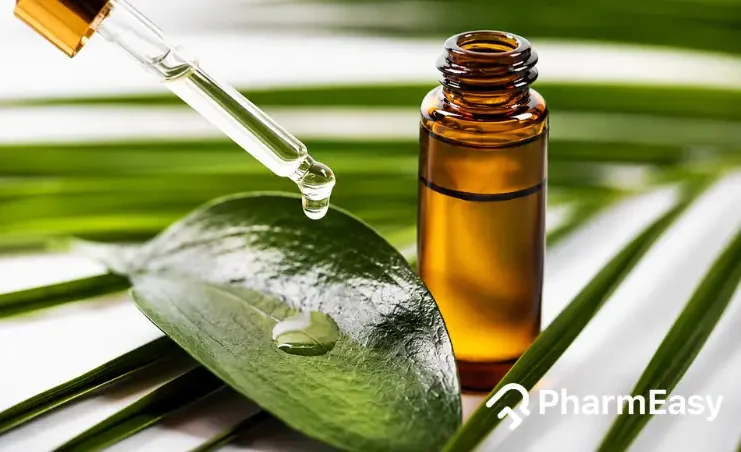
Tea tree oil contains many compounds like terpinen-4-ol that have anti-microbial properties1. Terpinen-4-ol helps work against infection by boosting your immunity. It can help increase the activity of white blood cells to promote immunity.
Did you know?

Tea tree oil is commonly used for skin care due to its antimicrobial and anti-inflammatory properties. It can help improve skin appearance by reducing inflammation and microbial load. It contains certain bioactive compounds that may support skin barrier function; however, its antioxidant effects lack substantial evidence2.

Tea tree oil helps against acne due to its anti-inflammatory and anti-microbial properties. Research2 suggests that it is as helpful as benzoyl peroxide. It may help soothe redness, swelling, and inflammation. It may help reduce bacterial growth and excess oil from the skin. It may also help reduce and lighten scars and restore the natural oil balance of the skin; however, it may take several weeks to show the results. You should always use diluted tea tree oil to minimise potential skin irritation or tea tree oil-based gel.

The anti-microbial and anti-inflammatory properties of tea tree oil are believed to help clear infections. While it shows activity against certain fungal and bacterial skin infections like athlete’s foot, it is ineffective against chronic issues like psoriasis or viral infections like herpes. It also helps to relieve skin irritation and inflammation2,3. You can add a few drops of tea tree oil to your moisturiser or olive oil and apply it to the affected area.
Tea tree oil may be used as a hand sanitiser or a natural mosquito repellent. It is also believed to be useful in repelling insects, for example, tea tree oil may be used to keep ants off of produce1,4. Due to its anti-microbial properties, it can be used to treat and disinfect minor cuts and abrasions and avoid infections in open wounds1.
Studies15 have revealed that tea tree oil might be your ally in eyelid infection. Major eyelid symptoms include frequent chronic inflammatory disease of the eyelid border, including peeling, redness, burning, and crusting. Topical application of tea tree oil in this condition is recommended under medical supervision due to its anti-inflammatory and anti-bacterial properties.
Dr. Rajeev Singh, BAMS

Studies5 have investigated tea tree oil’s effects on certain cancer cell lines but there is currently no strong clinical evidence to support its use in avoiding or treating skin cancer in humans.

Tea tree oil is believed to have antiseptic properties that help with dandruff, lice, white flakes, and dead skin of the scalp. It also acts as a cleanser and conditioner and may help soothe dry scalp and manage lice6. For best results, add a few drops of tea tree oil to coconut or almond oil and apply to your hair daily.

Tea tree oil may be used as a tonic for your hair and helps make it healthy and shiny. It promotes natural hair growth and strengthens the hair7.
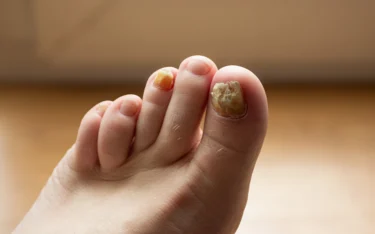
Fungal nail infections are common but difficult to treat. Tea tree oil helps manage nail fungus when used alone or in combination with other natural remedies8. Use a few drops of tea tree oil alone or mix it with an equal amount of coconut oil and apply it to the affected area.

Tea tree oil may help with respiratory complaints as it has anti-inflammatory properties. It may help clear the blocked mucus in the throat and nose. It can also help with respiratory conditions like bronchitis, influenza, and cold9.

Research suggests that tea tree oil fights against germs that may cause tooth decay, bad breath, and other inflammatory oral diseases10,11. You can use it as a chemical-free mouthwash by mixing a drop of tea tree oil in half a cup of water and swishing in your mouth for 30 seconds.
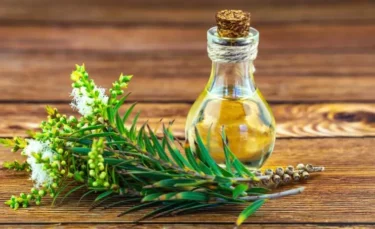
Because of its anti-bacterial properties, diluted tea tree oil may be used as an ingredient in deodorants12.
Other than abundant benefits, tea tree oil may be harmful too, if not taken as per the physician’s guidance. Taking tea tree oil orally is not advised. Oral administration might result in significant side effects such as unconsciousness, ataxia (lack of muscular coordination), disorientation, and breathing issues16.
Dr. Siddharth Gupta, B.A.M.S, M.D (Ayu)
Tea tree oil may be safe when applied topically, but sometimes it may cause skin irritation, dryness of the skin, and swelling. While tea tree oil can be a great addition to your daily routine, it is important to follow certain precautions. Tea tree oil is not for consumption and should always be diluted before application on the skin. Other side effects of tea tree oil may include an allergic reaction or symptoms like redness, itching, burning, and dry or scaly skin13. It is suggested to do a skin patch test before applying tea tree oil on a large area of skin. As tea tree oil can also be used for aromatherapy, breathing in or inhaling too much of the essence may lead to symptoms such as nausea, headache or vertigo14.
Tea tree oil, derived from the Australian Plant, is a versatile essential oil with a history of traditional use. Its primary medicinal value lies in its antimicrobial and anti-inflammatory properties, which make it popular for managing various skin and hair conditions. However, it is crucial to remember that tea tree oil should never be swallowed and must always be diluted before topical application to avoid potential side effects. When used correctly, tea tree oil can be a valuable addition to natural health and personal care routines.
Disclaimer: The information provided here is for educational/awareness purposes only and is not intended to be a substitute for medical treatment by a healthcare professional and should not be relied upon to diagnose or treat any medical condition. The reader should consult a registered medical practitioner to determine the appropriateness of the information and before consuming any medication. PharmEasy does not provide any guarantee or warranty (express or implied) regarding the accuracy, adequacy, completeness, legality, reliability or usefulness of the information; and disclaims any liability arising thereof.
Links and product recommendations in the information provided here are advertisements of third-party products available on the website. PharmEasy does not make any representation on the accuracy or suitability of such products/services. Advertisements do not influence the editorial decisions or content. The information in this blog is subject to change without notice. The authors and administrators reserve the right to modify, add, or remove content without notification. It is your responsibility to review this disclaimer regularly for any changes.
 50
50  1
1Comments

Leave your comment...
You may also like























Comments