
In recent years, many people have become increasingly interested in how to support or maintain a healthy immune system. Questions such as “How can I improve my immunity?” or “How can I support my body’s natural defences?” are more common than ever.
People often seek ways to strengthen their immunity through various means, including medicines, diets, exercise routines, and lifestyle changes. However, it is important to understand that consuming a variety of so-called ‘superfoods’ alone will not guarantee good health. Instead, a balanced and nutritious diet, when combined with other healthy habits, can play a key role in supporting the body’s immune function1.
The immune system is our body’s natural defence mechanism. When harmful microorganisms such as bacteria or viruses enter the body, the immune system responds to help defend against them. White blood cells (WBCs) are particularly important in this process and are a key component of immune function.
Foods that support the immune system typically contain a combination of essential vitamins, minerals, proteins, antioxidants, and other beneficial compounds. These nutrients work together to help maintain the normal functioning of the body’s natural defence mechanisms.

Spinach and broccoli are packed with important nutrients such as antioxidants, vitamins, minerals, and dietary fibre. These components are known to support the body’s natural immune function and contribute to overall health2.
Green leafy vegetables also contain bioactive compounds that may help maintain gut health, which plays a vital role in the body’s immune response. Whenever possible, it is advisable to consume such vegetables raw or lightly cooked, as this can help preserve their nutritional value.
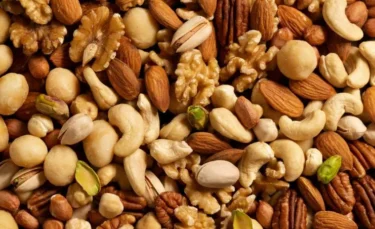
Antioxidants are important for maintaining a healthy immune system. Nuts like almonds, walnuts, and cashews are rich in vitamin E, a key antioxidant. Almonds also provide protein and healthy fats, which help sustain energy levels. A small handful daily can be a nutritious addition to your diet3.

Ginger and garlic are well-known for both their flavour and traditional use in home remedies. Ginger contains natural compounds with antioxidant and anti-inflammatory properties, while garlic provides allicin, which may support the body’s defences4,5. A cup of ginger tea daily can be a comforting addition to a balanced routine.

Indian spices such as turmeric, clove, asafetida, pepper, and cinnamon are traditionally used for their potential health-supporting properties. Turmeric, which contains the compound curcumin, is known for its antioxidant and anti-inflammatory effects.
These spices are often combined in a herbal decoction, commonly known as kadha, which is traditionally consumed to support overall wellbeing and the body’s natural defences6.

Yogurt and smoothies are enjoyable foods that may support immune health. Probiotics are beneficial bacteria found in the gut, play a role in digestion and overall wellbeing. Low-fat yoghurt and other fermented dairy products are good sources of probiotics, as well as proteins, fats, and vitamins that contribute to a balanced diet7.
Plant-based foods are gaining popularity due to their rich nutritional content. When included as part of a balanced diet, such foods may help support the body’s natural immune function.
Dr. Rajeev Singh, BAMS
Also Read: Cold Water Vs Warm Water – Which One Should You Drink?

Button mushrooms are rich in selenium and B vitamins, which contribute to maintaining the body’s natural defences. A mushroom omelette combined with vegetables can be a nutritious addition to a balanced diet8.

Whether it is chicken, red meat, beef, pork, or seafood, these foods provide valuable protein, which is essential for the body to build and repair tissues. For many, a bowl of chicken soup is comforting when unwell. Proteins in chicken supply amino acids that support the body’s natural immune responses. Additionally, shellfish such as oysters and crabs are rich sources of zinc, a mineral important for maintaining overall health9,10.

Egg yolks are rich in nutrients that support overall health. Eggs provide vitamin D and proteins, both of which contribute to the maintenance of normal bodily functions, including the immune system11.

Sweet potato pancakes with eggs are popular among children and can be a nutritious choice. Sweet potatoes are rich in beta-carotene, a nutrient that supports the healthy functioning of white blood cells, which play a role in the body’s natural defence mechanisms12.

Berries such as blueberry, elderberry, and acai berry are rich in antioxidants, which contribute to maintaining overall health and supporting the body’s natural defences13.

Citrus fruits such as oranges, grapes are excellent sources of vitamin C. This vitamin contributes to the normal functioning of the immune system and overall health14.
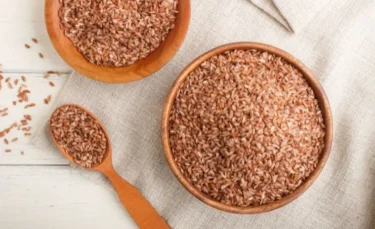
Brown rice is good source of magnesium, a mineral that supports the healthy functioning of the nervous system15.

A cup of black tea can help refresh your mood and provides antioxidants that support overall health. Various teas, including green tea and anise tea, contain polyphenols and flavonoids, compounds known for their antioxidant properties16.
In addition to consuming nutritious foods that support the immune system, there are other effective ways to maintain and enhance your immunity, such as:
Moringa (Drumstick leaves) is a nutritious plant that contains a variety of vitamins, minerals, and bioactive compounds. It is recognised for its antioxidant, anti-inflammatory, and antimicrobial properties, which contribute to its overall health-supporting potential. Some preliminary studies suggest that moringa leaves may help support the body’s immune system.
Dr. Siddharth Gupta, B.A.M.S, M.D (Ayu)
Also Read: Worst Foods for Diarrhea, According to Experts
Supporting the immune system requires more than relying on specific “superfoods” or quick fixes. A balanced diet rich in a variety of nutritious foods, combined with healthy lifestyle habits such as regular exercise, adequate sleep, good hygiene, and stress management, plays a vital role in maintaining your body’s natural defences. By making these practical and sustainable choices, you can help strengthen your immunity and promote overall wellbeing for the long term.
Also Read: 10 Best Foods For A Healthy Gut System
Disclaimer: The information provided here is for educational/awareness purposes only and is not intended to be a substitute for medical treatment by a healthcare professional and should not be relied upon to diagnose or treat any medical condition. The reader should consult a registered medical practitioner to determine the appropriateness of the information and before consuming any medication. PharmEasy does not provide any guarantee or warranty (express or implied) regarding the accuracy, adequacy, completeness, legality, reliability or usefulness of the information; and disclaims any liability arising thereof.
 78
78
 9
9
Delhi can’t breathe! The thick grey haze that has enveloped the National Capital Territory has left the entire country worried. Recently, Delhi’s Air Quality Index has been fluctuating between 350 and 450 in many areas for the last few weeks. Delhi and surrounding cities are experiencing severe air pollution. This can adversely affect people’s health. Delhi is in the middle of a climate emergency.
What has triggered it? And how can the residents of Delhi save themselves from pollution? Read on to find out.
Delhi is gasping, and so are its people. For weeks, a heavy grey cloud has taken over the city, pushing the AQI to a shocking 350–450 in several areas. Eyes burn, throats itch, and the air smells of smoke. It’s not just pollution anymore. Delhi is standing in the middle of a climate emergency.
But here’s the real question:
What suddenly pushed the city into this hazardous haze? And more importantly, what can residents actually do to protect themselves right now? The answers are deeper (and more urgent) than most people think. Let’s uncover what’s really happening and how Delhi can fight back.
Delhi’s ‘hazard’ levels of pollution are due to the interplay of multiple factors:
Seasonal Influence: These pollutants are then trapped over the city due to low wind speeds and cold temperatures, which makes the air heavier and exacerbates the problem, especially during the winter season.
The risk of death significantly increases with long-term exposure to polluted air. For instance, people susceptible to heart disease are at higher risk.
Dr. M.G. Kartheeka, MBBS, MD(Pediatrics)
Delhi’s pollution levels are indeed a health emergency. Every year during November and December, Delhi’s PM2.5 (pollutant particles with a radius of 2.5 micrometres) level exceeds 300 or sometimes 400 – the normal range of PM2.5 level is 0-50. This puts Delhi in the ‘severe’ category for air pollution.
These particles directly enter our bloodstream through the lungs, causing severe damage that affects the body in multiple ways.
Air pollution is also linked to lung damage and limited lung function. Air pollution can also have an inflammatory effect on the heart; it can elevate blood pressure and aggravate pre-existing conditions of the heart.
Dr. M.G. Kartheeka, MBBS, MD(Pediatrics)
According to the World Health Organisation, the rising levels of pollution are responsible for nearly one-third of the cases of stroke, heart disorders and lung cancers in Delhi.
Both short and long-term exposure to air pollution can lead to a wide range of diseases, including chronic obstructive pulmonary disease, trachea, bronchus and lung cancers, aggravated asthma and lower respiratory infections. Children and adolescents are particularly vulnerable because their bodies, organs and immune systems are still developing.
Dr. Ashish Bajaj , M.B.B.S, M.D. in Clinical Pharmacology and Toxicology
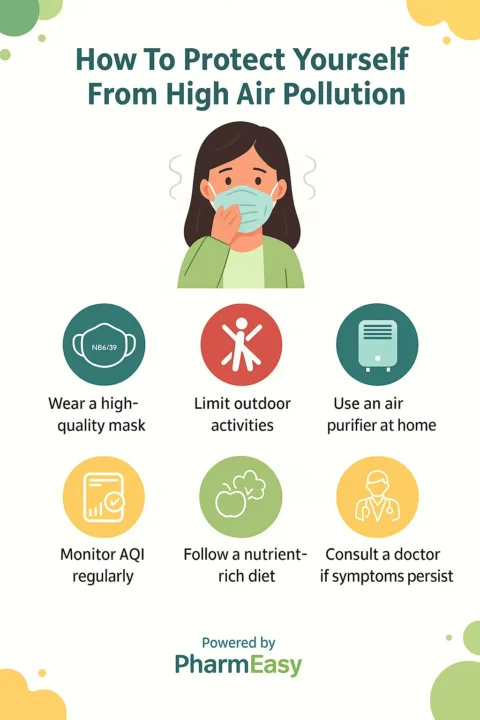
To minimise exposure and health risks during severe pollution, the following measures can help:
Air pollution in Delhi and the surrounding areas poses a risk to everyone living there. Adopt the precautionary measures outlined above to protect yourself from the harmful effects of pollution. Consult a doctor when needed. People with pre-existing respiratory illnesses (asthma, COPD, pneumonia, etc), pregnant women, and newborns need extra care and protection from pollutants.
Also Read: Smog: What Is It, Causes and Ways To Protect Yourself From It
Disclaimer: The information provided here is for educational/awareness purposes only and is not intended to be a substitute for medical treatment by a healthcare professional and should not be relied upon to diagnose or treat any medical condition. The reader should consult a registered medical practitioner to determine the appropriateness of the information and before consuming any medication. PharmEasy does not provide any guarantee or warranty (express or implied) regarding the accuracy, adequacy, completeness, legality, reliability or usefulness of the information; and disclaims any liability arising thereof.
Links and product recommendations in the information provided here are advertisements of third-party products available on the website. PharmEasy does not make any representation on the accuracy or suitability of such products/services. Advertisements do not influence the editorial decisions or content. The information in this blog is subject to change without notice. The authors and administrators reserve the right to modify, add, or remove content without notification. It is your responsibility to review this disclaimer regularly for any changes.
About one quarter of the world’s population is thought to be infected with Tuberculosis (TB) and with such a huge group of people, widespread Tuberculosis myths are only to be expected1. These misconceptions can lead to delayed diagnoses, fear-driven stigma, and poor treatment outcomes.
In this article, we aim to dispel five of the most common myths associated with tuberculosis, using evidence-based information to promote greater awareness, understanding, and public health literacy.
Fact: Tuberculosis can be contracted by anyone, although certain populations, such as people with comorbidities like diabetes, people with reduced immunity, malnourished people, and people who smoke/drink, are at a greater risk2. Individuals in contact with these people are also at risk.
Contrary to the popular myth that Tuberculosis is lifelong, tuberculosis can be cured with the right treatment, although it depends on drug-susceptibility, adherence, and host factors. ATT (Anti tubercular therapy) is a highly effective way to treat this bacterial infection, which is infact available free of cost by Government of INDIA under the NTEP (National TB Elimination Program). The usual treatment for TB involves a combination of several antibiotics, which need to be taken consistently for a minimum of 6 months.
Fact: A person can be infected with TB bacteria for years without suffering any ill effects. Perhaps 90 percent of all TB infections remain asymptomatic3. Immunocompromised patients (HIV, immunosuppressive therapy, diabetes, malnutrition) are at higher risk, but not every latent TB infection necessarily reactivates and shows symptoms.
If patients are not cured or follow inadequate/irregular treatment and their disease becomes resistant, they then must take second-line drugs. These drugs are administered when first-line drugs fail. Treatment for MDR-TB is commonly administered for 2 years or longer and involves daily injections for six months.
Fact: The BCG vaccine (a weakened live strain of Mycobacterium bovis) is primarily used to protect children from severe forms of TB, such as miliary or meningeal tuberculosis. It may provide variable protection against pulmonary TB in adults, depending on geographic region and exposure, but this protection is not consistent4. In the U.S., universal BCG vaccination is not practiced due to the low incidence of TB and potential interference with tuberculin skin testing, though it may be used in select high-risk individuals, such as children with unavoidable exposure or for certain healthcare workers.
Tuberculosis may also impact the gastrointestinal tract, most common features are fever and abdominal pain that is often relieved by defecation or vomiting.
Fact: Everyone who is infected with Human Immunodeficiency Virus and has TB has to take ARVs5. The timing of ARV initiation depends on the CD4 count and clinical condition6,7.
Patients with undiagnosed TB who start antiretroviral therapy (ARVs) may develop TB-IRIS (Immune Reconstitution Inflammatory Syndrome), in which the immune system mounts an exaggerated response to existing TB antigens. This can make TB appear clinically worse, but it does not indicate treatment failure. Proper screening for TB in HIV patients before starting ARVs is therefore essential8.
While active TB infection does not directly increase the risk of lung cancer, healed TB with residual scarring (scar carcinoma) is associated with a slightly higher risk, particularly for a type of lung carcinoma that is adenocarcinoma, due to chronic scarring and inflammation9. Other major risk factors for lung cancer include smoking (cigarettes, cigars, pipes), passive smoke exposure, occupational exposures (asbestos, silica, radon, diesel exhaust), genetic susceptibility, radiation exposure, and chronic lung diseases such as COPD10.
By dispelling these five widespread misconceptions, we intend to clarify the reality of tuberculosis (TB). With the correct information and medical attention, TB is preventable, treatable, and curable. The global endeavour to eradicate tuberculosis must include promoting early detection, combating stigma, and raising awareness. Let’s use the truth to strengthen our communities and dispel fear.
Disclaimer: The information provided here is for educational/awareness purposes only and is not intended to be a substitute for medical treatment by a healthcare professional and should not be relied upon to diagnose or treat any medical condition. The reader should consult a registered medical practitioner to determine the appropriateness of the information and before consuming any medication. PharmEasy does not provide any guarantee or warranty (express or implied) regarding the accuracy, adequacy, completeness, legality, reliability or usefulness of the information; and disclaims any liability arising thereof.
Links and product recommendations in the information provided here are advertisements of third-party products available on the website. PharmEasy does not make any representation on the accuracy or suitability of such products/services. Advertisements do not influence the editorial decisions or content. The information in this blog is subject to change without notice. The authors and administrators reserve the right to modify, add, or remove content without notification. It is your responsibility to review this disclaimer regularly for any changes.
8


