Get,

Free Doctor Tips

to manage your symptom

Get your,

FREE Doctor Tips Now!!

4 Cr+ families

benefitted

Enter your Phone Number

+91

|

Enter a valid mobile number

Send OTP

Verify your mobile number

OTP sent to 9988776655

CONGRATULATIONS!!!

You’ve successfully subscribed to receive

doctor-approved tips on Whatsapp


Get ready to feel your best.

Hi There,

Download the PharmEasy App now!!

AND AVAIL

AD FREE reading experience
Get 25% OFF on medicines
Banner Image

Register to Avail the Offer

Send OTP

By continuing, you agree with our Privacy Policy and Terms and Conditions

Success Banner Image
Verify your mobile number

OTP sent to 9988776655

Comments

Subscribe
Notify of
guest
0 Comments
Inline Feedbacks
View all comments

Leave your comment here

Your email address will not be published. Required fields are marked *

25% OFF on medicines

Collect your coupon before the offer ends!!!

COLLECT

Swollen Eyes: Causes, Symptoms, Treatment, Home Remedies, and Prevention

By Dr. Poonam Rai +2 more

Join Health Talk by PharmEasy on WhatsApp

Introduction

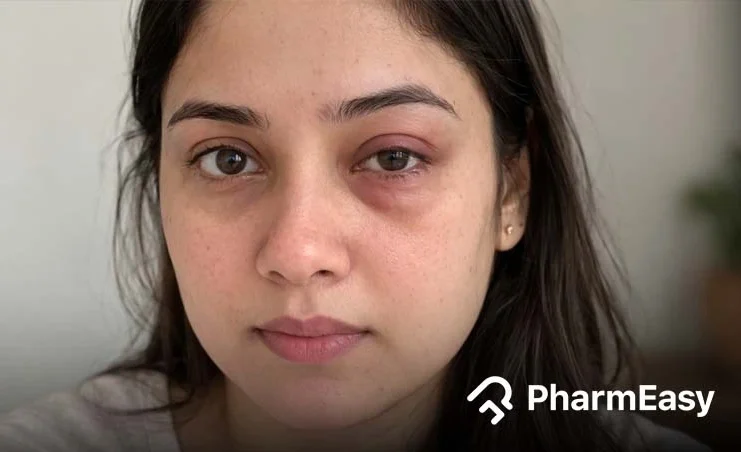
Have you ever woken up with swollen under eyes in the morning as if you hadn’t slept well or had been crying? Swollen eyes are a common problem faced by many people that can happen at any time. The swelling can range from mild puffiness to more pronounced swelling that causes discomfort or affects your vision. 

Reasons for swollen eyes can include allergies, infections, and underlying health conditions. Along with swelling, you may also experience redness, puffiness or watering of the eyes1. While swollen eyes may be temporary and harmless in some cases, persistent or severe swelling may require medical attention. 
swollen eyes

In this article, we will explore swollen eye symptoms, causes, home care tips, and management options to help you manage swollen eyes. 

Advertisement

What Is a Swollen Eye?

If your eyes become red and sore and the skin around your eyes looks bruised and swollen, you may have swollen eyes. Different parts of your eyes, such as the eyelids, tear ducts, or skin around the eyes can contribute to swollen eyes1. Inflammation of any of these parts due to infections, fluid buildup, or irritation due to allergies may lead to visible puffiness. 
  • Infections: When you get an infection, your eyes may become inflamed, resulting in swelling1
  • Allergies: When your eyes are exposed to allergens like pollen, your body releases a substance called histamine, which may cause swollen eyes2
  • Fluid Build-up: When you cry, do not get proper sleep, or have an allergic reaction, fluid accumulates around your eyes, which makes your eyes look puffy3

Symptoms Associated With Swollen Eyes

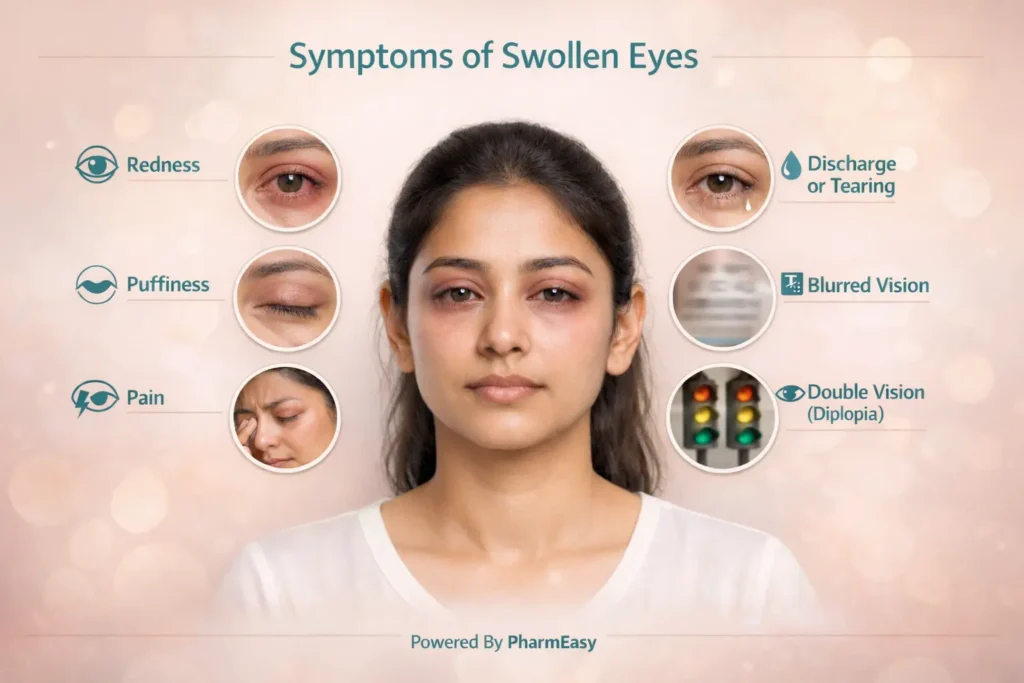
Symptoms that may occur along with swollen eyes include: 

  • Redness: It can be caused by anything from a simple allergy to a severe eye injury1.  
  • Puffiness: It may result from crying, consuming too much salt, lack of sleep, swollen eyes due to allergies3, rubbing of eyes, or ageing4
  • Pain: It can result from injuries or infections1
  • Discharge or Tearing: It can result from infections1 or allergies3
  • Blurred Vision: It can be caused by inflammation, allergies or infections5
  • Double Vision (diplopia): It can be caused by conditions like Graves’ disease (an autoimmune condition)6 or due to infections. 

Common Types of Eye Swelling

Have you ever thought, “Why is my eye swollen?” Eye swelling may be caused by several conditions. Here are some common causes of eye swelling based on the eye part affected: 

  • Periorbital Oedema: It is the swelling of the soft tissues around the eyes3, the cause of which may include: 
    • Orbital cellulitis: This is infection (mostly bacterial) of the tissues of the eye socket, which may lead to swelling around the eyes, e.g., swelling of both upper and lower eyelids and eyebrows7
  • Conjunctival Swelling: It is the swelling of the conjunctiva, the thin, delicate, transparent tissue that covers the inner surface of the eyelids and the eye’s white part. Its causes may include: 
    • Infectious conjunctivitis: This may be due to a bacterial or viral infection. 
    • Allergic conjunctivitis: This may be caused by an allergic reaction to allergens or irritants8
  • Eyelid Swelling: It is the swelling of the upper or lower eyelids caused by inflammation or fluid buildup. Its causes include: 
    • Stye: A stye is a painful lump occurring outside or inside of the eye, caused by swelling of the eyelash follicle due to a bacterial infection9. In some cases, it may cause the corner of eye to swell. 
    • Chalazion: Swelling of the eyelids causing a small bump on them due to the blockage of oil glands. Often develops after a stye10
    • Blepharitis: Swelling of eyelids (mostly in the eyelash area) usually caused by bacterial overgrowth. May be accompanied by inflammation, irritation, and itchiness11
    • Nasolacrimal Duct Obstruction: Swelling and redness in the inner corner of the eye accompanied by a noticeable bulge just below that area, which is usually caused by blockage and infection in the tear duct12

Causes of Swollen Eye

Swollen eyes can occur due to many reasons, such as: 

  • Allergies: Swollen eyes due to allergies occur when the body reacts to allergens like pollen, dust, mould or dead animal cells. It can also result from an insect sting or bite reaction. It is usually accompanied by itching and redness of the eye. 
  • Infections: Eye swelling can be caused by bacterial or viral infections causing pain, redness and discharge. 
  • Injuries: The eyes can become swollen due to injuries, such as from a sport or while working with materials that are used to cut or drill wood or metal. It can also cause pain, redness and changes in vision1
  • Underlying conditions: Eye swelling can also occur due to underlying conditions, such as Graves’ disease6, kidney disease13, and skin conditions like eczema. 
  • Lack of Sleep: Lack of sleep may lead to swelling under the eyes and also cause drooping eyelids, redness of the eyes, and dark circles3
  • Eye Irritation: Eye swelling may occur when the eye gets irritated by rubbing. 
  • Crying: Swollen eyes after crying is quite common. It is caused by fluid collecting around the eyes for a short period after crying, which goes off on its own after a while3

Home Remedies for Swollen Eyes

Following are some home remedies for swollen eyes. 

1. Wash Your Eyes

eye wash
  • Use clean water, saline or any sterile eyewash liquid1. This might soothe the inflammation and reduce puffiness. 

2. Apply a Warm Compress

compress on eyes
  • Soak a clean cloth in warm water and gently press it over your eyelids for a few minutes1. This might help reduce the swelling caused by a stye or chalazion. 

3. Apply a Cold Compress

cold compress
  • Soak a clean cloth in cold water and gently place it over the eye. This might help reduce puffiness of eyes, as cold temperature is known to help reduce swelling14

4. Reduce Salt Intake

processed foods
  • Reduce the intake of foods high in sodium, such as processed and packaged foods, to manage water retention that causes eye swelling, especially under the eyes3

5. Get Proper Sleep

sleeping on sating pillowcase
  • Sleep for at least 7-9 hours. This might help reduce under-eye swelling, redness, and dark circles3

6. Apply Coconut Oil

coconut oil
  • Coconut oil is known to have antimicrobial effects and protect from irritants and allergens and might help in reducing swelling caused by allergens or due to irritation14

7. Apply Cucumber Slices

cucumber slices on eyes
  • Cucumber slices are believed to have anti-inflammatory properties that may help reduce puffiness of the eyes. 

8. Apply Green Tea Bags

apply green tea bags
  • Green tea bags might help reduce redness and inflammation along with swelling under the eyes due to their antioxidant properties. 

9. Apply Rose Water

rose water
  • Rose water is believed to have anti-inflammatory and antioxidant properties15 that might help you in reducing the puffiness under your eyes. 

You may now understand how to cure swollen eyes or manage them; however, these methods may provide only temporary benefits. If you think your condition is getting worse even after following these home care tips, please contact an ophthalmologist immediately. 

Advertisement

Other Ways to Treat a Swollen Eye

Although home care tips may help reduce eye swelling and discomfort, eye swelling does not always not resolve with self-care. In such cases, evaluation by a doctor is important to understand the cause of the swelling. Let’s see the options your doctor may suggest on how to treat a swollen eye. 

  • Antihistamines: Antihistamines may be helpful in managing or reducing swollen eyes caused by allergies. They are also available as drops. 
  • Antibiotics: Antibiotics may be helpful in reducing swelling and its symptoms caused by an infection. They are available as drops and ointment. For viral infections, doctors may prescribe antivirals1
  • Steroids: Steroid treatments in the form of drops may usually be used for swelling and inflammation caused by conditions like conjunctivitis8 or allergies. 
  • Surgery: Surgery might be needed for conditions such as chalazion if they don’t resolve after using steroids10
  • Sprays: Certain types of medicinal sprays with ingredients like hypochlorous acid help in conditions like blepharitis. These sprays may be recommended in cases where eyelid inflammation is linked to mite overgrowth11
  • Managing Underlying Conditions: Managing underlying conditions might help reduce the swelling associated with them. E.g., managing thyroid for Graves’ disease6, following the recommended fluid limit for kidney patients13, staying hydrated and applying anti-inflammatory creams for skin irritations like eczema16 may help reduce swollen eyes. 

Note: Use the medicines only under the guidance of an ophthalmologist or an expert. 

Tips to Avoid Eye Swelling

The following are some tips which you may follow to avoid swollen face and eyes. 

  • Avoid contact with known allergens, such as pollens and dust. 
  • Avoid touching your face and eyes with dirty hands to avoid infections. 
  • Wear protective glasses when working1
  • Get enough sleep. 
  • Limit salt intake to reduce water retention3 

When to See a Doctor?

Swollen eyes can be the sign of a serious infection. If you think your condition is getting worse, consult a doctor instead of thinking why is my eye swollen even with home care and medical approaches? If you have the following signs you shouldn’t ignore the symptoms. 

  • If you have severe eye pain and headache 
  • If you get nausea1 
  • If you think the infection is getting worse 
  • If you have difficulty in vision 
  • If your entire eye is getting red 
  • If you are being very sensitive to light9 
  • If the lump on your eyes gets bigger even after taking medicines 
  • If you are losing your eyelashes10 
  • If you get a fever along with other symptoms7 
  • If your condition does not improve even after using home care tips and other prescribed medications 

Also Read: Sunken Eyes: Causes, Symptoms, Home Remedies & More 

Conclusion

Swollen eyes are a common condition that can range from mild, temporary puffiness to more serious swelling caused by allergies, infections, or underlying health issues. In many cases, simple home care tips and proper eye care may help reduce discomfort. However, persistent swelling, severe pain, vision changes, or signs of infection should never be ignored. Identifying the cause early and seeking appropriate medical care when needed can help avoid complications and ensure faster recovery. 

Frequently Asked Questions (FAQs)

How to stop swollen eyes after crying? 

Puffiness due to crying may resolve itself after a while3. To reduce swelling, you may use cold compresses or hot compress method. 

What causes swollen eyes in the morning? 

Swollen eyes in the morning may be caused by fluid buildup around the eyes due to poor sleep, excess salt intake, allergies, crying, or rubbing the eyes.

Can stress cause swollen eyes? 

Yes, stress is known to be a cause of swollen eyes. The periorbital swelling is particularly known to occur in women who have more stress15.

Can kidney problems cause eye swelling? 

Yes, kidney problems can cause eye swelling. This is because in people with kidney issues, the excess water isn’t filtered out. This results in accumulation of fluids in different parts of the body, including eyes13

Can a sinus infection cause swollen eyes? 

Yes, a sinus infection can cause swollen eyes because inflammation and congestion in the sinuses can lead to fluid buildup and swelling around the eyes. 

References

1. Swollen Eye. 2025. Doi: https://www.healthdirect.gov.au/swollen-eye 

2. Allergic Conjuctivitis. 2024. Doi: https://medlineplus.gov/ency/article/001031.htm 

3. Arakelyan. HS. Periorbital Edema. 2019. Doi: https://www.researchgate.net/publication/332670247_Periorbital_Edema 

4. Boyd K. How to Get Rid of Bags Under the Eyes. 2025. Doi: https://www.aao.org/eye-health/tips-prevention/bags-under-eyes 

5. Corneal Conditions. 2025. Doi: https://www.nei.nih.gov/eye-health-information/eye-conditions-and-diseases/corneal-conditions 

6. Grave’s Eye Disease. 2024. Doi: https://www.nei.nih.gov/eye-health-information/eye-conditions-and-diseases/graves-eye-disease 

7. Orbital Cellulitis. 2024. Doi: https://medlineplus.gov/ency/article/001012.htm 

8. Conjuctivitis: Pink Eyes. doi: https://www.aoa.org/healthy-eyes/eye-and-vision-conditions/conjunctivitis 

9. Stye. 2024. Doi: https://www.healthdirect.gov.au/stye 

10. Chalazion. 2024. Doi: https://medlineplus.gov/ency/article/001006.htm 

11. Blepharitis. 2024. Doi: https://medlineplus.gov/ency/article/001619.htm 

12. Nasolacrimal Duct Obstruction. 2023. Doi: https://www.ncbi.nlm.nih.gov/books/NBK532873/ 

13. 5 Signs Your Kidneys or Heart Could be in Trouble. 2017. Doi: https://www.kidney.org/news-stories/5-signs-your-kidneys-or-heart-could-be-trouble 

14. Lin TK, Zhong L, Santiago J. Anti-Inflammatory and Skin Barrier Repair Effects of Topical Application of Some Plant Oils. IJMS. 2017;19(1):70. doi:10.3390/ijms19010070.  https://pubmed.ncbi.nlm.nih.gov/29280987/ 

15. Joshi M, Perera PS, Korrapati NH. Effective Home Remedies that Provide Quick Relief for Puffy Eyes. Published online 2021. Doi: https://www.researchgate.net/publication/354871368_Effective_Home_Remedies_that_Provide_Quick_Relief_for_Puffy_Eyes 

16. Nemeth V, Syed HA, Evans J. Ezcema. 2024. Doi: https://www.ncbi.nlm.nih.gov/books/NBK538209/ 

17. Serhan HA, Alma’aitah HW, Irshaidat S, Ameer MA, Asghar MS, Tahir MJ. Ophthalmic manifestations of nutritional deficiencies: A mini review. Journal of Family Medicine and Primary Care. 2022;11(10):5899-5901. doi:10.4103/jfmpc.jfmpc_790_22. https://pubmed.ncbi.nlm.nih.gov/36618247/ 

Disclaimer: The information provided here is for educational/awareness purposes only and is not intended to be a substitute for medical treatment by a healthcare professional and should not be relied upon to diagnose or treat any medical condition. The reader should consult a registered medical practitioner to determine the appropriateness of the information and before consuming any medication. PharmEasy does not provide any guarantee or warranty (express or implied) regarding the accuracy, adequacy, completeness, legality, reliability or usefulness of the information; and disclaims any liability arising thereof.

Links and product recommendations in the information provided here are advertisements of third-party products available on the website. PharmEasy does not make any representation on the accuracy or suitability of such products/services. Advertisements do not influence the editorial decisions or content. The information in this blog is subject to change without notice. The authors and administrators reserve the right to modify, add, or remove content without notification. It is your responsibility to review this disclaimer regularly for any changes.

Advertisement

Comments

Leave your comment...