




LASIK Eye Surgery: Procedure, Safety and Side Effects
By Dr. Poonam Rai +2 more

Medically reviewed by Dr. Poonam Rai
Last updated: Mar 12, 2026 Published on: Mar 12, 2026


Get,

to manage your symptom
Get your,

4 Cr+ families
benefitted

OTP sent to 9988776655



You’ve successfully subscribed to receive
doctor-approved tips on
Whatsapp

Get ready to feel your best.


Register to Avail the Offer
Send OTPBy continuing, you agree with our Privacy Policy and Terms and Conditions
Hi There,
Sign up on PharmEasy now!!


Trusted by 4 crore+ families

OTP sent to 9988776655
You have unlocked 25% off on medicines


Code: NU25

By Dr. Poonam Rai +2 more
Table of Contents
Imagine waking up and not needing your contact lenses or glasses to see clearly. The laser-assisted in situ keratomileusis (LASIK) eye surgery makes this possible for many people by correcting vision problems and reducing dependence on spectacles. As more people worldwide develop short-sightedness (myopia), the demand for spectacle-free vision continues to grow. Along with this popularity, understanding safety, possible side effects, and expected results is important1. In this article, we explain what is LASIK, how it is done, its benefits, and possible side effects.
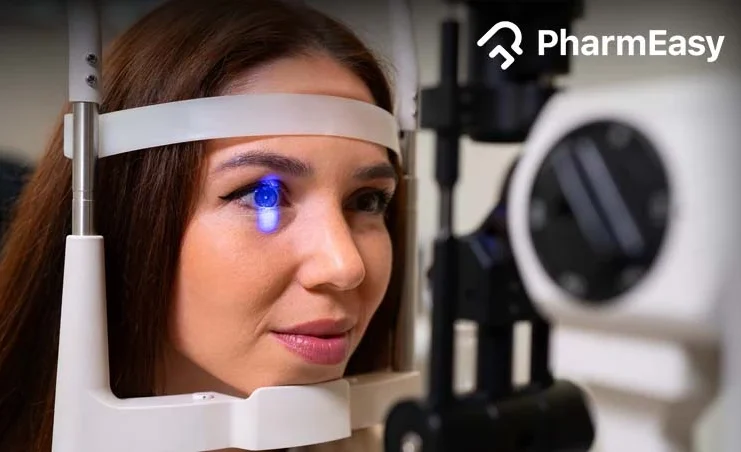
LASIK stands for ‘laser-assisted in situ keratomileusis’. It is a vision correction surgery that improves eyesight by changing the shape of the cornea, which is the clear front surface of the eye. This reshaping helps light enter the eye properly, allowing it to focus clearly and improve vision1,2.
During the procedure, a very thin flap is created on the cornea using a small blade or a laser device. One side of the flap remains attached and is gently lifted to expose the inner layer of the cornea. A computer-controlled laser then removes a tiny amount of tissue to reshape the cornea. After this, the flap is carefully placed back in position2.
LASIK eye surgery is performed to correct vision problems called refractive errors. Refractive errors occur when the eye does not focus light correctly, causing blurred vision. LASIK is used to treat:
LASIK is the most common laser treatment for these problems. It usually causes little pain, and most people start seeing clearly within a few days. Many people choose LASIK as it provides clearer long-term vision, higher satisfaction, and fewer difficulties than glasses or contact lenses. It may also reduce night driving problems, visual disturbances, and contact lens–related infections4.
LASIK eye surgery is recommended based on several factors, as eyesight and eye structure can vary from person to person3. The ideal candidate for LASIK should meet the following criteria:
A thorough eye examination is important because it helps the surgeon choose the safest and most suitable treatment, ensuring stable and reliable vision after surgery3.
LASIK eye surgery follows a clear and carefully planned process, starting from detailed eye checks to recovery after the procedure. The steps below explain what usually happens before, during, and immediately after LASIK, so individuals know what to expect at each stage.
A detailed eye assessment is carried out before LASIK to understand vision status and overall eye health.
To ensure accurate eye measurements and the safe planning of LASIK, individuals are recommended to follow these steps:
The LASIK procedure involves the following steps to improve vision safely and accurately:
The procedure can be safely performed on both eyes on the same day3.
Duration of surgery: LASIK surgery usually takes less than 30 minutes in total. Most of this time is used to prepare the eye and create the corneal flap, while the actual laser reshaping of the cornea takes only a few seconds6,7.
Immediate post-procedure experience: The eye may feel itchy, slightly painful, or gritty (like there is a small particle inside it). The eyes may water, and vision is often blurry or unclear at first. There may also be sensitivity to light, glare, haloes or star-shaped lights, and redness of the eye. Although there may be an urge to touch or rub the eye, this should be avoided because it can disturb the healing surface6.
Taking good care of the eyes and going for follow-up check-ups supports proper healing and helps maintain stable vision.
Before LASIK surgery, your eyesight may be unclear because the eye does not focus light properly. In myopia, faraway objects appear blurry because light focuses in front of the retina. In farsightedness (hyperopia), close objects appear blurry because light focuses behind the retina.
After LASIK surgery, the shape of the cornea is changed to correct these issues. After the procedure:
Vision may change during the first few months after surgery. It usually takes around 3 to 6 months to achieve full visual stability. During this period, glare, halos around lights, or difficulty seeing at night may occur. If additional correction is needed, it should only be done after measurements remain consistent for over two visits at least 3 months apart6.
LASIK surgery provides several advantages by correcting vision problems and reducing reliance on glasses or contact lenses. Key benefits include:
LASIK offers long-lasting and reliable improvements in vision. It makes eyesight clearer, recovery fast, and daily life easier while treating many types of vision problems. Next section clarifies on a common fear many have: Is LASIK surgery safe?
LASIK surgery is considered a safe and effective way to improve vision. It can reduce the need for glasses or contact lenses and make everyday activities easier. Modern laser technology provides improved experience with finer and better controlled laser movements, advanced eye tracking, and improved flap techniques, helping make the procedure more precise. Experienced surgeons carefully check their patients to ensure the best outcomes. Regular check-ups and yearly eye exams help maintain safety and monitor vision, and re-treatments are available if needed. Even with minor changes in vision over time, most individuals stay independent from glasses or contacts and continue to enjoy daily life8.
LASIK is generally considered safe; however, like any surgery, there can be some side effects or risks that may be temporary or longer lasting, depending on the situation.
With careful selection of candidates for LASIK, proper follow-ups, and modern laser technology, LASIK is highly safe and effective, even though small risks remain.
After LASIK surgery, proper eye care is essential for healing and better vision. Follow your doctor’s instructions carefully, which may include the following.
Contact your doctor immediately if you experience severe pain, worsening vision, any new symptoms, or any unusual changes.
LASIK surgery may not be safe for everyone, especially in individuals with certain conditions, as follows:
There are a few different types of laser eye procedures that can help improve vision. Photorefractive keratectomy (PRK) removes the top layer of the cornea and keeps the vision stable for many years, with a smooth recovery. Small incision lenticule extraction (SMILE) reshapes the cornea without making a flap and may cause less dryness. Laser epithelial keratomileusis (LASEK) gently removes the surface layer of the cornea using alcohol or a small tool. The doctor will recommend the procedure that is safest and most suitable based on your specific eye condition3.
LASIK is a safe and effective surgery that helps people see clearly without glasses or contacts. The procedure reshapes the cornea using a laser, and most individuals notice improved vision within a few days. Some mild side effects, like dryness or glare, may happen at first but usually go away. With proper pre-surgery checks, careful treatment, and following aftercare instructions diligently, LASIK is a reliable way to get clearer long-term vision and makes everyday activities like reading, sports, and driving much easier.
Also Read: Contact Lenses: Types, Uses, Safety, and Side Effects
LASIK may offer long-lasting clear vision; however, it does not always permanently “fix” the eyes. Over time, natural ageing, changes in the eye, or high levels of myopia can cause vision to shift, so some people may still need glasses later1.
LASIK is generally not considered very painful. Numbing drops can help you avoid significant pain; however, individuals may feel pressure, mild discomfort, or a burning/itching sensation during and immediately after surgery. Most discomfort resolves within days after the procedure, and mild pain can be managed with simple pain relievers6.
Most people can see well after LASIK without glasses. But as they get older, some might still need glasses for reading or if their eyesight changes a little5.
After LASIK, you usually need a few days of rest from work. Non-contact activities can start in 1–3 days, but strenuous or contact sports should be avoided for at least 4 weeks6.
The most common problem after LASIK is dry eyes. About 20–40% of people feel that their eyes have become dry or itchy; however, this usually improves in a few months with only 2–3% individuals having long-lasting discomfort5.
After LASIK, most people see clearly, but some problems can happen later. Dry eyes are common but usually improve. About 20% notice glare or halos. Rarely, flap, cornea, or serious eye problems like retinal problems can occur. Most people, about 92–95%, are satisfied with LASIK3.
1. Moin KA, Majid Moshirfar. A toolkit for patients evaluating benefits and risks of LASIK. Expert Review of Ophthalmology. 2024 Sep 9;1–4. Available from: https://www.tandfonline.com/doi/full/10.1080/17469899.2024.2394214#d1e416
2. Center for Devices and Radiological Health. LASIK [Internet]. U.S. Food and Drug Administration. 2018. Available from: https://www.fda.gov/medical-devices/surgery-devices/lasik
3. Majid Moshirfar, Bennett P, Ronquillo Y. Laser In Situ Keratomileusis (LASIK) [Internet]. Nih.gov. StatPearls Publishing; 2023 [cited 2026 Feb 19]. Available from: https://www.ncbi.nlm.nih.gov/sites/books/NBK555970/
4. Price MO, Price DA, Bucci FA, Durrie DS, Bond WI, Price FW. Three-Year Longitudinal Survey Comparing Visual Satisfaction with LASIK and Contact Lenses. Ophthalmology. 2016 Aug;123(8):1659–66. Available from: https://www.sciencedirect.com/science/article/abs/pii/S0161642016300963?utm_source=chatgpt.com
5. WILKINSON JM, COZINE EW, KHAN AR. Refractive Eye Surgery: Helping Patients Make Informed Decisions About LASIK. American Family Physician [Internet]. 2017 May 15;95(10):637–44. Available from: https://www.aafp.org/pubs/afp/issues/2017/0515/p637.html#patient-selection–precautions–and-contraindications
6. Research C for BE and. What should I expect before, during, and after surgery? FDA [Internet]. 2023; Available from: https://www.fda.gov/medical-devices/lasik/what-should-i-expect-during-and-after-surgery#before
7. Reinstein DZ, Carp GI, de Benedictis D, Archer TJ, Gobbe M, Khan R, et al. Standardization of laser in situ keratomileusis surgical technique evaluated by comparison of procedure time between 2 experienced surgeons. Journal of cataract and refractive surgery [Internet]. 2015 May;41(5):1004–8. Available from: https://pubmed.ncbi.nlm.nih.gov/26049833/
8. Hickenbotham AL. Long Term Safety Results of LASIK Refractive Surgery: A Twenty-Year Retrospective Study. Journal of Surgery and Research [Internet]. 2023;6(3):303–9. Available from: https://www.fortunejournals.com/articles/long-term-safety-results-of-lasik-refractive-surgery-a-twentyyear-retrospective-study.html
Disclaimer: The information provided here is for educational/awareness purposes only and is not intended to be a substitute for medical treatment by a healthcare professional and should not be relied upon to diagnose or treat any medical condition. The reader should consult a registered medical practitioner to determine the appropriateness of the information and before consuming any medication. PharmEasy does not provide any guarantee or warranty (express or implied) regarding the accuracy, adequacy, completeness, legality, reliability or usefulness of the information; and disclaims any liability arising thereof.
Links and product recommendations in the information provided here are advertisements of third-party products available on the website. PharmEasy does not make any representation on the accuracy or suitability of such products/services. Advertisements do not influence the editorial decisions or content. The information in this blog is subject to change without notice. The authors and administrators reserve the right to modify, add, or remove content without notification. It is your responsibility to review this disclaimer regularly for any changes.


Comments

Leave your comment...
You may also like
























Comments