



Best Estrogen Rich Foods to Support Estrogen Levels Naturally
By Dr. Mrunal Shirodkar +2 more

Medically reviewed by Dr. Mrunal Shirodkar
Last updated: Mar 17, 2026 Published on: Feb 19, 2026


Get,

to manage your symptom
Get your,

4 Cr+ families
benefitted

OTP sent to 9988776655



You’ve successfully subscribed to receive
doctor-approved tips on
Whatsapp

Get ready to feel your best.


Register to Avail the Offer
Send OTPBy continuing, you agree with our Privacy Policy and Terms and Conditions
Hi There,
Sign up on PharmEasy now!!


Trusted by 4 crore+ families

OTP sent to 9988776655
You have unlocked 25% off on medicines


Code: NU25

By Dr. Mrunal Shirodkar +2 more
Table of Contents
Estrogen is a vital hormone involved in both female and male reproductive health, but its role extends far beyond fertility. Healthy estrogen levels help regulate menstrual cycles, keep bones strong, support heart health, stabilize mood, and maintain a healthy metabolism1. This makes it essential for overall health and well-being. However, estrogen levels can fluctuate due to age (especially during perimenopause and menopause) as well as under certain medical conditions1. In some cases, medical treatment may be needed, but food choices can also help.
Some foods contain phytoestrogens (natural plant compounds that act in the same way as estrogen functions in the body) that may support hormonal balance2. In this article, we will look at the best estrogen-rich foods and how adding them to your daily diet may help support healthy estrogen levels naturally.
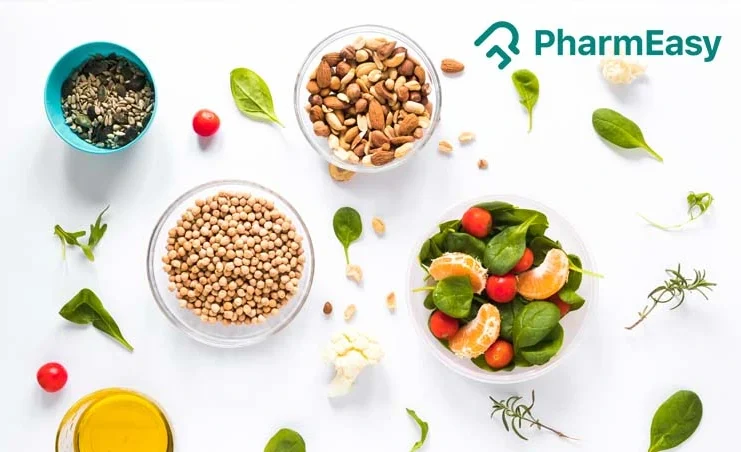
Estrogen is a natural hormone produced by both women and men (in different amounts). In women, it is mainly produced in the ovaries, while in men, small amounts are made in the testes and other tissues3.
Estrogen plays a major role in reproductive health. In women, it helps regulate the menstrual cycle, supports ovulation, and prepares the body for pregnancy3. Beyond reproduction, estrogen is important for many other body systems:
Low estrogen levels can develop for several reasons, ranging from natural age-related changes to lifestyle factors and underlying medical conditions.
Some common causes include:
When estrogen levels drop below normal, the body can experience several changes. Since estrogen affects many systems (including the reproductive system, bones, brain, and heart), low levels can lead to both physical and emotional symptoms.
Low estrogen can affect different parts of the body. Common symptoms include8:
Note: If any of these symptoms are severe or persistent, it is important to seek medical advice for proper evaluation and management.
Below are some food options that may help increase estrogen production and balance.
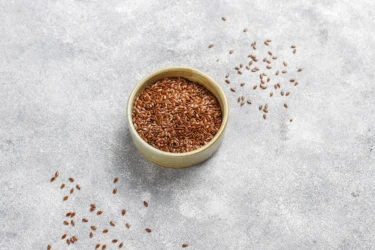
Flaxseeds are one of the richest sources of lignans, a type of phytoestrogen that may help balance estrogen levels naturally9.
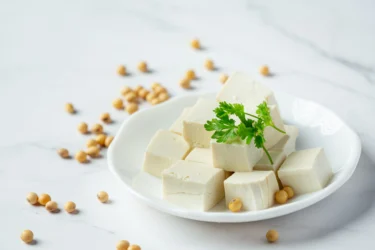
Soy contains isoflavones, plant compounds that mimic estrogen by binding to its receptors10. You may consider choosing organic and non-GMO soy products to ensure better quality and minimise exposure to genetically modified ingredients or unwanted additives.
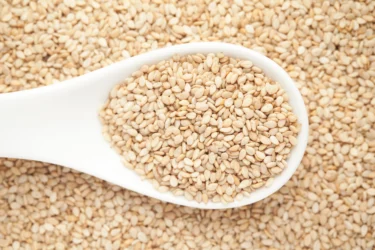
Sesame seeds contain lignans and healthy fats that support hormone production11.
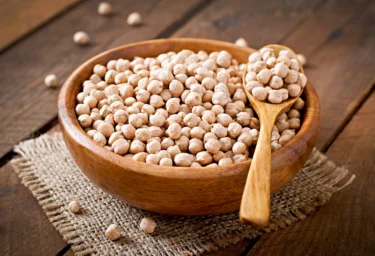
Legumes contain phytoestrogens and are rich in plant protein and fibre12.
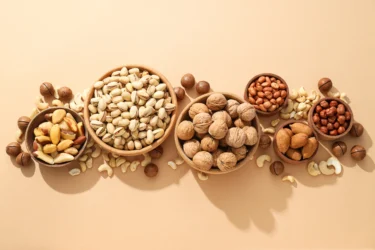
Nuts provide healthy fats and are considered phytoestrogen agents13.
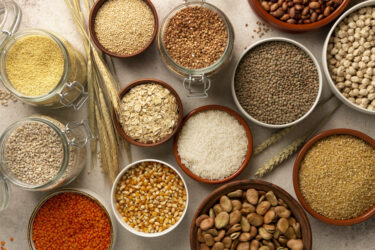
Whole grains contain small amounts of phytoestrogens and high fibre14.
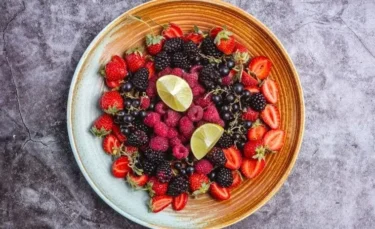
Berries contain antioxidants and small amounts of phytoestrogens2,16.
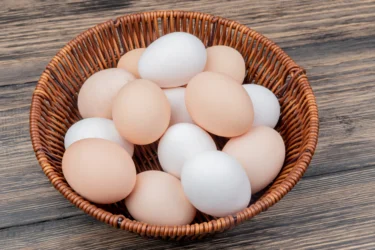
Eggs naturally contain small amounts of estrogen and support hormone production through healthy fats and protein17,18.
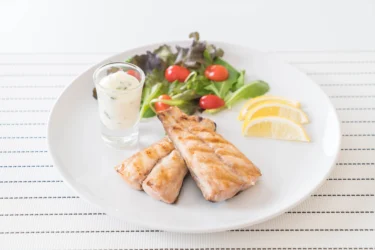
Fatty fish do not contain high estrogen but support hormone balance through omega-3 fatty acids19.
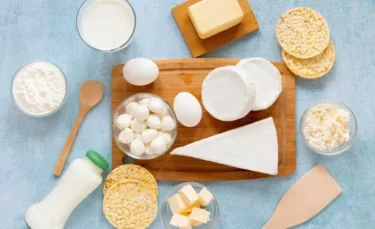
Dairy contains small natural amounts of estrogen and supports overall hormone production20.
Note: While foods that increase estrogen are generally safe when consumed in moderation, excessive intake (especially of concentrated phytoestrogen sources) may cause mild gastrointestinal disturbances in some individuals21. Therefore, they should always be consumed in moderation.
When discussing about estrogen foods, it’s important to understand that plant and animal sources work differently in the body.
Plant foods contain phytoestrogens, which are natural compounds found in foods like flaxseeds, soy, sesame seeds, legumes, and whole grains. These are structurally similar to human estrogen but are much weaker. They bind to estrogen receptors in the body and can have a mild estrogen-like effect2.
It is also important to note that since phytoestrogens are plant compounds, their absorption and activity vary from person to person, especially based on gut bacteria.
Animal-based foods such as dairy, eggs, and certain meats may contain small amounts of natural estrogen because animals also produce hormones. However, the amounts present in food are generally low. Unlike phytoestrogens, the estrogen found in animal products is the same type of hormone produced in the body17,20.
However, dietary estrogen from animal foods usually has a minimal hormonal effect in healthy individuals because it is broken down during digestion and processed by the liver.
Note: Plant-based phytoestrogens are weaker and tend to have a gentle, balancing effect, while animal-based foods contain small amounts of actual estrogen but typically do not significantly raise hormone levels. Therefore, for most people, a balanced diet that includes a variety of whole plant foods and moderate animal products may help support overall hormone health without dramatically altering estrogen levels.
Estrogen-rich foods can help support hormone balance, but their effect is gentle and supportive rather than dramatic. Most plant-based estrogen-rich foods contain phytoestrogens, natural compounds that are structurally similar to human estrogen but much weaker in action.
When consumed regularly, phytoestrogens may bind to estrogen receptors in the body and provide mild estrogen-like activity and help reduce symptoms like hot flashes or bone loss. In addition, many estrogen-supportive foods are rich in fibre, antioxidants, and healthy fats2. However, these foods do not replace medical treatment when a hormone imbalance is severe. Their benefits are gradual and work best when combined with a healthy lifestyle, including regular exercise, stress management, and good sleep.
Precaution: Women diagnosed with uterine fibroids should be cautious when consuming estrogen-rich or phytoestrogen-rich foods, as even though they are weaker than the body’s natural estrogen, they might still influence hormone-sensitive conditions22. Therefore, individuals with fibroids should consult their doctor before significantly increasing the intake of these foods.
While mild hormonal fluctuations are common, persistent or severe symptoms may require medical attention. It is important to consult a doctor if you experience23.
Note: Other warning signs, such as frequent fractures or unexplained weight changes, should also be medically assessed.
Also Read: Best Fertility Boosting Foods for Females: What to Eat, Avoid & Lifestyle Tips
Estrogen plays a crucial role in reproductive health, bone strength, heart function, mood regulation, and overall metabolic balance. While natural fluctuations are normal, maintaining healthy estrogen levels is important for long-term well-being.
Incorporating estrogen-supportive foods, especially those rich in phytoestrogens, fibre, healthy fats, and antioxidants, can gently support hormonal balance as part of a healthy lifestyle. However, diet works best alongside regular exercise, stress management, and proper medical guidance when needed. If symptoms are persistent or severe, consulting a doctor ensures safe and effective management.
No vitamin directly ‘increases’ estrogen. However, vitamin D is known to support reproductive hormone production and balance24.
There is no drink that directly boosts estrogen significantly. However, beverages like soy milk (rich in phytoestrogens) may provide mild estrogen-like effects10.
No, estrogen-rich foods do not significantly increase breast size. Phytoestrogens in foods are much weaker than natural estrogen and are unlikely to cause noticeable breast enlargement.
Low estrogen may disrupt sleep by causing hot flashes, night sweats, anxiety, and changes in brain chemicals that regulate sleep4,8. This is common during perimenopause and menopause.
Vitamin B12 does not directly increase estrogen levels. It supports energy production and nervous system health, which may improve overall well-being, but does not raise estrogen significantly25.
You can help balance estrogen naturally by following a healthy lifestyle and eating a balanced diet that includes phytoestrogen-rich foods (like flaxseeds and soy) that may gently support hormone levels2,9,10. However, if symptoms persist or worsen, it is best to consult a doctor for proper evaluation.
1. Hamilton KJ, Hewitt SC, Arao Y, Korach KS. Estrogen Hormone Biology. Curr Top Dev Biol. 2017;125:109-146. doi:10.1016/bs.ctdb.2016.12.005. Available from: https://pubmed.ncbi.nlm.nih.gov/28527569/
2. Desmawati D, Sulastri D. Phytoestrogens and Their Health Effect. Open Access Maced J Med Sci. 2019;7(3):495-499. doi:10.3889/oamjms.2019.086. Available from: https://pubmed.ncbi.nlm.nih.gov/30834024/
3. Hammes SR, Levin ER. Impact of estrogens in males and androgens in females. J Clin Invest. 2019;129(5):1818-1826. doi:10.1172/JCI125755. Available from: https://pubmed.ncbi.nlm.nih.gov/31042159/
4. Albert KM, Newhouse PA. Estrogen, Stress, and Depression: Cognitive and Biological Interactions. Annu Rev Clin Psychol. 2019;15:399-423. doi:10.1146/annurev-clinpsy-050718-095557. Available from: https://pubmed.ncbi.nlm.nih.gov/30786242/
5. Camon C, Garratt M, Correa SM. Exploring the effects of estrogen deficiency and aging on organismal homeostasis during menopause. Nat Aging. 2024;4(12):1731-1744. doi:10.1038/s43587-024-00767-0. Available from: https://pubmed.ncbi.nlm.nih.gov/39672893/
6. Kossman DA, Williams NI, Domchek SM, Kurzer MS, Stopfer JE, Schmitz KH. Exercise lowers estrogen and progesterone levels in premenopausal women at high risk of breast cancer. J Appl Physiol (1985). 2011;111(6):1687-1693. doi:10.1152/japplphysiol.00319.2011. Available from: https://pubmed.ncbi.nlm.nih.gov/21903887/
7. Frontiers | Ovarian hormones and eating disorders. Accessed February 16, 2026. Available from: https://www.frontiersin.org/journals/psychology/articles/10.3389/fpsyg.2024.1467795/full
8. Menopause: MedlinePlus Medical Encyclopedia. Accessed February 16, 2026. Available from: https://medlineplus.gov/ency/article/000894.htm
9. Nowak W, Jeziorek M. The Role of Flaxseed in Improving Human Health. Healthcare (Basel). 2023;11(3):395. doi:10.3390/healthcare11030395. Available from: https://www.mdpi.com/2227-9032/11/3/395
10. Messina M, Duncan A, Messina V, Lynch H, Kiel J, Erdman JW. The health effects of soy: A reference guide for health professionals. Front Nutr. 2022;9:970364. doi:10.3389/fnut.2022.970364. Available from: https://pubmed.ncbi.nlm.nih.gov/36034914/
11. Mostashari P, Mousavi Khaneghah A. Sesame Seeds: A Nutrient-Rich Superfood. Foods. 2024;13(8):1153. doi:10.3390/foods13081153. Available from: https://pubmed.ncbi.nlm.nih.gov/38672826/
12. Polak R, Phillips EM, Campbell A. Legumes: Health Benefits and Culinary Approaches to Increase Intake. Clin Diabetes. 2015;33(4):198-205. doi:10.2337/diaclin.33.4.198. Available from: https://pubmed.ncbi.nlm.nih.gov/26487796/
13. Gonçalves B, Pinto T, Aires A, et al. Composition of Nuts and Their Potential Health Benefits—An Overview. Foods. 2023;12(5):942. doi:10.3390/foods12050942. Available from: https://www.mdpi.com/2304-8158/12/5/942
14. Frølich W, Åman P. Whole grain for whom and why? Food Nutr Res. 2010;54:10.3402/fnr.v54i0.5056. doi:10.3402/fnr.v54i0.5056. Available from: https://foodandnutritionresearch.net/index.php/fnr/article/view/443
15. McRae MP. Health Benefits of Dietary Whole Grains: An Umbrella Review of Meta-analyses. J Chiropr Med. 2017;16(1):10-18. doi:10.1016/j.jcm.2016.08.008. Available from: https://pubmed.ncbi.nlm.nih.gov/28228693/
16. Stote KS, Burns G, Mears K, Sweeney M, Blanton C. The Effect of Berry Consumption on Oxidative Stress Biomarkers: A Systematic Review of Randomized Controlled Trials in Humans. Antioxidants (Basel). 2023;12(7):1443. doi:10.3390/antiox12071443. Available from: https://pubmed.ncbi.nlm.nih.gov/37507981/
17. Courant F, Antignac JP, Maume D, Monteau F, Andre F, Le Bizec B. Determination of naturally occurring oestrogens and androgens in retail samples of milk and eggs. Food Addit Contam. 2007;24(12):1358-1366. doi:10.1080/02652030701329637. Available from: https://pubmed.ncbi.nlm.nih.gov/17852390/
18. Convit L, Nicola CM, Urwin CS, et al. Eggs as a Nutrient-Rich Food with Potential Relevance to Sleep Metabolic Health, and Well-Being During the Menopausal Transition: A Narrative Review. Nutrients. 2025;17(24). doi:10.3390/nu17243837. Available from: https://www.mdpi.com/2072-6643/17/24/3837
19. Mendivil CO. Fish Consumption: A Review of Its Effects on Metabolic and Hormonal Health. Nutr Metab Insights. 2021;14:11786388211022378. doi:10.1177/11786388211022378. Available from: https://pmc.ncbi.nlm.nih.gov/articles/PMC8182174/
20. MALEKINEJAD H, REZABAKHSH A. Hormones in Dairy Foods and Their Impact on Public Health – A Narrative Review Article. Iran J Public Health. 2015;44(6):742-758. Accessed February 16, 2026. Available from: https://pmc.ncbi.nlm.nih.gov/articles/PMC4524299/
21. Tempfer CB, Froese G, Heinze G, Bentz EK, Hefler LA, Huber JC. Side effects of phytoestrogens: a meta-analysis of randomized trials. Am J Med. 2009;122(10):939-946.e9. doi:10.1016/j.amjmed.2009.04.018. Available from: https://pubmed.ncbi.nlm.nih.gov/19786161/
22. Qin H, Lin Z, Vásquez E, Luan X, Guo F, Xu L. High soy isoflavone or soy-based food intake during infancy and in adulthood is associated with an increased risk of uterine fibroids in premenopausal women: a meta-analysis. Nutr Res. 2019;71:30-42. doi:10.1016/j.nutres.2019.06.002. Available from: https://pubmed.ncbi.nlm.nih.gov/31668644/
23. Menopause basics | Office on Women’s Health. Accessed February 16, 2026. Available from: https://womenshealth.gov/menopause/menopause-basics
24. Chu C, Tsuprykov O, Chen X, Elitok S, Krämer BK, Hocher B. Relationship Between Vitamin D and Hormones Important for Human Fertility in Reproductive-Aged Women. Front Endocrinol (Lausanne). 2021;12:666687. doi:10.3389/fendo.2021.666687. Available from: https://pubmed.ncbi.nlm.nih.gov/33935976/
25. Vitamin B12 – Health Professional Fact Sheet. Accessed February 16, 2026. Available from: https://ods.od.nih.gov/factsheets/VitaminB12-HealthProfessional/
Disclaimer: The information provided here is for educational/awareness purposes only and is not intended to be a substitute for medical treatment by a healthcare professional and should not be relied upon to diagnose or treat any medical condition. The reader should consult a registered medical practitioner to determine the appropriateness of the information and before consuming any medication. PharmEasy does not provide any guarantee or warranty (express or implied) regarding the accuracy, adequacy, completeness, legality, reliability or usefulness of the information; and disclaims any liability arising thereof.
Links and product recommendations in the information provided here are advertisements of third-party products available on the website. PharmEasy does not make any representation on the accuracy or suitability of such products/services. Advertisements do not influence the editorial decisions or content. The information in this blog is subject to change without notice. The authors and administrators reserve the right to modify, add, or remove content without notification. It is your responsibility to review this disclaimer regularly for any changes.


Comments

Leave your comment...
You may also like











Comments