




Food Allergies: Symptoms, Types, Diagnosis & Home Remedies
By Dr. Vishesh Bharucha +2 more

Medically reviewed by Dr. Vishesh Bharucha
Last updated: Aug 20, 2026 Published on: Apr 14, 2026


Get,

to manage your symptom
Get your,

4 Cr+ families
benefitted

OTP sent to 9988776655



You’ve successfully subscribed to receive
doctor-approved tips on
Whatsapp

Get ready to feel your best.


Register to Avail the Offer
Send OTPBy continuing, you agree with our Privacy Policy and Terms and Conditions
Hi There,
Sign up on PharmEasy now!!


Trusted by 4 crore+ families

OTP sent to 9988776655
You have unlocked 25% off on medicines


Code: NU25

By Dr. Vishesh Bharucha +2 more
Table of Contents
Have you ever experienced itching in your mouth or rashes after eating certain foods? Maybe it was peanuts, shellfish, or even milk. These may be the signs that your body is warning you about having a food allergy.
Food allergies occur when your immune system mistakenly detects harmless foods as a threat and reacts against them1. Most food allergies happen because of a substance in your body called IgE (an antibody). However, some allergies happen in different ways or through a mix of reactions, sometimes involving other parts of the immune system, called T cells2.

While some reactions are mild, there may be certain conditions which might turn dangerous or severe1. This is why recognising or identifying a food allergy is very important.
This blog will help you understand what exactly food allergies are, how to recognise them, what are their types, common foods that can cause allergies and when to seek medical attention.
As mentioned earlier, food allergy is a condition that occurs when your immune system mistakenly detects harmless food you eat as a threat. While your immune system normally protects you from harmful substances, here some food items you consume are flagged as harmful by the body, leading to allergic reactions. This condition usually causes only mild reactions. But in some cases, it may become dangerous or life-threatening, causing severe reactions (anaphylaxis)1.
People often get confused between food allergies and food intolerances. These are different in the following ways:
| Feature | Food Allergy | Food Intolerance |
| Reactivity | The immune system is involved1 | Usually related to difficulty digesting food (immune system has no role)1 |
| Trigger | Can occur with very small amount of food3 | Based on portions different people have different thresholds (portion size matters) |
| Severity | Might cause severe allergic reation1 | Typically digestive symptoms like bloating or gas trouble1 |
| Occurrence of symptoms | Can start as soon as after eating the allergic food to within 2 hours1 | May cause immediate symptoms, or take 1-2 days4 |
Now you might be clear with the food allergy meaning. Even if you think you cannot distinguish whether you have an allergy or intolerance, do not wait for the symptoms to get worse, immediately consult your doctor for confirmation, as unattended allergies can be life-threatening.
Food allergies bring about several symptoms. These food allergy symptoms can be classified as follows:

These are the most common indications of food allergies3.

These might occur alongside skin symptoms. Appear within half an hour of consuming food3.

These are crucial as they can progress to life-threatening conditions.

These are much dangerous symptoms that should not be ignored, as they may be a sign of anaphylaxis, a rapid and severe allergic reaction affecting the whole body and can be fatal. Symptoms include:
Note: Although some symptoms are classified into different categories (apart from being listed under the severe section), this does not mean they are less dangerous. Any allergic symptom can progress to severe reactions. Therefore, it is important to consult your doctor if you think the allergy symptoms or reactions are persisting for a while or are getting worse.
Based on the reaction timing, the food allergies can be classified into three categories. They are:
These are types of food allergies which involve a wide range of signs and symptoms. This type of food allergy is one of the main causes of severe allergic reactions that may lead to a need to go to the emergency room (especially in children)2.
These are types of food allergies which do not involve IgE antibodies, but other parts of the immune system. Therefore, they are harder to diagnose because there are only a few easy, painless tests to confirm them.
These allergies are caused when immune reactions or allergy contributions in some foods are mediated by IgE and some other parts of the immune system, making them mixed.
The following is a list of foods that can cause allergies especially in sensitive individuals:
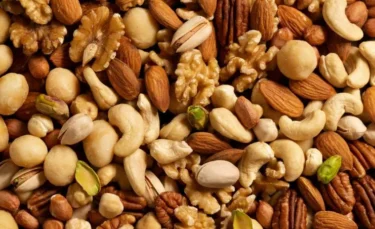
Peanuts are the most common and dangerous ones causing allergies. Even a small amount may trigger the immune system, causing severe, life-threatening reactions. Commonly consumed nuts that cause allergies include almonds, cashews, Brazel nuts, pistachios, walnuts, etc. may also cause allergic reactions. Symptoms include hives, redness, itching, breathing problems (asthma, wheezing, etc.), digestive symptoms and sometimes severe reactions like constriction of airways, BP fall10.

Allergy to cow’s milk can be seen in one in fifty babies, while this is rare in adults11. Some people, who are allergic to cow milk might develop allergies if they consume milk of other animals like goat, sheep, or buffalo. However, this isn’t same for all (reactions are more common with goat and sheep milk, while buffalo milk may or may not cause a reaction). Symptoms caused by this allergy can vary from mild to severe, which include hives, itching, redness, swelling of the face, stomach discomfort and serious or life-threatening symptoms like breathing difficulties, paleness, loss of consciousness, etc. Foods containing cow’s milk that can cause allergy include cheese, chocolate, ghee, ice cream, butter, yoghurt, etc11.

Allergies to fishes and shellfish can be seen more in adults and adolescents than in kids. It is said that one in every hundred people may have this allergy12. Symptoms can range from mild to severe, such as hives, lip swelling, itchiness, runny nose, breathing problems, throat tightness, stomach pain, vomiting, dizziness, body turning pale, losing consciousness, etc. The fish causing allergies include salmon, mackerel, tuna, trout, snapper, etc. The shellfish causing allergies include crustaceans (prawns, crab, lobster) and molluscs (squid, cuttlefish, mussels)12.

Wheat allergies are most commonly seen in children however, about two-third of them overcome these allergies as they grow old13. These allergies are caused by immune reactions to several wheat proteins such as gluten (most relevant), albumins, globulins, etc. Even though people with wheat allergies can eat other grains, some can be having problems. The symptoms of wheat allergies can range from mild to severe, which include hives, stomach problems (vomiting, nausea, pain and diarrhoea), asthma, headache, and other life-threatening problems causing breathing difficulties and shock. The foods which may produce these symptoms include pasta, bread, crackers, hot dogs, ice creams, etc13.

Egg allergies are one of the common types of allergies, caused by presence of certain proteins in egg. Those who are allergic to chicken eggs may develop allergies to other types of eggs, such as from goose, turkey, or quail. The common symptoms produced by egg allergies include mild and severe ones, such as vomiting, stomach cramps, persistent cough, breathing difficulties, skin turning pale, lip or tongue swelling, weak pulse, confusion, etc. The foods containing eggs which may cause these symptoms include soups, salads, ice cream, meatballs, egg curry, etc14.
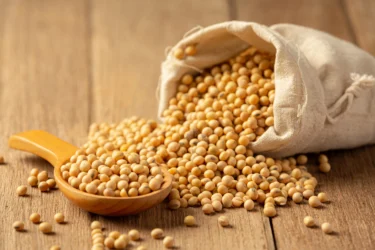
Soy-related allergies are commonly found in infants, and they may overcome these allergies as they grow old. The symptoms caused by soy allergies can be mild or severe such as skin problems (hives, rashes, itching, redness), cold symptoms (sneezing, runny nose, watery eyes, etc.), gastric problems (vomiting, nausea, stomach discomfort, etc.), and serious, life-threatening problems (skin colour change, body shock, falling unconscious, weak pulse, etc). Foods that may cause these allergies include tofu, natto, soybeans, soya, soybean curd, etc15.
The following are some common methods used for food allergy testing:
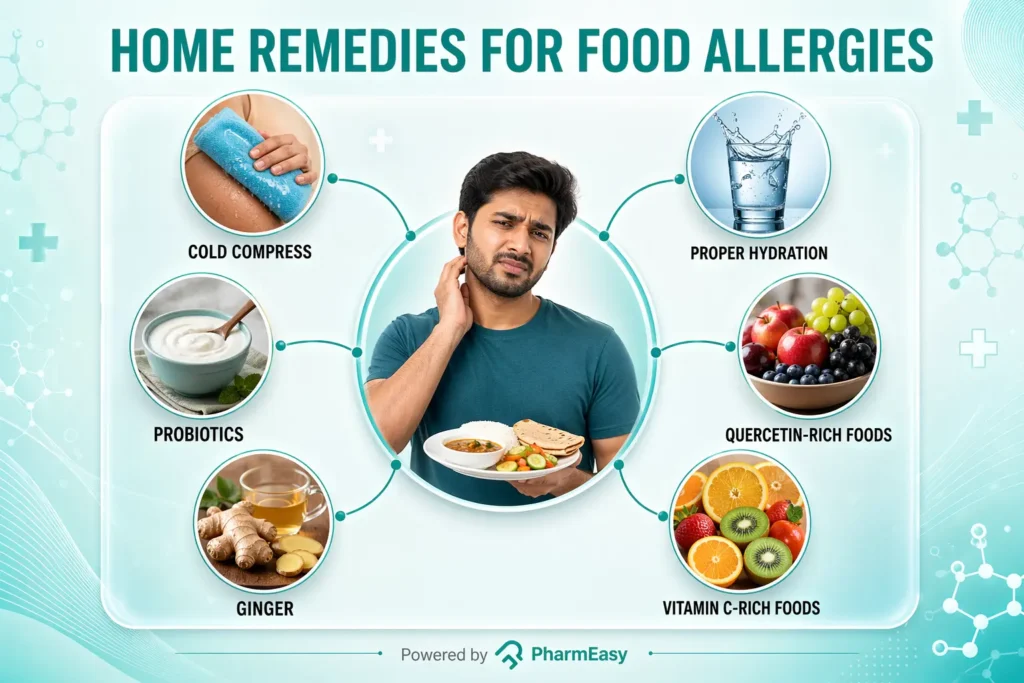
The following are some home remedies for the food allergy symptoms:
Also Read: Gluten Allergy: What It Is, Causes, Symptoms, Diagnosis & More
Note: Although these might help reduce the symptoms of food allergy, they are never a placement for proper treatment. The most effective way known to reduce the food allergies is to avoid consuming such allergic foods. Remember that food allergy treatment at home is not a safe option. The home approaches might help alleviate certain skin and digestive-related symptoms however, they may get worse even if these are followed. Therefore, always consult a doctor if you are having severe allergic reactions, rather than completely depending on these home approaches. Unattended allergic reactions can be life-threatening and fatal.
The following is a list of food allergy symptoms that may need immediate medical attention:
Also Read: Food Intolerance: What is It, Symptoms, Causes, Treatment & More
Food allergies can range from mild discomfort to serious, life-threatening reactions, so it is important to take them seriously. Recognising symptoms early and avoiding trigger foods can help avoid the complications. If you notice any unusual reactions after eating, do not ignore them and seek medical advice. With proper care and awareness, food allergies can be managed safely.
Also Read: Drug Allergy: Symptoms, Causes, Diagnosis, Tests & Treatment
Xolair (omalizumab) injection is the most effective, FDA-approved medicine to treat food allergies. However, even with this medicine, it is recommended to avoid consuming allergy-causing foods22.
Certain herbal infusions made from chamomile, saffron, anise, fennel and black seeds are known to reduce the activity of histamine. This may help reduce the allergic reactions18. However further scientific evidence is needed to confirm this.
Milk, eggs, fish, shellfish, tree nuts, peanuts, wheat and soy are said to cause 90% of allergies6.
While we cannot say that there exists food which doesn’t cause allergies, there are certain foods with very little allergy risk. These include potatoes, vegetables, avocado, olive oil, etc23.
Probiotics are usually considered good for allergies as they soothe the gut and reduce inflammation19. Curd can be a good choice, as it is a probiotic. However, for those with milk allergies, it is not a suitable option.
There are no ways to completely wipe out allergies naturally. The only way is to avoid contact with allergens such as pollen, moulds or other substances. In case of food allergens, avoid consuming them, which can trigger your immune system4.
Disclaimer: The information provided here is for educational/awareness purposes only and is not intended to be a substitute for medical treatment by a healthcare professional and should not be relied upon to diagnose or treat any medical condition. The reader should consult a registered medical practitioner to determine the appropriateness of the information and before consuming any medication. PharmEasy does not provide any guarantee or warranty (express or implied) regarding the accuracy, adequacy, completeness, legality, reliability or usefulness of the information and disclaims any liability arising thereof.
Links and product recommendations in the information provided here are advertisements of third-party products available on the website. PharmEasy does not make any representation on the accuracy or suitability of such products/services. Advertisements do not influence the editorial decisions or content. The information in this blog is subject to change without notice. The authors and administrators reserve the right to modify, add, or remove content without notification. It is your responsibility to review this disclaimer regularly for any changes.


Comments

Leave your comment...
You may also like
























Comments