



GLP-1 Diet Plan: Foods to Eat, Avoid, Meal Plans & More!
By Dr. Mrunal Shirodkar +2 more

Medically reviewed by Dr. Mrunal Shirodkar
Last updated: Oct 1, 2026 Published on: Apr 14, 2026


Get,

to manage your symptom
Get your,

4 Cr+ families
benefitted

OTP sent to 9988776655



You’ve successfully subscribed to receive
doctor-approved tips on
Whatsapp

Get ready to feel your best.


Register to Avail the Offer
Send OTPBy continuing, you agree with our Privacy Policy and Terms and Conditions
Hi There,
Sign up on PharmEasy now!!


Trusted by 4 crore+ families

OTP sent to 9988776655
You have unlocked 25% off on medicines


Code: NU25

By Dr. Mrunal Shirodkar +2 more
Table of Contents
According to the International Diabetes Federation, about one billion adults were living with diabetes in 2021, and this number is expected to reach 700 million by 2045. The World Obesity Federation states that nearly 2.8 billion people worldwide are affected by obesity1. When both conditions occur together, the risk of heart disease, stroke, kidney disorders, and certain cancers increases. This is often linked to insulin resistance, where the body does not respond properly to insulin, leading to high blood sugar levels. Therefore, proper treatment must aim to control blood glucose and maintain a healthy body weight.
GLP-1 receptor agonists are medicines prescribed for type 2 diabetes and, in some cases, obesity2. They help manage blood sugar levels, support heart and kidney health, and provide weight loss benefits3.

They work by copying the action of glucagon-like peptide-1 (GLP-1), a natural hormone in the body that reduces hunger and slows digestion4. However, GLP 1 medicines work best when combined with healthy food habits and regular physical activity5.
A GLP-1 diet is a smart way of eating that works well with this group of medicines (GLP-1 agonists). It focuses on foods that help you feel full for longer, keep blood sugar steady, and support good digestion, such as fibre-rich foods, protein, and healthy fats. This diet is not a quick or strict plan, instead, it is a balanced and practical approach that combines healthy food choices with regular physical activity for people using GLP 1 medicines to support long-term health and better results6,7.

Answer a few quick questions to check eligibility.
Your response has been submitted.
Our team will contact you shortly.
The GLP-1 diet is a structured way of eating to be followed during treatment with GLP-1 medicines. These medicines regulate blood sugar levels and support weight loss by reducing hunger and slowing digestion, leading to lower food intake. Because appetite is reduced with these medicines, there is a risk of not eating enough essential nutrients, especially protein, which may cause muscle loss and low energy if not planned properly.
The main aim of the GLP-1 diet is to support blood sugar control and overall metabolic health along with healthy weight loss, while protecting muscle strength, maintaining energy levels, and reducing digestive discomfort7. The diet focuses on nutrient-dense foods that provide more nutrition in smaller portions, such as fruits, vegetables, whole grains, legumes, lean proteins, nuts, and seeds. Highly processed foods, sugary drinks, refined carbohydrates, fast foods, and processed meats are limited, as they offer fewer nutrients and may affect health8.
Meals are planned to begin with protein-rich foods so that adequate protein is consumed despite reduced hunger, which helps protect muscle mass during weight loss8.
The diet encourages intake of small, frequent meals. Foods chosen are easy to digest and eaten in small portions to reduce discomfort. Adequate water intake supports digestion and overall body function during treatment7.
GLP-1, a natural hormone made in our body after we eat food is released from special cells called L-cells that are present in the intestine. When food enters the gut, nutrients signal these cells to release GLP-1. This hormone then travels in the blood and also sends messages through nerves. In this way, GLP-1 connects the gut, brain, and pancreas and helps them work together. The main functions of GLP-1 include:
Thus, GLP-1 helps the body control blood sugar, appetite, digestion, and fat use by allowing the gut, brain, and pancreas to work together. This process supports feeling full for longer, prevents sudden rises in blood sugar after meals, and helps maintain a healthy energy balance9.
Certain foods can help increase the release of GLP-1 hormone. Nutrients from different foods interact with L-cells in the gut, stimulating higher GLP-1 production. Specific foods and meal combinations support this process, and the natural GLP-1 foods are listed below:
Not only GLP-1 foods, but also eating habits affect GLP-1 release. Eating protein or fish before carbohydrates can increase GLP-1 and help stabilise blood sugar after meals. Eating slowly, chewing well, and taking time to finish meals can further increase GLP-1 and PYY levels. Meal timing, such as eating more calories earlier in the day, may also improve GLP-1 response and reduce blood sugar spikes9.
A GLP-1 diet should include foods that help maintain hydration and provide the right balance of energy, fibre, protein, carbohydrates, and fats to help keep blood sugar levels steady and promote healthy weight loss.

People following a GLP-1 diet are encouraged to drink more than 2–3 litres of fluids daily. Suitable options include water, tea, coffee, low-fat milk, and soy milk, which help prevent dehydration and support digestion.
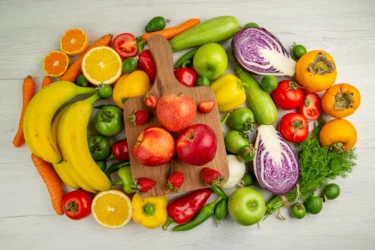
These foods should form the main part of daily meals to help maintain stable blood sugar levels and support overall metabolic health during treatment. They provide essential vitamins, minerals, and natural fibre needed for normal body functions. Whole fruits, vegetables and grains with lower glycemic index are preferred as they provide sustained energy.
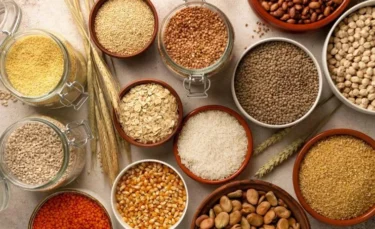
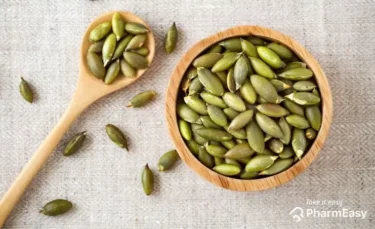
GLP-1 foods like whole grains, vegetables, beans, peas, lentils, fruits, nuts, and seeds help meet daily fibre needs and lower the risk of constipation. Fibre supplements may be considered if food intake is inadequate.
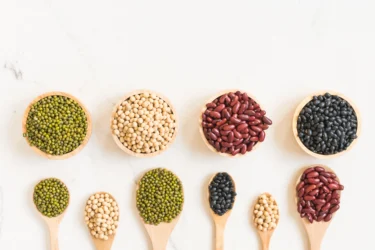
Beans, lentils, nuts, seeds, soy products, fish, lean meat, poultry, eggs, and low-fat dairy foods help maintain muscle mass and should be eaten first at meals10.
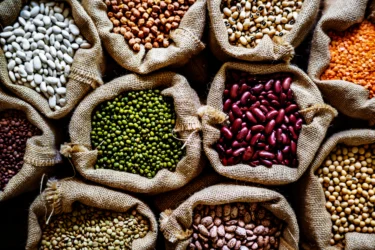
Choose high-fibre, minimally processed carbohydrates such as non-starchy vegetables, legumes, whole grains, fruits, and milk in appropriate portions to support steady blood sugar levels. Limit added sugars and refined grains. Healthy fats from nuts, seeds, oils, avocado, and fatty fish should be included11.
Choosing these specific foods in the recommended amounts supports balanced nutrition and stable blood sugar control during GLP-1 therapy, while also assisting healthy weight management.
When using GLP-1 medications, certain foods and eating habits should be minimized or avoided because they may reduce treatment benefits, increase side effects, contribute to poor nutrition, interfere with blood sugar control, or affect healthy weight reduction. The GLP-1 foods to avoid are:

These include processed grains, refined flours, starches, and added sugars. Foods made with white flour and white rice should be minimised, as they offer little fibre and cause rapid rises in blood sugar.

Intake of sugary foods, salty snacks, starchy items, high-fat foods, and fast-food fats should be reduced. Ultra-processed foods rich in sugar and starch are especially discouraged.

Soft drinks and sweetened juices should be avoided because they provide excess calories without essential nutrients.
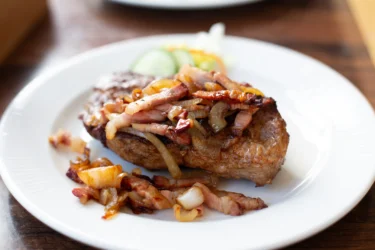
These should be limited due to their association with type 2 diabetes, heart disease, and colorectal cancer.

Most fast foods, packaged sweets, savoury snacks, and other ultra-processed items should be avoided.

Alcohol should be avoided as it may contribute to dehydration and other gastroinstinals side effects.
Unhealthy eating habits such as emotional eating, mindless eating, night-time eating, long gaps between meals, and very large meals should also be avoided, as they can affect blood sugar balance and overall treatment outcomes. Limiting these specific foods and behaviours supports safer and more effective GLP-1 therapy8.
This sample GLP-1 diet plan is designed to support lower calorie intake, adequate protein, fibre, fluids, and balanced carbohydrates and fats, in line with the provided information. Two variations are shown:
Both GLP-1 diet plans emphasise regular meals, adequate fluids (>2–3 L/day), fibre-rich foods, lean protein, and avoidance of high-fat, fried, and sugar-sweetened foods to support effective GLP-1 therapy10.
GLP-1 medicines commonly cause stomach-related side effects such as nausea, vomiting, diarrhoea, and constipation, especially at the start of treatment and during dose escalation. The right food choices and eating habits can help reduce these effects.
These steps help reduce side effects and improve comfort during GLP-1 therapy.
Also Read: Starting a GLP-1 Medicine: A Simple Guide for Patients
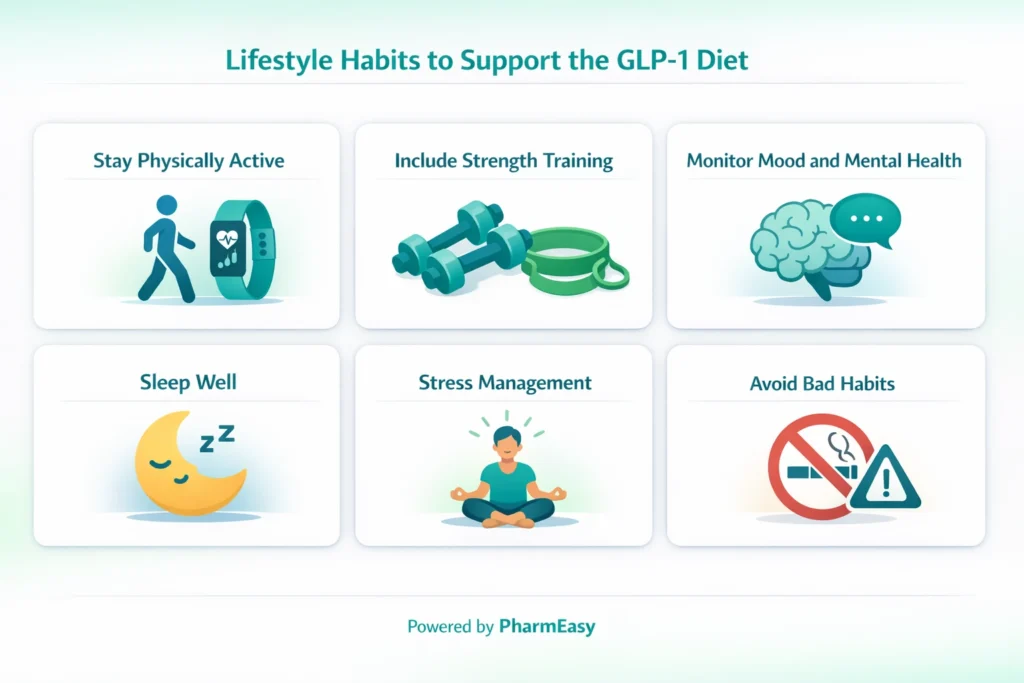
Healthy lifestyle habits are important for getting the best results from a GLP-1 diet. These habits help maintain stable glucose levels, weight control and overall health.
Together, these lifestyle habits support better treatment and overall health outcomes when using a GLP-1 medication.
Also Read: How to Stay Consistent With GLP-1 Medication: Tips, Challenges, Benefits & Long-Term
GLP-1 medicines often affect digestion, especially when starting treatment or increasing the dose. Common effects include nausea, vomiting, diarrhoea, and constipation. These symptoms usually improve when meals are adjusted and portion sizes are controlled.
Seek medical attention if you notice:
Although rare, gallbladder problems or inflammation of the pancreas may occur and need early medical attention12.
Dietary care plays an important role in reducing these problems. A dietitian can help adjust food choices, portion sizes, and meal timing to improve comfort, support better tolerance to GLP-1 treatment, and maintain good nutrition while using GLP-1 medicines8.
Also Read: Everything to Know About GLP-1 Receptor Agonist and Its Role in Weight Management
GLP-1 diet mainly focuses on eating fibre-rich foods, enough protein, and balanced carbohydrates. This type of diet helps control hunger, keeps blood sugar levels steady, and supports healthy weight loss. However, good results do not come from diet alone. Following healthy habits such as regular physical activity, good sleep, stress management, and mindful eating, alongside appropriate medical guidance are essential when using GLP-1 therapy.
GLP-1 foods including whole grains, nuts, avocados, and eggs can naturally increase this hormone. These foods help the gut release GLP-1, which supports appetite control and helps maintain healthy blood sugar levels6.
You can include natural glp 1 foods like protein-rich foods in your diet along with avoiding fatty foods, eating slowly, and chewing well. Regular exercise, such as walking or strength activities, also helps increase GLP-1 and supports healthy blood sugar control9.
To maximise GLP-1 results, medicines should be combined with healthy eating, regular physical activity, and behaviour changes. Regular follow-up and long-term care help keep blood sugar levels steady, support healthy body weight, and overall health, because GLP-1 medicines alone cannot manage diabetes or obesity5.
Coffee may help increase GLP-1 after meals. Research suggests that certain natural compounds in coffee, called polyphenols, might support the release of GLP-1. However, further evidence is needed to clearly understand this effect in more people14.
Longer fasting may slightly increase GLP-1 after eating. Some research shows a small rise in GLP-1 when people fast longer before meals. However, the effect is mild, and scientists are still studying how fasting affects GLP-115.
Yes, exercise may increase GLP-1. During physical activity, the muscles release a substance called IL-6, which can se GLP-1. Exercise lasting more than 30 minutes, especially at moderate to high intensity, may help improve blood sugar coignal the body to produce morntrol9.
1. Pavlidou E, Papadopoulou SK, Fasoulas A, Papaliagkas V, Alexatou O, Chatzidimitriou M, et al. Diabesity and Dietary Interventions: Evaluating the Impact of Mediterranean Diet and Other Types of Diets on Obesity and Type 2 Diabetes Management. Nutrients. 2023 Dec 21;16(1):34. doi:10.3390/nu16010034. Available from: https://pubmed.ncbi.nlm.nih.gov/38201865/
2. Glucagon-Like Peptide-1 Receptor Agonists – StatPearls – NCBI Bookshelf [Internet]. [cited 2026 Mar 5]. Available from: https://www.ncbi.nlm.nih.gov/books/NBK551568/
3. Nachawi N, Rao PP, Makin V. The role of GLP-1 receptor agonists in managing type 2 diabetes. Cleve Clin J Med. 2022 Aug;89(8):457–64. doi:10.3949/ccjm.89a.21110. Available from: https://pubmed.ncbi.nlm.nih.gov/35914933/
4. Christensen S, Robinson K, Thomas S, Williams DR. Dietary intake by patients taking GLP-1 and dual GIP/GLP-1 receptor agonists: A narrative review and discussion of research needs. Obes Pillars. 2024 Sep;11:100121. doi:10.1016/j.obpill.2024.100121. Available from: https://pubmed.ncbi.nlm.nih.gov/39175746/
5. WHO issues global guideline on the use of GLP-1 medicines in treating obesity [Internet]. [cited 2026 Feb 27]. Available from: https://www.who.int/news/item/01-12-2025-who-issues-global-guideline-on-the-use-of-glp-1-medicines-in-treating-obesity
6. Nutritional modulation of endogenous glucagon-like peptide-1 secretion: a review – PMC [Internet]. [cited 2026 Feb 27]. Available from: https://pmc.ncbi.nlm.nih.gov/articles/PMC5148911/
7. A Multidisciplinary Perspective on Semaglutide Treatment and Medical Nutrition Therapy in Obesity Management | Current Obesity Reports | Springer Nature Link [Internet]. [cited 2026 Feb 27]. Available from: https://pubmed.ncbi.nlm.nih.gov/41129057/
8. Mozaffarian D, Agarwal M, Aggarwal M, Alexander L, Apovian CM, Bindlish S, et al. Nutritional Priorities to Support GLP-1 Therapy for Obesity: A Joint Advisory From the American College of Lifestyle Medicine, the American Society for Nutrition, the Obesity Medicine Association, and the Obesity Society. Am J Lifestyle Med. 2025 May 30;15598276251344827. doi:10.1177/15598276251344827 PubMed PMID: 40452753; PubMed Central PMCID: PMC12125019. Available from: https://pubmed.ncbi.nlm.nih.gov/40673264/
9. Fujiwara Y, Eguchi S, Murayama H, Takahashi Y, Toda M, Imai K, et al. Relationship between diet/exercise and pharmacotherapy to enhance the GLP-1 levels in type 2 diabetes. Endocrinol Diabetes Metab. 2019 Jul;2(3):e00068. doi:10.1002/edm2.68 PubMed PMID: 31294084; PubMed Central PMCID: PMC6613229. Available from: https://pubmed.ncbi.nlm.nih.gov/31294084/
10. Almandoz JP, Wadden TA, Tewksbury C, Apovian CM, Fitch A, Ard JD, et al. Nutritional considerations with antiobesity medications. Obesity. 2024 Sep;32(9):1613–31. doi:10.1002/oby.24067. Available from: https://onlinelibrary.wiley.com/doi/10.1002/oby.24067
11. Diabetes Nutrition & Wellness | American Diabetes Association [Internet]. [cited 2026 Mar 5]. Available from: https://diabetes.org/newsroom/press-releases/american-diabetes-association-releases-standards-care-diabetes-2026
12. Gorgojo-Martínez JJ, Mezquita-Raya P, Carretero-Gómez J, Castro A, Cebrián-Cuenca A, de Torres-Sánchez A, et al. Clinical Recommendations to Manage Gastrointestinal Adverse Events in Patients Treated with Glp-1 Receptor Agonists: A Multidisciplinary Expert Consensus. J Clin Med. 2022 Dec 24;12(1):145. doi:10.3390/jcm12010145 PubMed PMID: 36614945; PubMed Central PMCID: PMC9821052. https://www.researchgate.net/publication/366616927_Clinical_Recommendations_to_Manage_Gastrointestinal_Adverse_Events_in_Patients_Treated_with_Glp-1_Receptor_Agonists_A_Multidisciplinary_Expert_Consensus
13. Wadden TA, Chao AM, Moore M, Tronieri JS, Gilden A, Amaro A, et al. The Role of Lifestyle Modification with Second-Generation Anti-obesity Medications: Comparisons, Questions, and Clinical Opportunities. Curr Obes Rep. 2023 Dec;12(4):453–73. doi:10.1007/s13679-023-00534-z PubMed PMID: 38041774; PubMed Central PMCID: PMC10748770. Available from: https://pubmed.ncbi.nlm.nih.gov/38041774/
14. Jokura H, Watanabe I, Umeda M, Hase T, Shimotoyodome A. Coffee polyphenol consumption improves postprandial hyperglycemia associated with impaired vascular endothelial function in healthy male adults. Nutr Res. 2015 Oct;35(10):873–81. doi:10.1016/j.nutres.2015.07.005. Available from: https://pubmed.ncbi.nlm.nih.gov/26337017/
15. Clemmensen KKB, Quist JS, Vistisen D, Witte DR, Jonsson A, Pedersen O, et al. Role of fasting duration and weekday in incretin and glucose regulation. Endocr Connect. 2020 Apr;9(4):279–88. doi:10.1530/EC-20-0009 PubMed PMID: 32163918; PubMed Central PMCID: PMC7159259. Available from: https://pubmed.ncbi.nlm.nih.gov/32163918/
Disclaimer: The information provided here is for educational/awareness purposes only and is not intended to be a substitute for medical treatment by a healthcare professional and should not be relied upon to diagnose or treat any medical condition. The reader should consult a registered medical practitioner to determine the appropriateness of the information and before consuming any medication. PharmEasy does not provide any guarantee or warranty (express or implied) regarding the accuracy, adequacy, completeness, legality, reliability or usefulness of the information; and disclaims any liability arising thereof.
Links and product recommendations in the information provided here are advertisements of third-party products available on the website. PharmEasy does not make any representation on the accuracy or suitability of such products/services. Advertisements do not influence the editorial decisions or content. The information in this blog is subject to change without notice. The authors and administrators reserve the right to modify, add, or remove content without notification. It is your responsibility to review this disclaimer regularly for any changes.
 0
0 
Comments

Leave your comment...
You may also like























Comments