Get,

Free Doctor Tips

to manage your symptom

Get your,

FREE Doctor Tips Now!!

4 Cr+ families

benefitted

Enter your Phone Number

+91

|

Enter a valid mobile number

Send OTP

Verify your mobile number

OTP sent to 9988776655

CONGRATULATIONS!!!

You’ve successfully subscribed to receive

doctor-approved tips on Whatsapp


Get ready to feel your best.

Hi There,

Download the PharmEasy App now!!

AND AVAIL

AD FREE reading experience
Get 25% OFF on medicines
Banner Image

Register to Avail the Offer

Send OTP

By continuing, you agree with our Privacy Policy and Terms and Conditions

Success Banner Image
Verify your mobile number

OTP sent to 9988776655

Comments

Subscribe
Notify of
guest
0 Comments
Inline Feedbacks
View all comments

Leave your comment here

Your email address will not be published. Required fields are marked *

25% OFF on medicines

Collect your coupon before the offer ends!!!

COLLECT

Yoga for Weight Management: Benefits, Best Poses, and a Safe Weekly Plan

By Dr. Himani Bisht +2 more

Introduction

India continues to face a rising burden of obesity, with the National Family Health Survey (NFHS-5, 2019 to 21) reporting that 24% of women and 23% of men are overweight or obese1. In this concerning scenario, yoga has emerged as a widely practised approach to improve physical and mental well-being. It has been observed that most individuals who practice yoga report meaningful benefits such as improved flexibility, reduced stress, better weight management, and enhanced quality of life2,3. In this article, we explore yoga asanas for weight management and a safe, progressive weekly plan for beginners as well as regular practitioners.

yoga

Benefits of Yoga for Weight Management

If you are thinking, is yoga good for weight management? The answer is yes. Yoga supports weight management by combining physical movement with mindfulness. While dynamic flows and sustained poses help bring about physical changes, the mindfulness component helps individuals regulate their emotions and reduce stress levels. So, together, these physical and psychological effects make yoga an effective and sustainable approach to weight management4

Let’s see how yoga benefits with weight management4,5


1. Physical Changes

The physical postures in yoga help burn calories, tone muscles and increase muscle mass required for weight management. Research shows that yoga interventions improve obesity related outcomes, including body mass index (BMI), body weight, body fat, and waist circumference, which are important measures of any weight loss technique.

2. Psychological Reset

Yoga not only affects your body but also your mind. By calming your mind, yoga can help promote a shift in your emotional state. It aids in lowering stress and anxiety and promoting sleep, which can help balance hormones like cortisol that are involved with weight gain.

3. Shift Toward Healthy Eating

Yoga can help bring about a change in your eating patterns. Yoga helps increase mindfulness and awareness about your behaviours. By promoting changes in mindset and overall mental well-being, it can help influence your food choices and eating behaviours in ways that support weight management efforts.

4. Overall Health Benefits

Long-term yoga boosts your overall health and helps improve conditions like diabetes and hypertension, thereby reducing the use of medications that may lead to weight gain. Moreover, yoga helps improve digestion and boosts metabolism, supporting weight management.

5. Influence of the Yoga Community/Yoga Culture

The yoga community and its culture play a role in supporting an individual’s weight reduction experience. This means that social influences, role modelling, and the broader environment of yoga practice also contribute positively to the weight management efforts.

Top 12 Yoga Poses for Weight Management (Includes Warm Up and Cool Down)

Yoga asanas support weight management by strengthening muscles, improving mindfulness, enhancing flexibility, and promoting better posture and breathing. To ensure safe and effective practice, we have curated the following list, which begins with 1 warm-up pose to prepare your body and ends with 1 cool-down pose, with 10 key weight management poses in between6,7.


1. Warm up with Tadasana (Palm Tree Pose)

warm up

How to Do:

  • Stand straight and raise your arms overhead.
  • Stretch upward and lift heels gently.
  • Hold for 20 to 30 seconds.

Benefits:

  • Stretches the body, improves posture and builds strength.
  • Good warm up pose for any weight management sequence.

2. Ardhakati Chakrasana (Side Bending Pose)

ardhakati chakrasana

How to Do:

  • Stand with your toes together and relax your shoulders.
  • Raise one arm sideways up to the shoulder, then above the head.
  • Bend to the opposite side and hold for 30 seconds.
  • Repeat on the other side.

Benefits:

  • Useful for people with obesity (especially around the waist).
  • Increases hip flexibility and improves digestion.

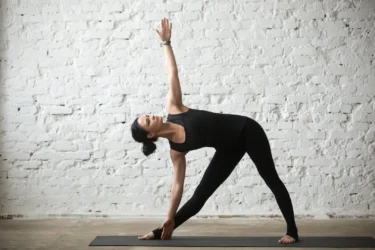
3. Trikonasana (Triangle Pose)

trikonasana
Image Source: freepik.com

How to Do:

  • Stand with legs apart and stretch your arms.
  • Bend sideways and place your hand near your foot.
  • Keep the other arm up.
  • Hold 20 to 30 seconds on each side.

Benefits:

  • Stretches calf, thigh, and waist muscles.
  • Improves spinal and hip flexibility.
  • Strengthens legs, knees, ankles, back, chest, and arms.

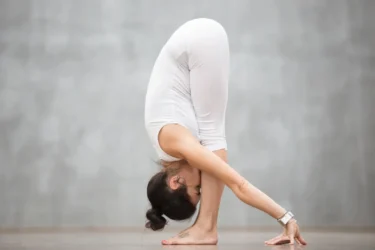
4. Padahastasana (Hand-to-Foot Pose)

padahastasana
Image Source: freepik.com

How to Do:

  • Stand straight with legs together and arms beside the thighs.
  • Inhale and raise your arms upward until they touch your ears.
  • Stretch the arms up fully, turning the palms forward.
  • Exhale and bend forward without bending the knees.
  • Hold the heels and bring the forehead toward the knees.
  • Stay for 20 to 30 seconds.

Benefits:

  • Improves the flexibility of the spine.
  • Stretches calf muscles and thighs.
  • Strengthens legs and abdominal muscles.

5. Utkatasana (Chair Pose)

utkatasana
Image Source: freepik.com

How to Do:

  • Stand and raise your arms.
  • Bend knees and sit back like a chair (in a squatting position).
  • Hold for 20 to 30 seconds.

Benefits:

  • Burns calories.
  • Strengthens the knees and thighs.

6. Paschimottanasana (Seated Forward Bend)

paschimottanasana
Image Source: freepik.com

How to Do:

  • Sit with your legs extended.
  • Inhale and raise your arms.
  • Exhale in a fold forward.
  • Hold toes and stay in this position for 20 to 30 seconds.

Benefits:

  • Tones the abdominal muscles.
  • Improves digestion and helps in relieving back stiffness.

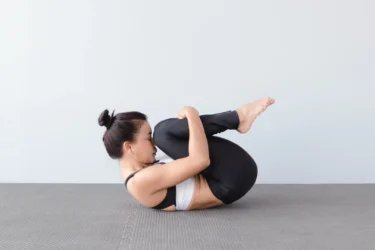
7. Pavanamuktasana (Wind-Relieving Pose)

pavanamuktasana

How to Do:

  • Lie on your back and gently pull your knees to your chest.
  • Hold the shins and bring your head toward your knees.
  • Hold for 20 to 30 seconds.

Benefits:

  • Aids digestion and reduces bloating.
  • Helps strengthen the lower back.

8. Setu Bandhasana (Bridge Pose)

setu bandhasana
Image Source: freepik.com

How to Do:

  • Lie on your back and bend your knees upwards.
  • Inhale and lift your hips upward.
  • Hold for 20 to 30 seconds.

Benefits:

  • Strengthens thighs and hips.
  • Stimulates abdominal organs and improves digestion.

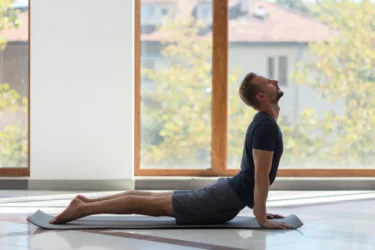
9. Bhujangasana (Cobra Pose)

bhujangasana
Image Source: freepik.com

How to Do:

  • Lie on your stomach.
  • Keep your palms beside your chest.
  • Inhale and lift head, chest, and upper abdomen.
  • Hold for 20 to 30 seconds.

Benefits:

  • Strengthens the back, arms, and shoulders.
  • Reduces abdominal fat and improves digestion.

10. Vakrasana (Twisted Pose)

vakrasana

How to Do:

  • Sit with your legs extended together and keep your hands by your side.
  • Bend the right leg and adjust the right foot beside the left knee.
  • Exhale and twist the torso to the right.
  • Wrap the left arm around the right knee and hold the right big toe (or place the left palm beside the right foot).
  • Take the right arm back and place the right palm on the ground (keeping the spine straight).
  • Hold for 10 to 30 seconds.
  • Repeat on the other side.

Benefits:

  • Increases spinal flexibility.
  • Helps stimulate the upper belly and relieves constipation.

11. Salabhasana (Locust Pose)

salabhasana

How to Do:

  • Begin by lying on your stomach and placing your hands under your head with relaxed elbows.
  • Keep your chin on the floor and place your arms by your sides.
  • Inhale and lift legs without bending knees.
  • Hold for 20 to 30 seconds.
  • Exhale, lower legs and rest.

Benefits:

  • Reduces fat on thighs and buttocks.
  • Strengthens the lower back and hip region.
  • Improves digestion.

12. Cool Down with Makarasana (Crocodile Pose)

Makarasana

How to Do:

  • Lie on your stomach with feet wide apart & toes pointing outwards.
  • Place your hands under your head and keep your elbows relaxed.
  • Now breathe slowly for 20 to 30 seconds.

Benefits:

  • Relaxes the lower back and body after all the asanas.
  • Good cool down pose after any weight management sequence.

While some people may experience weight reduction through yoga alone, the best results occur when yoga is combined with a balanced lifestyle that includes healthy eating, adequate sleep, and regular physical activity.

Note: Any exercises including yoga should be practised after physician’s consent by individuals with certain health conditions, such as high blood pressure, severe arthritis, cardiac issues, or any medical concerns where forward bending, twisting, or intense stretching is not advised. Also, it is important to practice under guidance if you have existing health problems or are pregnant.

Weekly Yoga Plan for Weight Management

The following weekly plan outlines yoga asanas for weight management spread across the week. Keep these points in mind:

  • Remember to warm up and cool down every day before beginning and after completing your practice.
  • Repeat each exercise based on your comfort level. Ideally, beginners may perform each pose once, intermediate practitioners twice, and advanced practitioners up to three times.
  • Always consult a qualified yoga instructor or professional if you experience any discomfort, have medical conditions, or feel unsure about performing any of the yoga poses for weight management.

1. Beginner Weekly Plan

  • Day 1, 3, 5 (Gentle Floor Poses)
    • Ardhakati Chakrasana
    • Trikonasana
    • Varksasana
    • Pavanamuktasana
    • Setu Bandhasana
  • Day 2, 4, 6 (Core Activation)
    • Padahastasana
    • Paschimottanasana
    • Vakrasana
    • Bhujangasana
    • Setu bandhasana

Duration per day: 15 to 20 minutes

2. Intermediate Weekly Plan

  • Day 1, 3, 5 (Leg and Buttock Strengthening)
    • Trikonasana
    • Utkatasana
    • Padahastasana
    • Setu Bandhasana
    • Vakrasana
  • Day 2, 4, 6 (Core and Back)
    • Ardhakati Chakrasana
    • Paschimottanasana
    • Pavanamuktasana
    • Salabhasana
    • Bhujangasana

Duration per day: 20 to 30 minutes

3. Advanced Weekly Plan

  • Day 1, 3, 5 (Standing and Bends)
    • Trikonasana
    • Utkatasana
    • Padahastasana
    • Paschimottanasana
  • Day 2, 4, 6 (Core, Back and Hip )
    • Bhujangasana
    • Salabhasana
    • Dhanurasana
    • Setu Bandhasana
    • Pavanamuktasana
    • Vakrasana

Duration per day: 30 to 40 minutes

Note: If you are thinking, which yoga is best for weight loss, there is no single answer or pose. All yoga styles and poses may support weight management when practised consistently and combined with a healthy lifestyle.

General Guidelines for Safe Yoga Practice

Follow these key guidelines to practice yoga safely and gain maximum benefit from each session8:

1. Before You Begin

  • Keep your surroundings, body, and mind clean before practice.
  • Choose a calm and quiet place where you can practice with a relaxed body and mind.
  • Practice on an empty or light stomach. If you are feeling weak, you may take a little honey in lukewarm water.
  • Ensure the bladder and bowels are emptied beforehand.
  • Keep your surroundings, body, and mind clean before practice.
  • Choose a calm and quiet place where you can practice with a relaxed body and mind.
  • Practice on an empty or light stomach. If you are feeling weak, you may take a little honey in lukewarm water.
  • Ensure the bladder and bowels are emptied beforehand.

2. During the Practice

  • Begin with a prayer or invocation to create a peaceful mental state.
  • Perform yoga slowly and mindfully, paying attention to your breath and body.
  • Do not hold your breath unless the pose specifically requires it.
  • Always breathe through the nostrils, unless instructed otherwise.
  • Avoid holding the body too tightly or making sudden jerky movements.
  • Practice within your own capacity and avoid strain.
  • Remember that progress takes time, so be consistent and patient.
  • End the session with meditation or deep silence.

3. After the Practice

  • Wait 20 to 30 minutes before taking a bath.
  • Consume food only 20 to 30 minutes after completing your yoga practice.

If you are a beginner, it’s best to practise yoga under a trained professional to understand the precise positions needed for yoga poses and reduce risk of any injury.

Conclusion

Yoga poses offer a holistic approach to weight management by improving strength, flexibility, posture, and overall physical and mental well-being. Its mindful nature helps reduce stress and emotional eating, while the physical postures support fat reduction and muscle toning. Individuals are more likely to stay committed and experience long-term benefits by practising consistently and choosing a yoga style that feels enjoyable and comfortable.

Yoga shows the potential to become a powerful and lasting tool for healthy weight management with patience, regular practice, and a balanced lifestyle.

Frequently Asked Questions (FAQs)

Can I lose weight by doing yoga?

Regular yoga practice may support weight management by increasing calorie burn, muscle toning, enhancing metabolism, as well as reducing stress, and promoting mindful lifestyle habits4,5.

Does yoga reduce belly fat?

Yoga may help reduce belly fat by improving digestion, strengthening core muscles, and lowering stress5,6. Poses like Pashcimottanasana, Pavanamuktasana, and Salabhasana are particularly helpful.

Can I lose 10 kg in a month with yoga?

Yoga supports gradual, sustainable weight management when combined with a balanced lifestyle, healthy eating, and stress management. So, no, losing 10 kg in one month is not safe or realistic with yoga or any healthy method.

Which yoga burns the most fat?

Continuous practice of yoga styles or poses that involve stretches and muscle engagement tends to burn more fat9. There is no single yoga pose that burns the most fat. Weight reduction benefits come from consistent, overall practice, where a combination of movements, breathing, and mindfulness work together to support gradual and sustainable results.

Can we do yoga at night for weight loss?

You may practice yoga at night, as long as you choose the right type of session. Regular yoga practice has been shown to improve sleep quality and reduce sleep disturbances, which may support overall health and metabolic function10. However, avoid very intense, high-energy yoga too close to bedtime. Instead, simply focus on slower flows, stretches, and breathing exercises that calm the nervous system and prepare your body for rest.

Can we do yoga and the gym together for weight loss?

A study combining yoga with aerobic exercise showed significant improvements in body weight, body fat, and waist circumference11. This means yoga and gym workouts may work well together, as the gym helps burn calories, strength and conditioning of the muscles, while yoga improves flexibility, recovery, and stress control, supporting overall weight management. However, be careful and do not overdo it. Start gradually, allow rest days, listen to your body, stop if you feel pain or dizziness, and consult a doctor if you have any medical issues.

References

  1. India Press Information Bureau. Towards a Fit and Healthy India: Combating Obesity Through Collective Action [Internet]. Press Information Bureau; [cited 2025 Dec 12]. Available from: https://www.pib.gov.in/PressReleaseIframePage.aspx?PRID=2107179&reg=3&lang=2
  2. Khanal H, Khanal U. Benefits, barriers and determinants of practicing yoga: A cross sectional study from Kathmandu, Nepal. J Ayurveda Integr Med. 2021 Jan-Mar;12(1):102-106. Available from: https://pmc.ncbi.nlm.nih.gov/articles/PMC8039334/
  3. Büssing A, Michalsen A, Khalsa SB, Telles S, Sherman KJ. Effects of yoga on mental and physical health: a short summary of reviews. Evid Based Complement Alternat Med. 2012;2012:165410. Available from: https://pmc.ncbi.nlm.nih.gov/articles/PMC3447533/
  4. Yoga for weight loss: Benefits beyond burning calories: Harvard Health Online [Internet]. Harvard Health Publishing; [cited 2025 Dec 12]. Available from: https://www.health.harvard.edu/blog/yoga-for-weight-loss-benefits-beyond-burning-calories-202112062650
  5. Ross A, Brooks A, Touchton-Leonard K, Wallen G. A Different Weight Loss Experience: A Qualitative Study Exploring the Behavioral, Physical, and Psychosocial Changes Associated with Yoga That Promote Weight Loss. Evid Based Complement Alternat Med. 2016;2016:2914745. Available from: https://pmc.ncbi.nlm.nih.gov/articles/PMC4995338/
  6. Directorate of AYUSH. Yoga for Family: General Guidelines and Practices for Health and Wellness [Internet]. Government of NCT of Delhi; [cited 2025 Dec 12]. Available from: https://ayush.delhi.gov.in/sites/default/files/ayush/important-news/yoga_for_family.pdf
  7. Government of India. Common Yoga Protocol [Internet]. Ministry of External Affairs; [cited 2025 Dec 12]. Available from: https://www.mea.gov.in/images/pdf/common-yoga-protocol.pdf
  8. Government of India. Common Yoga Protocol: Book-English [Internet]. Ministry of AYUSH; [cited 2025 Dec 12]. Available from: https://yoga.ayush.gov.in/api/uploads/assets/cyp/Common%20Yoga%20Protocol%20Book-English.pdf
  9. Na Nongkhai MP, Yamprasert R, Punsawad C. Effects of Continuous Yoga on Body Composition in Obese Adolescents. Evid Based Complement Alternat Med. 2021 Aug 25;2021:6702767. Available from: https://pmc.ncbi.nlm.nih.gov/articles/PMC8410386/
  10. Panjwani U, Dudani S, Wadhwa M. Sleep, Cognition, and Yoga. Int J Yoga. 2021 May-Aug;14(2):100-108. Available from: https://pmc.ncbi.nlm.nih.gov/articles/PMC8191228/
  11. Luo J, Zheng B. Effect of yoga combined with aerobic exercise intervention on morphological and blood lipid indicators in female college students. J Sports Med Phys Fitness. 2020 Mar;60(3):442-448. Available from: https://pubmed.ncbi.nlm.nih.gov/31684707

Disclaimer: The information provided here is for educational/awareness purposes only and is not intended to be a substitute for medical treatment by a healthcare professional and should not be relied upon to diagnose or treat any medical condition. The reader should consult a registered medical practitioner to determine the appropriateness of the information and before consuming any medication. PharmEasy does not provide any guarantee or warranty (express or implied) regarding the accuracy, adequacy, completeness, legality, reliability or usefulness of the information; and disclaims any liability arising thereof.

Links and product recommendations in the information provided here are advertisements of third-party products available on the website. PharmEasy does not make any representation on the accuracy or suitability of such products/services. Advertisements do not influence the editorial decisions or content. The information in this blog is subject to change without notice. The authors and administrators reserve the right to modify, add, or remove content without notification. It is your responsibility to review this disclaimer regularly for any changes.

Advertisement

Comments

Leave your comment...