




Jicama (Mexican Turnip): Uses, Benefits, Side Effects & More!
By Dr. Malavika Athavale +2 more

Medically reviewed by Dr. Malavika Athavale
Last updated: Aug 25, 2026 Published on: May 14, 2024


Get,

to manage your symptom
Get your,

4 Cr+ families
benefitted

OTP sent to 9988776655



You’ve successfully subscribed to receive
doctor-approved tips on
Whatsapp

Get ready to feel your best.


Register to Avail the Offer
Send OTPBy continuing, you agree with our Privacy Policy and Terms and Conditions
Hi There,
Sign up on PharmEasy now!!


Trusted by 4 crore+ families

OTP sent to 9988776655
You have unlocked 25% off on medicines


Code: NU25

By Dr. Malavika Athavale +2 more
Table of Contents
Jicama, also known as a Mexican turnip or yam bean, is a unique root vegetable that has gained popularity for its many potential health benefits and culinary versatility. With an impressive nutritional profile and a mildly sweet, crunchy texture, jicama is worth exploring as a staple in your diet.
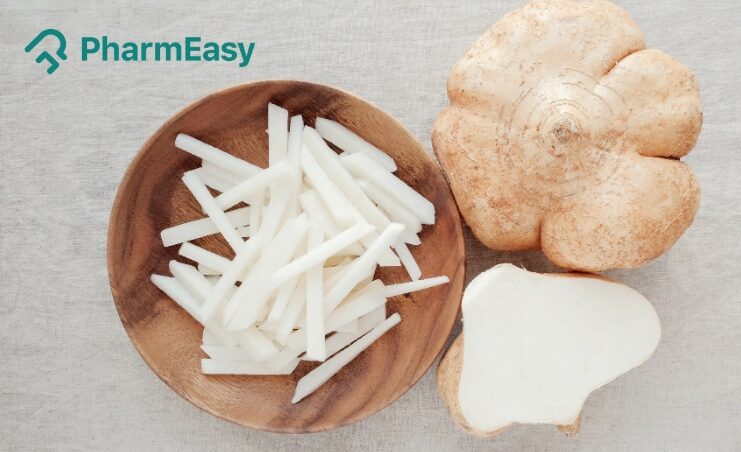
In this article we aim to cover everything you need to know about jicama, diving into its history, nutritional value, and potential health benefits. We will also explore how to prepare and use jicama in various dishes, along with addressing some potential risks and frequently asked questions.
Did you know?
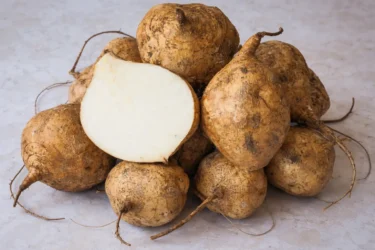
Jicama is a tuberous root belonging to the legume-rich Fabaceae family, which also includes peas, lentils, peanuts, and beans. Jicama originated in Mexico and Central America1, and its taste is often compared to a potato and pear mix or a water chestnut.
The ancient Aztecs and Mayans cultivated jicama in Mexico. Over time, it spread to other places like the Philippines and Asia. Now, it is well-received across the globe due to its unique taste, potential health benefits, and culinary use.
Jicama is available as two main types:
They taste the same, so you can use them interchangeably in your recipes. But, Jicama de agua is usually easier to find in the market.
Did you know that the scientific name of jicama is Pachyrhizus erosus? This crunchy root vegetable is often used as a substitute for water chestnut (Eleocharis dulcis) in Chinese cuisine, adding a crisp texture to various dishes.
Dr. Siddharth Gupta, B.A.M.S, M.D (Ayu)
Jicama is well-balanced with carbohydrates, proteins, and fats. Yet, carbohydrates make up most of its calories.
Thanks to its high fibre content, it has a low glycaemic index. Which means it doesn’t spike your blood sugar levels after eating. However, you should consult your doctor before you start including jicama in your diet.
The following amounts of vitamins and minerals are present in a single cup of jicama.
All these nutrients are crucial for several body functions, from supporting the immune system to aiding digestion.
As noted earlier, jicama is high in dietary fibre, which helps facilitate bowel movements, reduce constipation, and maintain a healthy gut4.
Jicama is packed with antioxidants, mainly vitamin C. These protect cells from free radical damage, which lowers the risk of chronic diseases5.
The potential health benefits of jicama include:
As a nutrient-dense, low-calorie powerhouse, jicama is considered good for weight management, providing essential vitamins and complex carbohydrates without adding excess calories. This may be due to its high water content and presence of two types of fibres soluble fibres, such as inulin, increase satiety and avoid blood glucose spikes, while insoluble fibres regulate intestinal movements by retaining water in the gut. Thus jicama may be able to support digestive health, stabilise metabolic health, and naturally maintain a sense of fullness for a longer time6,7.
Jicama is also known as a powerful antioxidant that helps protect your body from cell damage. It contains natural compounds that may be able to neutralise harmful free radicals, boost your body’s own defence enzymes, and lower markers of stress in your cells. Additionally, jicama can stop certain metals in your system from causing chemical reactions that hurt your tissues. Because it is so good at fighting this internal stress, jicama may be able to help support the immune system and help protect against issues like stomach ulcers and diabetes5.

As jicama contains prebiotics like inulin and fructo-oligosaccharides (FOS), it helps with cardiovascular and metabolic wellness. By modulating lipid and cholesterol levels, these fibres may help avoid hypertension, which may further contribute to lower systemic cortisol levels. Fresh jicama juice may help inhibit platelet aggregation (sticking together of platelets) and help provide a defence against heart attack and stroke6,8,9.

Fibre may act like a natural scrub brush for your digestive system, helping to optimise gut health. Jicama is considered an excellent source of fibre, helping to regulate intestinal function, helping avoid constipation, and maintaining a healthy internal balance4,10.

The antioxidants and fibre in jicama may help reduce cancer risk. The high antioxidant content in jicama may help neutralise oxidative stress and likely help protect against cancer and regulate the immune system. Jicama also contains natural compounds like rotenone and its derivatives, which may help the body against cancer cells, including those found in the lungs, colon, breast, and liver5.
I recently read that jicama extract helps protect the pancreatic cells from damage and avoids the enlargement and overgrowth of specific areas in the pancreas known as islets of Langerhans. Animal studies also show that jicama flour, rich in fibre, slows down stomach emptying, which in turn reduces sugar absorption in the intestines. This can help avoid damage to pancreatic cells caused by high blood sugar levels. Its potential uses for pancreatic health may be explored further in future studies, offering a natural tool for maintaining pancreatic health11.
Dr Rajeev Singh, BAMS
You can use Jicama both raw or cooked in different dishes.

Peel off the tough brown skin with a peeler or knife. Then you can slice, dice, or grate the jicama as required by your recipe.
You can keep whole, unpeeled jicama in the fridge for up to two weeks. Cut pieces can be stored in an airtight container in the fridge for a week.
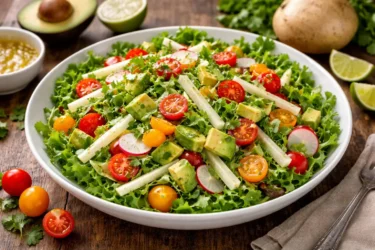
You can eat raw jicama just as it is or add it to other dishes.

Cooked jicama adds texture and taste to various dishes.
Also Read: Chickpeas (Garbanzo beans): Uses, Benefits, Side Effects By Dr. Rajeev Singh
Although jicama is often safe and nutritious to eat, it is essential to note some potential risks and safety rules.
Although rare, some people are allergic to jicama. It can cause itching of the skin and around the mouth1. If you think you may be allergic to jicama, a healthcare provider can guide you. Also, eating too much jicama might cause digestive issues like gas or bloating because of its high fibre content. So, it’s best to increase your fibre intake gradually.
Always remember, only the root of the jicama plant is safe to eat. The stem, leaves, beans, and skin contain a toxic compound called rotenone1. Eating these parts can cause vomiting, muscle tremors, low blood pressure, and increased heart rate. Peel the skin off before you eat jicama to avoid any possible toxins.
Also Read: Red Bananas: Uses, Benefits, Side Effects and More By Dr. Smita Barode
Jicama is a versatile and nutrient-dense vegetable that offers a host of health benefits. Its impressive nutrient profile, along with the health-promoting properties of its content, such as antioxidants and fibre, make it a valuable addition to any diet.
Incorporating jicama into your meal plans is simple and enjoyable, whether eaten raw or cooked in various dishes. Just remember to remove the skin and consume only the root. Avoid all other parts of the plant. Jicama may support heart health and weight management and is a delicious vegetable that may help improve your overall well-being.
Also Read: Radish (Mooli): Uses, Benefits, Side Effects and More!
Yes, you can eat it raw. It adds a nice crunchy texture to salads, and it’s a great snack. But you can also cook it in stir-fries, soups, and stews.
The taste of jicama is mildly sweet and a bit nutty. It is said to taste like a potato and pear mix or a water chestnut.
Jicama is considered good for individuals with diabetes as it is low in sugar and calories, but high in fibre. Its low glycaemic index indicates that it doesn’t cause a sudden surge in blood sugar after eating.
Jicama can sometimes cause allergies for some people. Itchy skin and mouth are common symptoms. Eating too much jicama can cause digestive issues like gas or bloating, due to its high fibre content. You should contact your doctor or healthcare provider to understand how to manage these side effects. Also, only the root of jicama is edible, while other parts of the plant contain rotenone, which is a toxic compound.
Disclaimer: The information provided here is for educational/awareness purposes only and is not intended to be a substitute for medical treatment by a healthcare professional and should not be relied upon to diagnose or treat any medical condition. The reader should consult a registered medical practitioner to determine the appropriateness of the information and before consuming any medication. PharmEasy does not provide any guarantee or warranty (express or implied) regarding the accuracy, adequacy, completeness, legality, reliability or usefulness of the information; and disclaims any liability arising thereof.
Links and product recommendations in the information provided here are advertisements of third-party products available on the website. PharmEasy does not make any representation on the accuracy or suitability of such products/services. Advertisements do not influence the editorial decisions or content. The information in this blog is subject to change without notice. The authors and administrators reserve the right to modify, add, or remove content without notification. It is your responsibility to review this disclaimer regularly for any changes.
 1
1 
Comments

Leave your comment...
You may also like























Comments