Bloating, abdominal discomfort, or changes in the appetite in women may seem like digestive issues; however, if they are unusual for you and persist for longer than 2 weeks, they should be taken seriously. While these symptoms can have many causes, persistent or unusual changes may sometimes indicate ovarian cancer1. This blog explores the common signs of ovarian cancer, risk factors, diagnosis and treatment of ovarian cancer, and can help you understand what to look out for and when to seek medical advice.
Ovarian cancer is a cancer that starts in the ovaries, two small organs in the female reproductive system that produce eggs and hormones2. It develops when abnormal cells grow uncontrollably in the ovary and form a tumour3. Some ovarian cancers may start in the fallopian tubes (small tubes that connect the ovaries to the womb) or nearby peritoneal tissues4.
Although ovarian cancer cannot always be prevented, knowing the signs of ovarian cancer and recognising changes in your body can help you seek medical advice when needed. The common and possible ovarian cancer symptoms include1,5:
It is important to pay attention to symptoms that are new, persistent, occur more frequently than usual, or represent a noticeable change from your normal pattern.
Note: These symptoms may also be caused by conditions other than ovarian cancer and are not just ovarian cancer symptoms5.
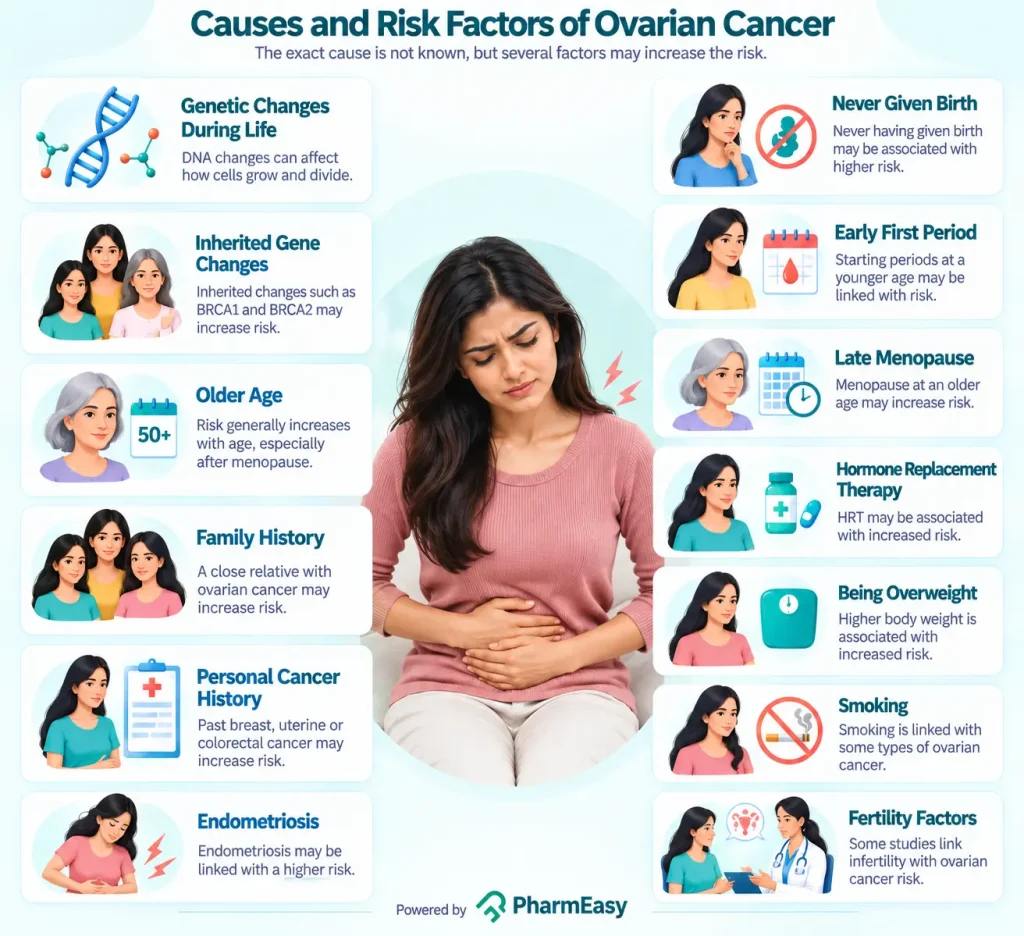
The exact cause of ovarian cancer is not exactly known. Several factors may increase the chance of developing ovarian cancer. Let’s have a look at ovarian cancer risk factors:
Note: Having one or more risk factors does not mean that a woman will develop ovarian cancer. Some women may develop the disease without having any known risk factors6.
Ovarian cancer is grouped into different types depending on the cells where the cancer starts. The three main types are9:
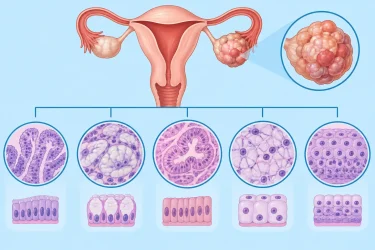
This is the most common type of ovarian cancer. It begins in the cells that form the outer covering of the ovary. The different types of epithelial ovarian cancer include9,10:
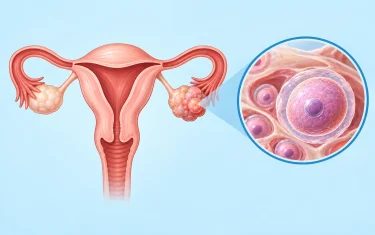
This is a less common type that starts in the cells that normally develop into eggs. It is more often found in teenagers and younger women9.
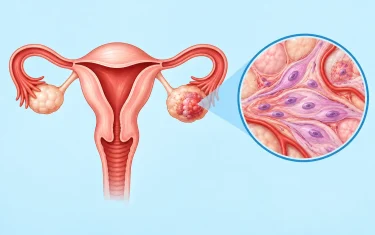
This rare type develops in the cells that support the ovary and help it produce hormones. It develops in the tissues that support the ovaries and may be diagnosed at an early stage9.
Together, these three groups make up most ovarian cancers. Some cancers found in the ovary may also have started in another part of the body and then spread to the ovary.
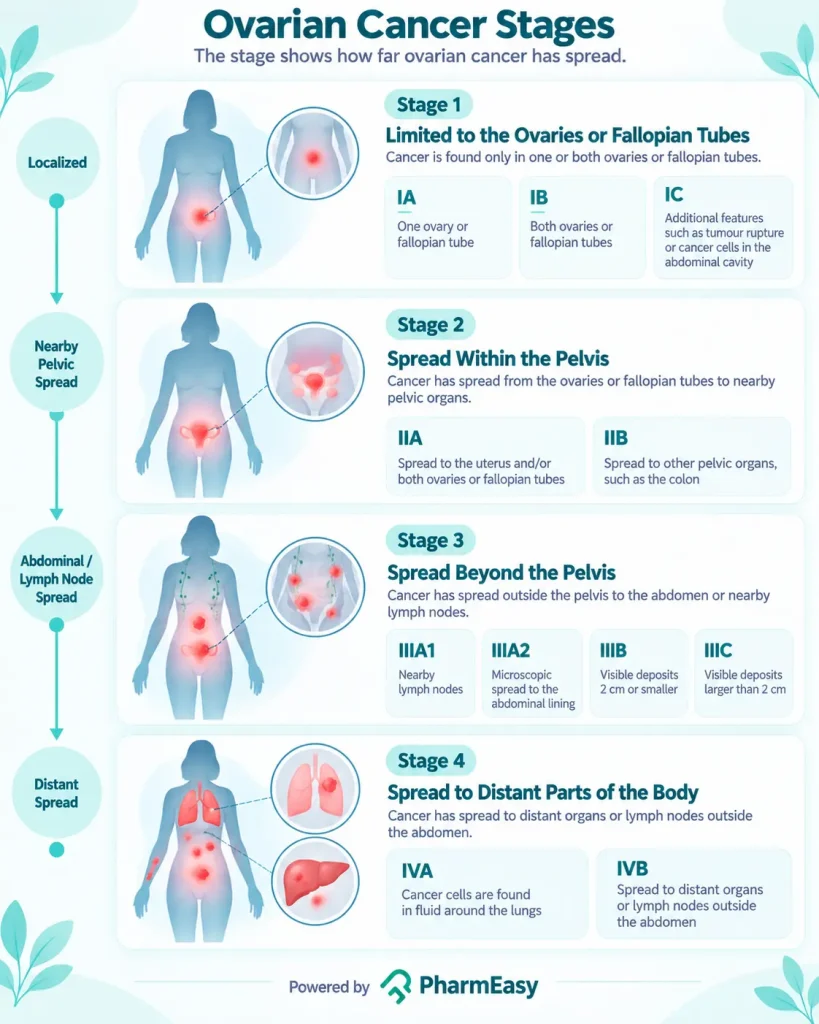
Ovarian cancer is usually divided into four stages, based on how far it has spread5.
Knowing the ovarian cancer stages helps doctors determine the right treatment options.
If a doctor suspects ovarian cancer, they may recommend a few tests for ovarian cancer diagnosis. These include:
Ovarian cancer treatment varies from person to person. It depends on the type and stage of the cancer, its location, whether it has spread, and the person’s overall health. A specialist team will discuss the most suitable treatment and what to expect5. The common options include:

Surgery is a common treatment for ovarian cancer and aims to remove as much of the cancer as possible. Depending on the type and stage of the cancer, this may involve removing one or both ovaries, the fallopian tubes, the uterus, or nearby tissues.
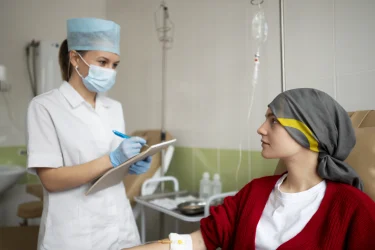
Chemotherapy uses medicines to stop cancer cell growth by stopping them from multiplying or killing them. It may be given before or after surgery and can also be used if the cancer returns.

These medicines target specific cancer cells or other type of cells that help cancer cells grow. They may be offered to some people with advanced or recurrent ovarian cancer.
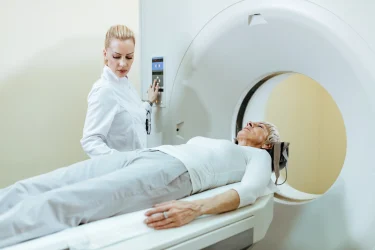
Radiotherapy uses high-energy radiation to destroy cancer cells. It is not usually the main treatment for ovarian cancer, but it may sometimes be used to control symptoms or treat cancer that has spread to another part of the body.
This treatment uses substances to boost or direct the body’s immune system to help fight cancer cells5.
Some of the ovarian cancers develop or grow using hormones such as estrogen. Hormone therapy may be used to block these hormones so that the cancer does not grow.

If ovarian cancer comes back, the treatment will depend on where it has returned, previous treatments and the person’s overall health. Options may include chemotherapy, targeted therapy, hormone therapy or further surgery14.
Not everyone will need all these treatments. The Gynaecologic oncology team will explore options available for each individual and, based on the possible benefits and side effects of each, will help the individual decide on the most suitable approach to remove as much of the cancer as possible (cytoreduction).
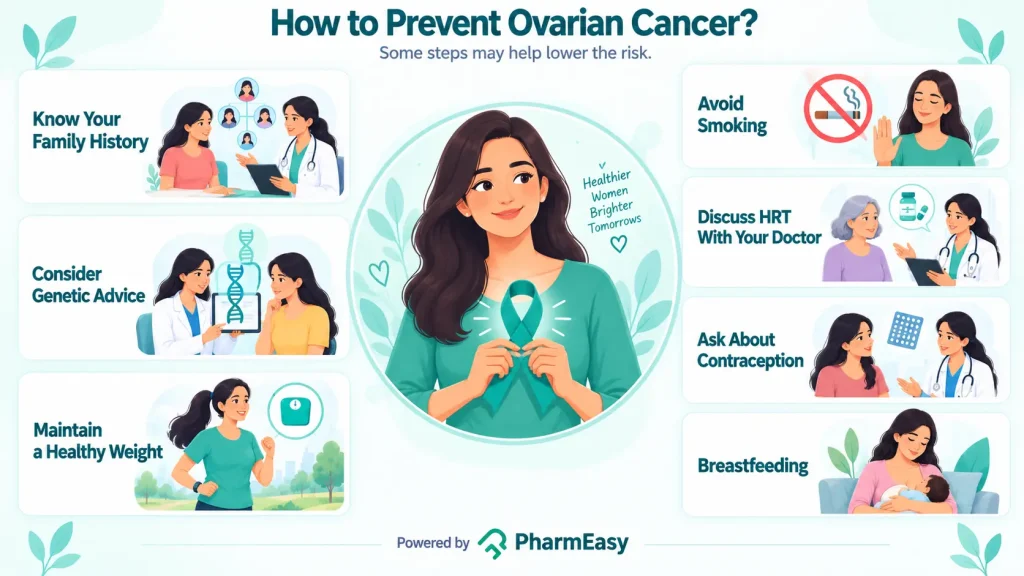
There is no certain way to prevent ovarian cancer, but some steps may help lower its chance or help early diagnosis15. These include:
No method can completely prevent ovarian cancer, so knowing the symptoms and getting unusual changes checked is important.
Also Read: Common Cancer Symptoms and Warning Signs in Women
Speak to your doctor if you notice symptoms such as the following that are unusual for you, last for 2 weeks or longer, become more frequent, or do not improve1:
These symptoms can have many causes and do not necessarily mean ovarian cancer. However, if they are unusual for you or persist, it is important to speak to your doctor.
Ovarian cancer may be hard to spot because its early signs can resemble common stomach or urinary problems. Being aware of changes such as persistent bloating, pelvic or tummy discomfort, reduced appetite or feeling full sooner than usual can help you recognise when you may need medical attention. Talking to a doctor about symptoms that don’t settle can help identify the underlying cause and ensure you get the right care early. Knowing your family history and personal risk can also help you discuss any concerns with your doctor.
Survival rates depend largely on the stage and type of ovarian cancer. Earlier-stage ovarian cancer generally has better survival outcomes than cancer diagnosed at a later stage18.
Ovarian cancer can be treated with surgery, chemotherapy and, for some people, targeted therapy. Early detection is generally linked with a better prognosis19.
Ovarian cancer can sometimes be genetic. Changes in genes such as BRCA1 and BRCA2 can increase the risk of developing ovarian cancer2.
Pelvic organs prolapse is not usually a sign of ovarian cancer20. It occurs when the womb, bladder or bowel bulges into the vagina because the supporting tissues have weakened. Symptoms of prolapse can include a feeling of heaviness or pressure in the lower abdomen or vagina, a bulge or lump in or around the vagina, constipation, or problems passing urine21.
HPV is mainly linked to cervical and some other cancers22 and is not usually known to cause ovarian cancer.
Yes. Advanced ovarian cancer can spread to the lungs and other parts of the body23 .
Some studies have suggested a possible link between polycystic ovary syndrome (PCOS) and ovarian cancer risk, particularly in younger (premenopausal) women. However, the evidence is limited and more research is needed to clarify whether PCOS is associated with an increased risk of ovarian cancer24.
1. CDC. Symptoms of Ovarian Cancer. Ovarian Cancer. February 26, 2025. Accessed September 3, 2026. https://www.cdc.gov/ovarian-cancer/symptoms/index.html
2. Ovarian Cancer. Accessed September 3, 2026. https://medlineplus.gov/ovariancancer.html
3. What Is Cancer? – NCI. September 17, 2007. Accessed September 3, 2026. https://www.cancer.gov/about-cancer/understanding/what-is-cancer
4. Ovarian, Fallopian Tube, & Primary Peritoneal Cancers Prevention – NCI. Accessed September 8, 2026. https://www.cancer.gov/types/ovarian/patient/ovarian-prevention-pdq?
5. Treatment of Ovarian Epithelial, Fallopian, & Peritoneal Cancers – NCI. February 10, 2026. Accessed September 3, 2026. https://www.cancer.gov/types/ovarian/patient/ovarian-epithelial-treatment-pdq
6. CDC. Ovarian Cancer Risk Factors. Ovarian Cancer. September 22, 2025. Accessed September 3, 2026. https://www.cdc.gov/ovarian-cancer/risk-factors/index.html
7. Ovarian cancer – Causes. nhs.uk. October 20, 2017. Accessed September 3, 2026. https://www.nhs.uk/conditions/ovarian-cancer/causes/
8. Salehi F, Dunfield L, Phillips KP, Krewski D, Vanderhyden BC. Risk factors for ovarian cancer: an overview with emphasis on hormonal factors. J Toxicol Environ Health B Crit Rev. 2008;11(3-4):301-321. doi:10.1080/10937400701876095 https://pubmed.ncbi.nlm.nih.gov/18368558/
9. 3 types of ovarian cancer, explained. NIH MedlinePlus Magazine. Accessed September 3, 2026. https://magazine.medlineplus.gov/article/3-types-of-ovarian-cancer-explained
10. Tumor Morphology | SEER Training. Accessed September 3, 2026. https://training.seer.cancer.gov/ovarian/abstract-code-stage/ovarian-morphology.html?
11. Ovarian Cancer Early Detection, Diagnosis, and Staging. Accessed September 3, 2026. https://www.cancer.org/cancer/types/ovarian-cancer/detection-diagnosis-staging.html
12. Ovarian cancer – Tests and next steps. nhs.uk. February 15, 2022. Accessed September 3, 2026. https://www.nhs.uk/conditions/ovarian-cancer/tests-and-next-steps/
13. Expert Panel on GYN and OB Imaging, Stein EB, Venkatesan AM, et al. ACR Appropriateness Criteria® Staging and Follow-Up of Ovarian Cancer: 2025 Update. J Am Coll Radiol JACR. 2025;22(11S):S689-S698. doi:10.1016/j.jacr.2025.08.033 https://pubmed.ncbi.nlm.nih.gov/41193052/
14. Treatment if your ovarian cancer comes back. Accessed September 3, 2026. https://www.cancerresearchuk.org/about-cancer/ovarian-cancer/treatment/if-your-cancer-comes-back
15. Causes, Risk Factors, and Prevention of Ovarian Cancer. Accessed September 3, 2026. https://www.cancer.org/cancer/types/ovarian-cancer/causes-risks-prevention.html
16. Ovarian cancer – Causes. nhs.uk. October 20, 2017. Accessed August 27, 2026. https://www.nhs.uk/conditions/ovarian-cancer/causes/
17. CDC. Reducing Risk for Ovarian Cancer. Ovarian Cancer. September 23, 2025. Accessed August 27, 2026. https://www.cdc.gov/ovarian-cancer/prevention/index.html
18. Yeole BB, Kumar AVR, Kurkure A, Sunny L. Population-based survival from cancers of breast, cervix and ovary in women in Mumbai, India. Asian Pac J Cancer Prev APJCP. 2004;5(3):308-315. https://pubmed.ncbi.nlm.nih.gov/15373712/
19. CDC. Treatment of Ovarian Cancer. Ovarian Cancer. April 23, 2026. Accessed September 4, 2026. https://www.cdc.gov/ovarian-cancer/treatment/index.html
20. DeMarco C. Can pelvic organ prolapse be a sign of cancer? UT MD Anderson. Accessed September 3, 2026. https://www.mdanderson.org/cancerwise/can-pelvic-organ-prolapse-be-a-sign-of-cancer.h00-159618645.html
21. Pelvic organ prolapse – NHS. Accessed September 3, 2026. https://www.nhs.uk/conditions/pelvic-organ-prolapse/
22. CDC. Cancers Caused by HPV. Human Papillomavirus (HPV). March 3, 2025. Accessed September 4, 2026. https://www.cdc.gov/hpv/about/cancers-caused-by-hpv.html
23. Gardner AB, Charo LM, Mann AK, Kapp DS, Eskander RN, Chan JK. Ovarian, uterine, and cervical cancer patients with distant metastases at diagnosis: most common locations and outcomes. Clin Exp Metastasis. 2020;37(1):107-113. doi:10.1007/s10585-019-10007-0 https://pubmed.ncbi.nlm.nih.gov/31758289/
24. Li Z, Wang YH, Wang LL, et al. Polycystic ovary syndrome and the risk of endometrial, ovarian and breast cancer: An updated meta-analysis. Scott Med J. 2022;67(3):109-120. doi:10.1177/00369330221107099 https://pubmed.ncbi.nlm.nih.gov/35686317/
Disclaimer: The information provided here is for educational/awareness purposes only and is not intended to be a substitute for medical treatment by a healthcare professional and should not be relied upon to diagnose or treat any medical condition. The reader should consult a registered medical practitioner to determine the appropriateness of the information and before consuming any medication. PharmEasy does not provide any guarantee or warranty (express or implied) regarding the accuracy, adequacy, completeness, legality, reliability or usefulness of the information; and disclaims any liability arising thereof.
Links and product recommendations in the information provided here are advertisements of third-party products available on the website. PharmEasy does not make any representation on the accuracy or suitability of such products/services. Advertisements do not influence the editorial decisions or content. The information in this blog is subject to change without notice. The authors and administrators reserve the right to modify, add, or remove content without notification. It is your responsibility to review this disclaimer regularly for any changes.


Many people consider age when it comes to fertility, but there is an additional key factor that might provide valuable insights anti-mullerian hormone (AMH). AMH is important in evaluating the ovarian reserve and can assist doctors in determining reproductive potential of the individual1. This article explores everything you need to know about AMH, including what it is, its normal range, and what low and high AMH levels mean.
Anti-mullerian hormone (AMH) is a hormone that plays an important role in reproductive development and ovarian function. In women, it is produced by small growing follicles (tiny fluid-filled sacs) in the ovaries that contain immature eggs. The amount of AMH in the blood can indirectly help the experts estimate the size of ovarian follicular pool, which is why it is widely employed as an indicator of ovarian reserve.
In men, AMH is produced by the Sertoli cells in the testes from their foetal development stage through childhood. It contributes to the normal development of the male reproductive system before birth. However, after puberty, its levels decrease in men as the sertoli cells mature1.
Did You Know?
AMH and its assessment has many different functions in the human body, including the following:
The benefits associated with healthy AMH levels include:
Both low and high AMH levels can provide important information on reproductive health. Here’s what each may indicate:
Low AMH levels often indicate that a woman’s ovaries have fewer eggs than expected for her age. The possible causes include:
The potential implications of low AMH level:
High AMH levels often indicate a larger number of developing follicles. it can also be associated with:
The AMH test is a simple blood test that requires no special preparation. Here is how it is done:
AMH levels are commonly interpreted as follows:
Note: The AMH reference range may differ slightly across laboratories, testing methods, and age groups. The doctor will interpret the AMH results based on one’s age, medical history, symptoms, and the results of other tests.
Adopting healthy lifestyle habits may support overall reproductive health and ovarian function. Although these habits may not directly increase anti-mullerian hormone levels, they can help support overall fertility. Here are some ways to support ovarian health and fertility:
Note: There is no proven natural approach for increasing AMH levels. These lifestyle changes benefit general reproductive health and fertility, although they may not significantly affect AMH levels, which normally decrease with age.
Consult a doctor if you have:
Note: The above mentioned scenarios do not indicate a direct test for AMH level, those might indicate the need to consult a doctor.
Also Read: Male Puberty: First Signs, Stages, Age, Changes & When It Ends
Anti-Mullerian hormone (AMH) is a valuable marker for assessing ovarian reserve and is commonly used as a part of fertility evaluation however, it does not provide a complete picture of fertility. Understanding AMH levels can help support informed decisions about reproductive health and family planning. In cases you have fertility concerns or abnormal AMH test results, consulting a doctor is important for comprehensive evaluation and appropriate guidance.
Also Read: What Does Oxytocin Do? Everything You Need to Know About the Love Hormone
There is no single good AMH level that guarantees pregnancy. AMH level reflects ovarian reserve. For conception in an otherwise healthy female, there are other factors which play an important role, like age, egg quality, reproductive health, sperm health of partner.
No. A low AMH level does not mean infertility. It simply suggests a reduced ovarian reserve, meaning fewer eggs remain in the ovaries. While a low AMH level may be associated with reduced fertility in some individuals, it does not determine the ability to conceive1, as factors such as egg quality, age, and overall reproductive health also play an important role in fertility.
Yes. High AMH levels may be linked to PCOS, as women with PCOS typically have a greater number of tiny ovarian follicles that produce AMH. However, a high AMH level alone cannot diagnose PCOS and it should be interpreted along with symptoms and other examination findings1.
AMH level varies across the lifespan and generally reaches its highest levels in early adulthood, around 20–25 years, afterwards it gradually declins with age11.
There is no proven, natural method for increasing AMH levels. However, living a healthy lifestyle, which includes eating a balanced diet, exercising regularly, maintaining a healthy weight, quitting smoking, and managing stress can benefit overall reproductive health and fertility6.
Disclaimer: The information provided here is for educational/awareness purposes only and is not intended to be a substitute for medical treatment by a healthcare professional and should not be relied upon to diagnose or treat any medical condition. The reader should consult a registered medical practitioner to determine the appropriateness of the information and before consuming any medication. PharmEasy does not provide any guarantee or warranty (express or implied) regarding the accuracy, adequacy, completeness, legality, reliability or usefulness of the information; and disclaims any liability arising thereof.
Links and product recommendations in the information provided here are advertisements of third-party products available on the website. PharmEasy does not make any representation on the accuracy or suitability of such products/services. Advertisements do not influence the editorial decisions or content. The information in this blog is subject to change without notice. The authors and administrators reserve the right to modify, add, or remove content without notification. It is your responsibility to review this disclaimer regularly for any changes.
Many people wonder if anal sex can lead to colon cancer. Currently, anal sex itself is not considered a direct cause of colon cancer1. However, certain infections from anal intercourse may affect the anal area and increase the risk of anal cancer2. In this article, we will discuss colon cancer, whether it is associated with anal sex, risk factors for colon cancer, symptoms that shouldn’t be ignored, and when to seek medical attention.
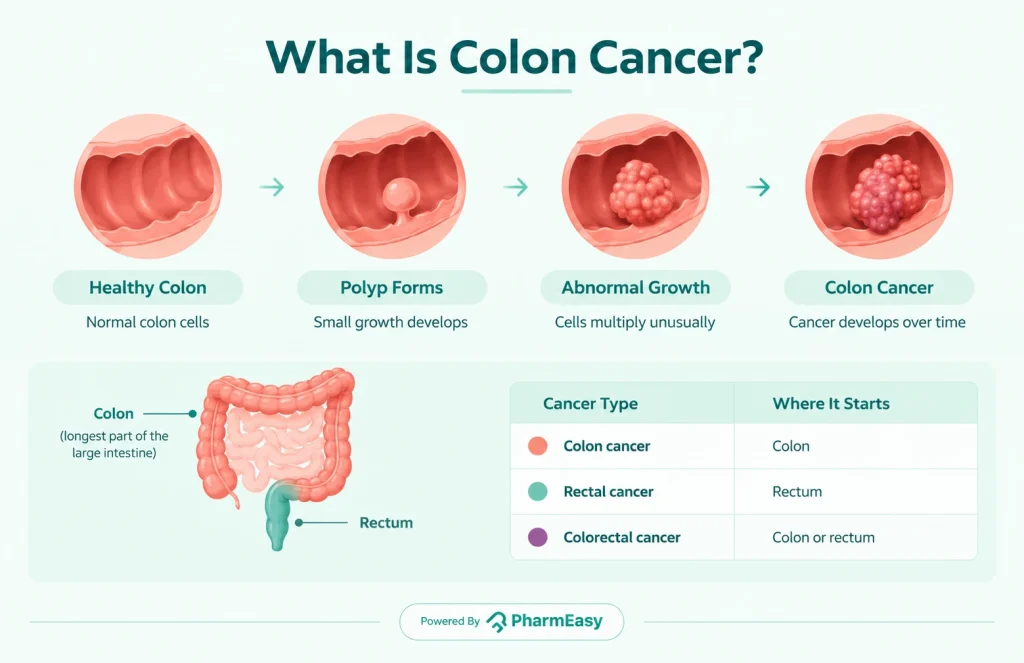
Colon cancer is a type of cancer that starts in the colon, which is the longest part of the large intestine. It usually begins when colon cells grow and divide unusually, forming a small growth called a polyp. Some polyps are harmless, while others may gradually develop into cancer over time. Colon cancer specifically affects the colon, while rectal cancer starts in the rectum, the final part of the large intestine. When cancer affects either the colon or rectum, it can be called colorectal cancer3.
Anal sex is not an established direct cause of colon cancer. Current evidence does not show that having anal sex causes cancer to develop in the colon1. Colon cancer usually develops because of changes in the cells of the colon and is influenced by factors such as age, family history, lifestyle, and certain medical conditions4. Therefore, anal sex should not be considered a direct cause of colon cancer.
Human papillomavirus (HPV) is a very common virus that can spread through intimate skin-to-skin contact, including sexual contact (vaginal, anal or oral sex)5. Some types of HPV can cause changes in cells that may eventually lead to cancer. HPV is strongly linked to anal cancer, which begins in the tissues around or inside the anus2.
However, anal cancer and colon cancer are different diseases because they develop in different parts of the digestive tract. A link between HPV and anal cancer does not mean that HPV or anal sex directly causes colon cancer1. Although some studies have found a possible link between HPV infection and colorectal cancer, more research is needed to confirm whether HPV directly contributes to its development6.
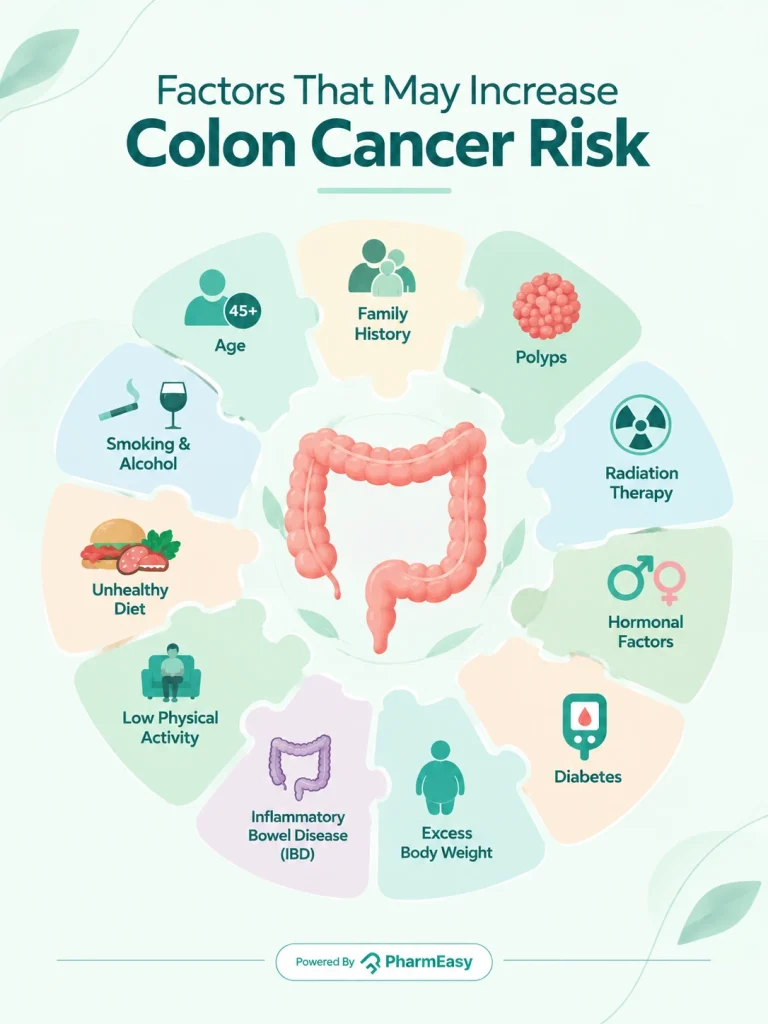
Several factors can increase the risk of colon cancer. These include:
Note: Having one or two risk factors doesn’t mean that you’ll get colon cancer, and one can get colon cancer even if one does not have a risk factor. It is important to consult a doctor if you are experiencing persistent symptoms of colon (or colorectal) cancer.
Also Read: Does Masturbating Increase Risk of Prostate Cancer or Vice Versa?
The risk of colon cancer may be reduced by following these tips:
Note: Although these tips may help reduce the risk of colon cancer, they cannot guarantee that you will not develop the disease. While some risk factors can be addressed, others, such as family history, cannot be changed.
Colon or related cancers can bring about many symptoms, which include common symptoms like:
See a doctor if you experience symptoms like blood in your stool, lasting changes in bowel habits, ongoing stomach discomfort, unexplained weight loss, or unusual tiredness9. Do not ignore repeated bleeding by assuming it is only due to haemorrhoids. Seek urgent care if you have heavy bleeding, severe abdominal pain, repeated vomiting, or difficulty passing stool or gas9,10. If you have a family history of colorectal cancer, previous high-risk polyps, IBD, or an inherited condition linked to colorectal cancer, speak with your doctor about the right screening schedule for you4,7.
Also Read: Is Bowel Leakage a Sign of Cancer?
Anal sex itself is not known to cause colon cancer. Although HPV can be linked to anal cancer, this does not mean that anal sex or HPV causes cancer in the colon. Factors such as age, family history, lifestyle, and certain health conditions can affect the risk of colon cancer. Knowing the warning signs and following recommended screening can help with early detection and timely treatment.
Anal sex does not necessarily cause bowel problems, but factors like the frequency of anal intercourse may affect the muscles that control bowel movements and increase the risk of stool incontinence or pain with intercourse. However, more research is needed to fully understand this association11.
No, colon cancer begins in the colon, which is the longest part of the large intestine, while anal cancer develops in the tissues of the anus, the opening through which stool leaves the body. Although both affect the lower digestive system, they are separate types of cancer3,12.
No, there is no way to guarantee the prevention of colon cancer. However, healthy lifestyle choices may help lower the risk and appropriate screening may help with early diagnosis and treatment of the cancer8.
Doctors may use different tests to check for colon cancer, depending on your symptoms and risk factors. These may include stool tests, blood tests, and a colonoscopy to look inside the colon. If an abnormal area is found, the doctor may take a small tissue sample, called a biopsy, to confirm whether cancer cells are present3.
Treatment can be effective, particularly if cancer is found at an early stage. Treatment options depend on factors such as the age, cancer stage and location, and overall health of the individual. Common treatment options include chemotherapy, radiation therapy, surgery, immunotherapy, and targeted therapy.
1. Diaz JA, Goldman R, Arellano N, Borkan J, Eaton CB. Brief report: Exploration of colorectal cancer risk perceptions among Latinos. J Immigr Minor Health. 2011;13(1):188-192. doi:10.1007/s10903-009-9312-1 https://pubmed.ncbi.nlm.nih.gov/20063065/
2. Anal cancer causes and risk factors. NCI. 2025. Available from: https://www.cancer.gov/types/anal/causes-risk-factors
3. Colorectal cancer. MedlinePlus. 2024. Available from: https://medlineplus.gov/colorectalcancer.html
4. Colorectal cancer risk factors. CDC. 2026. Available from: https://www.cdc.gov/colorectal-cancer/risk-factors/index.html
5. HPV and cancer. NCI. 2025. Accessed August 28, 2026. https://www.cancer.gov/about-cancer/causes-prevention/risk/infectious-agents/hpv-and-cancer
6. Hsu CH, Lin YJ, Chen YC, et al. Human Papillomavirus and Risk of Colorectal Cancer: An Analysis of Nationwide Claims Data. Medicina (Kaunas). 2022;58(10):1461. doi:10.3390/medicina58101461 https://pubmed.ncbi.nlm.nih.gov/36295621/
7. Colorectal cancer risk factors. American Cancer Society. 2025. Available from: https://www.cancer.org/cancer/types/colon-rectal-cancer/causes-risks-prevention/risk-factors.html
8. Can colorectal cancer be prevented? American Cancer Society. 2025. Available from: https://www.cancer.org/cancer/types/colon-rectal-cancer/causes-risks-prevention/prevention.html
9. Symptoms of colorectal cancer. CDC. 2026. Available from: https://www.cdc.gov/colorectal-cancer/symptoms/index.html
10. Songtanin B, Chu VM, Deb A, Islam S, Islam E, Nugent K. Vomiting and profound weight loss as a clue to the diagnosis of malignant coloduodenal fistula. Proc (Bayl Univ Med Cent). 2022;35(2):237-238. doi:10.1080/08998280.2021.2008220. https://pubmed.ncbi.nlm.nih.gov/35261464/
11. Chen AB, Kalichman L. Pelvic floor disorders due to anal sexual activity in men and women: A narrative review. Arch Sex Behav. 2024;53(10):4089-4098. doi:10.1007/s10508-024-02995-2 https://pubmed.ncbi.nlm.nih.gov/39287780/
12. Anal cancer. MedlinePlus. 2025. Available from: https://medlineplus.gov/analcancer.html
Disclaimer: The information provided here is for educational/awareness purposes only and is not intended to be a substitute for medical treatment by a healthcare professional and should not be relied upon to diagnose or treat any medical condition. The reader should consult a registered medical practitioner to determine the appropriateness of the information and before consuming any medication. PharmEasy does not provide any guarantee or warranty (express or implied) regarding the accuracy, adequacy, completeness, legality, reliability or usefulness of the information; and disclaims any liability arising thereof.
Links and product recommendations in the information provided here are advertisements of third-party products available on the website. PharmEasy does not make any representation on the accuracy or suitability of such products/services. Advertisements do not influence the editorial decisions or content. The information in this blog is subject to change without notice. The authors and administrators reserve the right to modify, add, or remove content without notification. It is your responsibility to review this disclaimer regularly for any changes.
Noticing fluid, pus, blood or any substance coming out of the ear can make anyone anxious. This type of ear discharge, which is medically known as otorrhea, can result from pathologic factors like ear wax or certain pathologic causes1. Understanding the causes of otorrhea can help in taking appropriate decisions regarding the severity of the condition and whether a medical intervention is needed. In this blog, we will cover what otorrhea is, its types, causes, symptoms, treatment and preventive measures that could be taken.
Any fluid or substance draining from the ear is termed as ear discharge or otorrhea. Mostly ear discharge is considered a sign of some underlying conditions rather than being a disease itself. It can result following certain infections, injuries, and some tissue growths1. The symptoms can vary based on the underlying condition that led to discharge, and can include pain, fever, dizziness, ringing in the ears etc. However, untreated discharge cases can lead to several complications, including hearing loss and spread of the infection to surrounding structures2.
Did You Know?
Based on the consistency, colour and appearance, ear discharges can be of five types4. Recognising the different types can help in reaching the diagnosis promptly and initiating appropriate interventions.
Ear discharge causes are mainly pointing towards any underlying infections, past injuries or procedures done in the ear.
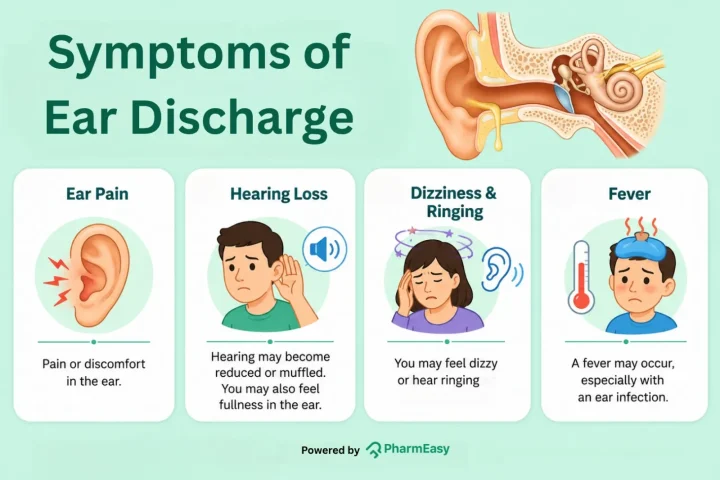
Ear discharge symptoms can vary based on the causes of discharge and include:
| Ear discharge in adults | Ear discharge in children |
| In adults, external ear infection is more common compared to children, along with acute middle ear infection and perforation of the eardrum3. | In children, the most common cause of discharge is middle ear infection, most commonly in the age group of 6 to 24 months3. |
| In adults, symptoms of an infection can include itchiness, irritation, a sense of fullness in the ear, pain and ear discharge11. | Children might show signs of any infection by rubbing or pulling the ear, being irritable, avoiding foods and losing their balance11. |
| Ear discharge in adults resolves based on the underlying causes. In cases of middle ear infections, oral antibiotics only provide a slight reduction of symptoms. In most cases, ear drops are preferred, provided there is no history of any other underlying diseases8. | In most cases of ear discharge in children, spontaneous resolution can be seen within one week12. Oral antibiotics are most beneficial in children having middle ear infection in both ears and who are aged more than 2 years8. |
| For treatment of ear discharge in adults with chronic suppurative otitis media (CSOM), topical antibiotics alone or along with other topical steroids are recommended. Ear cleansing can also be beneficial13. | For treatment in children with CSOM, topical antibiotics are preferred over antiseptics. Limited evidence is present regarding the benefits of ear cleansing, though it is usually recommended for children13. |
Diagnostic procedures mainly focus on a detailed history and examination to determine the underlying cause. Other tests are done if there is uncertainty in cause or more serious conditions are suspected.
Ear discharge treatment can vary based on the underlying cause, and it can be8:
Keeping the ears dry and avoiding inserting foreign objects such as cotton tips are also part of the otorrhea treatment, as they can help in preventing the further progression of the condition. A persistent, foul-smelling discharges needed to be assessed by a medical practitioner. Also, use of eardrops without proper medical attention might do danger to your health.
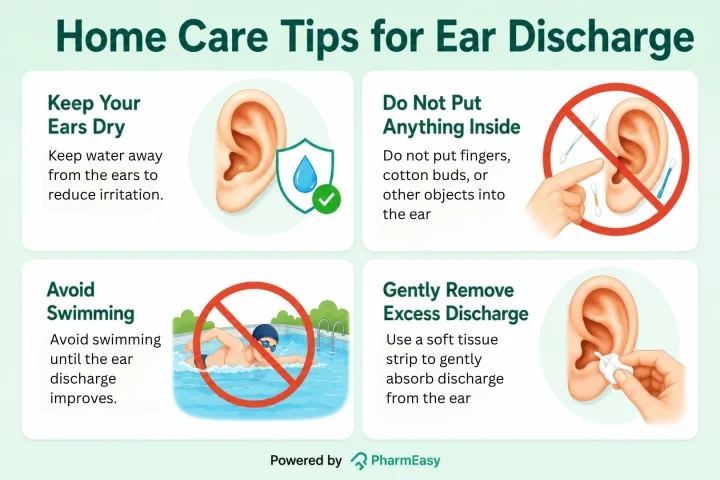
Home care tips that can help for ear discharge depend on the cause and symptoms of the discharge8:
Untreated ear infections along with the discharge can lead to complications, including2:
The following general preventive measures can be taken to avoid ear discharge:
Consultation with a doctor is recommended in the following instances7:
Immediate medical attention is required if external ear infections are associated with weakness of nerves of the brain (cranial nerve palsy) as this might indicate bone involvement. Additionally, in individuals having compromised immunity such as diabetics, ENT consultation is important if there is presence of small, red, easily bleeding tissues (granulation tissue) that formed in the ear canal, along with redness and swelling of the outer ear or deteriorating symptoms8.
Ear discharge or otorrhea is the drainage of fluid or any substance from the ear. Causes of otorrhea mostly involve ear infections, inserting any foreign objects into the ear, injuries or a previous history of any procedures or surgeries related to the ear. Otorrhea symptoms can vary based on the underlying causes and can include pain, sensation of fullness, hearing loss, fever, along with discharge. Though most cases can be managed effectively, understanding about otorrhea can help in avoiding unnecessary concerns and taking appropriate measures.
Also Read: Ear Infection (Otitis Media): Causes, Symptoms, Types, Treatment and Prevention
Diagnosis of ear discharge is mainly based on a detailed medical history and physical examination. Any past history of injuries, swimming, surgeries, or hearing changes is noted. An otoscope is used to check the ear canals and eardrum. Hearing tests or imaging tests such as CT and MRI are needed based on the findings1.
Yellow or green discharge might contain pus and is usually associated with underlying ear infections. In purulent middle ear infections, the discharge can be yellow with pus11. In cases of rupture of the eardrum, white, yellow or bloody discharges can be seen7. However, the colour of the discharge might not point towards a particular condition. A medical evaluation is required to find the exact cause.
Yes. Earwax can sometimes be mistaken for discharge, especially when it is darker, soft and excessive. Earwax is a normal substance that is produced by the ear to protect the ear from dust particles7. However, if the earwax accumulation causes any discomfort and foul smelling medical attention is needed.
Ear discharge is not contagious. Discharges associated with external ear infection or middle ear infection don’t spread from person to person3,10.
Remission of the ear discharges are depended on the underlying causes. In most cases of middle ear infections, spontaneous remission happens within one day. And in the absence of any underlying systemic diseases, only ear drops are needed in most cases. Children under 2 years of age and those having infections in both ears benefit more from oral antibiotics8.
Swimming put at an increased risk for ear discharge due to more chances for external ear infection. Keeping the ears dry after swimming or using any cotton plugs to avoid splashing of water into the ear can be followed as a preventive measure against ear discharge caused by this8.
Yes. Rupturing of the eardrum caused by injuries due to any foreign objects that are inserted into the ear, pushing materials into the ear, sudden pressure changes as during air travel and middle ear infections can all cause ear discharge7.
Disclaimer: The information provided here is for educational/awareness purposes only and is not intended to be a substitute for medical treatment by a healthcare professional and should not be relied upon to diagnose or treat any medical condition. The reader should consult a registered medical practitioner to determine the appropriateness of the information and before consuming any medication. PharmEasy does not provide any guarantee or warranty (express or implied) regarding the accuracy, adequacy, completeness, legality, reliability or usefulness of the information; and disclaims any liability arising thereof.
Links and product recommendations in the information provided here are advertisements of third-party products available on the website. PharmEasy does not make any representation on the accuracy or suitability of such products/services. Advertisements do not influence the editorial decisions or content. The information in this blog is subject to change without notice. The authors and administrators reserve the right to modify, add, or remove content without notification. It is your responsibility to review this disclaimer regularly for any changes.
A sore throat that keeps coming back, hoarseness that does not improve, trouble swallowing, or a lump in the neck can naturally make you worry about throat cancer. These symptoms often have causes other than cancer, but persistent or worsening changes should not be ignored1. Learning about the types, symptoms, causes, risk factors, diagnosis, and treatment of throat cancer can help you recognise warning signs early. Knowing when to seek medical advice may also support earlier detection and better treatment outcomes.
Throat cancer refers to cancer that develops in the throat (pharynx) or voice box (larynx). The throat is the passage behind the nose and mouth that leads to the food pipe and windpipe. Cancer can start in different parts of this area, including the tonsils, the base of the tongue, or the voice box1.
Did You Know?
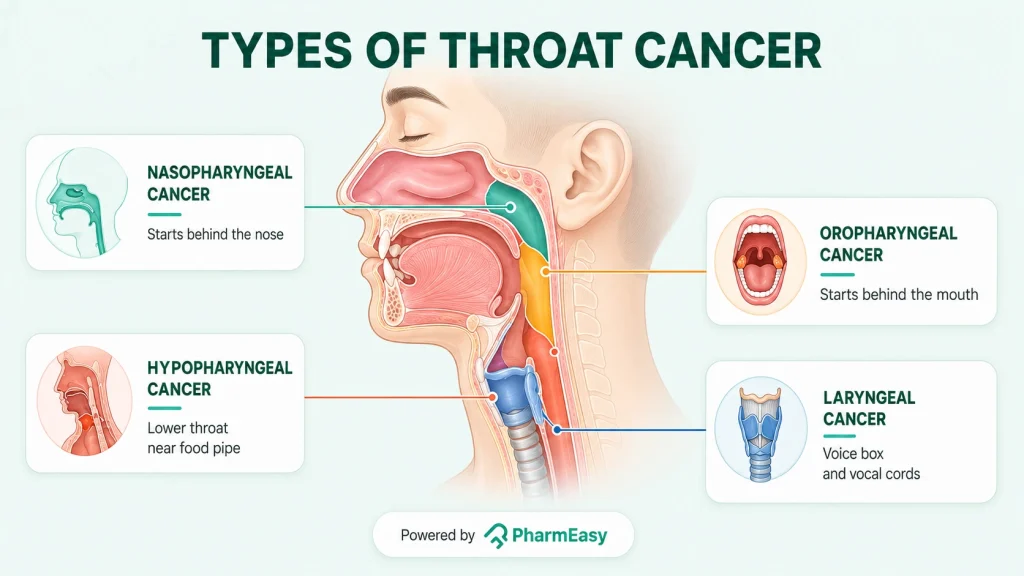
Cancer can develop in several parts of the throat. The main types are named after the area where the cancer starts:
The stage of throat cancer helps doctors describe how large the cancer is and whether it has spread. Staging can differ depending on the part of the throat affected, so the points below are a general guide rather than a substitute for a doctor’s explanation.
Note: These are general descriptions. The exact meaning of each stage varies between cancers of the nasopharynx, oropharynx, hypopharynx and larynx. HPV-related oropharyngeal cancers also have a different staging approach from some other throat cancers.
Throat cancer symptoms depend on where the cancer starts and how advanced it is. Some symptoms are common and can be caused by less serious conditions, but symptoms that persist should be checked by a doctor. Possible symptoms include:
Throat cancer develops when cells in the throat or voice box change and begin to grow in an abnormal, uncontrolled way. There is usually no single cause. Instead, several factors can increase the chance of these cell changes.
A risk factor is something that increases the chance of developing a disease. Having a risk factor does not mean a person will develop throat cancer, but it can make the condition more likely. Important risk factors include:
Note: A person can have one or more risk factors and never develop throat cancer. A person can also develop throat cancer without any known risk factors. If you notice possible warning signs, speak with a doctor for proper evaluation.
Throat cancer diagnosis usually involves checking the throat and neck, looking closely at the affected area, and confirming the diagnosis with a tissue sample if needed. The tests used depend on the symptoms and the part of the throat involved.
Note: Depending on the suspected cancer type, the doctor may recommend HPV testing or other laboratory tests on the biopsy sample. These results can help classify the cancer and guide treatment choices.
Also Read: Can CBC Test Detect Cancer? Unveiling the Potential of Blood Tests
Throat cancer treatment depends on the cancer type, location, stage, tumour size, overall health, and whether the cancer has spread. A care team may recommend one treatment or a combination of treatments.
Note: Treatment may also include supportive care to help with swallowing, nutrition, speech, pain and other treatment-related effects.
Throat cancer cannot always be prevented, but reducing known risks can lower the chance of developing it. The following steps may help reduce risk:
Note: These measures may lower risk, but they cannot guarantee complete prevention. A doctor or dentist should evaluate persistent, unusual, or worsening throat symptoms.
See a doctor if you have a sore throat, hoarseness, swallowing problems, or other throat symptoms that last for several weeks or keep coming back without a clear reason. Seek medical attention promptly if you notice a neck lump, unexplained weight loss, persistent ear pain, or blood in saliva or phlegm1,7. These symptoms can have many causes and do not necessarily mean cancer but getting them checked can help identify the problem early.
Also Read: Early Signs of Mouth Cancer You Should Know
Throat cancer can appear in different ways, and its symptoms may resemble those of less serious conditions. Persistent throat changes, voice changes, swallowing problems, or a neck lump should be assessed by a doctor. Knowing the warning signs and reducing avoidable risks may help with earlier detection and timely treatment.
Survival rates vary by cancer type, stage, overall health, and response to treatment. For example, US data report a 5-year relative survival rate of 62.5% for laryngeal cancer13. Some Indian studies have reported lower 5-year survival rates for laryngeal cancer, but these figures may reflect differences in stage at diagnosis, access to care, and study methods14.
Yes. Throat cancer can often be treated, and treatment is usually more effective when cancer is found early. The treatment plan may include surgery, radiation therapy, chemotherapy, targeted therapy, immunotherapy, or a combination of treatments, depending on the cancer type and stage4,5.
Throat cancer may cause a sore throat that does not improve, pain or difficulty when swallowing, hoarseness, a feeling that something is stuck in the throat, or a lump in the neck. These symptoms can also occur with non-cancer conditions, so a doctor’s assessment is important if they persist.1,2,7
No. Throat cancer is not contagious and cannot spread from one person to another through coughing, kissing, sharing food, or close contact. It develops from changes in a person’s own cells. HPV infection can spread between people, and some HPV infections can increase the risk of oropharyngeal cancer, but the cancer itself does not spread from person to person4,15.
Vaping exposes the throat to potentially harmful substances that may cause cellular damage. However, it is still unclear whether vaping directly causes throat cancer, and more long-term research is needed16.
Yes, certain high-risk types of HPV, especially HPV-16, can increase the risk of developing throat cancer, particularly cancer of the oropharynx4.
Acid reflux does not mean that a person will develop throat cancer. Some research has linked long-term gastro-oesophageal reflux disease with a higher risk of laryngeal cancer, but more research is needed to understand this relationship17.
1. Throat cancer. Healthdirect. 2024. Accessed August 13, 2026. https://www.healthdirect.gov.au/throat-cancer
2. Throat cancer symptoms. MedlinePlus. 2025. Accessed August 13, 2026. https://medlineplus.gov/throatcancer.html
3. Throat cancer. NCI. Accessed August 13, 2026. https://www.cancer.gov/publications/dictionaries/cancer-terms/def/throat-cancer
4. Oral cavity, oropharynx, hypopharynx, & larynx cancer prevention – NCI. 2024. Accessed August 13, 2026. https://www.cancer.gov/types/head-and-neck/patient/oral-prevention-pdq
5. Laryngeal cancer treatment. NCI. 2025. Accessed August 13, 2026. https://www.cancer.gov/types/head-and-neck/patient/adult/laryngeal-treatment-pdq
6. Oral cavity and oropharyngeal cancer stages. American Cancer Society. 2026. Accessed August 13, 2026. https://www.cancer.org/cancer/types/oral-cavity-and-oropharyngeal-cancer/detection-diagnosis-staging/staging.html
7. Throat Cancer. MedlinePlus. 2025. Accessed August 13, 2026. https://medlineplus.gov/throatcancer.html
8. Laryngeal and hypopharyngeal cancer causes, risk factors, and prevention. American Cancer Society. 2026. Accessed August 13, 2026. https://www.cancer.org/cancer/types/laryngeal-and-hypopharyngeal-cancer/causes-risks-prevention.html
9. Head and neck cancers basics CDC. 2025. Accessed August 13, 2026. https://www.cdc.gov/head-neck-cancer/about/index.html
10. Sun G, Cheng H, Yin M. Oral hygiene and cancer risk: emerging evidence and public health perspectives. PMC. doi:10.1007/s12672-026-04527-x https://pmc.ncbi.nlm.nih.gov/articles/PMC12923711/
11. Tests for oral cavity (mouth) and oropharyngeal (throat) cancers. American Cancer Society. 2021. Accessed August 13, 2026. https://www.cancer.org/cancer/types/oral-cavity-and-oropharyngeal-cancer/detection-diagnosis-staging/how-diagnosed.html
12. Tests for laryngeal cancer. Cancer Research UK. 2024. Accessed August 13, 2026. https://www.cancerresearchuk.org/about-cancer/laryngeal-cancer/getting-diagnosed/tests-laryngeal-cancer#blood-tests
13. Laryngeal cancer: Cancer stat facts. NCI. Accessed August 13, 2026. https://seer.cancer.gov/statfacts/html/laryn.html?statfacts_page=laryn.html&x=12&y=20&utm
14. Bobdey S, Jain A, Balasubramanium G. Epidemiological review of laryngeal cancer: An Indian perspective. Indian J Med Paediatr Oncol. 2015;36(3):154-160. doi:10.4103/0971-5851.166721 https://pubmed.ncbi.nlm.nih.gov/26855523/
15. Common cancer myths and misconceptions. NCI. 2024. Accessed August 13, 2026. https://www.cancer.gov/about-cancer/causes-prevention/risk/myths
16. Szukalska M, Szyfter K, Florek E, et al. Electronic cigarettes and head and neck cancer risk: Current state of art. Cancers (Basel). 2020;12(11):3274. doi:10.3390/cancers12113274 https://pubmed.ncbi.nlm.nih.gov/33167393/
17. Acid reflux disease and cancer Risk – NCI. 2021. Accessed August 13, 2026. https://dceg.cancer.gov/news-events/news/2021/gerd-cancer-risk
18. Martín-Hernán F, Sánchez-Hernández JG, Cano J, Campo J, del Romero J. Oral cancer, HPV infection and evidence of sexual transmission. Med Oral Patol Oral Cir Bucal. 2013;18(3):e439-e444. doi:10.4317/medoral.18419 https://pmc.ncbi.nlm.nih.gov/articles/PMC3668870/
Disclaimer: The information provided here is for educational/awareness purposes only and is not intended to be a substitute for medical treatment by a healthcare professional and should not be relied upon to diagnose or treat any medical condition. The reader should consult a registered medical practitioner to determine the appropriateness of the information and before consuming any medication. PharmEasy does not provide any guarantee or warranty (express or implied) regarding the accuracy, adequacy, completeness, legality, reliability or usefulness of the information; and disclaims any liability arising thereof.
Links and product recommendations in the information provided here are advertisements of third-party products available on the website. PharmEasy does not make any representation on the accuracy or suitability of such products/services. Advertisements do not influence the editorial decisions or content. The information in this blog is subject to change without notice. The authors and administrators reserve the right to modify, add, or remove content without notification. It is your responsibility to review this disclaimer regularly for any changes.
Cancer is considered one of the major health concerns worldwide. Cancer can affect any organ or tissue, and based on these, the causes, symptoms, and treatments can vary from case to case. Though not all cancers are preventable, adopting some healthy lifestyle habits and limiting the known risk factors can help in reducing the risk of developing certain types of cancers. This blog helps you understand what cancer is, its risk factors, how to prevent cancer, its diagnosis, treatment and when to seek medical advice to avoid unnecessary concerns and make informed decisions about one’s health.
Cancer is a disease in which certain cells in the body grow and multiply uncontrollably. In the human body, a natural process takes place as new cells are formed along with the removal of old, damaged cells. Normally, this process is controlled by many factors and in cancer, this normal mechanism is disturbed, which leads to the increased growth and multiplication of damaged cells.
Cancer cells behave differently from normal cells with regard to the processes involved in cell growth, division, repair, death and response to body’s immune system1.
Did You Know?
Cancers are caused by changes (mutations) in genetic materials which control the normal cell division process1. Several factors can control this, and avoiding these can help in the prevention of cancer occurrence. However, not every cancer is preventable, as some factors are non-modifiable, such as age and family history. However, 30%-50% of deaths due to cancer can be prevented by avoiding the risk factors and adopting evidence-based measures3.
Factors which might put a person at an increased chance for being affected by cancer are termed risk factors. These include:

Increasing age is considered one of the common risk factors of cancer. However, the age at which cancer may develop can vary based on the type of cancer. Cancers affecting the breast, colon, lung, and prostate usually occur around 63-72 years of age, while cancers like leukaemia are more common in children4.

Certain cancers can run in families through the passing down of genetic changes, which might increase the risk of cancer from their parents. This does not mean that cancer itself is passed down from the parents; rather, the changes in genes that put the person at an increased risk can be passed5.

Alcohol intake is linked with mouth, throat, liver and breast cancers. While, there is no completely risk-free level of alcohol consumption with to respect to cancer, the risk can be higher for those people who drink alcohol along with the use of tobacco6.

Certain infectious agents can increase the risk for developing cancer. Some viruses act by disturbing normal cell proliferation, and some infections might lead to weaker immunity and thereby to cancer. Viruses such as Epstein-Barr Virus (EBV), Hepatitis B and C viruses (HBV and HCV), Human immunodeficiency virus (HIV), human papillomavirus (HPV), human T-cell leukaemia virus (HTLV-1) and a bacterium named Helicobacter pylori (H.pylori) might increase the risk of certain cancers. Certain parasitic flatworms can also be involved in cancer development7.

High-energy radiation such as X-rays and gamma rays is most involved in the incidence of certain cancers. Some of the diagnostic procedures, including X-rays, computed tomography (CT), or positron emission tomography (PET) scans, might produce small changes in cells, though the risk for developing cancers is limited. Low-energy radiation such as that from cell phones and visible light has not proved to induce cancers in humans8. Radiotherapy on the other hand, intentionally uses high doses of ionizing radiation and can cause DNA damage to normal tissues; however, its benefits usually outweigh the long-term secondary-cancer risk when appropriately indicated.

Inflammation that lasts for a prolonged period might be caused by some infections, certain conditions such as obesity and abnormal immune reactions. The changes induced by these can also be reflected in DNA abnormalities and thereby lead to cancer. Chronic inflammatory diseases such as ulcerative colitis and Crohn’s disease can increase the risk of developing colon cancer9.
Hormones such as oestrogen are found to be associated with an increased risk for developing cancers, though they possess some normal functions in the human body. Evidence highlights the risk of breast cancer in women is more linked with the production of hormones such as oestrogen and progesterone from their ovaries. Long exposure to these hormones from early menstruation (menarche) and late permanent stoppage of monthly periods (menopause), delayed pregnancies and no history of any childbirth can be considered risk factors10.

In healthy individuals, under normal physiologic conditions, certain types of cancer cells can be detected by the body’s immune system, which tries to eliminate these abnormal cells. But, in people who have undergone organ transplants, certain immunosuppressive medicines are given to avoid rejection by the body. When these immunosuppressive drugs are taken, or under in case of certain infections like HIV, which weakens the immune system, these cells fail to detect the cancer cells. In HIV affected people, most cancers caused by certain viral infections are seen, although some non-infectious related cancers such as lung cancers can also be seen11.

Obese people are more prone to get affected with cancers of the breast, colon, rectum, kidney cancer, pancreas and gallbladder, although some other factors can also contribute to the development12.

Ultraviolet radiation (UVA and UVB) in sunlight is considered an inducing factor of cancer development. These radiations can accelerate skin ageing and cancers. People of any skin tone can develop skin cancer; however, people with a light skin tone are more prone to develop it13.

Use of tobacco is considered one of the common causes of death due to cancers. People who use tobacco or who are constantly exposed to environmental tobacco smoke might develop cancer due to the presence of certain chemicals in it. They are more prone to develop lung, mouth, throat, kidney, liver, stomach, colon and rectum cancers. Smokeless tobacco is involved in inducing mouth cancers, and it increases the risk of oesophageal or pancreatic cancers14.

Certain chemicals in the environment, including the ones in the air, water, food or in the materials we use, might cause some DNA damage. Some of these can be avoided, such as tobacco smoke, radiation, and UV rays. Other substances that might also cause cancer are arsenic, cadmium, radon, untreated mineral oils, etc. However, chances of developing cancers depend on many other factors, including the exposure duration and amount15.
These risk factors can be modifiable, that is those which can be altered by adopting some healthy lifestyle measures, or nonmodifiable, those which cannot be controlled. While nothing can be done about the nonmodifiable factors, reducing exposure or avoiding the modifiable risk factors might be helpful in cancer prevention.
Limiting or avoiding the modifiable risk factors along with adopting the evidence-based preventive measures are beneficial in preventing the deaths associated with certain cancers. The complications associated with these cancers can also be reduced by timely detection and early initiation of management strategies:

Avoiding all forms of tobacco, including smoking and smokeless tobacco is advised16.

Achieving a healthy weight can help in preventing obesity associated cancers16.

A diet including a lot of fruits and vegetables is recommended16.

Intake of alcohol can be seen linked with many cancers, such as mouth, throat, liver and breast and avoiding it can help in preventing the associated cancers6.

Regular exercise can help in prevention16. For adults, aiming for at least 150 minutes of moderate activity or at least 75 minutes of vigorous-intensity activity weekly is recommended17.
Also Read: Can Exercise Reduce The Risk Of Cancer?

Vaccinations against hepatitis B virus (HBV) and human papillomavirus (HPV) can be beneficial in preventing the cancers caused by them3.

Limiting sun exposure, particularly between mid-morning and late afternoon, can be beneficial in preventing UV-induced cancers. Wearing a hat that covers the face, neck and ears, wearing sunglasses when under sunlight, and wearing dresses with long sleeves and pants are preferred. Application of sunscreen with sun protection factor (SPF) of at least 30 and 30 minutes before going outside is recommended. Reapplication every two hours or after swimming or sweating can provide an added advantage13.
Also Read: Can Sunscreen Cause Cancer? What the Research Says
Reducing unnecessary exposure to radiation from occupational sites or following safe medical use of radiation in diagnosis and management can help in the prevention of certain cancers8.
No single test is available to detect cancer. Your doctor can diagnose cancer by sequential diagnostic methods. However, these tests can vary from person to person based on the type of cancer and their symptoms18:
Note: Specific screening tests for selected cancers also need to be considered such as mammography for breast cancer, HPV testing for cervical cancer screening, sputum cytology for lung cancer, colonoscopy for colorectal screening etc.
Screening and early detection can reduce cancer mortality for selected cancers.
Many types of cancer treatments are available, and the type of treatment for one person may vary from another based on the type of cancer and how advanced it is. Most people will have a combination of treatments, though some have only one. These can include19:
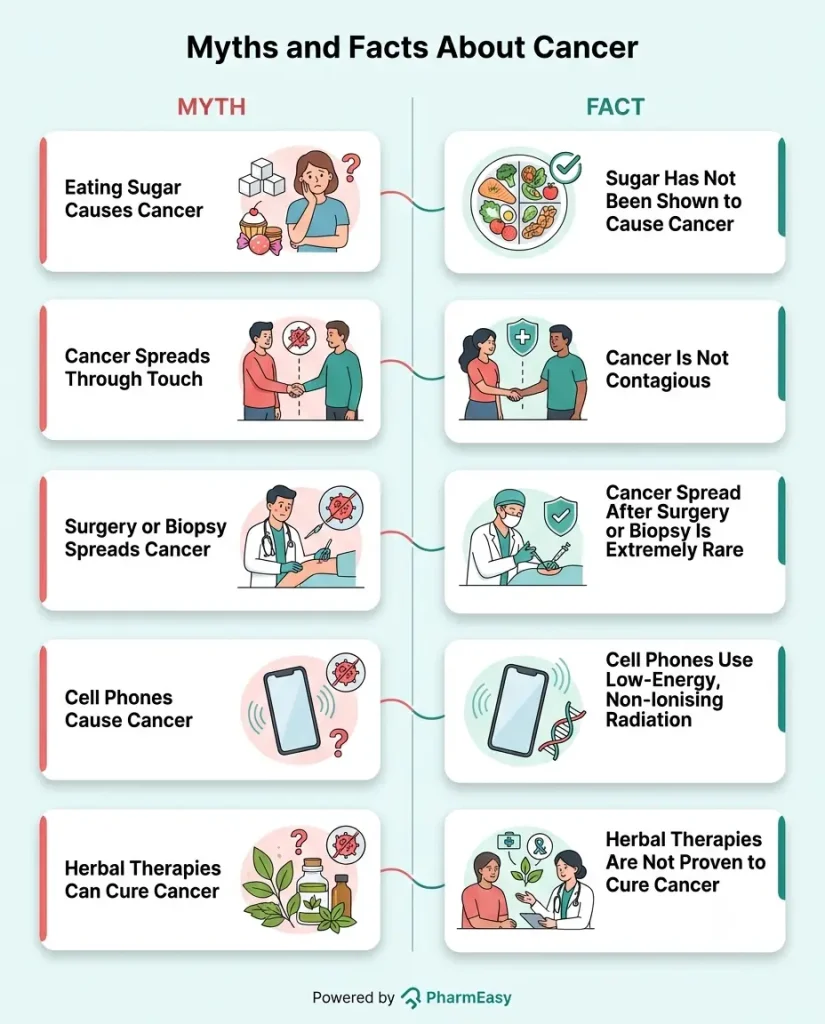
Certain common myths about cancer might lead to unnecessary concerns and related anxieties, which can lead to other complications. These myths can sometimes delay evidence-based preventive measures, timely identification and management strategies20:
Also Read: Early Warning Signs of Cancer You Should Know
If you notice any unusual symptoms such as new lumps, persistent fatigue or fever, unexplained weight loss or any changes that are not normal or if you are worried that these could be signs of cancer, you need to consult a doctor.
Cancer is considered one of the major health burdens worldwide. Cancer is considered the abnormal growth and multiplication of certain cells following certain mutations in associated genes. Cancer can affect any organ, and there can be several cancers which vary in their causes, symptoms, preventive measures, and treatment modalities. Having proper awareness about cancer can avoid unnecessary concerns and can help in timely medical evaluation and taking appropriate management measures.
Also Read: 10 Foods to Include in Your Diet for Lowering Your Cancer Risk
Though all cancers are not completely preventable or treatable, certain types of cancers can be prevented by adopting some healthy lifestyle measures such as limiting alcohol and tobacco, being physically active, avoiding UV radiation from sunlight and maintaining a healthy weight21. If persistent anxiety about cancer is affecting daily life, consulting a doctor is recommended.
Antioxidants are beneficial in preventing the damage caused by free radicals associated with cancer. However, limited evidence is available regarding the role of antioxidants in preventing the development of cancer. Some studies have shown an increased risk for cancer development linked with antioxidant usage22.
Regular exercise can help alter some risk factors associated with cancer occurrence. Being physically active can help maintaining a healthy body weight and lower inflammation, which have been linked to cancer development3.
Certain vaccines against hepatitis B and human papillomavirus (HPV) might help prevent the cancers that are caused by these viruses3. However, these vaccines might not prevent all cancers.
Autophagy is a natural process that occur in cells which involve transportation of cell components to lysosomes for their digestion. Autophagy is involved in several processes associated with cancer. It can limit cell death and inflammation and the spreading of tumour cells to other sites in the body. In contrast, it can also promote the invasion of tumour cells to new sites in its later stages. So, the role of autophagy as a lethal or protective factors are needed to be explored further23.
1. What Is Cancer? – NCI. September 17, 2007. Accessed August 14, 2026. https://www.cancer.gov/about-cancer/understanding/what-is-cancer
2. Cancer. Accessed August 14, 2026. https://www.who.int/news-room/fact-sheets/detail/cancer
3. Cancer. Accessed August 14, 2026. https://www.who.int/health-topics/cancer
4. Risk Factors: Age – NCI. April 29, 2015. Accessed August 14, 2026. https://www.cancer.gov/about-cancer/causes-prevention/risk/age
5. The Genetics of Cancer – NCI. April 22, 2015. Accessed August 14, 2026. https://www.cancer.gov/about-cancer/causes-prevention/genetics
6. Risk Factors: Alcohol – NCI. April 29, 2015. Accessed August 14, 2026. https://www.cancer.gov/about-cancer/causes-prevention/risk/alcohol
7. Risk Factors: Infectious Agents – NCI. April 29, 2015. Accessed August 14, 2026. https://www.cancer.gov/about-cancer/causes-prevention/risk/infectious-agents
8. Risk Factors: Radiation – NCI. April 29, 2015. Accessed August 14, 2026. https://www.cancer.gov/about-cancer/causes-prevention/risk/radiation
9. Risk Factors: Chronic Inflammation – NCI. April 29, 2015. Accessed August 14, 2026. https://www.cancer.gov/about-cancer/causes-prevention/risk/chronic-inflammation
10. Risk Factors: Hormones – NCI. April 29, 2015. Accessed August 14, 2026. https://www.cancer.gov/about-cancer/causes-prevention/risk/hormones
11. Risk Factors: Immunosuppression – NCI. April 29, 2015. Accessed August 14, 2026. https://www.cancer.gov/about-cancer/causes-prevention/risk/immunosuppression
12. Risk Factors: Obesity – NCI. April 29, 2015. Accessed August 14, 2026. https://www.cancer.gov/about-cancer/causes-prevention/risk/obesity
13. Cancer Risk Factors: Sunlight – NCI. April 29, 2015. Accessed August 14, 2026. https://www.cancer.gov/about-cancer/causes-prevention/risk/sunlight
14. Risk Factors: Tobacco – NCI. April 29, 2015. Accessed August 14, 2026. https://www.cancer.gov/about-cancer/causes-prevention/risk/tobacco
15. Cancer-Causing Substances in the Environment – NCI. March 18, 2015. Accessed August 14, 2026. https://www.cancer.gov/about-cancer/causes-prevention/risk/substances
16. Dart H, Wolin KY, Colditz GA. Commentary: Eight Ways to Prevent Cancer: a framework for effective prevention messages for the public. Cancer Causes Control CCC. 2012;23(4):601-608. doi:10.1007/s10552-012-9924-y https://pmc.ncbi.nlm.nih.gov/articles/PMC3631124/
17. Physical activity. Accessed August 26, 2026. https://www.who.int/initiatives/behealthy/physical-activity
18. Tests and Procedures Used to Diagnose Cancer – NCI. March 9, 2015. Accessed August 14, 2026. https://www.cancer.gov/about-cancer/diagnosis-staging/diagnosis
19. Types of Cancer Treatment – NCI. July 31, 2017. Accessed August 14, 2026. https://www.cancer.gov/about-cancer/treatment/types
20. Common Cancer Myths and Misconceptions – NCI. January 18, 2023. Accessed August 14, 2026. https://www.cancer.gov/about-cancer/causes-prevention/risk/myths
21. Risk Factors for Cancer – NCI. April 29, 2015. Accessed August 14, 2026. https://www.cancer.gov/about-cancer/causes-prevention/risk
22. Risk Factors: Diet – NCI. January 31, 2024. Accessed August 14, 2026. https://www.cancer.gov/about-cancer/causes-prevention/risk/diet
23. Bhutia SK, Mukhopadhyay S, Sinha N, et al. Autophagy: Cancer’s Friend or Foe? Adv Cancer Res. 2013;118:61-95. doi:10.1016/B978-0-12-407173-5.00003-0 https://pmc.ncbi.nlm.nih.gov/articles/PMC4349374/
Disclaimer: The information provided here is for educational/awareness purposes only and is not intended to be a substitute for medical treatment by a healthcare professional and should not be relied upon to diagnose or treat any medical condition. The reader should consult a registered medical practitioner to determine the appropriateness of the information and before consuming any medication. PharmEasy does not provide any guarantee or warranty (express or implied) regarding the accuracy, adequacy, completeness, legality, reliability or usefulness of the information; and disclaims any liability arising thereof.
Links and product recommendations in the information provided here are advertisements of third-party products available on the website. PharmEasy does not make any representation on the accuracy or suitability of such products/services. Advertisements do not influence the editorial decisions or content. The information in this blog is subject to change without notice. The authors and administrators reserve the right to modify, add, or remove content without notification. It is your responsibility to review this disclaimer regularly for any changes.
Do you often feel unusually tired, unwell, or uncomfortable in your upper abdomen without knowing why? Many women may link these changes to stress or hormonal fluctuations. However, they can also be signs of fatty liver disease, especially when risk factors such as weight gain, diabetes, high cholesterol, polyendocrine metabolic ovarian syndrome (PMOS), or menopause are present1. This blog explains the common symptoms of fatty liver in women, why they may happen, and when to speak with a doctor.
Fatty liver disease means there is excess accumulation of fat within liver cells, exceeding 5%–10% of total liver weight, a condition called steatosis2,3. The liver produces bile, which helps digest fats and supports the absorption of fat-soluble substances, stores energy, and metabolises waste products from the body2. Excess fat accumulation can cause inflammation of the liver and may lead to swelling of the liver cells due to fat deposition, scarring (also known as liver fibrosis), or long-term liver damage in the form of cirrhosis if it is not managed3.
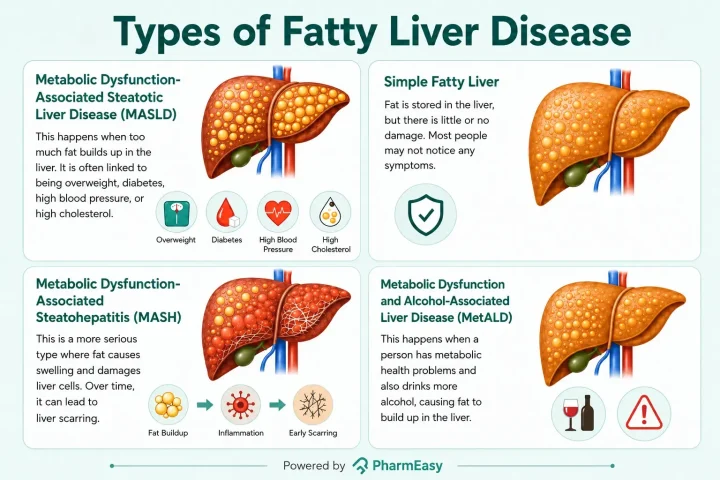
Fatty liver disease is renamed steatotic liver disease. The common forms are:
Fatty liver can affect both women and men. In women, the risk may increase with hormonal changes after menopause and with conditions such as PMOS, which can be linked to insulin resistance and weight gain. If fatty liver is not managed, it can progress in some people to liver inflammation, injury to the liver cells, or liver failure5.
Fatty liver disease often has no clear symptoms, and hence it is important to screen for MASLD6. When symptoms do occur, they may be mild and easy to confuse with other health issues. Symptoms may very rarely include:
Symptoms that may suggest more serious liver damage/end stage liver disease, requiring urgent medical care, include:
Several factors can increase a woman’s risk of developing fatty liver disease. These include:
Doctors diagnose fatty liver disease based on a person’s medical history, symptoms, and other associated risk factors such as concomitant alcohol use or chronic viral hepatitis, physical examination, and test results. They may recommend:
Treatment mainly focuses on healthy lifestyle changes and managing related health conditions. The goal is to reduce fat in the liver, lower the chance of scarring, and improve overall health. It is recommended to start the following:

If you are overweight, gradual and steady weight loss can reduce liver fat. Even modest weight loss (target of 0.7-1 kg/ week while maintaining a sustainable diet) may help, and larger sustained weight loss may improve liver swelling and scarring in some people5,9.

Inherently, a staple Indian diet lacks protein; hence, incorporating adequate protein helps counteract the quantity of fat and carbohydrate intake, in turn leading to a balanced meal. A balanced diet with vegetables, fruits, whole grains, pulses or lean proteins, and healthy fats can support liver health. It is helpful to abstain from alcohol- there is no “safe limit” of alcohol it is not recommended in small quantities, sugary drinks, sweets, fried foods, processed foods, and foods high in saturated fat. Quitting smoking is also important for overall health9.

Activities such as brisk walking, cycling, swimming, along with strength exercises can help improve blood sugar control, blood pressure, cholesterol levels, and weight. Many guidelines suggest aiming for about 150 minutes of moderate activity or 75 minutes of intense physical activity each week, if your doctor says it is safe for you9.
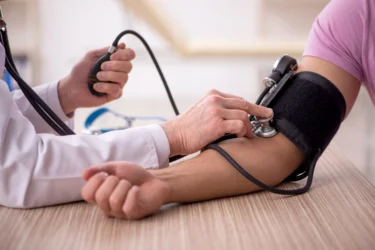
Managing conditions such as type 2 diabetes, high cholesterol, high blood pressure, and PMOS can help reduce the risk of fatty liver progression5,9.
Follow-up tests may be recommended to track liver health and check for any signs of progression.
Speak with a doctor if you have:
Fatty liver disease in women often has no symptoms at first, but it can become serious if it is not managed. Knowing your risk factors, maintaining a healthy weight, eating a balanced diet, staying active, and abstaining from alcohol can help protect your liver. Regular check-ups are especially important for women with diabetes, PCOS, obesity, high blood pressure, or high cholesterol.
Also Read: Best Exercises for Fatty Liver You Should Try
Yes, fatty liver can be asymptomatic (without any specific symptoms) in both men and women during the early stages. However, when symptoms occur, women may experience fatigue, a general feeling of being unwell, or abdominal discomfort1,11.
Yes, PMOS can increase the risk of fatty liver, as it is associated with insulin resistance, weight gain, hormonal changes, etc5.
Yes, menopause can increase the risk of fatty liver disease, as the decline in oestrogen levels during this phase is associated with increased fat accumulation in the liver5.
Women with fatty liver should limit foods high in sugar, unhealthy fats, and refined carbohydrates, as they can increase fat buildup in the liver. Examples include sugary drinks, sweets, processed foods, and fried foods9.
Fatty liver symptoms in females are generally similar to those in males, but many people may not experience symptoms in the early stages11. However, women may have certain risk factors, such as menopause and PMOS, that can increase their likelihood of developing fatty liver disease5.
Fatty liver disease may cause bloating or a feeling of fullness in some people. However, weight gain is generally a risk factor for fatty liver, rather than a direct symptom of the condition5.
Disclaimer: The information provided here is for educational/awareness purposes only and is not intended to be a substitute for medical treatment by a healthcare professional and should not be relied upon to diagnose or treat any medical condition. The reader should consult a registered medical practitioner to determine the appropriateness of the information and before consuming any medication. PharmEasy does not provide any guarantee or warranty (express or implied) regarding the accuracy, adequacy, completeness, legality, reliability or usefulness of the information; and disclaims any liability arising thereof.
Links and product recommendations in the information provided here are advertisements of third-party products available on the website. PharmEasy does not make any representation on the accuracy or suitability of such products/services. Advertisements do not influence the editorial decisions or content. The information in this blog is subject to change without notice. The authors and administrators reserve the right to modify, add, or remove content without notification. It is your responsibility to review this disclaimer regularly for any changes.
Hypertension means an increase in blood pressure, i.e., greater than 140/90 mmHg. This happens when the blood pushes against the arteries at high pressure. People with hypertension may not feel any symptoms. But very high blood pressure can cause headaches, chest pain, and blurred vision. Severe hypertension can cause major complications like heart disease, stroke, etc1.
Appropriate treatment is important to prevent complications of hypertension, and the condition usually requires long-term treatment2. Since high blood pressure requires long-term treatment, generic high blood pressure medicines can help reduce the treatment cost and encourage patients to take medicines consistently, leading to better blood pressure control3.
A generic drug is an approved form of the brand drug that mimics the branded drug in its safety, effectiveness, dosage and route of administration4. Many people with high blood pressure prefer switching from branded medicines to generics, which provide the same clinical effect at a lower cost. As hypertension is a long-term disease condition, affordability plays an important role in helping patients take their medications regularly. Doctors recommend generic medicines when an approved generic medicine is available in the market.
Reasons to switch to generic hypertension drugs can be as follows5:
There are several types of generic high blood pressure medicines available. Each belongs to a different drug class and lowers blood pressure in a different way. Your doctor will choose the most suitable medicine based on your blood pressure, age, overall health, and other medical conditions. As per the regulatory authorities, these medicines are categorized as follows6,7:
How do they work?
These medicines reduce the production of a hormone called angiotensin II, which normally causes constriction of blood vessels.
How do they work?
Instead of reducing the production of angiotensin II, ARBs prevent it from attaching to its receptors. This keeps blood vessels relaxed and helps lower blood pressure.
How do they work?
These medicines reduce the amount of calcium entering the muscle cells of the heart and blood vessels. As a result, blood vessels relax, making it easier for blood to circulate.
How do they work?
Diuretics help the kidneys remove extra salt and water from the body through urine. This reduces the amount of fluid in the blood vessels, lowering blood pressure.
How do they work?
Reduces the heart rate and the force of heart contraction. This helps reduce blood pressure.
Generic medicines used to treat high blood pressure are considered safe, effective, and reliable once they have been approved by regulatory authorities. Before a generic medicine becomes available to patients, it undergoes a thorough scientific evaluation to confirm that it performs in the same way as the original brand-name medicine. This means it must contain the same active ingredient, be available in the same strength and dosage form (such as a tablet or capsule) and be administered in the same way. It must also show that the body absorbs and uses the medicine similarly to the branded product, ensuring that patients receive the same blood pressure-lowering effect.
In addition to proving effectiveness, manufacturers must comply with strict quality standards during production. Every batch of an approved generic medicine is expected to meet the same manufacturing, purity, and quality requirements as the corresponding brand-name medicine. Therefore, patients can use approved generic blood pressure medicines with confidence, knowing they provide effective blood pressure control at a more affordable cost4,5.
All blood pressure medicines have side effects. Mild side effects may improve over time. Some of the common side effects of blood pressure medicines include8:
Contact your healthcare provider as soon as you observe any side effects. Changes in the dose of the medicines can help reduce the side effects. Do not stop or skip any medicines on your own.
The following are a few tips to be considered while taking generic high blood pressure medicines9:
Although hypertension has no symptoms, regular blood pressure check-ups are important. Regular monitoring by a healthcare professional is particularly needed if you have factors that increase your risk of having hypertension, like a sedentary lifestyle, an unhealthy diet typically high in sodium, excessive body weight, smoking or alcohol habit, or a family history.
Immediate medical attention may be needed in the following situations:
Also Read: Generic Medicines for Diabetes: Options, Safety and How Much You Can Save
Generic high blood pressure medicines play an important role in the treatment of hypertension. They provide the same therapeutic benefits at a reduced cost as compared to branded medicines. This helps patients to take the medicines regularly, improving medication adherence. Patients should take medicines as prescribed, not stop/change medicine on their own, monitor their blood pressure regularly and adapt lifestyle changes along with medication for optimal management of hypertension. Keeping a check of warning signs is important to avoid any complications.
Also Read: Are Generic Medicines Effective for the Elderly?
Yes. Generic blood pressure medicines are as effective as brand-name medicines. They have the same active pharmaceutical ingredient, strength, dosage form, etc. Regulatory authorities ensure that generic medicines are safe and effective as brand-name medicines3,5.
The commonly prescribed generic medicines for blood pressure are ACE Inhibitors, Angiotensin II Receptor Blockers, Calcium Channel Blockers or Diuretics6. Your doctor decides which is the best suited for you.
No. Do not stop or skip your blood pressure medicine without consulting your doctor. A normal blood pressure reading often means that your medicine is working effectively. Stopping treatment suddenly can cause your blood pressure to rise again, increasing the risk of heart attack, stroke, kidney disease, and other complications8.
Yes. In most cases, you can safely switch from a brand-name medicine to its approved generic equivalent after discussing it with your doctor. Generic medicines are designed to provide the same clinical effect as brand-name medicines while being more affordable. However, always consult your doctor before making any changes to your medication to ensure the generic medicine is appropriate for your individual health needs11.
Disclaimer: The information provided here is for educational/awareness purposes only and is not intended to be a substitute for medical treatment by a healthcare professional and should not be relied upon to diagnose or treat any medical condition. The reader should consult a registered medical practitioner to determine the appropriateness of the information and before consuming any medication. PharmEasy does not provide any guarantee or warranty (express or implied) regarding the accuracy, adequacy, completeness, legality, reliability or usefulness of the information; and disclaims any liability arising thereof.
Links and product recommendations in the information provided here are advertisements of third-party products available on the website. PharmEasy does not make any representation on the accuracy or suitability of such products/services. Advertisements do not influence the editorial decisions or content. The information in this blog is subject to change without notice. The authors and administrators reserve the right to modify, add, or remove content without notification. It is your responsibility to review this disclaimer regularly for any changes.
Have you ever noticed changes in your bowel habits, blood in your stool, unexplained abdominal discomfort, or ongoing tiredness and wondered if it could be bowel cancer? These symptoms can have many causes and may occur with a number of benign (non-cancerous) diseases, but it is important not to ignore them when they persist1. This article explains everything you should know about bowel cancer in a simple and easy-to-understand way.
Large bowel cancer, also called colorectal cancer, is a type of cancer that develops in the large intestine1. The large intestine includes parts like the colon and rectum, which help the body process waste before it leaves the body2. Bowel cancer usually begins when abnormal cells in the inner lining of the bowel (intestine) grow and multiply in an uncontrolled manner. Over time, these cells can form a growth called a tumour and may spread to other parts of the body if not treated1.
Did You Know?
The different types of bowel or colorectal cancers include:
The stage of bowel cancer describes how far the cancer has grown or spread. Bowel cancer is generally divided into Stages 0 to IV:
Note: The exact stage is determined using test results, including examination of the tumour and lymph nodes. The stage may be further divided into Stages 2, 3 and 4 and into sub-stages based on the extent of spread.
Bowel cancer symptoms in early stages are minimal. However, symptoms can be more noticeable in the later stages and include:
Bowel cancer does not usually have one single cause. It develops when changes occur in the DNA of bowel cells, causing them to grow and divide abnormally. These changes can build up over time and may eventually lead to cancer. Important causes include:
A risk factor is something that increases the likelihood of a disease. The risk factors for bowel cancer include:
Note: Although these factors increase the risk of developing the disease, having one or more of them does not necessarily mean that a person will develop bowel cancer or that people with none of these risk factors may not develop bowel cancer. Bowel cancer may also occur in people who have no known risk factors.
Bowel cancer is diagnosed using a combination of medical history, physical examination and tests. The doctor may use the following strategies to diagnose a bowel cancer:
Bowel cancer treatment depends on factors such as the location and stage of the cancer, its size and the person’s overall health. Doctors may use one treatment or combine several approaches.
Surgery is an important treatment for many colorectal cancers, and it may be performed during different stages of the cancer as needed. The surgeon removes the cancer along with an appropriate area of surrounding tissue. Nearby lymph nodes will also be removed and examined. The healthy ends of the bowel are then joined back together.
Examples: Hemicolectomy or total colectomy. In case of polyps (which may be precancerous) polypectomy or endoscopic submucosal dissection can be performed for complete & safe removal.
This treatment uses medicines that destroy cancer cells or stop them from multiplying. It may be given in different forms, such as an injection or tablets to be taken orally. Chemotherapy may be done after surgery to reduce the risk of cancer returning, before surgery in selected cases (to shrink the tumour), or for advanced disease.
Examples of chemotherapy medicines: Leucovorin, capecitabine, and oxaliplatin.
This method uses high-energy radiation to destroy cancer cells. Radiation therapy can be external (radiation is given using a machine, outside the body, to the area where cancer is present) or internal (sending radioactive waves directly into the cancer cells or near them). It may be given before or after surgery depending on the need.
This treatment uses specific medicines that act on specific cancer cells. The doctor may choose the type of medicine based on the biomarker test. It may be given alone or with chemotherapy.
Examples of targeted therapy medicines: Encorafenib, bevacizumab, and panitumumab.
This method uses medicines that help the immune system recognise and attack cancer cells. The doctor may choose the type of medicine based on the biomarker test. It may be suitable for certain colon cancers with specific characteristics.
Examples of immunotherapy agents: Ipilimumab, nivolumab, and pembrolizumab12.
Note: When colorectal cancer has spread to the distant organs, treatment may include a combination of chemotherapy, targeted therapy, immunotherapy and surgery or other local treatments in selected patients. The treatment plan is individualised based on the area of spread of cancer.
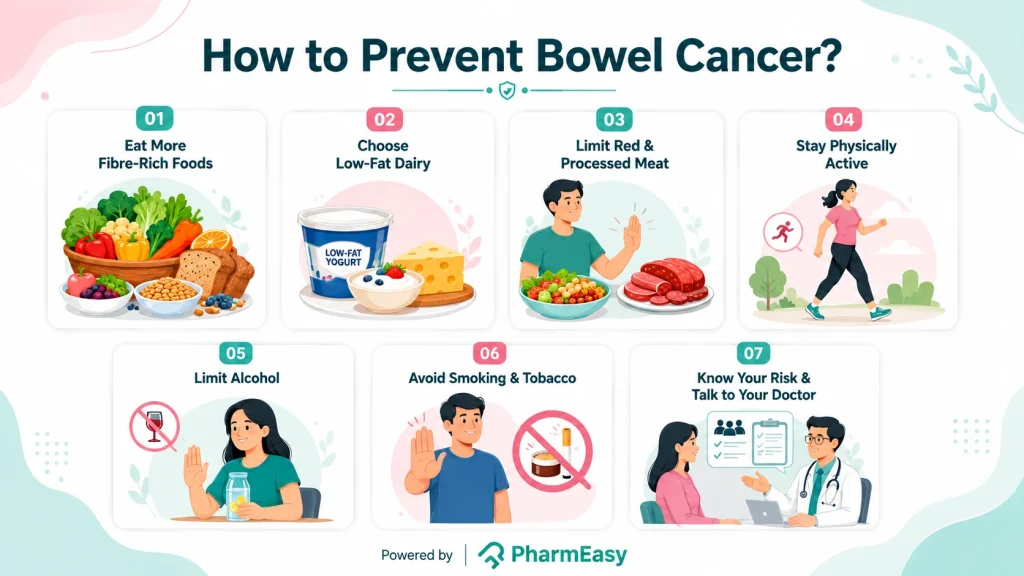
Although not all bowel cancers can be prevented, certain lifestyle changes may help reduce its risk. These include:
Note: These lifestyle measures may help lower the risk of bowel cancer, but they cannot guarantee that cancer will be prevented. Some people may develop bowel cancer even after following a healthy lifestyle.
It is important to seek medical advice if you have any of the following:
You may require urgent medical attention if you have symptoms like heavy bleeding through the rectum, bloody diarrhoea, and severe abdominal pain1,8.
Also Read: Is Bowel Leakage a Sign of Cancer?
Understanding the meaning of bowel cancer can help you recognise the disease and its warning signs early. Regular screening, a healthy lifestyle and timely medical advice can lower the risk and support early detection. If you notice ongoing changes in your bowel habits or other unusual symptoms, consult a doctor without delay.
Survival depends on how early the cancer is found. When detected before its spread, the 5-year survival rate can be around 91%13.
Yes, bowel cancer can be cured, especially when it is found and treated early. The chances of cure depend on the cancer’s stage, type and how well it responds to treatment3.
Bowel cancer can run in families, but not all bowel cancer is inherited. Having a close family member with bowel cancer may increase your risk1,3.
Increased gas or flatulence alone is usually not a sign of bowel cancer and can happen due to diet or other digestive problems. However, if it is persistent and occurs with blood in the stool or lasting changes in bowel habits, consult a doctor14.
Constipation does not always mean bowel cancer. However, constipation that is new, persistent or occurring with blood in the stool, weight loss or ongoing abdominal pain should be checked by a doctor1,8.
Yes, bowel cancer and colorectal cancer generally mean the same thing; cancer that develops in the colon or rectum, which are parts of the large intestine1.
Regular or heavy alcohol use can increase the risk of bowel cancer. The risk tends to increase further as alcohol intake increases1,10.
Yes, smoking can increase the risk of bowel cancer. Risk increases with the number of cigarettes smoked1,10.
Weight gain is not a typical sign of bowel cancer. Unexplained weight loss is more commonly associated with the disease. However, people with increased weight have a higher chance of getting bowel cancer1,8.
Back pain is not usually an early sign of bowel cancer. However, some people with bowel cancer may experience back pain if there is spread to the vertebrae/spine15.
Bowel cancer can sometimes cause pain or discomfort around the anus, particularly when the cancer affects the anus. However, conditions such as piles or anal fissures are more common causes of pain in the anus16.
Men and women may have many of the same bowel cancer symptoms, such as changes in bowel movements, blood in the stool, and stomach or abdominal pain. Women are more likely to develop cancer on the right side of the bowel, where symptoms may be less common. Signs such as anaemia and ongoing abdominal discomfort may occur, so the condition can sometimes go unnoticed until it becomes more advanced17.
1. Bowel cancer (colon and rectal cancer). Healthdirect. 2025. Accessed August 17, 2026. https://www.healthdirect.gov.au/bowel-cancer
2. Large intestine. NCI. Accessed August 17, 2026. https://www.cancer.gov/publications/dictionaries/cancer-terms/def/large-intestine
3. Colorectal cancer. WHO. Accessed August 17, 2026. https://www.who.int/news-room/fact-sheets/detail/colorectal-cancer
4. Shivshankar S, Patil PS, Deodhar K, Budukh AM. Epidemiology of colorectal cancer: A review with special emphasis on India. Indian J Gastroenterol. 2025;44(2):142-153. doi:10.1007/s12664-024-01726-8. https://pubmed.ncbi.nlm.nih.gov/39928255/
5. Grades and types of bowel cancer. Cancer Research UK. 2024. Accessed August 17, 2026. https://www.cancerresearchuk.org/about-cancer/bowel-cancer/stages-types-and-grades/grades-and-types
6. What Is Colorectal Cancer? American Cancer Society. 2024. Accessed August 17, 2026. https://www.cancer.org/cancer/types/colon-rectal-cancer/about/what-is-colorectal-cancer.html
7. Stages, types and grades of bowel cancer. Cancer Research UK. 2024. Accessed August 17, 2026. https://www.cancerresearchuk.org/about-cancer/bowel-cancer/stages-types-and-grades
8. Symptoms of bowel cancer. NHS. 2023. Accessed August 17, 2026. https://www.nhs.uk/conditions/bowel-cancer/symptoms/
9. Colorectal Cancer: An Overview. NCBI Bookshelf. Accessed August 17, 2026. https://www.ncbi.nlm.nih.gov/books/NBK586003/
10. Risks and causes of bowel cancer. Cancer Research UK. 2025. Accessed August 17, 2026. https://www.cancerresearchuk.org/about-cancer/bowel-cancer/risks-causes
11. Tests for bowel cancer. Cancer Research UK. 2024. Accessed August 17, 2026. https://www.cancerresearchuk.org/about-cancer/bowel-cancer/getting-diagnosed/tests-bowel-cancer
12. Colon cancer treatment. NCI. 2025. Accessed August 17, 2026. https://www.cancer.gov/types/colorectal/patient/colon-treatment-pdq
13. Colorectal cancer- Cancer Stat Facts. National Cancer Institute. 2026. Accessed August 17, 2026. https://seer.cancer.gov/statfacts/html/colorect.html
14. Passing wind. Cancer Research UK. 2025. Accessed August 17, 2026. https://www.cancerresearchuk.org/about-cancer/coping/physically/bowel-problems/types/passing-wind
15. Skalitzky MK, Zhou PP, Goffredo P, et al. Characteristics and symptomatology of colorectal cancer in the young. Surgery. 2023;173(5):1137-1143. doi:10.1016/j.surg.2023.01.018. https://pubmed.ncbi.nlm.nih.gov/36872174/
16. Anal pain. healthdirect. 2024. Accessed August 17, 2026. https://www.healthdirect.gov.au/anal-pain
17. Tsokkou S, Konstantinidis I, Papakonstantinou M, et al. Sex differences in colorectal cancer: Epidemiology, risk factors, and clinical outcomes. J Clin Med. 2025;14(15):5539. doi:10.3390/jcm14155539. https://pubmed.ncbi.nlm.nih.gov/40807160/
Disclaimer: The information provided here is for educational/awareness purposes only and is not intended to be a substitute for medical treatment by a healthcare professional and should not be relied upon to diagnose or treat any medical condition. The reader should consult a registered medical practitioner to determine the appropriateness of the information and before consuming any medication. PharmEasy does not provide any guarantee or warranty (express or implied) regarding the accuracy, adequacy, completeness, legality, reliability or usefulness of the information; and disclaims any liability arising thereof.
Links and product recommendations in the information provided here are advertisements of third-party products available on the website. PharmEasy does not make any representation on the accuracy or suitability of such products/services. Advertisements do not influence the editorial decisions or content. The information in this blog is subject to change without notice. The authors and administrators reserve the right to modify, add, or remove content without notification. It is your responsibility to review this disclaimer regularly for any changes.
Persistent indigestion, stomach discomfort, or unintentional weight loss can be a cause for concern, especially if the symptoms persist or recur. In many cases, these symptoms may be caused by common digestive problems1. However, when such symptoms continue or become worse, they should not be ignored, as they can sometimes be linked to stomach cancer. In this blog, we will discuss stomach cancer, its stages, symptoms, causes, treatment options, and when to seek medical attention.
The stomach is a muscular organ in the upper abdomen that helps break food down during digestion. Stomach cancer, also known as gastric cancer, is a type of cancer that begins when cells in the stomach start growing abnormally and uncontrollably. The most common type of stomach cancer is adenocarcinoma, which develops from the mucus-forming cells in the innermost lining of the stomach2,3. Over time, abnormal cells from this lining can grow deeper into the stomach wall and may eventually spread to other organs2.
In the early stages, stomach cancer may have mild to no symptoms, making it difficult to notice1. This is why ongoing or unusual digestive symptoms should be evaluated by a doctor rather than being treated as simple indigestion that occurs repeatedly4.
Stomach cancer symptoms may change as the disease progresses. The table below compares symptoms that may occur in the early and advanced stages of stomach cancer.
| Early Symptoms | Advanced Symptoms |
| Unexplained indigestion | Vomiting (often with blood) |
| Nausea (mild) | Blood in the stool (rarely) |
| Stomach discomfort | Unexplained weight loss |
| Lack of appetite | Difficulty swallowing |
| Heartburn | Abdominal pain or bloating |
| Yellowing of skin and eyes (jaundice) | |
| Fluid build-up in the abdomen (ascites) | |
| Anaemia accompanied by easy fatigability/generalised weakness |
Stomach cancer does not usually have a single cause. It develops when changes in the cells of the stomach cause them to grow and multiply abnormally. Factors that may increase the chance of these changes include:
Certain factors can make a person more likely to develop stomach cancer. These include:
Note: Having any of these risk factors does not mean that a person will develop stomach cancer. These factors only indicate that the likelihood of stomach cancer may be higher. If you have concerns about your risk or experience persistent digestive symptoms, speak with your doctor for appropriate advice and evaluation.
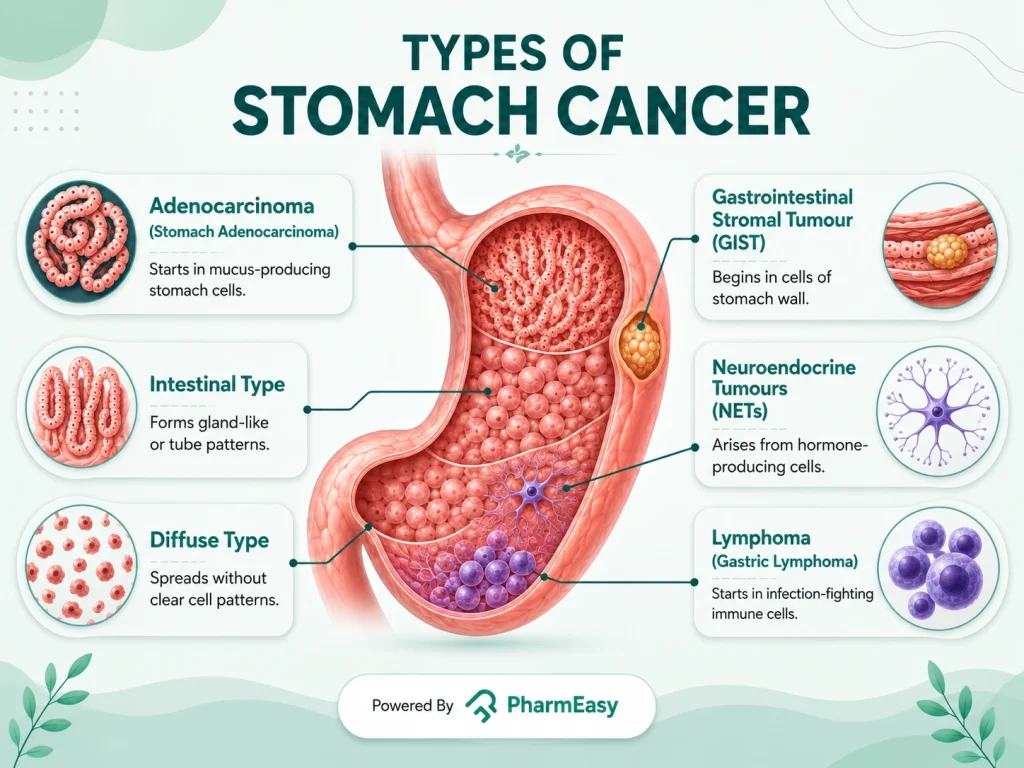
There are different types of stomach cancer based on the type of cells they originate in.
Note: There are certain other types of cancers, such as squamous cell carcinoma, small cell carcinoma, and leiomyosarcoma, that can develop in the stomach. However, these forms are uncommon.
Stomach cancer can be divided into different stages:
During this stage, abnormal or cancerous cells are limited to the innermost layer of the stomach lining (mucosa) and have not invaded deeper tissues but can spread to nearby parts. This is also called carcinoma in situ.
Stage I stomach cancer is divided into Stage IA and Stage IB, depending on the spread of the cancer and whether nearby lymph nodes are affected.
Stage II stomach cancer is divided into Stage IIA and Stage IIB based on how deeply the cancer has grown into the stomach wall and how many nearby lymph nodes are affected.
Stage III stomach cancer is divided into Stages IIIA, IIIB and IIIC. At this stage, the cancer has grown deeper into the stomach wall and may have spread to several nearby lymph nodes or surrounding organs.
The cancer at this stage has spread from the stomach to other distant parts of the body, such as the liver, lungs, distant lymph nodes or the lining of the abdomen. This stage is also known as metastatic stomach cancer. The cancer that has spread to other organs is the same type as the original tumour. For example, stomach cancer that spreads to the lungs will still have stomach cancer cells and it will be called metastatic stomach cancer8.
If stomach cancer is suspected, doctors may use a combination of tests to confirm the diagnosis, determine the extent of the disease and choose the most appropriate treatment. The common diagnostic tests include:
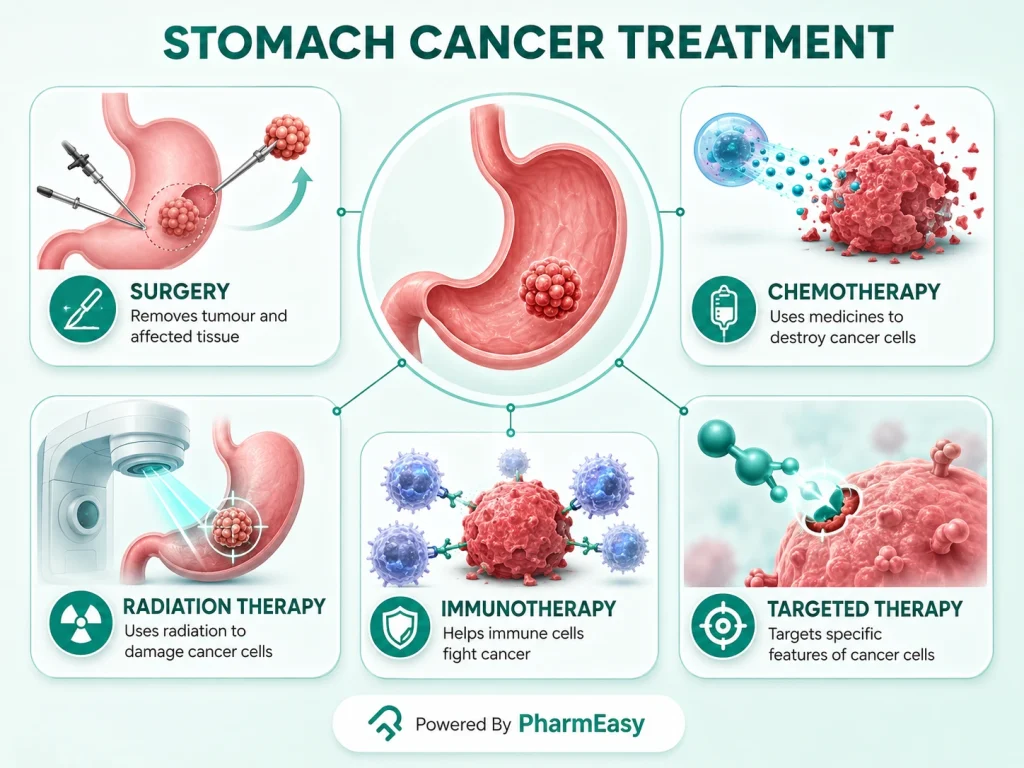
Stomach cancer treatment depends on factors such as the cancer stage, its location, the individual’s overall health, and whether the cancer has spread to other parts of the body. Doctors may use one treatment or combine several approaches as needed.
Also Read: Bowel Cancer (Colorectal Cancer): Meaning, Symptoms, Diagnosis & Treatment
Not every case of stomach cancer can be prevented. However, certain measures may help reduce its risk:
Note: These steps may help lower the risk of stomach cancer; however, they may not be able to prevent every case. Your risk can also be influenced by factors such as family history and other health conditions. Speak with a doctor for personalised advice if you have concerns about your risk factors.
See a doctor if digestive problems persist, keep coming back or worsen over time. Seek medical advice for symptoms such as unexplained weight loss, ongoing indigestion, repeated vomiting, difficulty swallowing, loss of appetite, feeling full quickly, blood in vomit or black (or red) stools, unusual tiredness, swelling or persistent abdominal pain. These symptoms can occur with many common digestive problems and do not necessarily mean stomach cancer. However, it is important to consult your doctor for persistent symptoms as this may help find the cause early and ensure appropriate treatment1.
Also Read: Is Bowel Leakage a Sign of Cancer?
Being aware of changes in digestion and other unusual stomach symptoms can help encourage early medical evaluation. Knowing your personal risk factors and following healthy habits may help lower the chances of developing stomach cancer. If symptoms do not settle or become more severe, seeing a doctor promptly can help identify the cause and guide you to the right treatment.
Stomach cancer is often discovered when persistent digestive symptoms lead a person to seek medical advice and undergo tests such as an upper endoscopy and biopsy. In some cases, it may be found during tests performed for another stomach-related problem1,9.
Stomach cancer can be serious and may become life-threatening, especially when diagnosed at an advanced stage. However, early detection and appropriate treatment can improve the chances of recovery14.
Yes, stomach cancer can cause unintentional weight loss1,4, often due to reduced appetite, feeling full quickly, or the effects of the cancer on the body.
The rate at which stomach cancer develops depends on multiple factors, such as the type of cancer. It can also differ based on the characteristics and stage of the tumour, with some cancers progressing gradually while others may advance more quickly15.
Yes, smoking is linked to a higher risk of developing stomach cancer, as harmful chemicals in tobacco can damage cells in the stomach lining. Quitting smoking can help reduce this risk and improve overall health6,13.
Early stomach cancer may cause few or no noticeable symptoms, so it cannot be confirmed based on symptoms alone. Persistent indigestion, stomach discomfort, loss of appetite or unexplained weight loss should be checked by a doctor. They may recommend tests such as an upper endoscopy or biopsy1,9.
1. Stomach cancer symptoms. NCI. 2024. Available from: https://www.cancer.gov/types/stomach/symptoms
2. Stomach cancer. Cancer Research UK. Available from: https://www.cancerresearchuk.org/about-cancer/stomach-cancer
3. What is stomach cancer? NCI. Available from: https://www.cancer.gov/types/stomach
4. Menon G, El-Nakeep S, Babiker HM. Gastric cancer. In: StatPearls. StatPearls Publishing; 2024. Available from: http://www.ncbi.nlm.nih.gov/books/NBK459142/
5. Causes of stomach cancer – NCI. 2025.Available from: https://www.cancer.gov/types/stomach/causes-risk-factors
6. Stomach cancer risk factors. American Cancer Society. 2026. Available from: https://www.cancer.org/cancer/types/stomach-cancer/causes-risks-prevention/risk-factors.html
7. Stomach cancer. American Cancer Society. 2026. Available from: https://www.cancer.org/cancer/types/stomach-cancer.html
8. Stages of stomach cancer. NCI. 2023. Available from: https://www.cancer.gov/types/stomach/stages#stage-0-carcinoma-in-situ-of-the-stomach
9. Stomach cancer diagnosis. NCI. 2023. Available from: https://www.cancer.gov/types/stomach/diagnosis
10. Tests for stomach cancer. Cancer Research UK. 2025. Available from: https://www.cancerresearchuk.org/about-cancer/stomach-cancer/getting-diagnosed/tests-stomach-cancer
11. Stomach cancer treatment. NCI. 2025. Available from: https://www.cancer.gov/types/stomach/treatment
12. Stomach cancer treatment by stage. NCI. 2025. Available from: https://www.cancer.gov/types/stomach/treatment/by-stage
13. Stomach cancer causes, risk factors, and prevention. American Cancer Society. 2026.Available from: https://www.cancer.org/cancer/types/stomach-cancer/causes-risks-prevention.html
14. Stomach cancer survival rates and statistics. NCI. 2023. Available from: https://www.cancer.gov/types/stomach/survival
15. Murakami K, Matsubara H. Chronology of gastrointestinal cancer. Surg Today. 2017;48(4):365-370. doi:10.1007/s00595-017-1574-y https://pubmed.ncbi.nlm.nih.gov/28795270/
Disclaimer: The information provided here is for educational/awareness purposes only and is not intended to be a substitute for medical treatment by a healthcare professional and should not be relied upon to diagnose or treat any medical condition. The reader should consult a registered medical practitioner to determine the appropriateness of the information and before consuming any medication. PharmEasy does not provide any guarantee or warranty (express or implied) regarding the accuracy, adequacy, completeness, legality, reliability or usefulness of the information and disclaims any liability arising thereof.
Links and product recommendations in the information provided here are advertisements of third-party products available on the website. PharmEasy does not make any representation on the accuracy or suitability of such products/services. Advertisements do not influence the editorial decisions or content. The information in this blog is subject to change without notice. The authors and administrators reserve the right to modify, add, or remove content without notification. It is your responsibility to review this disclaimer regularly for any changes.