




Health Benefits of Power-Packed Pulses
By Dr. Malavika Athavale +2 more

Medically reviewed by Dr. Malavika Athavale
Last updated: Sep 11, 2026 Published on: Mar 3, 2022


Get,

to manage your symptom
Get your,

4 Cr+ families
benefitted

OTP sent to 9988776655



You’ve successfully subscribed to receive
doctor-approved tips on
Whatsapp

Get ready to feel your best.


Register to Avail the Offer
Send OTPBy continuing, you agree with our Privacy Policy and Terms and Conditions
Hi There,
Sign up on PharmEasy now!!


Trusted by 4 crore+ families

OTP sent to 9988776655
You have unlocked 25% off on medicines


Code: NU25

By Dr. Malavika Athavale +2 more
Table of Contents
Pulses have been used widely in cuisine throughout the world, particularly in India, the Mediterranean region and the near east. Pulses are a constant ingredient in our routine diet. Especially for health-conscious individuals, pulses are a great choice as they are gluten-free and a great source of nutrients in a vegetarian diet. A variety of dishes including desserts, salads and curries can be made with different pulses like lentils and peas.
In this blog, we’ll discuss what pulses are, their nutritional value and how pulses can be beneficial for health.
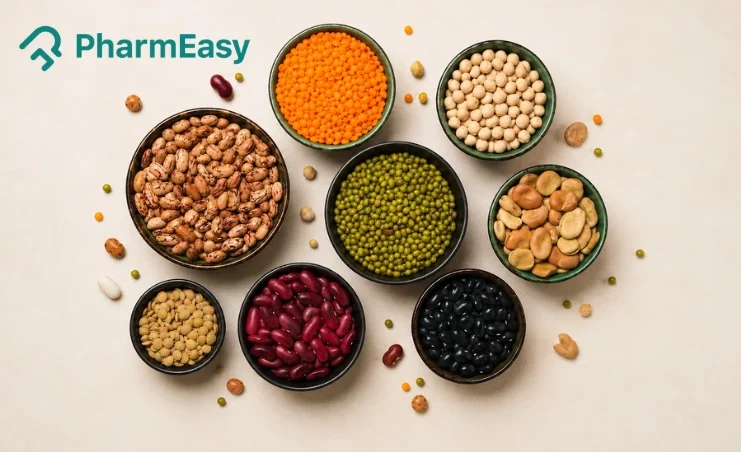
Pulses are dried seeds of any plant from the Fabaceae family that grows in a pod. These are:
Both pulsus and dals are flavorful, nutritious and super healthy. Different regions in India have their own take on forming delicious recipes for making curries or salads or even desserts with these. Both are high in protein as they serve as the main source for vegetarians who abstain from eating meat, poultry, eggs and fish. They help to generate a good amount of energy in the body.
While the exact nutrient composition of each type of pulse varies, all pulses in general are high in nutritional content and low in fats and cholesterol. They are rich in:
Pulses contain about 21–25% protein and 60-65% carbohydrate, however, these may slightly vary depending the type3.
Pulses can have several health benefits such as the following.
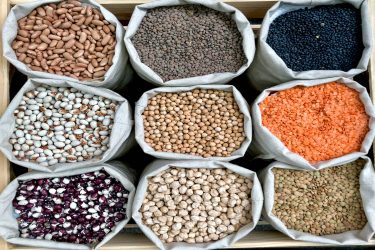
Pulses are the best source of proteins, fibers, antioxidants and complex carbohydrates. The varied yet essential set of nutrients helps fulfil a part of your balanced diet. Their iron content helps to transport oxygen throughout the body. Nutrients such as proteins are the building blocks of body and are needed for several body functions, and pulses are a great source of protein3.
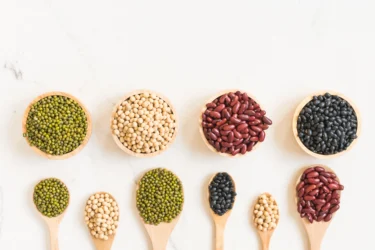
Pulses are low in fat and high in proteins, complex carbohydrates and fibers that help digest food slowly and give you a feeling of fullness. Pulses promote steady, slow-burning energy and helps to boost energy production and metabolism. This sustained energy and longer satiety can help curb unnecessary snacking and support weight management4.

People who consume foods that contain all types of nutrients like pulses and legumes may have lower risks of cardiovascular problems. These are naturally low in fat and high in fibre, which helps remove excess cholesterol. This can help avoid cholesterol-based heart diseases and reduce the risk of a heart attack. Also, high potassium and a low amount of sodium present in the pulses can help regulate blood pressure which is also beneficial for heart health5.

Despite having complex carbohydrates, pulses are low on the glycemic index (GI), which means that they do not let the blood sugar levels spike in your body when you consume them. The bioactive compounds in pulses can slow down carbohydrate breakdown, promote satiety and improve insulin secretion naturally that help maintain blood sugar levels6.
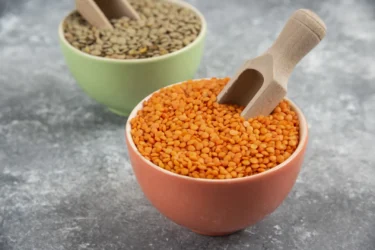
Pulses have a rich nutrient profile which means that they have numerous health benefits. They are also high in antioxidants that fight off free radicals and keep the immune system healthy avoid the risk of several diseases and even some cancers. High in fibre, they also help in keeping the digestive tract clear and regulating bowel movement7.

Pulses are rich in folate and iron that help pregnant women to keep their requirements up to the mark. Including pulses in your daily diet helps to stimulate the production of healthy red blood cells. Some studies suggest it may help to prevent neural tube defects in women during their pregnancy8.
As you age, you might face some neurological issues such as dementia. Studies9 have shown that eating plant-based proteins in the form of pulses might improve cognitive function in elderly patients.
Dr. Siddharth Gupta, B.A.M.S, M.D (Ayu)
Also Read: Are Grits Healthy? Here’s What You Should Know Before Adding Them to Your Diet
There are hundreds of varieties of pulses grown and a lot of these are commonly found in Indian kitchens. Some popular ones are lentils, dry beans, cowpeas, chickpea, tur dal, black beans, kidney beans, etc. They should be an essential part of our diet because they are healthy, versatile and nutritious. Plus, they are low in cost and readily available. The overall benefits of including pulses in routine diet are much on the higher side than the expensive supplements of proteins that everyone looks for these days.
Also Read: Kulthi Dal: Uses, Benefits, Side Effects & More!
Legumes are a broad group of plants that include beans, peas, lentils, peanuts, and soybeans. Pulses are the dry edible seeds of legume plants. All pulses are legumes, but fresh beans and peas are not pulses.
Pulses can be eaten in moderation, depending on the type of kidney stone. Some pulses contain oxalates and purines, so portion control and good hydration are important. It is best to follow medical advice rather than avoid it completely or consume excessively.
Yes, pulses have a shelf life and lose quality over time. Old pulses may take longer to cook and lose taste and nutrients. If stored properly in airtight containers, they usually last 1 to 2 years.
Store pulses in airtight containers in a cool and dry place away from sunlight. Keep them away from moisture to prevent spoilage and insects. For long storage, you can refrigerate or freeze them in sealed bags.
Pulses contain moderate purines, but plant sources usually have a milder effect on uric acid levels. Normal portions are safe for most people. Those with gout or high uric acid should manage their intake carefully.
Yes, pulses can be eaten at night as they provide protein and fibre. However, they digest slowly and may cause bloating in some people. Eating well-cooked light dals in moderate portions helps.
Soybeans, lentils, chickpeas, black gram, and kidney beans are high in protein. They are excellent protein sources for vegetarian diets. Including variety improves overall nutrition.
1. Semwal P, Painuli S, JP SB, Jamloki A, Rauf A, Olatunde A, Rahman MM, Mukerjee N, Khalil AA, Aljohani AS, Al Abdulmonem W. Exploring the nutritional and health benefits of pulses from the Indian Himalayan region: A glimpse into the region’s rich agricultural heritage. Food Chemistry. 2023 Oct 1;422:136259. https://www.sciencedirect.com/science/article/pii/S0308814623008774
2. Pulses: The Perfect Food, Healthy to Eat, Healthy to Grow; Peas-Lentils-Chickpeas (Internet). NDSU (cited 9th July 2026). https://www.ndsu.edu/agriculture/extension/publications/pulses-perfect-food-healthy-eat-healthy-grow-peas-lentils-chickpeas
3. Singh N. Pulses: an overview. J Food Sci Technol. 2017;54(4):853-857. https://pmc.ncbi.nlm.nih.gov/articles/PMC5336460/
4. McCrory MA, Hamaker BR, Lovejoy JC, Eichelsdoerfer PE. Pulse consumption, satiety, and weight management. Adv Nutr. 2010;1(1):17-30. https://pmc.ncbi.nlm.nih.gov/articles/PMC3042778/
5. Lukus PK, Doma KM, Duncan AM. The Role of Pulses in Cardiovascular Disease Risk for Adults With Diabetes. Am J Lifestyle Med. 2020;14(6):571-584. Published 2020 May 25. https://pmc.ncbi.nlm.nih.gov/articles/PMC7566181/
6. Thomas DJ, Shafiee M, Nosworthy MG, Lane G, Ramdath DD, Vatanparast H. Unveiling the Evidence for the Use of Pulses in Managing Type 2 Diabetes Mellitus: A Scoping Review. Nutrients. 2023;15(19):4222. https://pmc.ncbi.nlm.nih.gov/articles/PMC10574713/
7. Singh B, Singh JP, Shevkani K, Singh N, Kaur A. Bioactive constituents in pulses and their health benefits. J Food Sci Technol. 2017;54(4):858-870. https://pmc.ncbi.nlm.nih.gov/articles/PMC5336453/
8. Obrycki JF, Lee JJ, Kapur K, et al. A case-control analysis of maternal diet and risk of neural tube defects in Bangladesh. Birth Defects Res. 2019;111(14):967-981. https://pmc.ncbi.nlm.nih.gov/articles/PMC6703921/
9. Mazza EL, Fava A, Ferro y et al. Impact of legumes and plant proteins consumption on cognitive performances in the elderly 2017 May 22;15:109. doi: 10.1186/s12967-017-1209 https://pmc.ncbi.nlm.nih.gov/articles/PMC5440936/
Disclaimer: The information provided here is for educational/awareness purposes only and is not intended to be a substitute for medical treatment by a healthcare professional and should not be relied upon to diagnose or treat any medical condition. The reader should consult a registered medical practitioner to determine the appropriateness of the information and before consuming any medication. PharmEasy does not provide any guarantee or warranty (express or implied) regarding the accuracy, adequacy, completeness, legality, reliability or usefulness of the information; and disclaims any liability arising thereof.
Links and product recommendations in the information provided here are advertisements of third-party products available on the website. PharmEasy does not make any representation on the accuracy or suitability of such products/services. Advertisements do not influence the editorial decisions or content. The information in this blog is subject to change without notice. The authors and administrators reserve the right to modify, add, or remove content without notification. It is your responsibility to review this disclaimer regularly for any changes.
 7
7  1
1Comments

Leave your comment...
You may also like























Comments