Since ancient times, many plant species and their products have been used by humans as food or medicines to treat illnesses. Shea butter is one such fat extracted from the shea fruit’s kernel. It is obtained from the nuts of the Vitellaria paradoxa (formerly Butyrospermum paradoxa) and Vitellaria parkii trees belonging to the family sapotaceae. Butyrospermum, which means ‘butter seed’, explains that we can extract butter from seed after processing. The shea tree grows in Nigeria, Ghana and regions of West and East Africa. It is imported to India for its several benefits. Butter is solid at normal temperature but melts quickly at body temperature. It is utilised in cosmetics as well as in the food industry1,3. We can apply it as a cream or bath product like shampoo. Let’s keep reading to learn about shea butter and its potential uses.
Shea butter contains the following nutrients and their average content per 100g dry weight1:
Vitamins present in the shea butter are as follows:
Along with these, shea butter contains triglycerides, plant sterols, saponin and triterpenes1.
The following are the properties of shea butter:
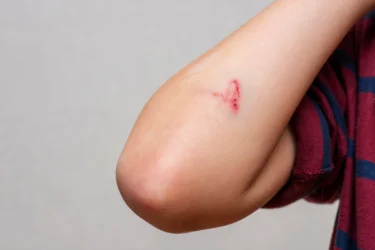
Shea butter is a rich source of fatty acids and plant sterols such as linoleic, palmitic, and stearic acids, which may have healing properties. Due to its anti-inflammatory property, it may be applied as an ointment. Shea butter has a lower soap formation rate than other nut oils. It also includes vitamin A, which may treat skin sensitivities such as poison ivy and bug bites. It also contains Vitamin F, which might help rejuvenate rough or damaged skin. Furthermore, it may have a soothing effect. Raw and unrefined shea butter may benefit skin rashes, stretch marks, burns, bug bites, athlete’s foot, scars, frost bites, skin peeling after tannin and arthritis1. Fatty acids present in the shea butter may help in these conditions. However, shea butter alone may not be able to help you with this condition. So, please consult a physician for a diagnosis and treatment.
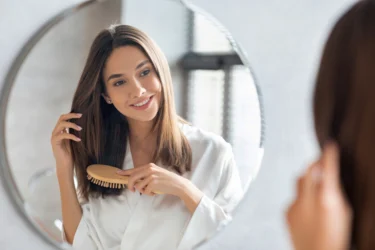
Shea butter may protect hair against harmful free radicals in the air, water and harsh weather conditions. Shea butter has a non-greasy texture, which allows it to spread easily on the scalp. Shea butter protects hair from heat after application. This protective function may be helpful for processed or coloured hair. When applied to the hair before swimming, Shea butter may protect it from salt and chlorine. Furthermore, it may be beneficial in softening and restoring damaged or dry hair and curly hair treatments1. However, shea butter may result in serious problems. So, please visit a doctor for better health results.

Shea butter contains triterpenes such as e-butyrospermol, lupeol, parkeol, etc. As a result, it may lower hypersensitivity reactions such as IgE-mediated allergy reactions, which are the antibodies that cause the allergic reaction. It may also be beneficial in patients with autoimmune responses in mammals1. Although, shea butter alone may not be able to help you with allergies. So, kindly consult a physician.

Shea butter may act as a sunscreen and moisturizing agent. Sunscreens work by absorbing or reflecting some of the sun’s ultraviolet (UV) light and blocking it from reaching the skin. According to a study5 done by Nahm in 2011 the cinnamate esters found in shea butter can absorb UV rays from the sun. Therefore, it may provide some sun protection. In addition, shea butter may add more moisture and nutrition to the skin in the winter and summer as it absorbs into the skin rapidly and has high water-binding characteristics, which may be helpful for skin care. Also, shea butter might protect the skin from sunburn, photo-ageing and erythema and reduce the risk of skin cancer. Nonetheless, please consult a doctor for proper diagnosis and treatment. Avoid trying self-medication because conditions could worsen.
Vitamin E is naturally abundant in shea butter making it one of the best skin moisturizing agent. Vitamin E is known for its antioxidant activity, that may protect against cellular deterioration and increase moisture in the skin7.
Dr. Rajeev Singh, BAMS

Protein metabolism may assist tissue repair and growth, allow metabolic reactions to occur and coordinate vital functions. Malachi, 2013 found that saponin in shea butter can form complexes with protein in the intestine. It may reduce protein concentrations in hepatic and renal organs, as well as in the blood. As a result, it may minimise protein metabolism in the body1. However, please visit a doctor. Self-medication with shea butter may result in serious complications.
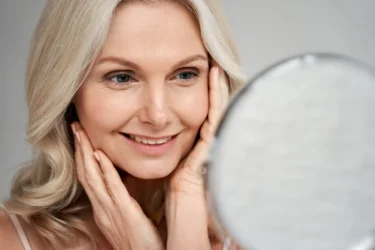
Triterpenes in shea butter might help improve collagen and elastin function, which protects the skin and provide strength. This might help in slowing the ageing process. In the study by Tran done in 1986, it was shown that shea butter has anti-erythemic activity against UV, which is the skin redness caused by an allergic reaction1. This property may soften the skin and increase cell regeneration. There is a need for more research to explore the potentiality of shea butter as an anti-ageing agent. Kindly consult the doctor for better health results.
Anti-inflammatory compounds included in shea butter may reduce skin oedema and redness. I recommend people apply it to soothe any discomfort, including sunburns, chapped lips, and skin which is overexposed to acidic peels or washes7.
Dr. Siddharth Gupta, B.A.M.S, M.D (Ayu)
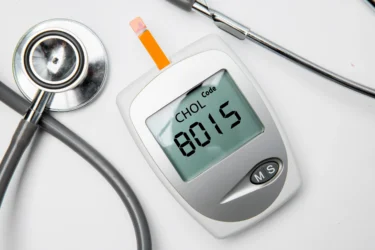
In a study6 by Akinwale et al., 2012 saponins and linoleic acid present in shea butter may lower LDL, total cholesterol, and high-density lipoprotein (HDL) in rats. In the same study, saponins in shea butter were found to form complexes with cholesterol and bile acids in the colon. As a result, rather than absorption, it produces cholesterol excretion. Furthermore, Masters et al. (2004) discovered that high levels of stearic acids in shea butter had antihypercholesterolemic properties, which may lower LDL and total cholesterol levels in the blood2. However, further research on this subject might be able to prove the effects of shea butter on cholesterol management. If you have high cholesterol levels, consult a doctor and do not self-medicate.
In a study4 by Amegah et al., 2019 consumption of shea butter may improve cardiovascular health and reduce hypertension. Oleic acid, linoleic acid and polyphenols in shea butter may help improve cardiovascular health. However, more studies are needed to prove the role of shea butter in cardiovascular health. As cardiovascular disease is a severe condition, please consult the doctor for the same.
Though there are studies that show the benefits of shea butter in various conditions, but these are insufficient and there is a need for further studies to establish the true extent of shea butter on human health.
You must consult a qualified doctor before taking any herbal supplements. Do not discontinue or replace an ongoing treatment of modern medicine with an ayurvedic/herbal preparation without consulting a qualified doctor.
Shea butter has no known side effects. Although, if an unpleasant reaction happens, get immediate medical help. First, consult the physician who prescribed it to you they will be able to diagnose and cure the problem.
It is important to take general safety precautions when taking any medication. It should be used cautiously, especially by pregnant women and breastfeeding mothers, and only when prescribed by your doctor. In addition, you should take caution while giving it to children and the elderly.
There were no adverse drug interactions reported between shea butter with other drugs. However, there is not enough information to say it doesn’t interact with other medicines and is entirely safe to use; further research is in need on this topic. As a result, you must follow your doctor’s advice carefully, as their prescription depends on your health situation.
No, however more research is required to determine the effect of shea butter on migraine.
Shea butter may be helpful in halting the process of photo-carcinogenesis which is related to tumour growth. UVB rays from the sun can cause it. These radiations have the potential to destroy cell DNA. So, shea butter might have a direct protective effect on DNA and may help in the management of skin cance1. Even so, cancer is a severe condition; please consult the doctor for diagnosis and treatment.
Shea butter includes vitamins A and E, which may be helpful as a hair moisturiser. Shea butter also has semi-solid properties and buttery consistency, which might make it a good moisturiser for the scalp and skin1. Kindly consult the doctor for better health results.
No. Although please consult the doctor for proper diagnosis and treatment, as diabetes is a severe condition.
Disclaimer: The information provided here is for educational/awareness purposes only and is not intended to be a substitute for medical treatment by a healthcare professional and should not be relied upon to diagnose or treat any medical condition. The reader should consult a registered medical practitioner to determine the appropriateness of the information and before consuming any medication. PharmEasy does not provide any guarantee or warranty (express or implied) regarding the accuracy, adequacy, completeness, legality, reliability or usefulness of the information; and disclaims any liability arising thereof.
Links and product recommendations in the information provided here are advertisements of third-party products available on the website. PharmEasy does not make any representation on the accuracy or suitability of such products/services. Advertisements do not influence the editorial decisions or content. The information in this blog is subject to change without notice. The authors and administrators reserve the right to modify, add, or remove content without notification. It is your responsibility to review this disclaimer regularly for any changes.
 12
12  1
1Aloe Vera, the modest houseplant, is believed to be a wonder herb, being used for its medicinal properties since ages. This plant is found to be rich in nutrients that help improve digestion and even boost immunity. Aloe Vera application in gel form can also be used to enhance skin and hair health. In this blog, we’ll discuss how this aloe vera gel can help you achieve a young, radiant skin and smooth, shiny hair.
Before we get into the essential reasons and health benefits of Aloe Vera, let us first learn how to make Aloe Vera gel directly from the plant. If you have an Aloe Vera plant at home, select its thicker leaves or stems and cut it from the base. You may also pull its leaves from their bottom. Be careful as the plant has thorns1.
Next, use a sharp knife to slice the thorns from the edge of each leaf. Then slice the aloe vera stalk in half while keeping the gel side upwards. You may slice open leaves as well. Use a spoon to scrape the gel into a container. When all the gel is scraped out, refrigerate the container and store the gel.
A lot of ready to use aloe vera gels are also available in the market. So, if this process seems too tedious for you, you can just buy one as well.
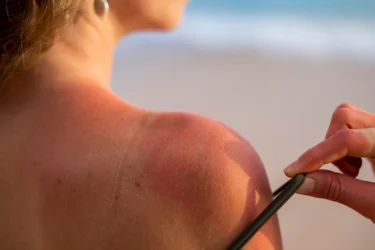
Aloe Vera gel has anti-inflammatory properties and is cooling in nature. It can be one of the best natural remedies for burnt skin like in case of a sunburn2. Applying this gel helps form a protective layer on the skin, and it also helps to retain moisture. It is rich in antioxidants as well as minerals that can help boost the healing. So, now you can enhance summer skin health using aloe vera.
Aloe vera contains the enzyme bradykinase, which is the active ingredient to suppress signs of inflammation, namely redness, swelling, pain, and heat when the gel is applied on the skin5.
Dr. Siddharth Gupta, B.A.M.S, M.D (Ayu)
Unlike regular moisturizers that are available in the market, Aloe Vera gel, when used as a moisturizing gel, doesn’t leave a greasy film on the face and the skin. In fact, it does just the opposite by unclogging the pores and softening the skin.
It can be used as an aftershave treatment. This is because Aloe Vera gel helps to keep the skin hydrated and due to its anti-inflammatory nature, helps in healing small nicks & cuts like those occurring with razor use. It also helps deal with a dry skin3.
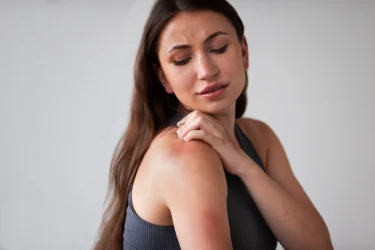
Aloe Vera is known to be beneficial for burns, cuts, and other minor injuries. This is because Aloe Vera boosts healing of wounds, and reduces the time of healing. It’s a great skin burn treatment, especially for the smaller and superficial ones. Aloe Vera is said to penetrate the epidermis, i.e., the outer layer of the skin faster than water and speed up skin cell formation, promoting repair4. However in case of major burns or injury, please consult a doctor and follow medical advice. Natural remedies like Aloe Vera should only be used as adjunct in such cases.
There has been a recent advancement regarding the composition of aloe vera. Researchers have isolated a compound, alprogen from aloe vera which is found to be effective against skin allergy5.
Dr. Rajeev Singh, BAMS
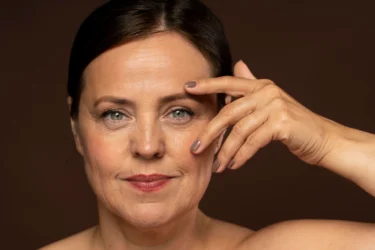
Aloe Vera gel has vitamin C and E, and beta-carotene in abundance. These are antioxidants that help fight oxidative stress in the body, leading to its proposed anti-ageing effects. It also has antimicrobial properties and is anti-inflammatory, and helps to increase the production of collagen in the body and improve skin elasticity5. It may therefore help eradicate skin blemishes and diminish age lines, although results can depend on several other factors.
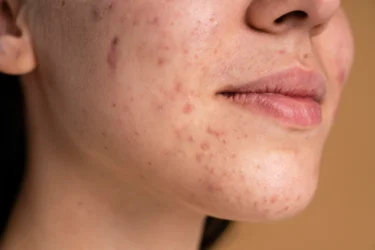
Aloe Vera can be suitable for even those who have acne prone skin. It helps in gentle cleansing, and its antimicrobial properties can help reduce pimples without causing any damage to the skin. Aloe Vera contains polysaccharides and gibberellins. These may help in the growth of new cells and at the same time, reduce inflammation and redness. It may also work as an astringent to reduces the size of pores, flushing out the excess sebum, microbes, and dirt6.
A Highly effective and prominent compound which works against inflammation of the skin has been recently extracted5.
Dr. Ashok Pal, B.A.M.S.
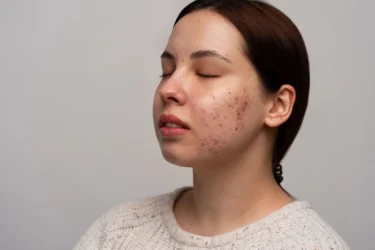
As already discussed, Aloe Vera can help speed up skin cell reproduction and reduce redness by fighting skin inflammation. Plus, its active agent aloin has skin depigmenting properties. So, it may be used as a natural way to manage stretch and acne marks, reduce freckles and lighten age spots7. Adding some lemon juice to the gel mixture can make it one of the perfect home remedies for glowing skin.
Aloe vera gel is considered a great cleanser for the skin due to its antiseptic action. It is comprised of soap-like substances, saponins, which are effective antiseptic agents5.
Dr. Smita Barode, B.A.M.S, M.S.

Like skin reproduction, Aloe Vera gel may help in activating new hair growth by increasing the blood circulation to the scalp. It also provides essential minerals and vitamins. However, when it comes to hair growth, results may vary as individual factors do play a role. Aloe Vera contains proteolytic enzymes that can help repair dead skin on the scalp. So aloe vera works as a great remedy for scalp problems in women and men8.
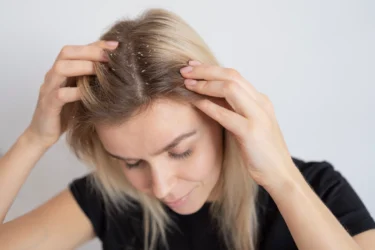
Aloe Vera helps in healing dry scalp, fungal infections, and an excessively oily scalp. All these are significant causes of dandruff. Aloe vera is one of the very useful natural ways to get rid of dandruff9. Although a flaky scalp can be due to several reasons, ranging from scalp infections to inflammatory conditions like psoriasis. It’s best to discuss with a dermatologist before resorting to natural remedies for any major scalp issues.
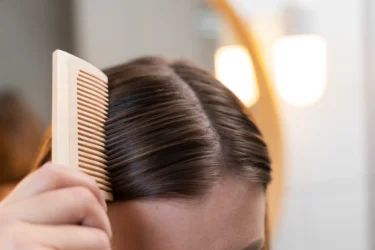
Just as it helps in moisturizing the skin, Aloe Vera also helps to condition the hair and soften it. Regularly applying Aloe gel to the hair and scalp helps to maintain the vitality of the hair and gives a smooth shiny appearance1,10.
Although initial studies have shown benefits of aloe vera for skin and hair, further large-scale clinical trials are needed to confirm these. Also, remember its best to consult a dermatologist before considering any home remedies for your skin or scalp-related issues.
Did you know that there are almost 250 different aloe vera varieties, out of which only 4 are capable of beneficial effects on health? Also, aloe vera is 96% water. The health benefits are due to the constituents which constitute about 4% of the composition of aloe vera11.
Dr. Anuja Bodhare, B.A.M.S, M.D (Ayu)
Also Read: 10 Home Remedies For Freckles & Clear Skin
Here are a few simple and easy Aloe vera DIY recipes for using on your skin:
Also Read: Effective Uses & Benefits of Aloe Vera!
Aloe vera can have a wide range of possible medical applications, including several advantages for skin and hair health. It can help hydrate the skin, heal minor burns and injuries and also help lighten pigmented areas. It may also help deal with scalp issues and make your hair smooth and shiny. However, remember that it must be used carefully. Inappropriate use of aloe vera, such as ingesting it orally, might have negative health implications. Consult your doctor to understand and manage the underlying cause for your problem first and follow their advice on safe and appropriate use of home remedies like aloe vera alongside.
Also Read: 20 Foods To Eat For A Healthy Skin!
There may be a few side effects of aloe vera that can occur in some individuals. If you take aloe vera orally, it might cause cramping and diarrhoea as it has a laxative effect. High doses of oral aloe are dangerous, and you can also have intestinal problems, heart issues, haemorrhoids, kidney problems, diabetes or electrolyte imbalances with excessive consumption.
Aloe vera used in creams and gels vary in dosage. While some may have just 0.5% aloe vera, others may contain as much as 70% aloe vera. Aloe as an oral supplement must be consumed in moderation and it is best to consult a doctor before using the same.
Aloe vera is often used as a natural remedy for minimising the appearance of dark circles. It may improve skin texture by moisturising and reducing inflammation and can be used under the eye for dark circles, but not too close to the edge of your eyelid.
Disclaimer: The information provided here is for educational/awareness purposes only and is not intended to be a substitute for medical treatment by a healthcare professional and should not be relied upon to diagnose or treat any medical condition. The reader should consult a registered medical practitioner to determine the appropriateness of the information and before consuming any medication. PharmEasy does not provide any guarantee or warranty (express or implied) regarding the accuracy, adequacy, completeness, legality, reliability or usefulness of the information; and disclaims any liability arising thereof.
449
14