
Right after birth, a baby begins to learn. From crying to smiling, speaking to walking, the first few years are the most crucial times for a baby’s growth and development. It is believed that eighty percent of a child’s brain develops between the age of zero to three and attains ninety percent growth until age five1. The child grows physically, learns immensely during this period, and develops new skills from thinking and speaking to social and emotional skills2. As parents, it is exciting to see a newborn grow and at the same time you may have several questions like, “When will they start walking?” or “When will they start talking?”
The baby growth milestones are a set of specific tasks or skills that average children achieve by a certain age2. These markers are looked at by parents, doctors, and teachers and can be matched with other kids of the same age to track growth. While it is true that some kids may be more advanced, some may be slow learners , if a child is majorly falling behind or missing out on important milestones, then the underlying cause must be addressed. Thus, it’s important to parents to know these milestones and understand when help may be needed. In this blog, we’ll discuss about a baby’s growth stages that you can expect during the first five years.
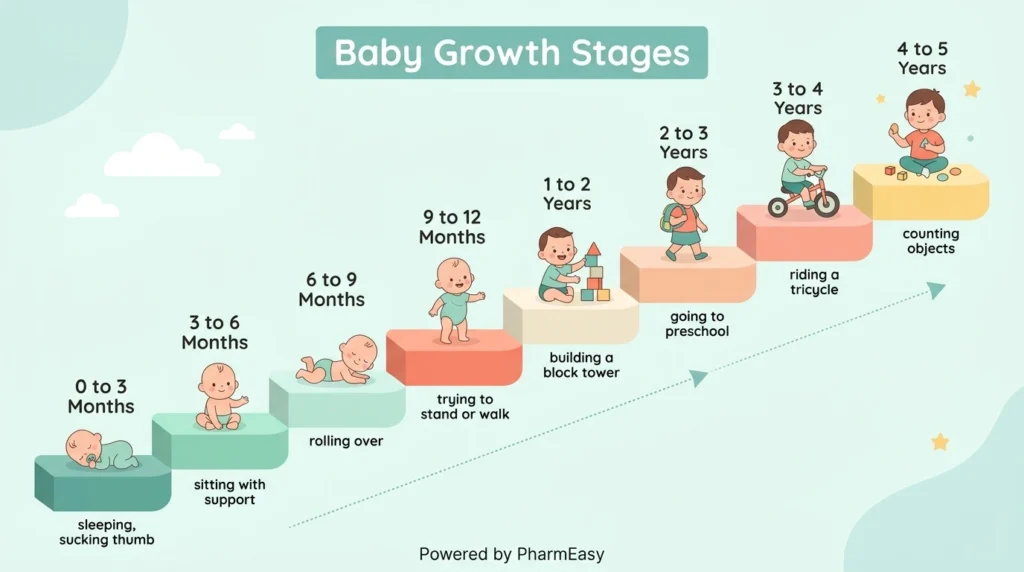
During this time the baby is just adjusting to the new surroundings. They begin to build upon their rooting, sucking, startling and grasping reflexes. They can hear sounds and are learning to use their eyes in coordination. They start to make ‘cooing’ sounds by about eight weeks and can recognise familiar faces by three months3.
In these months, the baby also learns about body movements, begins to notice their own hands, clench them into fists, and brings them to their mouth. They learn to control their head and hold it up for a few seconds with support and start kicking their legs3. Introducing tummy time (baby lying on their stomach, supervised by an adult) at this stage helps strengthen the baby’s neck, shoulders, back, and arms and helps in the later development of motor skills4.
Baby growth in 3rd month includes beginning to roll over, sitting up with support, reaching out for objects, bringing them to their mouths, and playing with toys and fingers. Babies also laugh, look at themselves in the mirror and recognize familiar faces and sounds. They may start with cooing and babbling (speech)5. Most babies start teething at around 6 months and the doctor may recommend you to start introducing top feed (food other than breast milk)- liquids, semi-solids, and later solid foods to your child.
This is the time span when children become increasingly mobile.. They learn to grasp and pull objects, can roll over, learn to sit without support and even begin to crawl. You will notice more facial expressions in babies during this time as they learn to imitate you. They look at you when you call their name and smile, and make a lot of different sounds6. By the time they are 7 or 8 months old, your child can eat a variety of foods including infant cereals, chicken or other proteins, fruits, vegetables, grains, yogurts, cheese and more7.
Most babies can pull themselves up to a seated position for a while at this age. They will try standing themselves by supporting their body onto a nearby furniture and some may even take their first steps during this phase. They also learn to pick objects, and roll using their hands and legs8. Apart from major growth milestones like standing up and walking, this is a significant period when a child develops more advanced fine motor skills.
During these months, the babies can learn to play a few games with you like peek-a-boo, waves bye-bye, start saying simple words like ”no” and call parents ”mama” or ”dada”8. The babies also start holding their own bottle and you may introduce drinking from a cup. Even though babies have completed an year, their physical and mental growth still continues at a fast pace.
During this growth stage, most kids can walk alone by themselves, climb off and on a couch or chair without help, walk up and down stairs and move and sway to the music. They also learn to pick things up while standing, colour by moving their entire arm, scribbling, turning knobs and handles, unscrewing bottle caps or building towers with blocks9. They can understand and respond to words, differentiate and sort objects, and can point out familiar objects and people in a picture book. They enjoy pretend play, start following simple instructions and combing words to communicate like “Mumma eat,” “need cookies”9. This is the time span when the babies are constantly learning through imitation and exploration but need supervision.
A toddler becomes very independent at this age, as they are now capable of so much10. He or she may even start pre-school and learn to sort various animals, shapes, numbers, stacking toys, respond to simple directions, draw a circle when you show how to, name and sound familiar objects, imitate more complex adult actions, say their own name, look and listen stories from a book, etc10,11. You may notice that they now recognize colours and can have a conversation well enough for others to understand as they start learning new words and can form some 2-3 word sentences11.
They start mingling with other kids but are less interested in sharing their toys. During this phase, constant attention from elders is what they seek most11.
3-year-olds observe the world around them, analyse and are curious about the things they see. They learn to question and begin to wonder how things work, and why12. At this age young children can be taught to ride a tricycle or scooter, they learn to go down a slide without help, throwing and catching a ball, walking in a straight line, building toy blocks, drawing a circle, and engaging in creative play with other kids. They can speak in sentences of 3 words, count 3 objects, can feed themselves and dress-up with some help12. Their cognitive skills are growing constantly and allow most of them to demonstrate understanding in regard to past and future events.
At this age, children are progressively growing and learning every day. They are better at using words, imitating actions, counting objects, and performing other basic activities13. Around this age, most children can rhyme words, identify many colours, and tell stories. They learn what is taught at school and can remember things they read and learn13.
A baby’s growth begins well before birth, in the mother’s womb. Once your baby is born, you must connect with them, develop a bond, and help them reach the crucial milestones.
These baby growth tips will help you raise a smart and healthy baby.
The first few years in a child’s life are critical for their physical, emotional, and cognitive development. Understanding their growth stages helps parents keep a track of milestones, know their child’s changing needs and respond to them with confidence. Although developmental timelines may vary from one child to the other, if you notice a potential delay, it’s ideal to consult your paediatrician for a correct diagnosis and timely intervention as early identification can help improve outcomes.
Disclaimer: The information provided here is for educational/awareness purposes only and is not intended to be a substitute for medical treatment by a healthcare professional and should not be relied upon to diagnose or treat any medical condition. The reader should consult a registered medical practitioner to determine the appropriateness of the information before consuming any medication. PharmEasy does not provide any guarantee or warranty (express or implied) regarding the accuracy, adequacy, completeness, legality, reliability, or usefulness of the information; and disclaims any liability arising thereof.
Links and product recommendations in the information provided here are advertisements of third-party products available on the website. PharmEasy does not make any representation of the accuracy or suitability of such products/services. Advertisements do not influence the editorial decisions or content. The information in this blog is subject to change without notice. The authors and administrators reserve the right to modify, add, or remove content without notification. It is your responsibility to review this disclaimer regularly for any changes.
 2
2 
Babies’ skin is softer than ours. So naturally, they need more care. Baby’s skin is sensitive and extremely gentle, which is why regular products cannot be used on them1. Some studies2 say that baby care products formulated with gentle, and natural handpicked ingredients may cater to the needs of babies. Keeping your baby well-groomed not only adds to their charm but is also an essential part of their health and hygiene.
Here are some ways to keep your baby’s skin soft, supple, gentle and moisturized all day long:

A gentle massage daily or every alternate day can have great benefits for your baby. Be it with baby oil or baby lotion, massaging the products ensures that it penetrates deep within the layers of the skin, keeping it hydrated and moisturized from within3. It is a great way to gain mobility faster by strengthening the muscles and bones4. Besides moisturizing the skin and strengthening muscles, regular massaging of the baby will also improve circulation and comfort the baby4.

Bathing the baby daily will ensure complete hygiene. You can start your baby’s day by giving him a nice bubble bath and cleaning him off the pee and poop gently. Generally, baby products are tear-free, and non-toxic and leave the baby’s skin soft and smooth. Using mild baby bathing products will gently cleanse, moisturise and nourish their delicate skin without stripping their natural body oils2. A gentle baby shampoo helps get rid of dirt and grime from your baby’s body as well as hair.

Keeping the baby directly in contact with a parents’ bare body provides warmth to the baby and also helps regulate baby’s heart rate and breathing. Feeling, hearing, and smelling your presence provides your baby with a sense of calm and security5,6.

Your baby’s face is super sensitive and needs extra care7. While investing in a good facial moisturiser for the baby, make sure it is free from parabens, sulphates, formaldehyde and fragrances, as these might harm your baby8,10. Only gentle, skin-protecting, and hydrating face cream should be put on your baby’s face after clearing their face.

Babies can often make a mess when it comes to feeding them. Always keep baby wipes in handy to clean them off and use zero alcohol wipes. These can keep your baby clean without making the skin too dry. This come super handy while changing a diaper as well11,12.
It is important to educate parents that after birth 1st stools should be passed within 48 hours and baby should pass 1st urine within 24 hours. If any delay should be brought to notice of Paediatrician.
Dr. M.G. Kartheeka, MBBS, MD

Baby’s skin is super delicate and prone to get infections and rashes easily1. Before massaging, moisturising or oiling your baby, always make it a point to wash your hands thoroughly and cut your nails properly to avoid risk of injury or infections8,12.

Do not sneeze or cough near the baby, use face mask around them14. Visitors should be avoided for first 6 weeks. Kissing the baby’s face should be done. Babies have a weak immune system yet to build up, so make sure to keep them away from infections13.
Also Read: Weaning for Babies: Meaning, Foods to Eat & When to Start
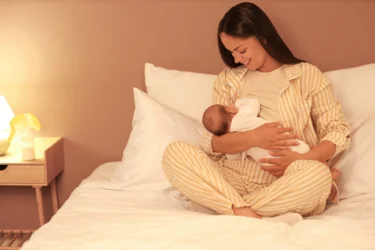
Breast Milk is the only essential nutrition your baby will need for the first 6 months. Solids and semi-solids can be introduced after 6 months while breastfeeding can continue for up to 2 years15. Do not start any top feed without talking to your doctor. For mothers who cannot breastfeed, doctors will recommend a suitable dose and type of formula feed to keep up with the nutritional requirements of the baby. Do not forget to help them burp after enough feed16.
Adequate nutrition during infancy and early childhood is essential to ensure the growth, health, and development of children to their full potential, it helps to stay healthy and imbibing good eating habits right from childhood.
Dr. Ashish Bajaj – M.B.B.S, M.D.

Talk to your baby’s doctor and set reminders about all the mandatory vaccinations that your baby requires. Maintain the immunization card (usually provided by hospitals) to keep a record of all vaccines that your baby has received.

Newborns require extra care and need to be held with adequate support on the neck and head. Till your child learns neck holding- be careful about neck support while holding the baby. Never shake the baby vigorously or lift up in the air at this stage17.
Also Read: Baby Diaper Rash: Causes, Types, Treatment & Home Remedies
Even though you may feel anxious about handling a newborn, in a few short weeks you’ll develop a routine and be parenting like a pro. If you have questions or concerns, seek your doctor’s help regarding the resources that can help you and your baby grow together. By keeping these points in mind, you will be able to take care of your baby better.
Also Read: Gripe Water for Babies: Benefits, Usage & Alternatives
To care for a baby’s skin, use gentle, fragrance-free cleansers and moisturizers, keep the skin dry and clean, and avoid exposure to harsh chemicals. Regularly change diapers to prevent rashes and dress the baby in soft, breathable fabrics to maintain healthy skin.
While parents can kiss a newborn baby, they should be cautious to avoid spreading infections. It’s important for anyone kissing the baby to ensure they are healthy and practice good hygiene, such as washing hands and avoiding kissing near the baby’s mouth or face if they have a cold sore or other contagious illness.
A baby can sleep on a parent’s chest while the parent is awake and alert to ensure the baby’s safety. However, it is not recommended for a baby to sleep on a parent’s chest if the parent might fall asleep, as this increases the risk of accidental suffocation and sudden infant death syndrome (SIDS). For safe sleep, it is best to place the baby on their back in a crib or bassinet.
No, it is not recommended for a baby to sleep on their side. The safest sleep position for a baby is on their back, as side-sleeping increases the risk of sudden infant death syndrome (SIDS) and accidental suffocation. Always place babies on their backs to sleep in a crib or bassinet with a firm mattress and no loose bedding.
Yes, babies can eat egg yolk but it should be cooked properly to avoid the risk of salmonella, typically starting around 8 months of age. Always introduce new foods one at a time and monitor for any signs of allergies.
Yes, parental stress can affect a baby. Maternal stress during pregnancy is linked to potential impacts on foetal development, including preterm birth and low birth weight. After birth, parental stress can influence a baby’s emotional and behavioural development, highlighting the importance of managing stress for the well-being of both the parent and the baby.
Disclaimer: The information provided here is for educational/awareness purposes only and is not intended to be a substitute for medical treatment by a healthcare professional and should not be relied upon to diagnose or treat any medical condition. The reader should consult a registered medical practitioner to determine the appropriateness of the information and before consuming any medication. PharmEasy does not provide any guarantee or warranty (express or implied) regarding the accuracy, adequacy, completeness, legality, reliability or usefulness of the information; and disclaims any liability arising thereof.
Links and product recommendations in the information provided here are advertisements of third-party products available on the website. PharmEasy does not make any representation on the accuracy or suitability of such products/services. Advertisements do not influence the editorial decisions or content. The information in this blog is subject to change without notice. The authors and administrators reserve the right to modify, add, or remove content without notification. It is your responsibility to review this disclaimer regularly for any changes.


